Kirjojen hintavertailu – 12 903 724 kirjaa ja 27 kauppaa
Kirjailija
Michael H. Gorn
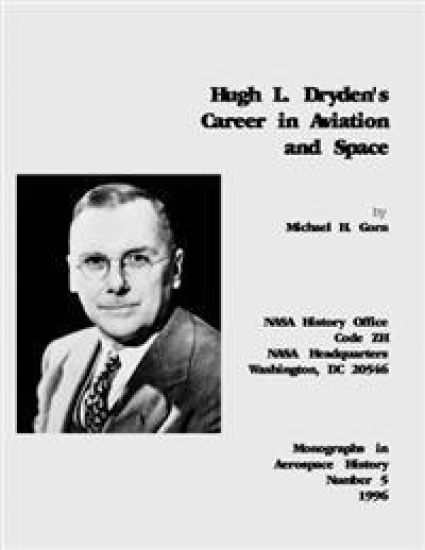
Kirjat ja teokset yhdessä paikassa: 13 kirjaa, julkaisuja vuosilta 2002–2025, suosituimpiin kuuluu Hugh L. Dryden's Career in Aviation and Space. Monograph in Aerospace History, No. 5, 1996. Vertaile teosten hintoja ja tarkista saatavuus suomalaisista kirjakaupoista.
Marvel at the history of space exploration through its daring vehicles, exhaustively chronicled in this authoritative volume featuring more than 250 artworks. In 1957, the world looked on with both uncertainty and amazement as the Soviet Union launched Sputnik 1, the first man-made orbiter. Sputnik 1 would spend three months circling Earth every 98 minutes and cover 71 million miles in the process. The world’s space programs have traveled far (literally and figuratively) since then, and the spacecraft they have developed and deployed represent almost unthinkable advances for such a relatively short period. In Spacecraft, illustrator and aerospace professional Giuseppe De Chiara teams up with aerospace historian Michael Gorn to present a huge, profusely illustrated aerospace history profiling and depicting spacecraft from Sputnik 1 through the International Space Station and everything in between, including concepts that have yet to actually venture outside the Earth’s atmosphere. This updated and revised edition includes:Expertly written profiles depicting and describing the design, development, and deployment of manned and unmanned spacecraft from around the world, including satellites, capsules, spaceplanes, rockets, and space stations—now updated with the latest modelsVivid scale illustrations of the many international spacecraft in multiple-view, sometimes cross-section, and in many cases shown in archival period photography to provide further historical contextEarthbound and spaceborne data and intel chronicling every technological leap, engineering challenge, and monumental achievement, from troubleshooting the lunar landers of the ’60s to engineering solar-driven sails to propel futuristic craft to Mars and beyondA look ahead to an era of privatized space travel and even plans for lunar and Martian space stations and settlement Dividing the book by era, De Chiara and Gorn feature spacecraft not only from the United States and Soviet Union/Russia, but also from the European Space Agency and China. The mind-blowing machines examined in this volume include the rockets Energia, Falcon 9, and VEGA; the Hubble Space Telescope; the Cassini space probe; and the Mars rovers, Opportunity, and Curiosity. For anyone who has marveled at humankind’s attempts and advances in leaving Earth, Spacecraft: The Complete Guide to the Rockets, Satellites, Capsules, Shuttles, and Stations That Put Us in Space is the definitive reference.
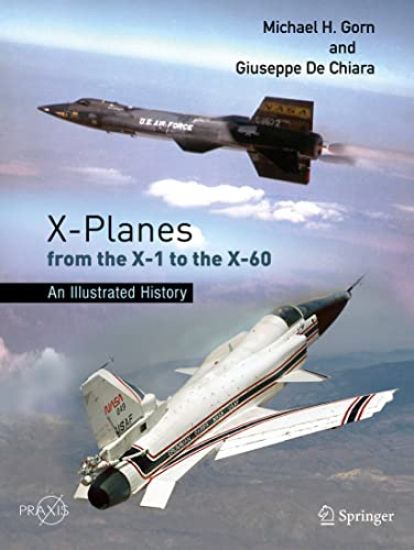
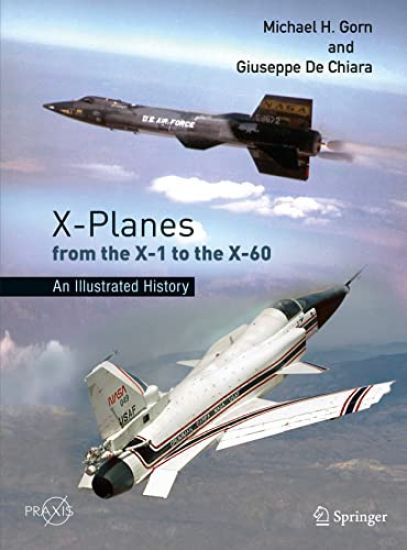
Foreword by Dr. Roger D. Launius, Former NASA Chief Historian For the past 75 years, the U. S. government has invested significant time and money into advanced aerospace research, as evidenced by its many experimental X-plane aircraft and rockets. NASA's X-Planes asks a simple question: What have we gained from it all? To answer this question, the authors provide a comprehensive overview of the X-plane’s long history, from the 1946 X-1 to the modern X-60. The chapters describe not just the technological evolution of these models, but also the wider story of politics, federal budgets, and inter-agency rivalries surrounding them. The book is organized into two sections, with the first covering the operational X-planes that symbolized the Cold War struggle between the U. S. and the U. S. S. R, and the second section surveying post-Cold War aircraft and spacecraft. Featuring dozens of original illustrations of X-plane cross-sections,in-flight profiles, close-ups, and more, this book will educate general readers and specialists alike.
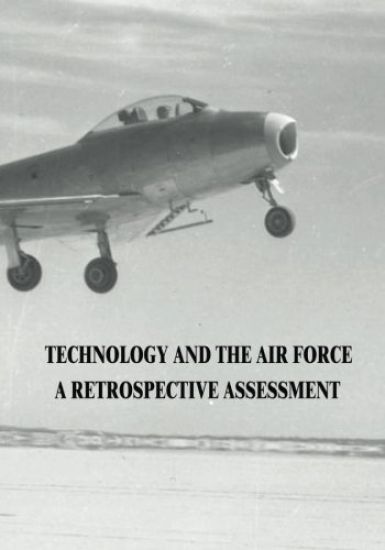
This book consists of two World War II documents essential to the history of American air power: Where We Stand and Science: The Key To Air Supremacy. These technology forecasts - produced under the direction of famed Hungarian-American aerodynamicist Dr. Theodore von K rm n at the request of General of the Army Air Forces Hap Arnold - established the U. S. Air Force's research and development agenda for much of the Cold War. Includes tables, diagrams, illustrations, photos, suggested readings. Abstract: Since the days of ancient warfare, commanders have relied on science and technology for success in war. Their use in military affairs increased dramatically after the Scientific and Industrial Revolutions, particularly in the nineteenth century. For example, chemists and metallurgists contributed greatly to World War I, while World War II is sometimes referred to as the physicists' war. During the fifty-year conflict known as the Cold War, scientists from diverse disciplines collaborated to multiply the effectiveness of military force and meet national security needs. Of all the federal organizations devoted to science and technology, none has been more important or influential than the U. S. Air Force's Scientific Advisory Board. In the midst of World War lithe Com- manding General of the Army Air Forces, Henry H. 'Hap' Arnold grasped the absolutely essential relationship between post-war science and national security. To realize his objective of inextricably linking science to air power, he called upon his friend, the brilliant Hungarian physicist Theodore von Karman, to assess and predict the future of military aeronautics. In Where We Stand and in Science, the Key to Air Supremacy, Karman and his hand- picked staff devised a multi-disciplinary approach to preserving the technical advantage gained by U. S. air power during the war.