Kirjojen hintavertailu – 12 859 819 kirjaa ja 27 kauppaa

Kirjailija

Michael H. Kater

Kirjat ja teokset yhdessä paikassa: 10 kirjaa, julkaisuja vuosilta 1994–2023, suosituimpiin kuuluu Cleansing the Fatherland. Vertaile teosten hintoja ja tarkista saatavuus suomalaisista kirjakaupoista.

Nimi esiintyy myös muodoissa: Michael H Kater

10 kirjaa

Kirjojen julkaisuvuodet: 1994–2023.

After the Nazis

After the Nazis

Michael H. Kater

YALE UNIVERSITY PRESS
2023
sidottu

Halvin toimitettuna 34,80 €

A wide-ranging, insightful history of culture in West Germany—from literature, film, and music to theater and the visual arts After World War II a mood of despair and impotence pervaded the arts in West Germany. The culture and institutions of the Third Reich were abruptly dismissed, yet there was no immediate return to the Weimar period’s progressive ideals. In this moment of cultural stasis, how could West Germany’s artists free themselves from their experiences of Nazism? Moving from 1945 to reunification, Michael H. Kater explores West German culture as it emerged from the darkness of the Third Reich. Examining periods of denial and complacency as well as attempts to reckon with the past, he shows how all postwar culture was touched by the vestiges of National Socialism. From the literature of Günter Grass to the happenings of Joseph Beuys and Karlheinz Stockhausen’s innovations in electronic music, Kater shows how it was only through the reinvigoration of the cultural scene that West Germany could contend with its past—and eventually allow democracy to reemerge.
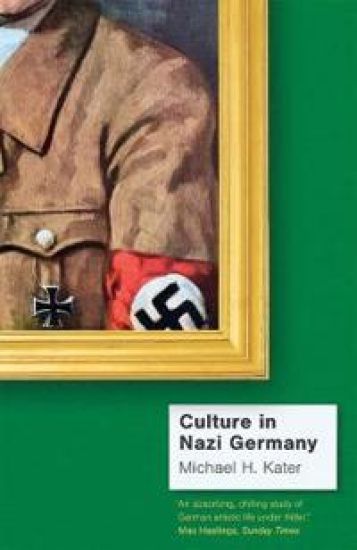
Culture in Nazi Germany

Culture in Nazi Germany

Michael H. Kater

Yale University Press
2020
pokkari
A fresh and insightful history of how the German arts-and-letters scene was transformed under the Nazis Culture was integral to the smooth running of the Third Reich. In the years preceding WWII, a wide variety of artistic forms were used to instill a Nazi ideology in the German people and to manipulate the public perception of Hitler’s enemies. During the war, the arts were closely tied to the propaganda machine that promoted the cause of Germany’s military campaigns. Michael H. Kater’s engaging and deeply researched account of artistic culture within Nazi Germany considers how the German arts-and-letters scene was transformed when the Nazis came to power. With a broad purview that ranges widely across music, literature, film, theater, the press, and visual arts, Kater details the struggle between creative autonomy and political control as he looks at what became of German artists and their work both during and subsequent to Nazi rule.
The Ghetto Swinger

The Ghetto Swinger

Coco Schumann; Michael H. Kater

DoppelHouse Press
2018
pokkari
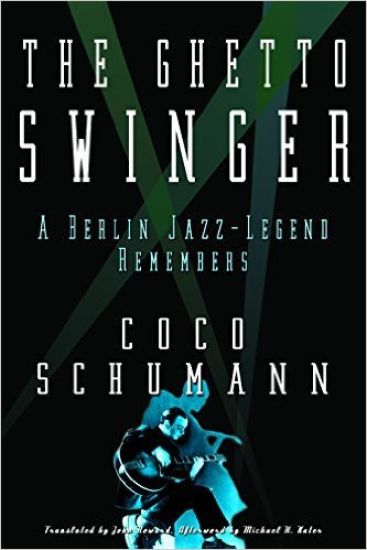
Jazz in Nazi-era and postwar Germany, as lived by a Jewish prodigy who survived the horrors of Theresienstadt and Auschwitz. "Coco, it's not important what you play. It's important how you play it," said Louis Armstrong to jazz and swing guitarist Coco Schumann during a break between sessions. Recalling this episode Schumann reminds readers that even in the midst of real-world nightmares, music is alive and musicians experience this essential freedom and hope, which they can, in turn, give to their audiences. Throughout his remarkable life, Coco Schumann (b. 1924) would accumulate accolades, including the Order of Merit from the Federal Republic of Germany in 1989 and the prestigious Ehrenpreise Lifetime Achievement Award in 2015, and play with jazz greats Toots Thielemans, Dizzy Gillespie, Louis Armstrong, Ella Fitzgerald, and others. But few knew he relied on composing music and performing for live audiences to ease the burden of his wartime memories. After forty years of silence Schumann's memoir opened a rare window into the previously unknown life of one of Germany's most renowned musicians, who was a member of the vibrant and illegal Berlin club scene, a part of the cultural revival of postwar Berlin, and a survivor of Theresienstadt (Terezin) and the horrors of Auschwitz. Shortlisted for the 2017 A. R. S. C. Awards for Excellence in Historical Research in Jazz. Includes over 50 historical documents and rare photographs.
The Ghetto Swinger

The Ghetto Swinger

Coco Schumann; Michael H. Kater

DoppelHouse Press
2016
sidottu
"From his early enthusiasm for American jazz in Berlin cabarets to his membership of Terezin's celebrated Ghetto Swingers and surviving Auschwitz through his music, to post-war appearances with the likes of Dizzy Gillespie, jazz remains a constant in a remarkable life story. [...] Illustrated by a fascinating range of photographs." -- The Jazz Rag (UK) "It is rare and beautiful that someone can play with such sadness--and with such musical humor." -- Abendzeitung Munchen (Germany) "The recently published, never-before translated book by "Coco" Schumann traces his journey from Berlin's pre-war nightlife to a band in Auschwitz and back to Berlin -- and doesn't miss a beat. [...] Look for this unusual book." -- Israel National News "An interesting and enlightening read. The passion and the clarity with which Schumann recalls his past experiences, playing with some of the greats, surviving World War II, his internment, are all very evident. I felt like I was listening to the gregarious great-uncle with stories almost too good to be true, other than the fact that they really are. This book very much feels like a conversation carried on between Schumann and anyone passionate about music." -- Reading for Sanity (USA) "A spirited and colorful story about the art of humor, as well as the power of hope in circumstances where there is no hope. Even in the Auschwitz death camp music gave Schumann hope, and he gave it to others in the message of his music." -- Satakunnan Kansa (Finland) "Why should you read this book? Coco Schumann takes you on a trip through his life and the history that surrounded it. This book not only gives a new perspective on World War Two, but provides a closer look at the jazz scene of the twentieth century as well. Schumann grabs your interest and lets you witness his beautiful, humorous and shocking experiences from up close." -- BLVD (The Netherlands) Coco Schumann's career as a jazz and swing musician spans more than seventy years and is replete with honors. But for decades Schumann bore his wartime experiences as a Holocaust survivor in silence, with only the pleasure of composing music and performing for live audiences to ease the burden of his most haunting memories. In his memoir, Schumann recounts the vibrant underground club scenes of Berlin in the years surrounding World War II as well as providing backstage glimpses into Berlin's famous nightlife, where he shared the stage with such jazz notables as Helmut Zacharias, Tullio Mobiglia, Toots Thielemans, and American visitors like Louis Armstrong, Dizzy Gillespie and Ella Fitzgerald. At the same time, The Ghetto Swinger offers Schumann's harrowing testimony from 1943-1945 about daily life inside Theresienstadt (Terezin) and Auschwitz, and provides readers with the important perspective of a Jewish Holocaust survivor who remained in Germany after the war. In his home country, Schumann is a celebrated personality. But until now, his life story hasn't been accessible to English-speaking audiences. Featuring rare photographs and an Afterword by Weimar- and Nazi-era culture scholar Michael H. Kater, The Ghetto Swinger is an engrossing historical document as much as it is a heartwarming memoir.

Weimar

Weimar

Michael H. Kater

Yale University Press
2014
sidottu
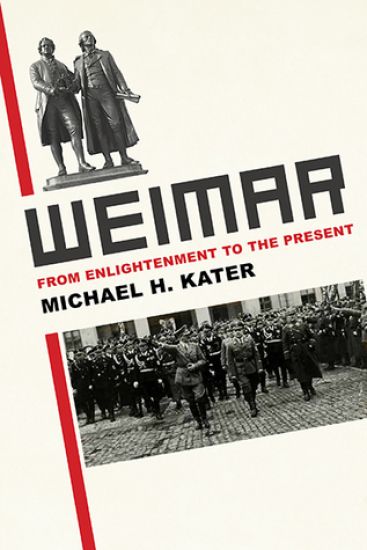
Historian Michael H. Kater chronicles the rise and fall of one of Germany’s most iconic cities in this fascinating and surprisingly provocative history of Weimar. Weimar was a center of the arts during the Enlightenment and hence the cradle of German culture in modern times. Goethe and Schiller made their reputations here, as did Franz Liszt and the young Richard Strauss. In the early twentieth century, the Bauhaus school was founded in Weimar. But from the 1880s on, the city also nurtured a powerful right-wing reactionary movement, and fifty years later, a repressive National Socialist regime dimmed Weimar’s creative lights, transforming the onetime artists’ utopia into the capital of its first Nazified province and constructing the Buchenwald death camp on its doorstep. Kater’s richly detailed volume offers the first complete history of Weimar in any language, from its meteoric eighteenth-century rise up from obscurity through its glory days of unbridled creative expression to its dark descent back into artistic insignificance under Nazi rule and, later, Soviet occupation and beyond.
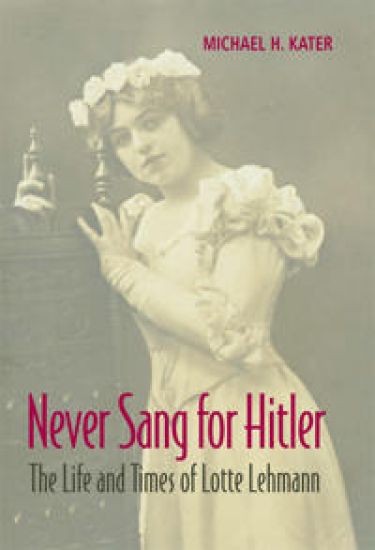
Never Sang for Hitler

Never Sang for Hitler

Michael H. Kater

Cambridge University Press
2014
pokkari
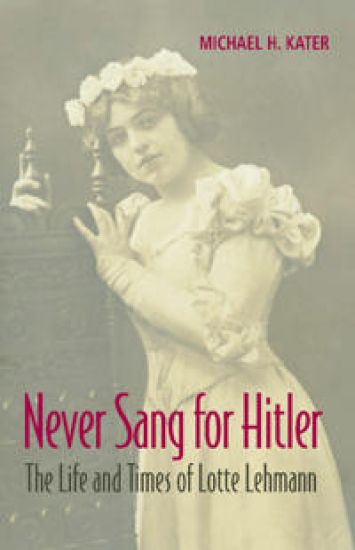
Lotte Lehmann ranks among the most celebrated singers of the twentieth century. She was a favorite of Richard Strauss, and also had a famous encounter with Hermann Göring, in which he claimed to want to make her the foremost singer in Nazi Germany. By the time of her final performance in 1951, she was considered one of the finest singing actresses of all time. Rather than a traditional biography, this book is both a descriptive narrative of Lehmann's life and a critical analysis of the interconnections of the artist and society. Kater describes the varying phases of Lehmann's life, as well as the sociocultural settings in which she finds herself - whether in the Wilhemine Empire, First Austrian Republic, Nazi Germany, or the United States. Kater's use of Lehmann's personal and other papers reshapes much of what is known about her life and career.
Never Sang for Hitler

Never Sang for Hitler

Michael H. Kater

Cambridge University Press
2008
sidottu
Lotte Lehmann ranks among the most celebrated singers of the twentieth century. She was a favorite of Richard Strauss, and also had a famous encounter with Hermann Göring, in which he claimed to want to make her the foremost singer in Nazi Germany. By the time of her final performance in 1951, she was considered one of the finest singing actresses of all time. Rather than a traditional biography, this book is both a descriptive narrative of Lehmann's life and a critical analysis of the interconnections of the artist and society. Kater describes the varying phases of Lehmann's life, as well as the sociocultural settings in which she finds herself - whether in the Wilhemine Empire, First Austrian Republic, Nazi Germany, or the United States. Kater's use of Lehmann's personal and other papers reshapes much of what is known about her life and career.
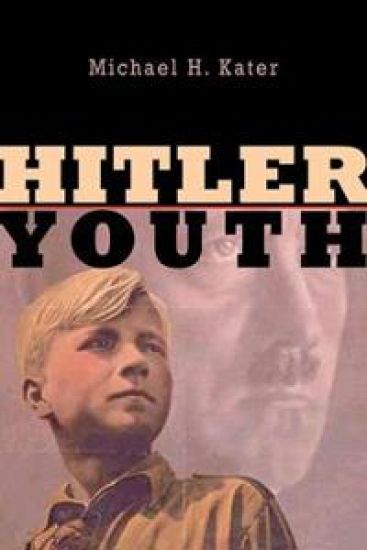
Hitler Youth

Hitler Youth

Michael H. Kater

Harvard University Press
2006
nidottu
In modern times, the recruitment of children into a political organization and ideology reached its boldest embodiment in the Hitler Youth, founded in 1933 soon after the Nazi Party assumed power in Germany. Determining that by age ten children's minds could be turned from play to politics, the regime inducted nearly all German juveniles between the ages of ten and eighteen into its state-run organization. The result was a potent tool for bending young minds and hearts to the will of Adolf Hitler. Baldur von Schirach headed a strict chain of command whose goal was to shift the adolescents' sense of obedience from home and school to the racially defined Volk and the Third Reich. Luring boys and girls into Hitler Youth ranks by offering them status, uniforms, and weekend hikes, the Nazis turned campgrounds into premilitary training sites, air guns into machine guns, sing-alongs into marching drills, instruction into indoctrination, and children into Nazis. A few resisted for personal or political reasons, but the overwhelming majority enlisted. Drawing on original reports, letters, diaries, and memoirs, Kater traces the history of the Hitler Youth, examining the means, degree, and impact of conversion, and the subsequent fate of young recruits. Millions of Hitler Youth joined the armed forces; thousands gleefully participated in the subjugation of foreign peoples and the obliteration of "racial aliens." Although young, they committed crimes against humanity for which they cannot escape judgment. Their story stands as a harsh reminder of the moral bankruptcy of regimes that make children complicit in crimes of the state.
Das "Ahnenerbe" Der SS 1935-1945

Das "Ahnenerbe" Der SS 1935-1945

Michael H Kater

Walter de Gruyter
2006
pokkari
Standardwerk der NS-Forschung: Die Schutzstaffel Heinrich Himmlers entfaltete wahrend des Dritten Reiches hochste Aktivitat, und das nicht nur als Agent totalitarer Machtvollstreckung. Kater zeigt, dass die SS den ernsthaften Versuch einer Infiltration des deutschen Kultur- und Geisteslebens unternommen hat, aus Motiven, die nicht zuletzt in der bizarren Personlichkeit Himmlers selbst begrundet liegen. Himmlers SS-Forschungsamt "Ahnenerbe" entwickelte sich, uber den Umweg anfangs noch harmlos anmutender geisteswissenschaftlicher Projekte, zu einem der gefahrlichsten Instrumente nationalsozialistischer Kulturpolitik. Dennoch vermochte sich das "Ahnenerbe" nie zur obersten Kulturbehorde des Dritten Reiches, nicht einmal der SS, auszuwachsen. In einem Prozess der institutionellen Selbstvernichtung, der sich innerhalb der Schutzstaffel vollzog, wurde es sogar fast zerrieben. Der Verfasser charakterisiert die SS nicht als monolithisches Gebilde, sondern als "Spielfeld parasitarer Krafte, die im Neben- und Gegeneinander wirkten." Er reiht sich damit in die Gruppe jener Historiker ein, die den Fuhrer-Staat Hitlers als Ausdruck eines auf allen Ebenen wuchernden Machtpluralismus interpretieren und nicht als eine zielbewusst gelenkte, allzeit geschlossene Monokratie."
Cleansing the Fatherland

Cleansing the Fatherland

Götz Aly; Peter Chroust; Christian Pross; Michael H. Kater

Johns Hopkins University Press
1994
pokkari
"The chapters in this volume painfully drive home the point that certainly as far as Germany is concerned, the lessons of the Third Reich have not yet been learned... These significant attempts by younger recruits to the larger medical establishment to change things through eye-opening reflection and analysis, however uncomfortable, need support."-Michael H. Kater, author of Doctors under Hitler, in the foreword. The infamous Nuremberg Doctors' Trials of 1946-47 revealed horrifying crimes -ranging from grotesque medical experiments on humans to mass murder-committed by physicians and other health care workers in Nazi Germany. But far more common, argue the authors of Cleansing the Fatherland, were the doctors who profited professionally and financially from the killings but were never called to task-and, indeed, were actively shielded by colleagues in postwar German medical organizations. The authors examine the role of German physicians in such infamous operations as the "T 4" euthanasia program (code-named for the Berlin address of its headquarters at Number 4 Tiergartenstrasse). They also reveal details of countless lesser known killings-all ordered by doctors and all in the name of public health. Maladjusted adolescents, the handicapped, foreign laborers too illto work, even German civilians who suffered mental breakdowns after air raids were "selected for treatment." (One physician who persisted in speaking of "killings" was officially reprimanded for his "negative attitude.") The book also includes original documents-never before published in English-that give unique and chilling insight into the everyday workings of Nazi medicine. Among them: * Minutes from a 1940 meeting of the Conference of German Mayors, at which a Nazi official gives the assembled politicians detailed instructions for the secret burial of murdered mental patients. * A pre-Nazi era questionnaire sent by the head of a state mental institution to parents of disabled children. (Sample question: "Would you agree to a painless shortening of your child's life after an expert had determined him incurably imbecilic?" Sample answer: "Yes, but I would prefer not to know.") * The diary of Dr. Hermann Voss, chief anatomist at the Reichs University of Posen (and later a highly respected physician in postwar Germany), who delights in the flowers blooming outside his window and worries that the overstock of Polish cadavers from his Gestapo suppliers might cause his crematory oven to break down. * Letters of Dr. Friedrich Mennecke, director of the notorious Eichberg Clinic, who writes with cloying sentimentality to the wife he calls "mommy" and comments offhandedly about visiting concentration camps to select "patients" for death. Today, as reports of mass death in Europe are once again cast in terms of public hygiene, and as euthanasia is advocated-even applauded-on U. S. television, the relevance of what Michael H. Kater here calls "the lessons of the Third Reich" is perhaps greater than ever. Against this background, Cleansing the Fatherland sends a stark message that is difficult to ignore.