Kirjailija
Michael Horton
Kirjat ja teokset yhdessä paikassa: 37 kirjaa, julkaisuja vuosilta 2003–2026, suosituimpiin kuuluu Exoneree. Vertaile teosten hintoja ja tarkista saatavuus suomalaisista kirjakaupoista.
37 kirjaa
Kirjojen julkaisuvuodet: 2003–2026.
What if America's judicial system, designed to protect the innocent, convicts the wrong man and sends him to prison? Uriah Courtney was incarcerated over eight years--for a crime he did not commit. But God set him free--spiritually and physically--to a new life inside his heart and outside razor wire. Exoneree relates how badly the judicial system can go wrong, but how intensely a dedicated few seek justice. It depicts God's protection amid the horrors of incarceration. Although it shows dark depravity, it shines with divine transformation. A sensitive man who loved the outdoors and his family, Uriah viewed life imprisonment as a death sentence. Yet God worked through this trauma to bring him new life. Uriah's transparent narrative transcends most jailhouse conversion accounts, as he confesses how becoming a Christian helped him cope in some ways but didn't solve every problem. Even after his release and exoneration through God's providence and the efforts of the California Innocence Project, Uriah faced unexpected challenges. In his warm and personable voice, Uriah describes how focusing on Christ helps him to continue overcoming the bitterness and anger often associated with trauma. And that's a story everyone needs to read. ""Uriah Courtney's book, Exoneree, is a testament to the human spirit. Uriah was wrongfully accused and convicted of a horrific crime and sentenced to life in prison, where he remained for eight years. This is a compelling story about the consequences of a faulty justice system and one man's fight to remain alive and ultimately find peace and forgiveness for the people who convicted him. Through the perseverance of Justin Brooks and the California Innocence Project and the evolving use and accuracy of DNA in cases like this, Uriah was exonerated and released from prison and began rebuilding his life. Surviving years of wrongful incarceration is truly a battle of life and death, finding purpose and happiness on the outside is yet another."" --John J. Christian, President and CEO, The Global Education Network A high-profile exoneree, Uriah Courtney frequently speaks about the trauma of wrongful conviction, including at the International Innocence Project conference in Dublin, Ireland in 2015. He remains active with the California Innocence Project and advocates for justice reform. Glenda Faye Mathes, a University of Iowa graduate (2006), writes professionally and is the author of Little One Lost: Living with Early Infant Loss (2012), two devotionals, and the ""Matthew in the Middle"" juvenile fiction series.

Exoneree
Uriah Courtney; Glenda Faye Mathes; Michael Horton; Justin Brooks
Cascade Books
2017
pokkari
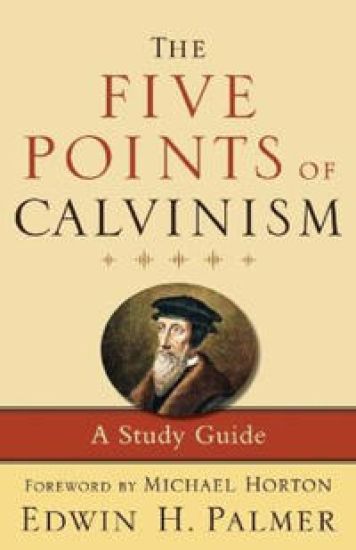
The Five Points of Calvinism – A Study Guide
Edwin H. Palmer; Michael Horton
Baker Books, a division of Baker Publishing Group
2010
nidottu
Halvin toimitettuna 23,30 €
Using the classic TULIP acronym (Total depravity, Unconditional election, Limited atonement, Irresistible grace, and Perseverance of the saints), this primer on the five points of Calvinism is perfect for students and laypeople alike. Using the Scriptures from which they are drawn, Edwin H. Palmer analyzes each point and explains them in accessible language. Helpful discussion questions follow each chapter, making this book ideal for classes or study groups. This important resource also includes a new foreword by Michael Horton and relevant historic catechisms and confessions.
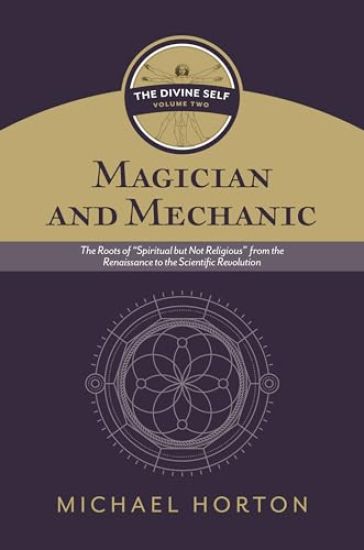
Magician and Mechanic (the Divine Self, Vol. 2): The Roots of "Spiritual But Not Religious" from the Renaissance to the Scientific Revolution
Michael Horton
William B. Eerdmans Publishing Company
2026
sidottu
A stunning history of "spiritual but not religious" thought in Western culture In this second volume of The Divine Self series, Michael Horton explores changing conceptions of the divine self during the historic period from the Renaissance to the Scientific Revolution--a tumultuous era of rethinking humanity's relationship to God and nature. In Horton's telling, this period is characterized not by steady diminishment of magic and orthodox religion and a corresponding rise of rational science, but rather by lively and productive interaction between these influences. Horton examines what is at stake for the divine self in this growing tension between magicians and Baconians, and what role each plays in the development of the modern self. He analyzes the work of renowned historical figures--Luther, Erasmus, Descartes, and Hobbes, to name a few--but also illuminates the activities of lesser-known individuals and groups that were profoundly influential in their time. From the gardens of Renaissance popes and dukes to Newton's alchemical pursuits, life during this period is characterized by an intense search for the sacred and a desire for fullness--forces that lay the groundwork for the "spiritual but not religious" phenomenon as we know it today. Magician and Mechanic occupies an important place in a monumental three-volume study of the divine self. The first volume surveys antiquity through the late Middle Ages; the third volume (forthcoming) will span the eighteenth century through the present day. When the series is complete, The Divine Self will stand as the authoritative guide to the "spiritual but not religious" phenomenon in Western culture.
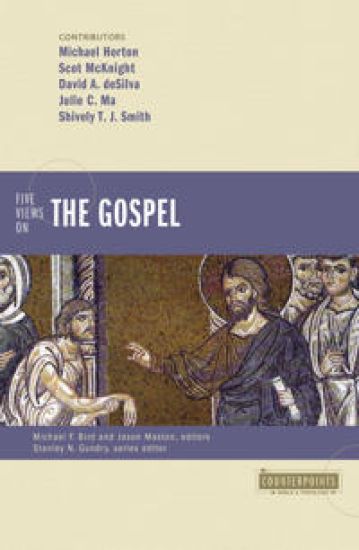
Five Views on the Gospel
Michael Horton; Scot McKnight; David A. deSilva; Julie C Ma; Shively T.J Smith
ZONDERVAN
2025
nidottu
Halvin toimitettuna 24,00 €
Five Views on the Gospel presents five different perspectives on the question "What is the gospel?" Presenting a variety of contemporary and tradition-based perspectives, each contributor answers key questions about the nature of the gospel. Questions contributors address include:What is the gospel? What is the context for understanding the New Testament teaching about the gospel? What are the primary biblical texts that you believe express the gospel and how do you understand them? What are people called to do with the gospel and what are the benefits promised by the gospel? How can the definition and proclamation of the gospel be contextualized and made relevant today? What example of an inadequate gospel and a false gospel can you offer? What does it mean to live a life worthy of the gospel? The CounterPoints format provides a unique opportunity for each contributor to set forth their own understanding of the gospel, to interact with competing perspectives, and for the editors to sum up points of agreement and disagreement and a path forward in the debate. Positions and Contributors include:The Reformation Gospel (Michael Horton)The King Jesus Gospel (Scot McKnight)The Wesleyan Gospel (David A. deSilva)The Pentecostal Gospel (Julie C. Ma)A Liberation Theology Gospel (Shively T. J. Smith) The Counterpoints series presents a comparison and critique of scholarly views on topics important to Christians that are both fair-minded and respectful of the biblical text. Each volume is a one-stop reference that allows readers to evaluate the different positions on a specific issue and form their own, educated opinion.
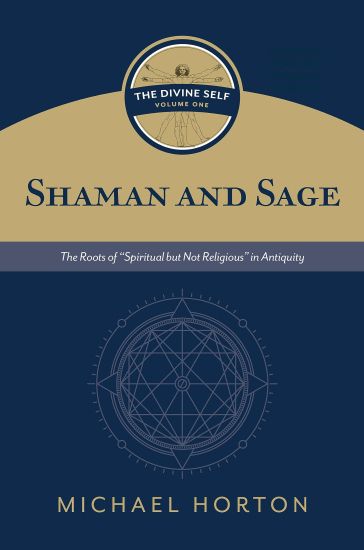
The first volume of Michael Horton's magisterial intellectual history of "spiritual but not religious" as a phenomenon in Western culture Conversations around secularization and the rapid rise in "nones" identifying as "spiritual but not religious" tend to focus on the past century. But this phenomenon and the values that underlie it may be older than Christianity itself. Michael Horton reveals that the hallmarks of modern spirituality--autonomy, individualism, utopianism, and more--have their foundations in Greek philosophical religion. Horton makes the case that the development of the shaman figure in the Axial Age--particularly its iteration among Orphists--represented a "divine self." One must realize the divinity within the self to break free from physicality and become one with a panentheistic unity. Time and time again, this tradition of divinity hiding in nature has arisen as an alternative to monotheistic submission to a god who intervenes in creation. This first volume explores the roots of the divine self in antiquity, while volumes two and three chart the concept through the Middle Ages and the Enlightenment. The Divine Self will be the authoritative work students and scholars consult to understand the "spiritual but not religious" tendency as a recurring theme in Western culture from antiquity to the present.
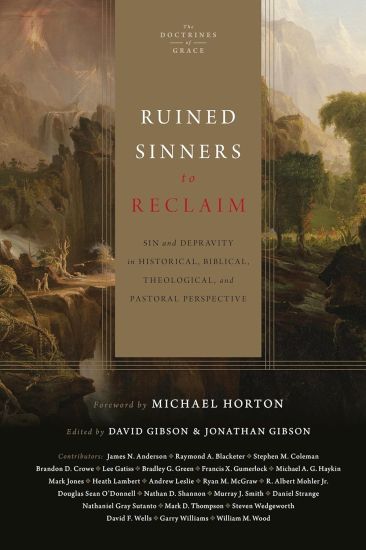
Examining the Doctrine of Human Depravity in Scripture and throughout Church History For centuries, theologians have debated the doctrine of total depravity—the belief that people are wholly and naturally corrupt due to original sin. Reformed theology upholds this truth, acknowledging it to be essential for understanding the gospel and humanity’s need for a Savior. Ruined Sinners to Reclaim persuasively reaffirms the doctrine of total depravity from biblical, historical, theological, and pastoral perspectives, drawing on the debates of theologians throughout church history. Edited by David and Jonathan Gibson, this book features contributions from respected theologians—including Michael A. G. Haykin, Gray Sutanto, Garry Williams, Mark Jones, Daniel Strange, and R. Albert Mohler Jr.—to help readers understand the reality of our sinful nature, its debilitating effects, and the Holy Spirit’s role in salvation. This is the second book in the Doctrines of Grace series, which explores the central points of the Canons of Dort, providing a framework for understanding each doctrine in all its historical, biblical, theological, and pastoral richness. Defends the Doctrine of Total Depravity: Including sin’s origin, spread, nature, and scope, as well as its effects on free will Comprehensive: Explores theological ideas throughout church history, including from the patristic, medieval, Reformation, and post-Reformation periods Part of the Doctrines of Grace Series: Along with From Heaven He Came and Sought Her, this volume explores a central tenet of Reformed theology
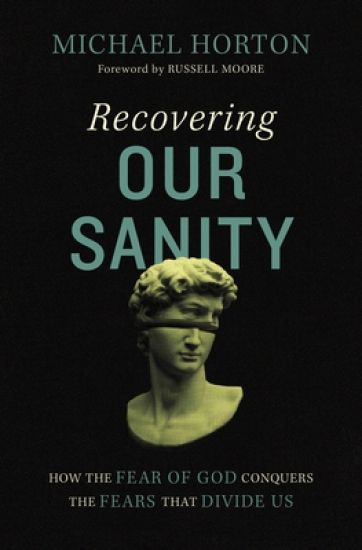
How cultivating a healthy fear of God liberates us from our fear of others, our fear of the future, and even our fear of death itself. At times the world feels like it's losing its mind. From politics to the pandemic, we live with an ever-increasing uncertainty, and many of us have grown to fear the rapid disintegration of our society and our own lives. Recovering Our Sanity is not another self-help book about how to beat your daily fears for a better life. It's a book that will show you the gravity and glory of a God who's worthy of our fear. It’s a book that will reveal how these two biblical phrases—Fear God and Do Not Be Afraid—are not contradictory but actually one coherent message. Michael Horton—Professor of Theology and Apologetics at Westminster Seminary—shows us that we cannot fight our fears by seeking the absence of fear altogether, but by living with a fear of God that drives out the fear of everything else. Horton will walk you through the case for the fear of God by:Developing what it means to fear God, biblically and theologically, and what this kind of fear looks like in practice. Categorizing different types of fears—from cultural anxiety to pain and hardship—and what they stem from. Focusing on how to confront our earthly fears with our hope in Christ, rooted in the gospel. Reminding us that God does not exist for us; we exist for God. Humbling, thought-provoking, and hope-igniting, Recovering Our Sanity delivers a timely message that will help you shift your focus from a human-centered obsession with self-preservation to a fixation on Christ and his salvation. Rather than clinging to false securities and promises of immediate gratification, you can gain the lasting joy of knowing the One who has given himself to save us and who says to us, "Do not be afraid."
Excellence: Every Classroom, Every Lesson, Every Day is the story of the transformation of a principal from new and inexperienced but good-hearted to a highly effective leader and motivator. The realistic fiction story is based upon the author’s experience coaching administrators and working with both underperforming schools and high-achieving schools while weaving in lessons from foundational leadership books from both business and education. The principal, Dr. Esposito, demonstrates throughout how she uses these lessons to solve common problems in schools as she gradually changes her leadership philosophy and style. Her lessons come from a variety of leadership books including Drive, How to Win Friends and Influence People, Practice Perfect, The Art of Influence, Radical Candor, and many others.
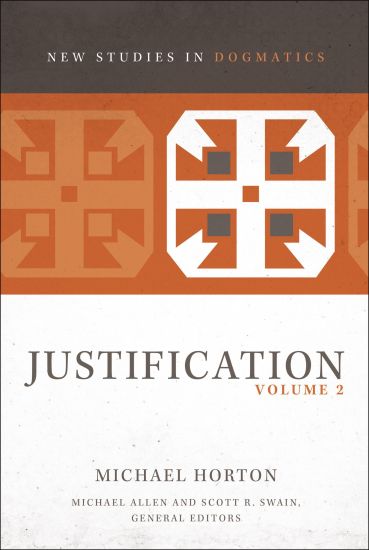
The second of a two-volume project delving into the doctrine of justification. Michael Horton seeks not simply to recover a clear message of its role in modern Reformed theology, but also to bring a fresh discovery of the gospel in a time when contemporary debates around justification have reignited. The doctrine of justification stands at the center of our systematic reflection on the meaning of salvation and grace as well as our piety, mission, and life together. And yet, within mainline Protestant and evangelical theology, it's often taken for granted or left to gather dust in favor of modern concerns and self-renewal. Volume 2 embarks on the theologically constructive task of investigating the biblical doctrine of justification in light of contemporary exegesis. Taking up the topic from a variety of theological vantage points, Horton engages with contemporary debates in biblical, especially Pauline, scholarship. Part 1 draws out The Horizon of Justification from the Old Testament narratives of Adam and Israel. Part 2 defines The Achievement of Justification in the blood of Christ and seeks to lay the groundwork for understanding its extent. Part 3 focuses on The Gift of Righteousness, delving into a clear articulation of what justification means, its mechanism, and the role of works on the day of judgement. Part 4 proposes a way forward for Receiving Justification and understanding faith and justification within the broader framework of union with Christ. Engaging and thorough, Justification shows that the doctrine of justification finds its most ecumenically significant starting point and proper habitat in unity with Christ, where the greatest consensus, past and present, is to be found among Orthodox, Roman Catholic, and Protestant theologies.
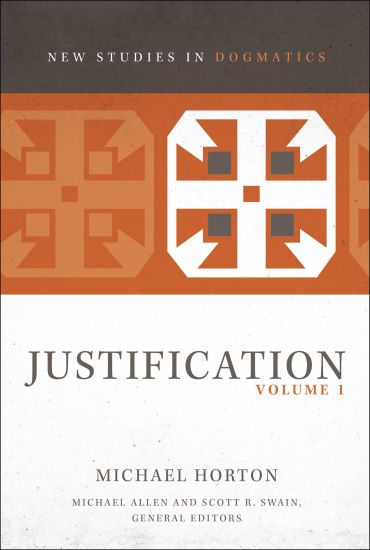
The first of a two-volume project delving into the doctrine of justification. Michael Horton seeks not simply to recover a clear message of its role in modern Reformed theology, but also to bring a fresh discovery of the gospel in a time when contemporary debates around justification have reignited. The doctrine of justification stands at the center of our systematic reflection on the meaning of salvation and grace as well as our piety, mission, and life together. And yet, within mainline Protestant and evangelical theology, it's often taken for granted or left to gather dust in favor of modern concerns and self-renewal. Volume 1 is an exercise in historical theology, exploring the doctrine of justification from the patristic era to the Reformation. This book:Provides a map for contemporary discussions of justification, identifying and engaging principal sources: Origen, Chrysostom, Augustine, Thomas Aquinas, John Duns Scotus, William of Ockham, Gabriel Biel, and the magisterial reformers. Studies the transformations of the doctrine through Aquinas, Scotus and the nominalists leading up to the era of the Reformation and the Council of Trent. Concludes by examining the hermeneutical and theological significance of the Reformers' understanding of the law and the gospel and the resultant covenantal scheme that became formative in Reformed theology. Engaging and thorough, Justification will not only reenergize the reader—whether Protestant or Catholic—with a passion for understanding this essential and long-running doctrinal conversation, but also challenge anyone to engage critically with the history of the Church and the heart of the gospel.
A two-volume project delving into the doctrine of justification. Michael Horton seeks not simply to recover a clear message of its role in modern Reformed theology, but also to bring a fresh discovery of the gospel in a time when contemporary debates around justification have reignited. The doctrine of justification stands at the center of our systematic reflection on the meaning of salvation and grace as well as our piety, mission, and life together. And yet, within mainline Protestant and evangelical theology, it's often taken for granted or left to gather dust in favor of modern concerns of self-renewal. Volume 1 is an exercise in historical theology, exploring the doctrine of justification from the patristic era to the Reformation:Providing a map for contemporary discussions of justification, identifying and engaging principal sources: Origen, Chrysostom, Augustine, Thomas Aquinas, John Duns Scotus, William of Ockham, Gabriel Biel, and the magisterial reformers. Studying the transformations of the doctrine through Aquinas, Scotus and the nominalists leading up to the era of the Reformation and the Council of Trent. Examining the hermeneutical and theological significance of the Reformers' understanding of the law and the gospel and the resultant covenantal scheme that became formative in Reformed theology. Volume 2 embarks on the theologically constructive task of investigating the biblical doctrine of justification in light of contemporary exegesis. Taking up the topic from a variety of theological vantage points, Horton engages with contemporary debates in biblical, especially Pauline, scholarship. Part 1 draws out The Horizon of Justification from the Old Testament narratives of Adam and Israel. Part 2 defines The Achievement of Justification in the blood of Christ and seeks to lay the groundwork for understanding its extent. Part 3 focuses on The Gift of Righteousness, delving into a clear articulation of what justification means, its mechanism, and the role of works on the day of judgement. Part 4 proposes a way forward for Receiving Justification and understanding faith and justification within the broader framework of union with Christ. Engaging and thorough, Justification, Vol 1 & 2 will not only reenergize the reader—whether Protestant or Catholic—with a passion for understanding this essential and long-running doctrinal conversation, but also challenge anyone to engage critically with the history of the Church and the heart of the gospel.
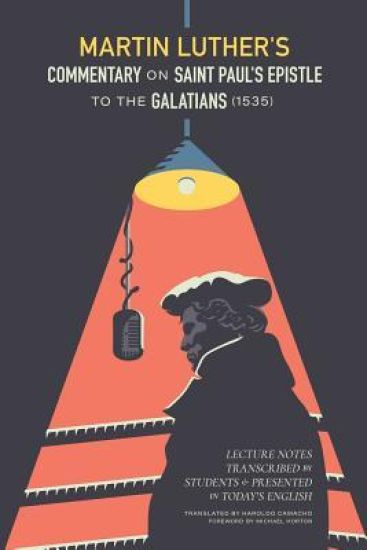
Martin Luther's Commentary On Saint Paul's Epistle To The Galatians
Martin Luther; Michael Horton
New Reformation Publications
2018
pokkari
Martin Luther's most comprehensive work on justification by faith, his commentary on St. Paul's Epistle to the Galatians is translated and edited from the Latin into a lively style, paralleling his spoken lectures. Combined with the passion and faith expressed in these lectures, the biblical foundation for the crucial doctrine of justification is underscored and expressed to a new audience. The commentary is also a historical document, a recording of a professor in a classroom in 1531 from July to December of that year, which expresses the Reformer's commitment to the good news of Jesus' death in the sinner's place, challenging the reader/hearer to compare St. Paul's theology with what he/she hears in the church today.
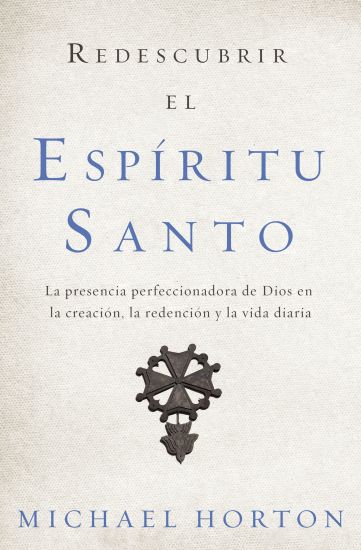
El autor, pastor y te logo Mike Horton les presenta a los lectores la persona olvidada del Esp ritu Santo, demostrando que la obras del Esp ritu de Dios son mucho m s comunes de lo que pensamos. El Esp ritu Santo est tan activamente involucrado en nuestras vidas que damos por sentada su presencia. Como dicen, la familiaridad lleva a la indiferencia. Al igual que damos por sentado el aire que respiramos, hacemos lo mismo con el Esp ritu Santo simplemente porque dependemos constantemente de l. Como el bast n llega a ser una extensi n del cuerpo del ciego, comenzamos a creer con demasiada facilidad que el Esp ritu Santo es una extensi n de nosotros mismos. Sin embargo, el Esp ritu est en el centro de la acci n en el drama divino desde G nesis 1:2 hasta Apocalipsis 22:17. La obra del Esp ritu es tan esencial como la del Padre y el Hijo, pero la obra del Esp ritu se atribuye siempre a la persona y a la obra de Cristo. De hecho, la eficacia de la misi n del Esp ritu Santo se mide por el grado en el que estamos conectados con Cristo. El Esp ritu Santo es la persona de la Trinidad que trae la obra del Padre, en el Hijo, hasta su finalizaci n. En todo lo que la Trinidad realiza, este trabajo de perfeccionamiento es caracter stico del Esp ritu. En este libro el autor, pastor y te logo Mike Horton presenta a los lectores la persona olvidada del Esp ritu Santo, demostrando que las obras del Esp ritu de Dios son mucho m s comunes de lo que pensamos. Horton sostiene que debemos dar un paso atr s para enfocarnos en el Esp ritu, su persona y sus obras, a fin de reconocerlo como alguien distinto a Jes s o a nosotros mismos, y mucho menos como parte de su creaci n. A trav s de esta contemplaci n podemos obtener una nueva dependencia del Esp ritu Santo en cada rea de nuestras vidas. In this book author, pastor, and theologian Mike Horton introduces readers to the neglected person of the Holy Spirit, showing that the work of God's Spirit is far more ordinary and common than we realize. Horton argues that we need to take a step back every now and again to focus on the Spirit himself. For the Spirit, being somewhat forgotten is an occupational hazard. The Holy Spirit is so actively involved in our lives that we can take his presence for granted. As they say, familiarity breeds contempt. Just as we take breathing for granted, we can take the Holy Spirit for granted simply because we constantly depend on him. Like the cane that soon feels like an extension of the blind man's own body, we too easily begin to think of the Holy Spirit as an extension of ourselves. Yet the Spirit is at the center of the action in the divine drama from Genesis 1:2 all the way to Revelation 22:17. The Spirit's work is as essential as the Father's and the Son's, yet the Spirit's work is always directed to the person and work of Christ. In fact, the efficacy of the Holy Spirit's mission is measured by the extent to which we are focused on Christ. The Holy Spirit is the person of the Trinity who brings the work of the Father, in the Son, to completion. In everything that the Triune God performs, this perfecting work is characteristic of the Spirit.
For the Spirit, being somewhat forgotten is an occupational hazard. The Holy Spirit is so actively involved in our lives that we can take his presence for granted. As they say, familiarity breeds contempt. Just as we take breathing for granted, we can take the Holy Spirit for granted simply because we constantly depend on him. Like the cane that soon feels like an extension of the blind man’s own body, we too easily begin to think of the Holy Spirit as an extension of ourselves. Yet the Spirit is at the center of the action in the divine drama from Genesis 1:2 all the way to Revelation 22:17. The Spirit’s work is as essential as the Father’s and the Son’s, yet the Spirit’s work is always directed to the person and work of Christ. In fact, the efficacy of the Holy Spirit’s mission is measured by the extent to which we are focused on Christ. The Holy Spirit is the person of the Trinity who brings the work of the Father, in the Son, to completion. In everything that the Triune God performs, this perfecting work is characteristic of the Spirit. In Rediscovering the Holy Spirit, author, pastor, and theologian Mike Horton introduces readers to the neglected person of the Holy Spirit, showing that the work of God’s Spirit is far more ordinary and common than we realize. Horton argues that we need to take a step back every now and again to focus on the Spirit himself—his person and work—in order to recognize him as someone other than Jesus or ourselves, much less something in creation. Through this contemplation we can gain a fresh dependence on the Holy Spirit in every area of our lives.
Faith Alone – The Evangelical Doctrine of Justification
R. C. Sproul; Michael Horton
Baker Academic, Div of Baker Publishing Group
2017
nidottu
Halvin toimitettuna 24,60 €
What must you do to be right with God? The Reformers broke with the Roman Catholic Church when they insisted people are justified by faith alone. But today many Protestants fail to grasp that keystone of faith. In Faith Alone, a Gold Medallion finalist, R. C. Sproul explains why Protestantism and Roman Catholicism split over justification in the first place and why that division remains an uncrossed chasm. Protestants must understand the biblical, Reformation view of the doctrine of justification to grasp the power of the gospel and proclaim it far and wide today. This repacked edition of a classic offers a new generation of Christians a clear explanation of the vital doctrine of salvation.
What beliefs are core to the Christian faith? This book is here to help you understand the reason for your hope as a Christian so that you can see it with fresh sight and invite others into the conversation. A lot of Christians take their story—the narratives that give rise to their beliefs—for granted. They pray, go to church, perhaps even read their Bible. But they might be stuck if a stranger asked them to explain what they believe and why they believe it. Author, pastor, and theologian Mike Horton unpacks the essential and basic beliefs that all Christians share in a way that is easy to understand and applicable to our lives today. And in a way that will make you excited to be a Christian! Core Christianity covers topics like:Jesus as both fully God and fully man. The doctrine of the Trinity. The goodness of God despite a broken world. The ways God speaks. The meaning of salvation. What is the Christian calling? Includes discussion questions for individual or group use. This introduction to the basic doctrines of Christianity is perfect for those who are new to the faith, as well as those who have an interest in deepening their understanding of what it means to be a follower of Jesus Christ.