Kirjojen hintavertailu – 12 859 818 kirjaa ja 27 kauppaa

Kirjailija

Michael J. Molloy

Kirjat ja teokset yhdessä paikassa: 8 kirjaa, julkaisuja vuosilta 2009–2025, suosituimpiin kuuluu The Diamond Man. Vertaile teosten hintoja ja tarkista saatavuus suomalaisista kirjakaupoista.

Nimi esiintyy myös muodoissa: Michael J Molloy

8 kirjaa

Kirjojen julkaisuvuodet: 2009–2025.

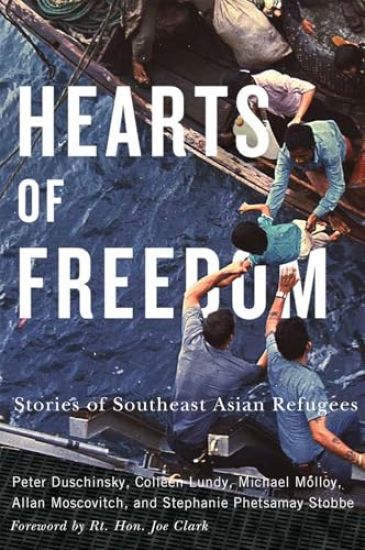
Hearts of Freedom

Hearts of Freedom

Peter Duschinsky; Colleen Lundy; Michael J. Molloy; Allan Moscovitch; Stephanie Phetsamay Stobbe; Joe Clark

MCGILL-QUEEN'S UNIVERSITY PRESS
2025
nidottu
Between 1975 and 1997 some three million Vietnamese, Cambodians, and Laotians fled atrocities in their home countries, with over 210,000 resettling in Canada. While this history is partly known to some Canadians, little has been written about it, especially from the perspectives of the refugees themselves. Hearts of Freedom is a rich oral history based on interviews with 145 former refugees, sharing deeply moving accounts of oppression, concentration camps, genocide, and perilous escapes over land and sea. Survivors reflect on their first impressions of Canada – the unfamiliar snow and cold, the unexpected kindness of neighbours, and occasional encounters with racism. Through their experiences, we come to understand the strengths and weaknesses of Canada's refugee programs. These stories reveal how refugees' attachment to Canada grew over the years and how multiculturalism policies facilitated that. Ordinary Canadians played a decisive role in the first mass refugee movement through newly created private sponsorship programs – a role for which the United Nations awarded the Nansen Medal to the Canadian people in 1986. Coming at a time when we are assessing the benefits of immigration and refugee policies and programs, Hearts of Freedom documents the lives and contributions of people who have suffered the worst excesses of war to rebuild their lives in Canada.

Running on Empty

Running on Empty

Michael J. Molloy; Peter Duschinsky; Kurt F. Jensen; Robert J. Shalka

McGill-Queen's University Press
2017
sidottu
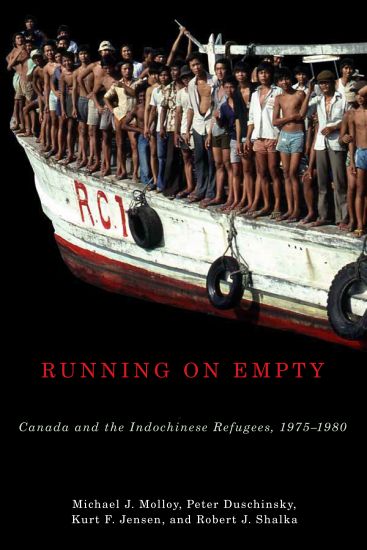
The fall of Saigon in April 1975 resulted in the largest and most ambitious refugee resettlement effort in Canada's history. Running on Empty presents the challenges and successes of this bold refugee resettlement program. It traces the actions of a few dozen men and women who travelled to seventy remote refugee camps, worked long days in humid conditions, subsisted on dried noodles and green tea, and sometimes slept on their worktables while rats scurried around them - all in order to resettle thousands of people displaced by war and oppression. After initially accepting 7,000 refugees from camps in Guam, Hong Kong, and military bases in the US in 1975, Canada passed the 1976 Immigration Act to establish new refugee procedures and introduce private refugee sponsorship. In July of 1979, the federal government under Prime Minister Joe Clark announced that Canada would accept an unprecedented 50,000 refugees - later increased to 60,000 - more than half of whom would be sponsored by ordinary Canadians. Running on Empty presents gripping first-hand accounts of the government officials tasked with selecting refugees from eight different countries, receiving and matching them with sponsors, and helping churches, civic organizations, and groups of neighbours to receive and integrate the newcomers in cities, towns, and rural communities across Canada. Timely and inspiring, Running on Empty offers essential lessons for governments, organizations, and individuals trying to come to grips with refugee crises in the twenty-first century.
Running on Empty

Running on Empty

Michael J. Molloy; Peter Duschinsky; Kurt F. Jensen; Robert J. Shalka

McGill-Queen's University Press
2017
nidottu
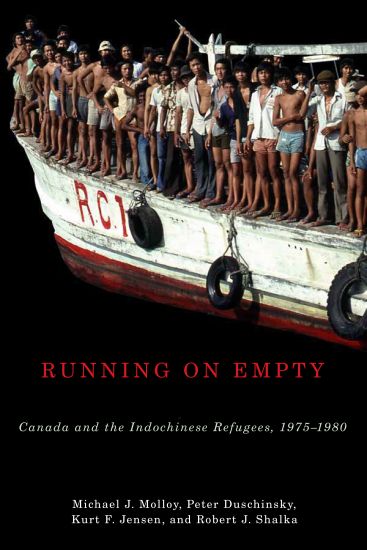
The fall of Saigon in April 1975 resulted in the largest and most ambitious refugee resettlement effort in Canada's history. Running on Empty presents the challenges and successes of this bold refugee resettlement program. It traces the actions of a few dozen men and women who travelled to seventy remote refugee camps, worked long days in humid conditions, subsisted on dried noodles and green tea, and sometimes slept on their worktables while rats scurried around them - all in order to resettle thousands of people displaced by war and oppression. After initially accepting 7,000 refugees from camps in Guam, Hong Kong, and military bases in the US in 1975, Canada passed the 1976 Immigration Act to establish new refugee procedures and introduce private refugee sponsorship. In July of 1979, the federal government under Prime Minister Joe Clark announced that Canada would accept an unprecedented 50,000 refugees - later increased to 60,000 - more than half of whom would be sponsored by ordinary Canadians. Running on Empty presents gripping first-hand accounts of the government officials tasked with selecting refugees from eight different countries, receiving and matching them with sponsors, and helping churches, civic organizations, and groups of neighbours to receive and integrate the newcomers in cities, towns, and rural communities across Canada. Timely and inspiring, Running on Empty offers essential lessons for governments, organizations, and individuals trying to come to grips with refugee crises in the twenty-first century.