Kirjojen hintavertailu – 12 903 724 kirjaa ja 27 kauppaa

Kirjailija

Michael Jacobs

Kirjat ja teokset yhdessä paikassa: 35 kirjaa, julkaisuja vuosilta 1986–2026, suosituimpiin kuuluu D W Winnicott. Vertaile teosten hintoja ja tarkista saatavuus suomalaisista kirjakaupoista.

35 kirjaa

Kirjojen julkaisuvuodet: 1986–2026.

Andes

Andes

Michael Jacobs

Granta Books
2011
nidottu
Stretching for over 5500 miles, and containing the highest active volcanoes in the world, the largest salt flat, the highest lake, and peaks rivalled in size only by the Himalayas, the Andes impress by statistics alone. But beyond the range's sheer immensity is its concentration of radically contrasting scenery and climates. In this remarkable book, Michael Jacobs journeys from the balmy Caribbean to the inhospitable islands of the Tierra del Fuego, through the relics of ancient civilizations, to retrace the footsteps of previous travellers. His route begins in Venezuela, following the path of the great 19th-century revolutionary Simón Bolívar. On his way Jacobs attempts to uncover the stories of those who have shared his fascination, and to reveal the secrets of a region steeped in history, science and myth.

Andes

Andes

Michael Jacobs

Counterpoint
2011
pokkari
For centuries, the Andes have caught the imagination of travelers, inspiring fear and wonder. The groundbreaking scientist Alexander von Humboldt claimed that "everything here is grander and more majestic than in the Swiss Alps, the Pyrenees, the Carpathians, the Apennines, and all other mountains I have known." Rivaled in height only by the Himalayas and stretching more than 4,500 miles, the sheer immensity of the Andes is matched by its concentration of radically contrasting scenery and climates, and the rich and diverse cultures of the people who live there. In this remarkable book, travel writer Michael Jacobs journeys across seven different countries, from the balmy Caribbean to the inhospitable islands of the Tierra del Fuego, through the relics of ancient civilizations and the remnants of colonial rule, retracing the footsteps of previous travelers. His route begins in Venezuela, following the path of the great nineteenth-century revolutionary Simon Bolivar, but soon diverges to include accounts from sources as varied as Humboldt, the young Charles Darwin, and Bolivar's extraordinary and courageous mistress, Manuela Saenz. On his way, Jacobs uncovers the stories of those who have shared his fascination and discovers the secrets of a region steeped in history, science, and myth.
Our Desire of Unrest

Our Desire of Unrest

Michael Jacobs

Karnac Books
2009
nidottu
Knowledge is never static. It is always open to revolutionary thinking or to evolving development. Similarly an individual?s knowledge is always moving, and indeed if the ability to think about ideas is lost, an important part of the individual is also lost. In this book, a collection of some of the papers and lectures written by Michael Jacobs over a period of thirty or more years, the author shows his own thinking at work, as he challenges himself to look deeper at some important aspects of his discipline ? principally psychodynamic psychotherapy, although always with reference to other forms of discourse such as literature and theology. Here the reader will find the writer behind those popular texts such as The Presenting Past, Psychodynamic Counselling in Action, and Shakespeare on the Couch.
Shakespeare on the Couch

Shakespeare on the Couch

Michael Jacobs

Karnac Books
2008
nidottu
Drawing upon a vast literature in psychoanalytic journals and either upon Shakespeare's characters themselves or alluding to those characters in the course of other topics, this book discusses eight of Shakespeare's plays and the relationships between the main characters in them. Psychoanalytic and literary approaches sometimes diverge, but they can also concur in seeing characters either as true examples of different psychological states and types of relating or as symbolic of aspects of the personality. The chapters contain many references to psychoanalytic interpretations from Freud onwards, although these cannot be proved, and in some cases are over-stretched, there will be times when psychoanalytic criticism 'rings bells' in the reader. The importance of this book lies in its drawing together from a large number of disparate sources, many of which will be inaccessible to those who do not have access to the journals or psychoanalytic databases. It is nonetheless relevant for counsellors and therapists, as well as for those interested in literature, particularly in Shakespearean studies.
Supervision

Supervision

Moira Walker; Michael Jacobs

Whurr Publishers Ltd
2004
nidottu
Supervision is a prerequisite for all counsellors, and for most psychotherapists, yet until recently it has been assumed that any experienced counsellor or therapist could become a supervisor without any special expertise. But the experience of those in supervision is sometimes of inadequate or even unhelpful work by their supervisors. At the same time supervision is receiving considerable attention as a discipline in its own right, with an expanding literature on the dynamics of the supervisory couple (or the supervisory triad, since the client is a central if absent presence); more attention is also being paid to the technical skills required of the supervisor. This book addresses those issues both from the perspective of the supervisee and the supervisor, suggesting what supervisees might expect from good supervision, as well as offering guidance to supervisors on how best to use to the full the opportunities offered by a therapeutic situation which has some similarities, but also some radical differences from counselling and therapy itself.
Conscious and Unconscious

Conscious and Unconscious

David Edwards; Michael Jacobs

Open University Press
2003
nidottu
All forms of psychotherapy deal with the limitations of our awareness. We have limited knowledge of our creative potential, of the details of our own behaviour, of our everyday emotional states, of what motivates us, and of the many factors within and around us which influence the decisions we make and the ways we act. Some therapists, especially those influenced by Freud and Jung, speak of the 'unconscious', giving the unintended impression that it is a kind of realm or domain of activity. Others, reacting against the specifics of Freudian theory, shun the word 'unconscious' altogether. However, so limited is the reach of everyday awareness and such is the range of unconscious factors, that one way or another these limitations must somehow be spoken about, sometimes in metaphor, sometimes more explicitly. This book offers a broad survey of psychotherapy discourses, including: The psychoanalytic The interpersonal The experiential The cognitive-behaviouralThe transpersonalThis book offers a comprehensive overview of the ways in which these discourses employ a rich variety of concepts to address the limits of our everyday consciousness. Conscious and Unconscious is invaluable reading for all those interested in counselling and psychotherapy, including those in training, as well as for experienced therapists.
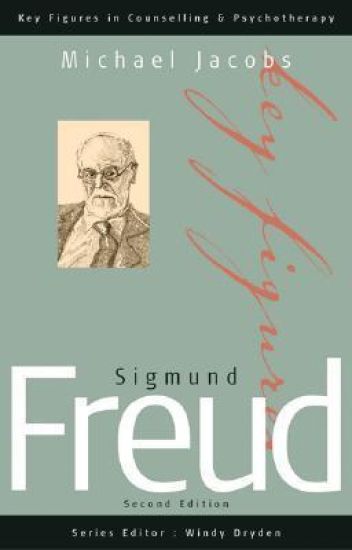
Sigmund Freud

Sigmund Freud

Michael Jacobs

SAGE Publications Inc
2003
nidottu
Praise for the First Edition: `This is the Second Edition of a book first published in 1992 as part of the Key Figures in Counselling and Psychotherapy series edited by Windy Dryden. It has proved a successful introduction to the life and work of Sigmund Freud: in this present edition Michael Jacobs takes the opportunity of the new translation of Freud now appearing to offer more suggestions about reading, particularly the papers of technique available through Virago's 2001 publication of the Standard Edition' - The Journal of Analytical Psychology In refreshing contrast to most other books on Sigmund Freud, this is a highly accessible account of his life and ideas, which focuses on the relevance of Freud's work for contemporary approaches to counselling and psychotherapy. The book provides an overview which is based firmly on Freud's own writings, but which goes far beyond a recapitulation of the existing literature, to offer fresh insights and some surprises, both about Freud the man and his theories. Written by bestselling author, Michael Jacobs and now fully updated for its Second Edition, Sigmund Freud presents and responds to the criticisms that Freud's work attracted, and charts his continuing influence in the 21st century. This is highly recommended reading for those training in counselling and psychotherapy as well as those studying Freud in other contexts. Michael Jacobs is a retired lecturer in Counselling Studies and bestselling author whose publications include (in the same series), D W Winicott (SAGE, 1995) and Psychodynamic Counselling in Action, Second Edition (SAGE, 1999).
Addiction

Addiction

Bill Reading; Michael Jacobs

Whurr Publishers Ltd
2002
nidottu
Counsellors and therapists sometimes work with clients who present particular issues, in which the therapist has no specialist training. Issues may highlight the need for specialist advice, so that they can continue to work with the client, or can decide if specialist help is required. This book is written in a question and answer style, with several types of reader in mind. It is intended primarily as a source of help for established counsellors and therapists, who wish to enhance their capacity to offer help to those affected by problematic drug-use. It will be of help also to those studying to become counsellors and therapists. It will also appeal to those who may wish to enquire further into the process of counselling those who use drugs, whatever the reasons for their curiosity. Typical questions about alcohol and drug use are answered by a series of experts in the field.
The Therapist's Use Of Self

The Therapist's Use Of Self

John Rowan; Michael Jacobs

Open University Press
2002
nidottu
Deals with the central question in therapy - who is the therapist? This book also covers other aspects of the therapist, including the way a therapist is trained, and uses supervision, in order to make use of her or his own reactions, responses and experience in working with any one client. It is aimed at counsellors and psychotherapists.
Madrid

Madrid

Elizabeth Nash; Michael Jacobs

Signal Books Ltd
2001
nidottu
This guide offers a cultural history of the city, and covers the building and development of Madrid as one of Europe's capitals. The author explores Madrid by touring the squares, parks, monuments, and the streets of old and new to discover the mystique of Madrid.
Illusion

Illusion

Michael Jacobs

Whurr Publishers Ltd
2000
nidottu
The ways we know, think and believe about a whole variety of key areas - different forms of discourse, psychotherapy as well as religion - have much more in common than is usually perceived. Through a series of fascinating parallels running across different disciplines, Jacobs demonstrates the possible analysis of modes of thinking and belief - from intuitive pre-thinking, through authoritative-driven thinking and belief, and personal and polymathic knowledge, to unknowing, the last concept being one that is shared by Bion, Winnicott and major mystical tradition. Using this theoretical model the book provides a map to how clients and indeed therapists might think and believe, suggesting ways in which they may be supported as they shift through different modes, with all the anxiety that disillusionment brings.
Swift to Hear

Swift to Hear

Michael Jacobs

SPCK Publishing
2000
pokkari

Halvin toimitettuna 24,80 €

An essential feature of successful counselling is the ability to listen and respond well to the information being given in an interview. In this book, the author shows how this ability may take away the need for leading and advising, creating a counselling encounter that is constructive and helpful. Leaders, whether clerical or lay, teachers or managers, doctors or social workers, frequently see their role as one of communication, but in the excitement of communicating, forget that theirs are not the only important voices. The primary purpose of this book is to emphasize the necessity of learning to listen as well as to speak, and to respond to what is said and what is omitted.
Still Small Voice

Still Small Voice

Michael Jacobs

SPCK Publishing
1993
pokkari
This best-selling volume has been fully revised and updated to take account of the latest thinking about the theory and practice of pastoral counselling. As reviews of the original edition demonstrate, this is a book that no Christian minister or lay counsellor can afford to be without. 'Michael Jacobs has written a book which in terms of realistic and sound understanding, of sensitivity to the real needs of people, of a proper encouragement and humility, could not be improved upon. I can think of no better book to recommend to those who are beginning to take the counselling task seriously. They will be given an excellent grounding, and will be spared many obvious and less obvious pitfalls' Theology. 'It is lucid, persuasive and practical, firmly insisting that all those who dare to help others must start by seeking to understand - and love - themselves. The illustrative dialogue and events scattered across the pages offer fresh insights into what must be familiar ground for many readers feeling alone in the pastoral work they do. The chapters on beliefs and values and on endings are particularly valuable' Epworth Review.