Kirjojen hintavertailu – 12 903 725 kirjaa ja 27 kauppaa

Kirjailija

Michael Keen

Kirjat ja teokset yhdessä paikassa: 9 kirjaa, julkaisuja vuosilta 2016–2022, suosituimpiin kuuluu Our Day at Universal Orlando: A Visit to Two Parks in one Day: A Brothers' Review. Vertaile teosten hintoja ja tarkista saatavuus suomalaisista kirjakaupoista.

9 kirjaa

Kirjojen julkaisuvuodet: 2016–2022.

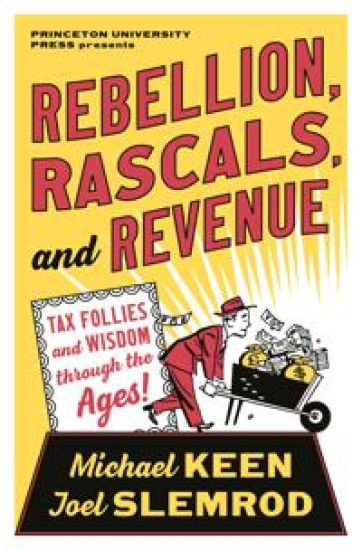
Rebellion, Rascals, and Revenue

Rebellion, Rascals, and Revenue

Michael Keen; Joel Slemrod

PRINCETON UNIVERSITY PRESS
2022
pokkari

Halvin toimitettuna 22,90 €

An engaging and enlightening account of taxation told through lively, dramatic, and sometimes ludicrous stories drawn from around the world and across the agesGovernments have always struggled to tax in ways that are effective and tolerably fair. Sometimes they fail grotesquely, as when, in 1898, the British ignited a rebellion in Sierra Leone by imposing a tax on huts—and, in repressing it, ended up burning the very huts they intended to tax. Sometimes they succeed astonishingly, as when, in eighteenth-century Britain, a cut in the tax on tea massively increased revenue. In this entertaining book, two leading authorities on taxation, Michael Keen and Joel Slemrod, provide a fascinating and informative tour through these and many other episodes in tax history, both preposterous and dramatic—from the plundering described by Herodotus and an Incan tax payable in lice to the (misremembered) Boston Tea Party and the scandals of the Panama Papers. Along the way, readers meet a colorful cast of tax rascals, and even a few tax heroes. While it is hard to fathom the inspiration behind such taxes as one on ships that tended to make them sink, Keen and Slemrod show that yesterday’s tax systems have more in common with ours than we may think. Georgian England’s window tax now seems quaint, but was an ingenious way of judging wealth unobtrusively. And Tsar Peter the Great’s tax on beards aimed to induce the nobility to shave, much like today’s carbon taxes aim to slow global warming. Rebellion, Rascals, and Revenue is a surprising and one-of-a-kind account of how history illuminates the perennial challenges and timeless principles of taxation—and how the past holds clues to solving the tax problems of today.
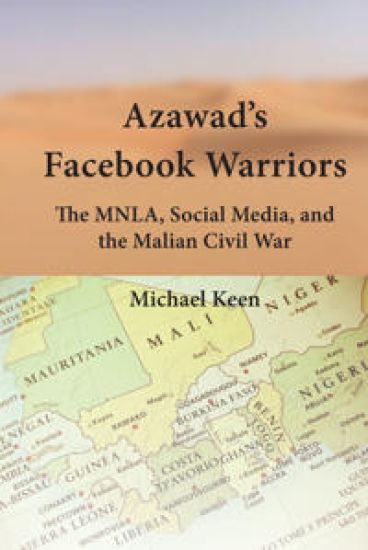
Azawad’s Facebook Warriors

Azawad’s Facebook Warriors

Michael Keen

Peter Lang Publishing Inc
2021
sidottu
In January 2012, the National Movement for the Liberation of Azawad (MNLA), a group dominated by members of the Tuareg ethnic group, launched a military uprising seeking the independence of Mali’s vast but sparsely populated north as the democratic, secular nation-state of Azawad. Azawad’s Facebook Warriors tells the extraordinary story of a small group of social media activists who sought to broadcast the MNLA’s cause to the world. Azawad’s Facebook Warriors offers a groundbreaking new study of the MNLA’s use of social media through the original analysis of more than 8,000 pro-MNLA Facebook posts published over a four-year period and interviews with key architects of the MNLA’s media strategy. The book further places the MNLA’s social media activism in context through a nuanced treatment of northern Mali’s history and an unparalleled blow-by-blow account of the MNLA’s role in the Malian civil war from 2012 through 2015. More broadly, through the case study of the MNLA, the book argues that studying rebel social media communications, a field that has until now unfortunately received scant scholarly attention, will prove an increasingly important tool in understanding rebel groups in coming years and decades.
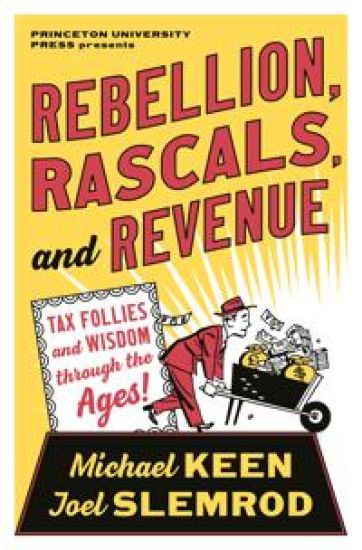
Rebellion, Rascals, and Revenue

Rebellion, Rascals, and Revenue

Michael Keen; Joel Slemrod

PRINCETON UNIVERSITY PRESS
2021
sidottu
An engaging and enlightening account of taxation told through lively, dramatic, and sometimes ludicrous stories drawn from around the world and across the agesGovernments have always struggled to tax in ways that are effective and tolerably fair. Sometimes they fail grotesquely, as when, in 1898, the British ignited a rebellion in Sierra Leone by imposing a tax on huts—and, in repressing it, ended up burning the very huts they intended to tax. Sometimes they succeed astonishingly, as when, in eighteenth-century Britain, a cut in the tax on tea massively increased revenue. In this entertaining book, two leading authorities on taxation, Michael Keen and Joel Slemrod, provide a fascinating and informative tour through these and many other episodes in tax history, both preposterous and dramatic—from the plundering described by Herodotus and an Incan tax payable in lice to the (misremembered) Boston Tea Party and the scandals of the Panama Papers. Along the way, readers meet a colorful cast of tax rascals, and even a few tax heroes. While it is hard to fathom the inspiration behind such taxes as one on ships that tended to make them sink, Keen and Slemrod show that yesterday’s tax systems have more in common with ours than we may think. Georgian England’s window tax now seems quaint, but was an ingenious way of judging wealth unobtrusively. And Tsar Peter the Great’s tax on beards aimed to induce the nobility to shave, much like today’s carbon taxes aim to slow global warming. Rebellion, Rascals, and Revenue is a surprising and one-of-a-kind account of how history illuminates the perennial challenges and timeless principles of taxation—and how the past holds clues to solving the tax problems of today.
Taxing Profit in a Global Economy

Taxing Profit in a Global Economy

Michael P. Devereux; Alan J. Auerbach; Michael Keen; Paul Oosterhuis; Wolfgang Schön; John Vella

Oxford University Press
2021
nidottu
This is an open access title available under the terms of a CC BY-NC-ND 4.0 licence. It is offered as a free PDF download from OUP and selected open access locations. This book undertakes a fundamental review of the existing international system of taxing business profit. It steps back from the current political debates on how to combat profit shifting and how taxing rights over the profits of the digitalized economy should be allocated. Instead, it starts from first principles to ask how we should evaluate a tax on business profit—and whether there is any good rationale for such a tax in the first place. It then goes on to evaluate the existing system and a number of alternatives that have been proposed. It argues that the existing system is fundamentally flawed, and that there is a need for radical reform. The key conclusion from the analysis is that there would be significant gains from a reform that moved the system towards taxing profit in the country in which a business made its sales to third parties. That conclusion informs two proposals that are put forward in detail and evaluated: the Residual Profit Allocation by Income (RPAI) and the Destination-based Cash Flow Tax (DBCFT). The book is authored by group of economists and lawyers—the Oxford International Tax Group, chaired by Michael P. Devereux. It draws insights from both economics and law—including economic theory, empirical evidence on the impact of taxes, and an examination of practical issues of implementation—to assess the existing system and to consider fundamental reforms. This book will be useful to tax policy makers, tax professionals, academics, and anyone interested in tax policy.
Taxing Profit in a Global Economy

Taxing Profit in a Global Economy

Michael P. Devereux; Alan J. Auerbach; Michael Keen; Paul Oosterhuis; Wolfgang Schön; John Vella

Oxford University Press
2021
sidottu
This is an open access title available under the terms of a CC BY-NC-ND 4.0 licence. It is offered as a free PDF download from OUP and selected open access locations. This book undertakes a fundamental review of the existing international system of taxing business profit. It steps back from the current political debates on how to combat profit shifting and how taxing rights over the profits of the digitalized economy should be allocated. Instead, it starts from first principles to ask how we should evaluate a tax on business profit—and whether there is any good rationale for such a tax in the first place. It then goes on to evaluate the existing system and a number of alternatives that have been proposed. It argues that the existing system is fundamentally flawed, and that there is a need for radical reform. The key conclusion from the analysis is that there would be significant gains from a reform that moved the system towards taxing profit in the country in which a business made its sales to third parties. That conclusion informs two proposals that are put forward in detail and evaluated: the Residual Profit Allocation by Income (RPAI) and the Destination-based Cash Flow Tax (DBCFT). The book is authored by group of economists and lawyers—the Oxford International Tax Group, chaired by Michael P. Devereux. It draws insights from both economics and law—including economic theory, empirical evidence on the impact of taxes, and an examination of practical issues of implementation—to assess the existing system and to consider fundamental reforms. This book will be useful to tax policy makers, tax professionals, academics, and anyone interested in tax policy.