Kirjojen hintavertailu – 12 903 725 kirjaa ja 27 kauppaa
Kirjailija
Michael Krausz
Kirjat ja teokset yhdessä paikassa: 9 kirjaa, julkaisuja vuosilta 2002–2018, suosituimpiin kuuluu Information Security Breaches. Vertaile teosten hintoja ja tarkista saatavuus suomalaisista kirjakaupoista.
By way of dialogues, Michael Krausz offers philosophical reflections about his life as philosopher, artist, and musician. He also rehearses his views about relativism, interpretation, creativity, and self-realization. Much of Krausz’s work has been inspired by conversations with thinkers such as Karl Popper, Thomas Kuhn, Isaiah Berlin, the Dalai Lama, and musicians such as Josef Gingold, Frederik Prausnitz, and Luis Biava. While the death of his grandparents in Auschwitz continues to disquiet his consciousness, Krausz’s critiques of versions of Advaitic Hinduism and Tibetan Buddhism led him to a distinctive humanism. This thought-provoking book includes personal and professional accounts about particular philosophers, artists, and musicians. It will edify anyone who, like Krausz, has confronted issues of self-identity and human existence.
A comprehensive guide to managing an information security incident Even when organisations take precautions, they may still be at risk of a data breach. Information security incidents do not just affect small businesses, major companies and government departments suffer from them as well. Completely up to date with ISO/IEC 27001:2013, Managing Information Security Breaches sets out a strategic framework for handling this kind of emergency. The book provides a general discussion and education about information security breaches, how they can be treated and what ISO 27001 can offer in that regard, spiced with a number of real-life stories of information security incidents and breaches. These case studies enable an in-depth analysis of the situations companies face in real life, and contain valuable lessons that your organisation can learn from when putting appropriate measures in place to prevent a breach. Understand what your top information security priorities should be The author explains what your top priorities should be the moment you realise a breach has occurred, making this book essential reading for IT security managers, chief security officers, chief information officers and chief executive officers. It will also be of use to personnel in non-IT roles, in an effort to make this unwieldy subject more comprehensible to those who, in a worst-case scenario, will be on the receiving end of requests for six- or seven-figure excess budgets to cope with severe incidents. About the author Michael Krausz studied physics, computer science and law at the Vienna University of Technology, Vienna University and Webster University. Over the last 20 years he has become an accomplished professional investigator, IT expert and ISO 27001 auditor, investigating over a hundred cases of information security breaches. He has delivered over 5,000 hours of professional and academic training, and has provided consulting or investigation services in 21 countries. Buy this book today and better understand how to manage information security breaches in your organisation.
How would your business respond to an information security breach? If you are running a business, you learn to expect the unexpected. Even if you have taken all the right precautions, your company might still find itself confronted with an information security breach. How would your business cope then? There are lots of books that will tell you what to do to prevent an information security breach. This book is different. It tells you what you have to do if a security breach occurs. Security breaches sometimes occur because computers containing sensitive information are not returned to their owners. NATO laptops have been spotted in flea markets, and US government computers were put up for sale on Ebay. Security breaches may also be the result of data theft. A bad apple in your company may be tempted to sell your confidential data to a rival firm. If something happens, your company needs to be ready to take prompt and decisive action to resolve the issue. This book tells you the plans and procedures you need to put in place to tackle an information security breach should it occur. In particular, the book gives you clear guidance on how to treat an information security breach in accordance with ISO27001. If a breach occurs, the evidence needs to be secured professionally. You need to know the rules on evidence gathering, and you need to be capable of isolating the suspect laptops right from the start. If you want your company to respond rapidly to an information security breach, you need to make sure that the responsibilities and roles in your company are clearly defined.
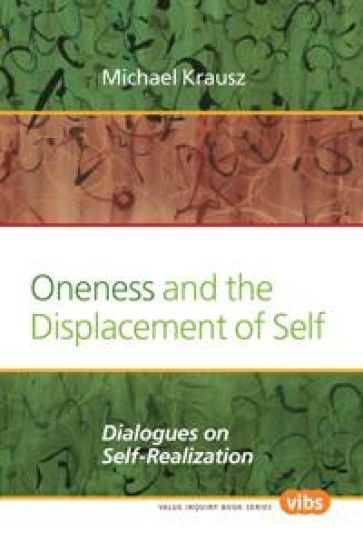
This book presents a fictional dialogue among four former college friends about Oneness and self-realization. News of the sudden death of a relative occasions their discussion. One friend, a devotee of the Advaita or non-duality school of Hindu philosophy, seeks to short-circuit the pain and suffering characteristically associated with anxieties about human mortality. According to her, to be is to be the ultimate ineffable undifferentiated Being, the birthless and the deathless—the One. The other friends, whose philosophical attitudes are broadly pragmatist, relativist, and realist, inquire into her views. While the pragmatist looks to the advaitist for guidance about meditative practices, she does not renounce human existence. She welcomes the joys and satisfactions as well as the burdens and pains of human existence. In turn, the relativist is skeptical about theories that aim to reach beyond one’s historical, cultural or personal frame of reference. On his view, to be is to be in relationship, especially with other human beings. Finally, the realist seeks objective, frame-independent truth. In addition, he holds that the world is comprised of individual objects and their properties. Accordingly, he finds the idea of Oneness to be incomprehensible.
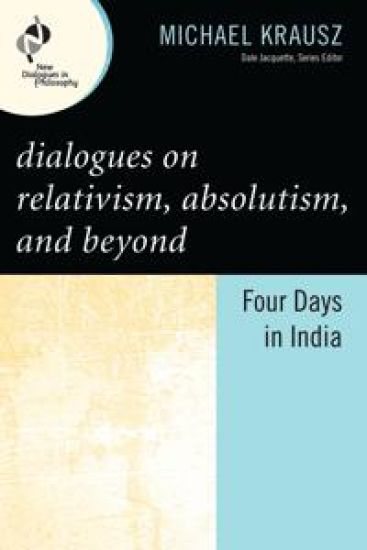
What is truth, goodness, or beauty? Can we really define these concepts without the idea of a frame of reference? In the newest addition to the New Dialogues in Philosophy series, Michael Krausz presents fictional dialogues between four former classmates who hold significantly different views about these questions. As they travel in India, a place with unfamiliar concepts and customs, these four friends debate the rightness of relativism and absolutism. Are these concepts irreconcilable? Might there be a better view that goes beyond both of them? These lively discussions provide students with an accessible introduction to one of the most enduring and far-reaching philosophical problems of our age.
What is truth, goodness, or beauty? Can we really define these concepts without the idea of a frame of reference? In the newest addition to the New Dialogues in Philosophy series, Michael Krausz presents fictional dialogues between four former classmates who hold significantly different views about these questions. As they travel in India, a place with unfamiliar concepts and customs, these four friends debate the rightness of relativism and absolutism. Are these concepts irreconcilable? Might there be a better view that goes beyond both of them? These lively discussions provide students with an accessible introduction to one of the most enduring and far-reaching philosophical problems of our age.
Is there a single right interpretation for such cultural phenomena as works of literature, visual artworks, works of music, the self, and legal and sacred texts? In these essays, almost all written especially for this volume, twenty leading philosophers pursue different answers to this question by examining the nature of interpretation and its objects and ideals. The fundamental conflict between positions that universally require the ideal of a single admissible interpretation (singularism) and those that allow a multiplicity of some admissible interpretations (multiplism) leads to a host of engrossing questions explored in these essays: Does multiplism invite interpretive anarchy? Can opposing interpretations be jointly defended? Should competition between contending interpretations be understood in terms of (bivalent) truth or (multivalent) reasonableness, appropriateness, aptness, or the like? Is interpretation itself an essentially contested concept? Does interpretive activity seek truth or aim at something else as well? Should one focus on interpretive acts rather than interpretations? Should admissible interpretations be fixed by locating intentions of a historical or hypothetical creator, or neither? What bearing does the fact of the historical situatedness of cultural entities have on their identities? The contributors are Annette Barnes, Noël Carroll, Stephen Davies, Susan Feagin, Alan Goldman, Charles Guignon, Chhanda Gupta, Garry Hagberg, Michael Krausz, Peter Lamarque, Jerrold Levinson, Joseph Margolis, Rex Martin, Jitendra Mohanty, David Novitz, Philip Percival, Torsten Pettersson, Robert Stecker, Laurent Stern, and Paul Thom.
Is there a single right interpretation for such cultural phenomena as works of literature, visual artworks, works of music, the self, and legal and sacred texts? In these essays, almost all written especially for this volume, twenty leading philosophers pursue different answers to this question by examining the nature of interpretation and its objects and ideals. The fundamental conflict between positions that universally require the ideal of a single admissible interpretation (singularism) and those that allow a multiplicity of some admissible interpretations (multiplism) leads to a host of engrossing questions explored in these essays: Does multiplism invite interpretive anarchy? Can opposing interpretations be jointly defended? Should competition between contending interpretations be understood in terms of (bivalent) truth or (multivalent) reasonableness, appropriateness, aptness, or the like? Is interpretation itself an essentially contested concept? Does interpretive activity seek truth or aim at something else as well? Should one focus on interpretive acts rather than interpretations? Should admissible interpretations be fixed by locating intentions of a historical or hypothetical creator, or neither? What bearing does the fact of the historical situatedness of cultural entities have on their identities? The contributors are Annette Barnes, Noël Carroll, Stephen Davies, Susan Feagin, Alan Goldman, Charles Guignon, Chhanda Gupta, Garry Hagberg, Michael Krausz, Peter Lamarque, Jerrold Levinson, Joseph Margolis, Rex Martin, Jitendra Mohanty, David Novitz, Philip Percival, Torsten Pettersson, Robert Stecker, Laurent Stern, and Paul Thom.