Kirjojen hintavertailu – 12 903 735 kirjaa ja 27 kauppaa
Kirjailija
Michael L. Radelet
Kirjat ja teokset yhdessä paikassa: 2 kirjaa, julkaisuja vuosilta 1993–2001, suosituimpiin kuuluu Executing the Mentally Ill. Vertaile teosten hintoja ja tarkista saatavuus suomalaisista kirjakaupoista.
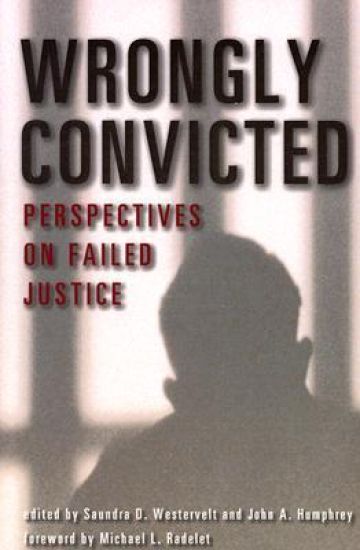
The American criminal justice system contains numerous safeguards to prevent the conviction of innocent persons. The Bill of Rights provides nineteen separate rights for the alleged criminal offender, including the right to effective legal representation and the right to be judged without regard to race or creed. Despite these safeguards, wrongful convictions persist, and the issue has reverberated in the national debate over capital punishment. The essays in this volume are written from a cross-disciplinary perspective by some of the most eminent lawyers, criminologists, and social scientists in the field today. The articles are divided into four sections: the causes of wrongful convictions, the social characteristics of the wrongly convicted, case studies and personal histories, and suggestions for changes in the criminal justice system to prevent wrongful convictions. Contributors examine a broad range of issues, including the fallibility of eyewitness testimony, particularly in cross-racial identifications; the disadvantages faced by racial and ethnic minorities in the criminal justice system; and the impact of new technologies, especially DNA evidence, in freeing the innocent and bringing the guilty to justice. The book also asks such questions as: What legal characteristics do wrongful convictions share? What are the mechanisms that defendants and their attorneys use to overturn wrongful convictions? The book also provides case studies that offer specific examples of what can and does go wrong in the criminal justice system.
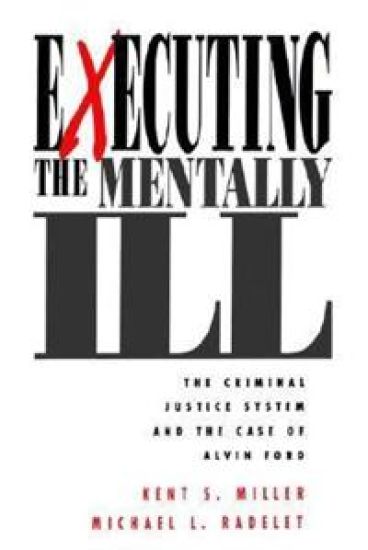
This book is an excellent primer on a subject that Americans are likely to debate for the foreseeable future. --Bimonthly Review of Law Books Unlike every other western democracy in the world, capital punishment is an active part of the criminal justice system in the United States. By the end of 1992, 2,700 men and 41 women were living under the sentence of death in America. Executing the Mentally Ill examines the compelling case of Florida death-row inmate Alvin Ford, which led the U. S. Supreme Court to rule that executions of severely psychotic death-row inmates are in violation of the Eighth Amendment's ban on cruel and unusual punishment. But how should mental illness be defined for purposes of exemption from execution? How should mental health professionals evaluate competence for execution? What happens when the professionals disagree among themselves about the defendant's mental health? How strong should doubts about mental status be before the execution is stopped? And what should be done with the prisoner who is found incompetent? In telling the powerful story of Ford's history, crime, mental state, and how he was handled by the criminal justice system, the authors confront questions about modern capital sentencing and the administration of the death penalty in America today. Executing the Mentally Ill provides a thought-provoking read for students and professionals in mental health, criminal justice, and legal fields, as well as policymakers and others concerned with capital punishment. "Those seeking a clearer context for the ambiguities and dilemmas that characterize the ongoing debate over exemption of the mentally ill from execution will find valuable historical and cross-cultural references here. The case of Alvin Ford provides a new perspective for measuring the gaps between the vagueness of the criteria used by mental health professionals in determining competence and its various legal definitions. . . . An underlying message for the reader is that questioning whether mentally ill or mentally retarded death-row inmates should be executed implies questioning the use of the death penalty for anyone." --Readings: A Journal of Reviews and Commentary in Mental Health "The case of Alvin Ford, a Florida man convicted of killing a police officer during a bungled armed robbery, provides a specific focus for Miller and Radelet's wide-ranging discussion of mental illness and the death penalty. . . . Miller is a psychologist and longstanding student of mental disability issues; Radelet is a leading contemporary authority on the death penalty. Their combined expertise provides readers with a thorough exploration of the "competence to die" issue, and they also touch on other death penalty issues such as proportionality and racial bias. . . . This book cannot, of course, decisively resolve all the issues involved in the death penalty debate, but it is a worthwhile contribution to the literature. Advanced undergraduates and above." --Choice "The life of Alvin Ford and his 17-year odyssey through Florida's complex capital-punishment process is the subject of Executing the Mentally Ill. In telling this fascinating and often macabre story, professors Miller and Radelet expose an inherent and often ignored moral dilemma with capital punishment. The book provides compelling empirical support for the dictum that 'though the justice of God may indeed ordain that some should die, the justice of man is altogether and always insufficient for saying who these may be' (Black, 1974, p. 96). The authors also use the Ford case to examine other important issues about the death penalty in the United States including racism and ineffective assistance of counsel. This well-documented volume should appeal both to an academic audience and to the general public." --Robert M. Bohm, Ph. D., University of North Carolina "Over the last five years, I have reviewed about a dozen books, mostly for university presses, and found this particular piece to be the most well-written and well-researched document to date. The scholarship is sound and 'workmanlike.' I was impressed with the authors' scholarship and ability to apply a wide range of data (e.g. psychiatric testimony, appellate decisions, interviews, and personal letters) to a critical social issue that will continue to haunt our society: the execution of the mentally ill offender. This book makes a very important contribution to the literature in psychology and the law. The book could be used as a supplementary text in criminal justice programs, sociology, psychology, law, and public policy. This book should be read by every appellate-level judge, felony district-court judge, prosecutor, and defense attorney in America. It leads the way in clarifying the practical, moral, and ethical issues. Legislators should also read this account." --James W. Marquart, Ph. D., Sam Houston State University "It is an important book, addressing an area that has only recently become the focus of much attention for mental health professionals. Miller and Radelet have undertaken a comprehensive and carefully articulated look at the issue of competency for execution and the way in which it affects mental health professionals, interwoven as it is with the politics of capital punishment." --Kirk Heilbrun, Ph. D., Department of Mental Health, Mental Retardation, and Substance Abuse Services, Central State Hospital, Virginia