Kirjojen hintavertailu – 12 903 735 kirjaa ja 27 kauppaa

Kirjailija

Michael Lapidge

Kirjat ja teokset yhdessä paikassa: 16 kirjaa, julkaisuja vuosilta 1988–2025, suosituimpiin kuuluu The Wiley Blackwell Encyclopedia of Anglo-Saxon England. Vertaile teosten hintoja ja tarkista saatavuus suomalaisista kirjakaupoista.

16 kirjaa

Kirjojen julkaisuvuodet: 1988–2025.

The Wiley Blackwell Encyclopedia of Anglo-Saxon England

The Wiley Blackwell Encyclopedia of Anglo-Saxon England

Michael Lapidge; John Blair; Simon Keynes; Donald Scragg

John Wiley Sons Inc
2013
sidottu
Widely acknowledged as the essential reference work for this period, this volume brings together more than 700 articles written by 150 top scholars that cover the people, places, activities, and creations of the Anglo-Saxons. The only reference work to cover the history, archaeology, arts, architecture, literatures, and languages of England from the Roman withdrawal to the Norman Conquest (c.450 – 1066 AD)Includes over 700 alphabetical entries written by 150 top scholars covering the people, places, activities, and creations of the Anglo-SaxonsUpdated and expanded with 40 brand-new entries and a new appendix detailing "English Archbishops and Bishops, c.450-1066"Accompanied by maps, line drawings, photos, a table of "English Rulers, c.450-1066," and a headword index to facilitate searchingAn essential reference tool, both for specialists in the field, and for students looking for a thorough grounding in key topics of the period
The Cult of St Swithun

The Cult of St Swithun

Michael Lapidge

Archaeopress
2025
sidottu
St Swithun was an obscure ninth-century bishop of Winchester about whom little was, and is, known. But following the translation of his relics from a conspicuous tomb into the Old Minster, Winchester, on 15 July 971, the massive rebuilding of the cathedral, and a vigorous publicity campaign by Bishop Aethelwold (963-84), St Swithun became one of the most popular and important English saints, whose cult was widespread not only in England but also in Ireland, Scandinavia, and France. The present volume includes new and full editions of all the relevant texts – hagiographical, liturgical, and historical – in Latin, Old English, and Middle English, many of which have never been published before: these illuminate the origins and development of St Swithun’s cult. No dossier of an important English saint has been published on this scale until now: the wealth of this volume sheds new light not only on St Swithun himself, but also on the times during which his cult was at the peak of its popularity.
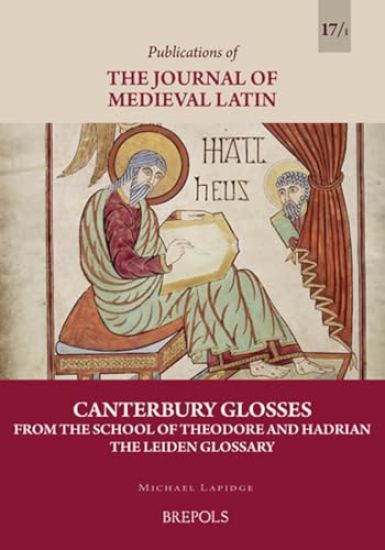
Canterbury Glosses from the School of Theodore and Hadrian: Vol. 1, the Leiden Glossary
The 'Leiden Glossary' provides a record of the understanding and interpretation of the patristic and grammatical texts studied at the Canterbury School of Theodore and Hadrian, regarded by Bede as the high point of Christian culture in early Anglo-Saxon England. Each entry in the 'Leiden Glossary' is provided with detailed commentary on the sources consulted by the two Canterbury masters (earlier glossaries; Isidore; Eucherius) and the later uses of the glossary by compilers of the Epinal-Erfurt and Corpus glossaries. The 'Leiden Glossary' is thus a key witness to one of the greatest schools of learning in the early Middle Ages.
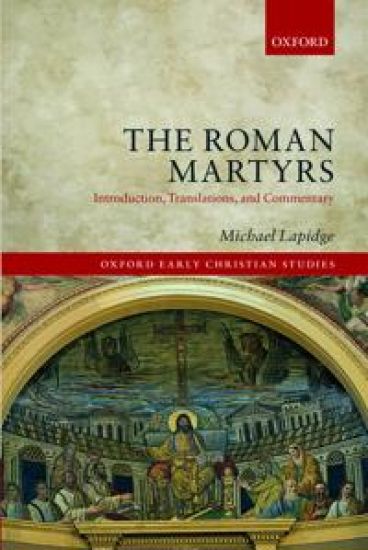
The Roman Martyrs

The Roman Martyrs

Michael Lapidge

Oxford University Press
2017
sidottu
The Roman Martyrs contains translations of forty Latin passiones of saints who were martyred in Rome or its near environs, during the period before the 'peace of the Church' (c. 312). Some of the Roman martyrs are universally known-SS. Agnes, Sebastian or Laurence, for example-but others are scarcely recognized outside the ecclesiastical landscape of Rome itself. Each of the translated passiones is accompanied by an individual introduction and commentary; the translations are preceded by an Introduction which describes the principal features of this little-known genre of Christian literature, and are followed by five Appendices which present translated texts which are essential for understanding the cult of Roman martyrs. This volume offers the first collection of the Roman passiones martyrum translated into a modern language. They were mostly composed during the period 425-675, by anonymous authors who were presumably clerics of the Roman churches or cemeteries which housed the martyrs' remains. It is clear that they were composed in response to the explosion of pilgrim traffic to martyrial shrines from the late fourth century onwards, at a time when authentic records (protocols) of their trials and executions had long since vanished, and the authors of the passiones were obliged to imagine the circumstances in which martyrs were tried and executed. The passiones are works of fiction; and because they abound in ludicrous errors of chronology, they have been largely ignored by historians of the early Church. Although they cannot be used as evidence for the original martyrdoms, they nevertheless allow a fascinating glimpse of the concerns which animated Christians during the period in question: for example, the preservation of virginity, or the ever-present threat posed by pagan practices. As certain aspects of Roman life will have changed little between the second century and the fifth, the passiones shed valuable light on many aspects of Roman society, not least the nature of a trial before an urban prefect, and the horrendous tortures which were a central feature of such trials. The passiones are an indispensable resource for understanding the topography of late antique Rome and its environs, as they characteristically contain detailed reference to the places where the martyrs were tried, executed, and buried.
Anglo-Saxon Manuscripts

Anglo-Saxon Manuscripts

Helmut Gneuss; Michael Lapidge

University of Toronto Press
2015
pokkari
Anglo-Saxon Manuscripts is the first publication to list every surviving manuscript or manuscript fragment written in Anglo-Saxon England between the seventh and the eleventh centuries or imported into the country during that time. Each of the 1,291 entries in Helmut Gneuss and Michael Lapidge’s Bibliographical Handlist not only details the origins, contents, current location, script, and decoration of the manuscript, but also provides bibliographic entries that list facsimiles, editions, linguistic analyses, and general studies relevant to that manuscript. A general bibliography, designed to provide full details of author-date references cited in the individual entries, includes more than 4,000 items. Compiled by two of the field’s greatest living scholars, the Gneuss-Lapidge Bibliographical Handlist stands to become the most important single-volume research tool to appear in the field since Greenfield and Robinson’s Bibliography of Publications on Old English Literature. Their achievement in the present book will endure for many decades and serve as a catalyst for new research across several disciplines.
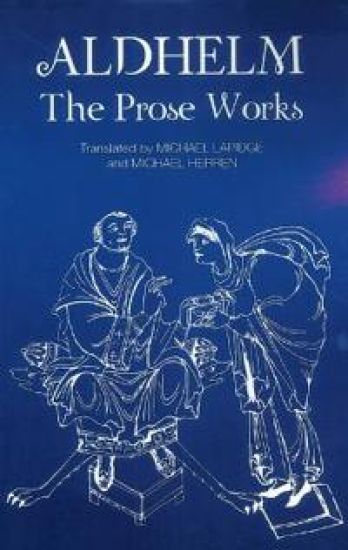
Aldhelm

Aldhelm

Michael Lapidge

D.S. Brewer
2009
pokkari
Translation with notes of Aldhelm's famous treatise on virginity, and his less well-known letters. Aldhelm, born c.640 in Wessex, and becoming abbot of Malmesbury and later bishop of Sherborne, was the first English man of letters; up to 1100, his prose writings were the most widely read of any Latin literature produced in Anglo-Saxon England. His surviving prose works include a long treatise De virginitate, and a number of letters; these in particular are an important source of knowledge concerning Anglo-Saxon England. The treatise, a lengthy exhortation on virtue addressed to nuns at Barking Abbey, is a fascinating series of exempla drawn from the prodigious range of Aldhelm's knowledge of patristic literature, and tailored to the expectations of a seventh-century Anglo-Saxon female audience. Because of the extreme difficulty of his Latin, however, Aldhelm's prose works have rarely been read, and have never been adequately appreciated - which this translation seeks to remedy. It is accompanied with an introduction outlining Aldhelm's central importance to Anglo-Saxon literary culture; a critical biography which throws new light on what has previously been assumed about him; and an essay establishing an accurate canon and chronology of his writings.
Aldhelm

Aldhelm

Michael Lapidge; James L. Rosier; Michael W. Herren

D.S. Brewer
2009
pokkari
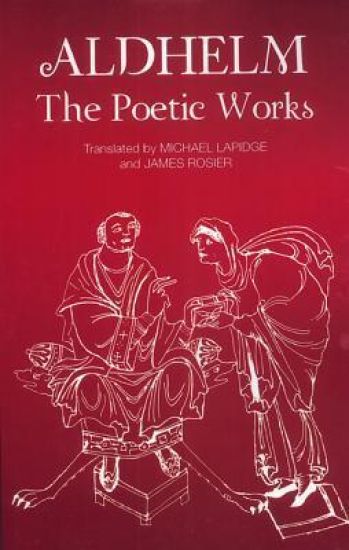
Translations from the Latin of the ingenious works of Aldelm, first English man of letters. Introduction, bibliography and notes to the texts included. Aldhelm was the first Latin poet of Europe who was not a native speaker of Latin. The ingenuity and originality which he brought to the task of composing Latin poetry ensured that his poems would be widely read everywhere, but they were studied especially in England during the early medieval period. Aldhelm's poetic corpus includes the Carmina Ecclesiastica, a series of dedicatory poems which contain a wealth of detail about early Anglo-Saxon churches; the Carmen de Virginitate, a verse counterpart to his earlier prose De Virginitate, but which includes an extensive passage describing an allegorical battle of the vices and virtues; a collection of 100 riddles or Enigmata, which are an imaginative investigation of the structure of the natural world; and a brief rhythmical poem describing the effects of a mighty storm in southwest England. In each of the poetic genres he essayed, Aldhelm found a host of later imitators, and it is not an exaggeration to say that he was the most influential Latin poet whose works were studied in Anglo-Saxon England; indeed, many surviving Old English poems are simple translations or adaptations of Latin poems by Aldhelm. The translations are presented here with an introduction outlining what is known of Aldhelm's life and writings, and an appendix by NEIL WRIGHT contains a translation of Aldhelm's De Metris, a technical treatise on the composition of Latin verse.
The Anglo-Saxon Library

The Anglo-Saxon Library

Michael Lapidge

Oxford University Press
2008
nidottu
The cardinal role of Anglo-Saxon libraries in the transmission of classical and patristic literature to the later middle ages has long been recognized, for these libraries sustained the researches of those English scholars whose writings determined the curriculum of medieval schools: Aldhelm, Bede, and Alcuin, to name only the best known. Yet this is the first full-length account of the nature and holdings of Anglo-Saxon libraries from the sixth century to the eleventh. The early chapters discuss libraries in antiquity, notably at Alexandria and republican and imperial Rome, and also the Christian libraries of late antiquity which supplied books to Anglo-Saxon England. Because Anglo-Saxon libraries themselves have almost completely vanished, three classes of evidence need to be combined in order to form a detailed impression of their holdings: surviving inventories, surviving manuscripts, and citations of classical and patristic works by Anglo-Saxon authors themselves. After setting out the problems entailed in using such evidence, the book provides appendices containing editions of all surviving Anglo-Saxon inventories, lists of all Anglo-Saxon manuscripts exported to continental libraries during the eighth century and then all manuscripts re-imported into England in the tenth, as well as a catalogue of all citations of classical and patristic literature by Anglo-Saxon authors. A comprehensive index, arranged alphabetically by author, combines these various classes of evidence so that the reader can see at a glance what books were known where and by whom in Anglo-Saxon England. The book thus provides, within a single volume, a vast amount of information on the books and learning of the schools which determined the course of medieval literary culture.
Anglo-Saxon England

Anglo-Saxon England

Simon Keynes; Michael Lapidge

Cambridge University Press
2007
pokkari
This volume explores many fundamental questions regarding Anglo-Saxon history. Among those considered is the question of did the earliest English prose really divide into a Mercian tradition and a separate West Saxon one? What is the full roll-call of extant texts containing late Old English 'Winchester' words? How far was Anglo-Saxon medicine hocus-pocus and how far the fruit of deliberate experimentation? How much Greek vocabulary was known in Anglo-Saxon England, and how was it known and how used? How did Anglo-Saxon land law work in practice? Advances in scholarship, application of modern scientific knowledge of a type not normally available, fresh directions of thought, original analysis, stricter criteria and additions to the stock of primary evidence all characterize this book. The usual comprehensive bibliography of the previous year's publications in all branches of Anglo-Saxon studies rounds off the book.
The Anglo-Saxon Library

The Anglo-Saxon Library

Michael Lapidge

Oxford University Press
2006
sidottu
The cardinal role of Anglo-Saxon libraries in the transmission of classical and patristic literature to the later middle ages has long been recognized, for these libraries sustained the researches of those English scholars whose writings determined the curriculum of medieval schools: Aldhelm, Bede, and Alcuin, to name only the best known. Yet this is the first full-length account of the nature and holdings of Anglo-Saxon libraries from the sixth century to the eleventh. The early chapters discuss libraries in antiquity, notably at Alexandria and republican and imperial Rome, and also the Christian libraries of late antiquity which supplied books to Anglo-Saxon England. Because Anglo-Saxon libraries themselves have almost completely vanished, three classes of evidence need to be combined in order to form a detailed impression of their holdings: surviving inventories, surviving manuscripts, and citations of classical and patristic works by Anglo-Saxon authors themselves. After setting out the problems entailed in using such evidence, the book is provided with appendices containing editions of all surviving Anglo-Saxon inventories, lists of all Anglo-Saxon manuscripts exported to continental libraries during the eighth century and then all manuscripts re-imported into England in the tenth, as well as a catalogue of all citations of classical and patristic literature by Anglo-Saxon authors. A comprehensive index, arranged alphabetically by author, combines these various classes of evidence so that the reader can see at a glance what books were known where and by whom in Anglo-Saxon England. The book thus provides, within a single volume, a vast amount of information on the books and learning of the schools which determined the course of medieval literary culture.
Studies in Early Medieval Latin Glossaries

Studies in Early Medieval Latin Glossaries

Wallace Martin Lindsay; Michael Lapidge

Variorum
1996
sidottu
Glossaries are one of the most important sources for our knowledge of early medieval schools, for they provide an accurate records of what texts were studied and how they were understood. But they are also very difficult to access: countless glossaries lie unpublished in manuscript, the relations between them are unknown, and their origins are obscure. The most important contribution to solving these problems was made by Wallace Martin Lindsay (1858-1937), one of the greatest classical scholars ever produced in the British Isles, who in a pioneering series of articles identified the principal glossaries and clarified their relationships; he subsequently oversaw their publication in Glossaria Latina. So comprehensive was Lindsay's work that the subject virtually stood still for half a century; but recent advances in paleography and Insular Latin studies have drawn scholarly attention to glossaries once again. Any future work on glossaries must be based on Lindsay's pioneering articles; to facilitate such work, these articles have been provided with comprehensive indices of the Latin lemmata and sources of the glossaries, together with an account of recent work on medieval glossaries.
Anglo-Saxon Litanies of the Saints

Anglo-Saxon Litanies of the Saints

Michael Lapidge

Henry Bradshaw Society
1991
pokkari
Most of these litanies, taken from nearly fifty manuscripts written or owned in Anglo-Saxon England, have never previously been printed. The texts of the litanies provide an indispensable resource for scholars seeking to understand the spirituality of Anglo-Saxon England, to localise the manuscript in which the litanies are contained, and to trace the development and diffusion of eary medieval saints' cults. The volume is accompanied by comprehensive indices of all the saints named in the litanies here printed, and of all the liturgical forms of prayer which they contain. It also includes an extensive introduction which traces the origin and development of this particular form of prayer in Anglo-Saxon England. MICHAEL LAPIDGEis Professor of Anglo-Saxon, University of Cambridge.
The World of Bede

The World of Bede

Peter Hunter Blair; Michael Lapidge

Cambridge University Press
1990
pokkari
An engaging and accessible introduction to the writings and intellectual development of the Venerable Bede (d.735), this book (originally published in 1970 and out of print for many years) is now made available again for the enjoyment of all those interested in the early medieval world. A new preface and supplementary bibliography by Michael Lapidge has brought the book up to date. Based almost entirely on primary sources, particularly Bede’s own writings, the book surveys the fragmented state of Britain after the Anglo-Saxon conquests, tracing the - sometimes faltering - rebirth of Christianity from the time of St. Augustine through to the glories of the golden age of Northumbria in the eighth century. What was Bede’s contribution to the growth of scholarship? Why is his famous Ecclesiastical History of the English Church and People still so highly regarded? How did Bede see his own age? What traditions most influenced him? Peter Hunter Blair answers all these questions, assessing Bede sympatheticaly in all the fields in which he was active, as teacher, orthographer, moral philospher, grammarian, theologian, natural scientist and, above all, as our first modern historian.
The World of Bede

The World of Bede

Peter Hunter Blair; Michael Lapidge

Cambridge University Press
1990
sidottu
An engaging and accessible introduction to the writings and intellectual development of the Venerable Bede (d.735), this book (originally published in 1970) is available again for the enjoyment of all those interested in the early medieval world. With an updated preface and supplementary bibliography by Michael Lapidge, the book is based almost entirely on primary sources, particularly Bede's own writings. The book surveys the fragmented state of Britain after the Anglo-Saxon conquests, tracing the - sometimes faltering - rebirth of Christianity from the time of St. Augustine through to the glories of the golden age of Northumbria in the eighth century. What was Bede's contribution to the growth of scholarship? Why is his famous Ecclesiastical History of the English Church and People still so highly regarded? How did Bede see his own age? What traditions most influenced him? Peter Hunter Blair answers all these questions, assessing Bede sympatheticaly in all the fields in which he was active, as teacher, orthographer, moral philospher, grammarian, theologian, natural scientist and, above all, as our first modern historian.
Latin Learning in Medieval Ireland

Latin Learning in Medieval Ireland

Mario Esposito; Michael Lapidge

Variorum
1988
sidottu
The field of Hiberno-Latin literature, a term coined to describe the Latin literature written in Ireland, or by Irishmen abroad, between 400 and 1500, was first defined by the late Mario Esposito. His work, too, revealed its vast extent and range, so enabling a significantly better understanding of the importance of Irish scholarship in the cultural history of the Western Middle Ages. This volume concentrates on Hiberno-Latin authors, and on texts composed in Ireland; a second collection of Esposito’s articles contains studies on Irish learning and texts written on the Continent. The great strength of his research is that it is founded on unparalleled knowledge of the manuscripts - many of which, indeed, no longer survive. The articles, now provided with extensive indexes to facilitate their consultation, therefore form the essential basis and guide for any further enquiry into the authors dealt with or their works.