Kirjojen hintavertailu – 12 859 828 kirjaa ja 27 kauppaa

Kirjailija

Michael Lazarus

Kirjat ja teokset yhdessä paikassa: 4 kirjaa, julkaisuja vuosilta 2010–2025, suosituimpiin kuuluu Absolute Ethical Life. Vertaile teosten hintoja ja tarkista saatavuus suomalaisista kirjakaupoista.

4 kirjaa

Kirjojen julkaisuvuodet: 2010–2025.

Absolute Ethical Life

Absolute Ethical Life

Michael Lazarus

STANFORD UNIVERSITY PRESS
2025
pokkari

Halvin toimitettuna 33,40 €

Karl Marx gave us not just a critique of the political economy of capital but a way of confronting the impoverished ethical quality of life we face under capitalism. Interpreting Marx anew as an ethical thinker, Absolute Ethical Life provides crucial resources for understanding how freedom and rational agency are impacted by a social world formed by value under capitalism, with consequences for philosophy today. Michael Lazarus situates Marx within a shared tradition of ethical inquiry, placing him in close dialogue with Aristotle and Hegel. Lazarus traces the ethical and political dimensions of Marx's work missed by Hannah Arendt and Alasdair MacIntyre, two of the most profound critics of modern politics and ethics. Ultimately, the book claims that Marx's value-form theory is both a continuation of Aristotelian and Hegelian themes and at the same time his most distinctive theoretical achievement. In this normative interpretation of Marx, Lazarus integrates recent moral philosophy with a historically specific analysis of capitalism as a social form of life. He challenges contemporary political and economic theory to insist that any conception of modern life needs to account for capitalism. With a robust critique of capitalism derived from the determinations of what Marx calls the "form of value," Lazarus argues for an ethical life beyond capital.

Absolute Ethical Life

Absolute Ethical Life

Michael Lazarus

STANFORD UNIVERSITY PRESS
2025
sidottu
Karl Marx gave us not just a critique of the political economy of capital but a way of confronting the impoverished ethical quality of life we face under capitalism. Interpreting Marx anew as an ethical thinker, Absolute Ethical Life provides crucial resources for understanding how freedom and rational agency are impacted by a social world formed by value under capitalism, with consequences for philosophy today. Michael Lazarus situates Marx within a shared tradition of ethical inquiry, placing him in close dialogue with Aristotle and Hegel. Lazarus traces the ethical and political dimensions of Marx's work missed by Hannah Arendt and Alasdair MacIntyre, two of the most profound critics of modern politics and ethics. Ultimately, the book claims that Marx's value-form theory is both a continuation of Aristotelian and Hegelian themes and at the same time his most distinctive theoretical achievement. In this normative interpretation of Marx, Lazarus integrates recent moral philosophy with a historically specific analysis of capitalism as a social form of life. He challenges contemporary political and economic theory to insist that any conception of modern life needs to account for capitalism. With a robust critique of capitalism derived from the determinations of what Marx calls the "form of value," Lazarus argues for an ethical life beyond capital.

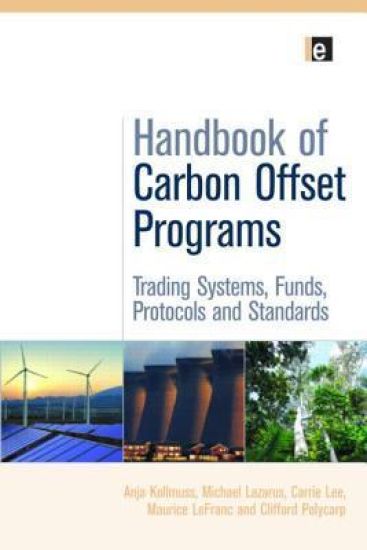
Handbook of Carbon Offset Programs

Handbook of Carbon Offset Programs

Anja Kollmuss; Michael Lazarus; Carrie Lee; Maurice LeFranc; Clifford Polycarp

Routledge
2015
nidottu
Greenhouse gas (GHG) offsets have long been promoted as an important element of a comprehensive climate policy approach. Offset programs can reduce the overall cost of achieving a given emission goal by enabling emission reductions to occur where costs are lower. Offsets have the potential to deliver sustainability co-benefits, through technology development and transfer. They can also develop human and institutional capacity for reducing emissions in sectors and locations not included in a cap and trade or a mandatory government policy. However, offsets can pose a risk to the environmental integrity of climate actions, especially if issues surrounding additionality, permanence, leakage, quantification and verification are not adequately addressed. The challenge is to design offset programs and policies that can maximize their potential benefits while minimizing their potential risks. This handbook provides a systematic and comprehensive review of existing offset programs. It looks at what offsets are, how offset mechanisms function, and the successes and pitfalls they have encountered. Coverage includes offset programs across the full swath of applications including mandatory and voluntary systems, government regulated and private markets, carbon offset funds, and accounting and reporting protocols such as the WBCSD/WRI GHG Protocol and ISO 14064. Learning from the successes and failures of these programs will be essential to crafting effective climate policy. This is an essential reference for all regulators, policy makers, business leaders and NGOs concerned with the design and operation of GHG offset programs world-wide. Published with SEI
Handbook of Carbon Offset Programs

Handbook of Carbon Offset Programs

Anja Kollmuss; Michael Lazarus; Carrie Lee; Maurice LeFranc; Clifford Polycarp

Earthscan Ltd
2010
sidottu
Greenhouse gas (GHG) offsets have long been promoted as an important element of a comprehensive climate policy approach. Offset programs can reduce the overall cost of achieving a given emission goal by enabling emission reductions to occur where costs are lower. Offsets have the potential to deliver sustainability co-benefits, through technology development and transfer. They can also develop human and institutional capacity for reducing emissions in sectors and locations not included in a cap and trade or a mandatory government policy. However, offsets can pose a risk to the environmental integrity of climate actions, especially if issues surrounding additionality, permanence, leakage, quantification and verification are not adequately addressed. The challenge is to design offset programs and policies that can maximize their potential benefits while minimizing their potential risks. This handbook provides a systematic and comprehensive review of existing offset programs. It looks at what offsets are, how offset mechanisms function, and the successes and pitfalls they have encountered. Coverage includes offset programs across the full swath of applications including mandatory and voluntary systems, government regulated and private markets, carbon offset funds, and accounting and reporting protocols such as the WBCSD/WRI GHG Protocol and ISO 14064. Learning from the successes and failures of these programs will be essential to crafting effective climate policy. This is an essential reference for all regulators, policy makers, business leaders and NGOs concerned with the design and operation of GHG offset programs world-wide. Published with SEI