Kirjojen hintavertailu – 12 903 724 kirjaa ja 27 kauppaa

Kirjailija

Michael Leja

Kirjat ja teokset yhdessä paikassa: 4 kirjaa, julkaisuja vuosilta 1997–2025, suosituimpiin kuuluu Die Wupper - Amazonas im Bergischen Land. Vertaile teosten hintoja ja tarkista saatavuus suomalaisista kirjakaupoista.

4 kirjaa

Kirjojen julkaisuvuodet: 1997–2025.

A Flood of Pictures

A Flood of Pictures

Michael Leja

UNIVERSITY OF PENNSYLVANIA PRESS
2025
sidottu
Explores how the widespread circulation of pictures reshaped a nineteenth-century US culture that was accustomed to printed and spoken words When and how did pictures start to permeate everyday lives in the United States? What happened to those daily lives when they did? And what happened to pictures in the process? In this full-color, heavily illustrated book, Michael Leja traces the beginnings of a transformation in cultural life in the United States: when the widespread circulation of pictures reshaped a culture accustomed to printed and spoken words. In the three decades before the Civil War, the ordinary experiences of a large segment of the population came to include pictures of many kinds, including illustrations in books, pamphlets, and newspapers; photographs on cards; full-sheet printed pictures collected in scrapbooks or albums or hung on walls; posters and broadsheets; spectacular paintings displayed in theatrical venues; and more. Pictures supplemented verbal texts—and in some cases overshadowed them—for conveying news and information; portraying people, places, and events; focusing public discourse; selling things; educating and instructing; generating excitement and aesthetic gratification; promoting and disguising political agendas; shaping social identities; and building and undermining social bonds. A Flood of Pictures recovers a time before successful pictorial formulas for mass appeal were established, before an audience habituated to consumption of pictures existed, and before pictures had become thoroughly commodified. Through its exploration of these nineteenth-century developments, the book reveals the foundations of our picture-saturated twenty-first century.

Art of the United States, 1750-2000

Art of the United States, 1750-2000

John Davis; Michael Leja

Terra Foundation for the Arts
2020
pokkari
Art of the United States is a landmark volume that presents three centuries of US art through a broad array of historical texts, including writings by artists, critics, patrons, literary figures, and other commentators. Combining a wide-ranging selection of texts with high-quality reproductions of artworks, it offers an unprecedented resource for the study and understanding of the visual arts of the United States. With contextual essays, explanatory headnotes, a chronology of US historical landmarks, maps, and full-color illustrations of key artworks, the volume will appeal to national and international audiences ranging from undergraduates and museum visitors to art historians and other scholars. Texts by a range of artists and cultural figures--including John Adams, Thomas Cole, Frederic Douglass, Mary Cassatt, Edward Hopper, Clement Greenberg, and Cindy Sherman--are grouped according to historical era alongside additional featured artists. A sourcebook of unprecedented breadth and depth, Art of the United States brings together multiple voices throughout the ages to provide a framework for learning and critical thinking on US art.
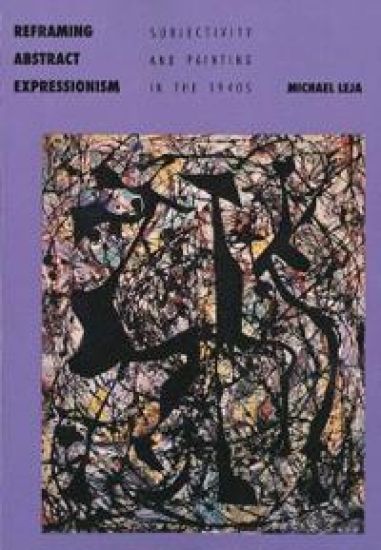
Reframing Abstract Expressionism

Reframing Abstract Expressionism

Michael Leja

Yale University Press
1997
pokkari
In the wake of World War II, the paintings of Jackson Pollock, Mark Rothko, Barnett Newman, Willem de Kooning, and other New York School artists participated in a culture-wide initiative to reimagine the self. At a time when widely held beliefs about human nature and the human condition were coming to seem to many commentators increasingly outdated and inadequate, Abstract Expressionism gave compelling visual form to a new subjectivity—a new experience and idea of self. In this original and wide-ranging study, Michael Leja argues that the interest of these artists in tapping "primitive" and unconscious components of self aligns them with many contemporary essayists, Hollywood filmmakers, journalists, and popular philosophers who were turning, like the artists, to psychology, anthropology, and philosophy in the effort to reformulate individual identity. Taking Pollock's paintings and their reception as a case study, Leja shows that critics located in Pollock's abstract forms a web of metaphors—including spatial entrapment, conflicted production, energy flow, gendered opposition, and unconsciousness—that situated the paintings in mainstream cultural discourses on the individual's sense of self and identity. In this interpretative frame, the cultural and ideological character of the art is illuminated. According to Leja, Abstract Expressionism effectively enacted and represented the new, conflicted, layered subjectivity, a feature that helps to account for the support and interest it garnered from cultural and political institutions alike.