Kirjojen hintavertailu – 12 903 724 kirjaa ja 27 kauppaa

Kirjailija

Michael Lind

Kirjat ja teokset yhdessä paikassa: 14 kirjaa, julkaisuja vuosilta 1997–2021, suosituimpiin kuuluu Ancient Zapotec Religion. Vertaile teosten hintoja ja tarkista saatavuus suomalaisista kirjakaupoista.

14 kirjaa

Kirjojen julkaisuvuodet: 1997–2021.

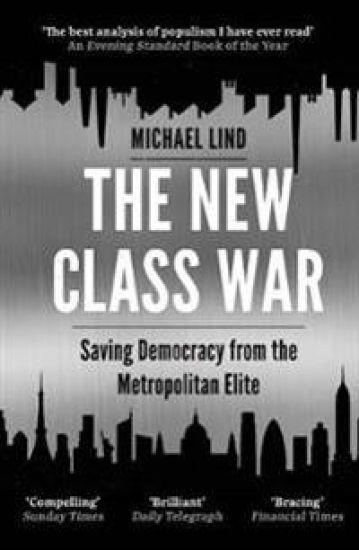
The New Class War

The New Class War

Michael Lind

Atlantic Books
2021
nidottu
An Evening Standard's Book of the Year'A tour de force.' David GoodhartAll over the West, party systems have shattered and governments have been thrown into turmoil. The embattled establishment claims that these populist insurgencies seek to overthrow liberal democracy. The truth is no less alarming but is more complex: Western democracies are being torn apart by a new class war. In this controversial and groundbreaking analysis, Michael Lind, one of America's leading thinkers, debunks the idea that the insurgencies are primarily the result of bigotry and reveals the real battle lines. He traces how the breakdown of class compromises has left large populations in Western democracies politically adrift. We live in a globalized world that benefits elites in high income 'hubs' while suppressing the economic and social interests of those in more traditional lower-wage 'heartlands'. A bold framework for understanding the world, The New Class War argues that only a fresh class settlement can avert a never-ending cycle of clashes between oligarchs and populists - and save democracy.

The New Class War: Saving Democracy from the Managerial Elite
In both Europe and North America, populist movements have shattered existing party systems and thrown governments into turmoil. The embattled establishment claims that these populist insurgencies seek to overthrow liberal democracy. The truth is no less alarming but is more complex: Western democracies are being torn apart by a new class war. In this controversial and groundbreaking new analysis, Michael Lind, one of America's leading thinkers, debunks the idea that the insurgencies are primarily the result of bigotry, traces how the breakdown of mid-century class compromises between business and labor led to the conflict, and reveals the real battle lines. On one side is the managerial overclass--the university-credentialed elite that clusters in high-income hubs and dominates government, the economy and the culture. On the other side is the working class of the low-density heartlands--mostly, but not exclusively, native and white. The two classes clash over immigration, trade, the environment, and social values, and the managerial class has had the upper hand. As a result of the half-century decline of the institutions that once empowered the working class, power has shifted to the institutions the overclass controls: corporations, executive and judicial branches, universities, and the media. The class war can resolve in one of three ways: - The triumph of the overclass, resulting in a high-tech caste system. - The empowerment of populist, resulting in no constructive reforms - A class compromise that provides the working class with real power Lind argues that Western democracies must incorporate working-class majorities of all races, ethnicities, and creeds into decision making in politics, the economy, and culture. Only this class compromise can avert a never-ending cycle of clashes between oligarchs and populists and save democracy.
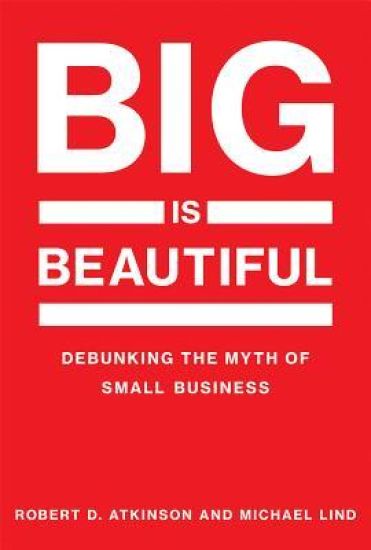
Big Is Beautiful

Big Is Beautiful

Robert Atkinson; Michael Lind

MIT Press
2019
pokkari
Why small business is not the basis of American prosperity, not the foundation of American democracy, and not the champion of job creation. In this provocative book, Robert Atkinson and Michael Lind argue that small business is not, as is widely claimed, the basis of American prosperity. Small business is not responsible for most of the country's job creation and innovation. American democracy does not depend on the existence of brave bands of self-employed citizens. Small businesses are not systematically discriminated against by government policy makers. Rather, Atkinson and Lind argue, small businesses are not the font of jobs, because most small businesses fail. The only kind of small firm that contributes to technological innovation is the technological start-up, and its success depends on scaling up. The idea that self-employed citizens are the foundation of democracy is a relic of Jeffersonian dreams of an agrarian society. And governments, motivated by a confused mix of populist and free market ideology, in fact go out of their way to promote small business. Every modern president has sung the praises of small business, and every modern president, according to Atkinson and Lind, has been wrong. Pointing to the advantages of scale for job creation, productivity, innovation, and virtually all other economic benefits, Atkinson and Lind argue for a "size neutral" policy approach both in the United States and around the world that would encourage growth rather than enshrine an anachronism. If we overthrow the "small is beautiful" ideology, we will be able to recognize large firms as the engines of progress and prosperity that they are.
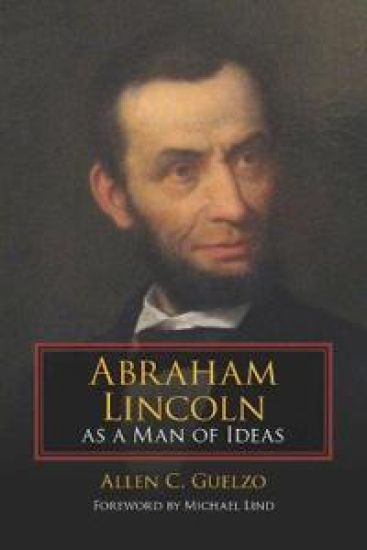
Abraham Lincoln as a Man of Ideas

Abraham Lincoln as a Man of Ideas

Allen C. Guelzo; Michael Lind

Southern Illinois University Press
2016
nidottu
Despite the most meager of formal educations, Lincoln had a tremendous intellectual curiosity that drove him into the circle of Enlightenment philosophy and democratic political ideology. And from these, Lincoln developed a set of political convictions that guided him throughout his life and his presidency. This compilation of ten essays from Lincoln scholar Allen C. Guelzo uncovers the hidden sources of Lincoln’s ideas and examines the beliefs that directed his career and brought an end to slavery and the Civil War.
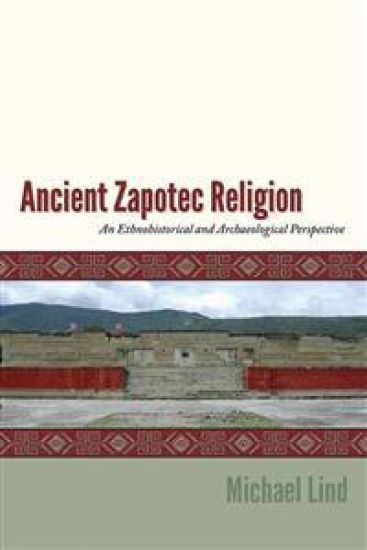
Ancient Zapotec Religion

Ancient Zapotec Religion

Michael Lind

University Press of Colorado
2015
sidottu
Ancient Zapotec Religion is the first comprehensive study of Zapotec religion as it existed in the southern Mexican state of Oaxaca on the eve of the Spanish Conquest. Author Michael Lind brings a new perspective, focusing not on underlying theological principles but on the material and spatial expressions of religious practice. Using sixteenth- and seventeenth-century Spanish colonial documents and archaeological findings related to the time period leading up to the Spanish Conquest, he presents new information on deities, ancestor worship and sacred bundles, the Zapotec cosmos, the priesthood, religious ceremonies and rituals, the nature of temples, the distinctive features of the sacred and solar calendars, and the religious significance of the murals of Mitla—the most sacred and holy center. He also shows how Zapotec religion served to integrate Zapotec city-state structure throughout the valley of Oaxaca, neighboring mountain regions, and the Isthmus of Tehuantepec. Ancient Zapotec Religion is the first in-depth and interdisciplinary book on the Zapotecs and their religious practices and will be of great interest to archaeologists, epigraphers, historians, and specialists in Native American, Latin American, and religious studies.
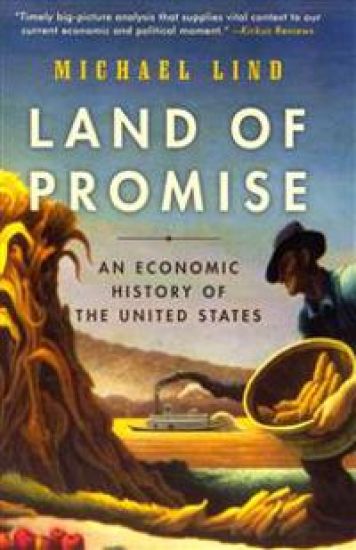
Land of Promise: An Economic History of the United States

Land of Promise: An Economic History of the United States

Michael Lind

HARPER PAPERBACKS
2013
nidottu

Halvin toimitettuna 22,20 €

A sweeping and original work of economic history by Michael Lind, one of America's leading intellectuals, Land of Promise recounts the epic story of America's rise to become the world's dominant economy. As ideological free marketers continue to square off against Keynesians in Congress and the press, economic policy remains at the center of political debate. Land of Promise: An Economic History of the United States offers a much-needed historical framework that sheds new light on our past--wisdom that offers lessons essential to our future. Building upon the strength and lucidity of his New York Times Notable Books The Next American Nation and Hamilton's Republic, Lind delivers a necessary and revelatory examination of the roots of American prosperity--insight that will prove invaluable to anyone interested in exploring how we can move forward.
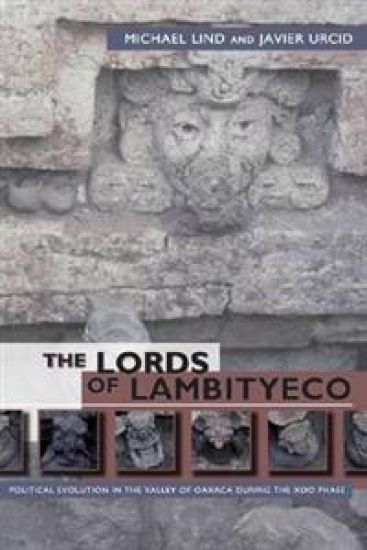
The Lords of Lambityeco

The Lords of Lambityeco

Michael Lind; Javier Urcid

University Press of Colorado
2009
sidottu
The Valley of Oaxaca was unified under the rule of Monte Albán until its collapse around AD 800. Using findings from John Paddock’s long-term excavations at Lambityeco from 1961 to 1976, Michael Lind and Javier Urcid examine the political and social organization of the ancient community during the Xoo Phase (Late Classic period). Focusing on change within this single archaeological period rather than between time periods, The Lords of Lambityeco traces the changing political relationships between Lambityeco and Monte Albán that led to the fall of the Zapotec state. Using detailed analysis of elite and common houses, tombs, and associated artifacts, the authors demonstrate increased political control by Monte Albán over Lambityeco prior to the abandonment of both settlements. Lambityeco is the most thoroughly researched Classic period site in the valley after Monte Albán, but only a small number of summary articles have been published about this important locale. This, in combination with Lambityeco’s status as a secondary center—one that allows for greater understanding of core and periphery dynamics in the Monte Albán state—makes The Lords of Lambityeco a welcome and significant contribution to the literature on ancient Mesoamerica.
American Way of Strategy

American Way of Strategy

Michael Lind

Oxford University Press
2008
nidottu
In The American Way of Strategy, Lind argues that the goal of U. S. foreign policy has always been the preservation of the American way of life--embodied in civilian government, checks and balances, a commercial economy, and individual freedom. Lind describes how successive American statesmen--from George Washington, Thomas Jefferson, and Alexander Hamilton to Franklin Roosevelt, Dwight Eisenhower, and Ronald Reagan--have pursued an American way of strategy that minimizes the dangers of empire and anarchy by two means: liberal internationalism and realism. At its best, the American way of strategy is a well-thought-out and practical guide designed to preserve a peaceful and demilitarized world by preventing an international system dominated by imperial and militarist states and its disruption by anarchy. When American leaders have followed this path, they have led our nation from success to success, and when they have deviated from it, the results have been disastrous. Framed in an engaging historical narrative, the book makes an important contribution to contemporary debates. The American Way of Strategy is certain to change the way that Americans understand U. S. foreign policy.
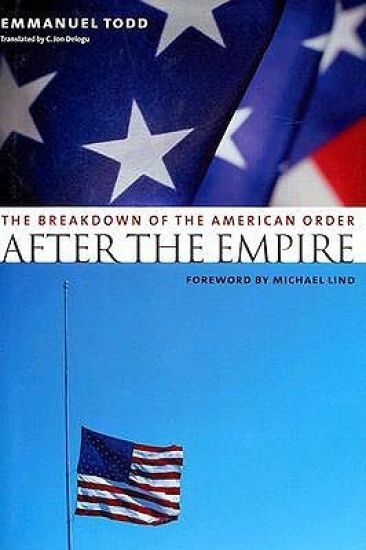
After the Empire

After the Empire

Emmanuel Todd; Michael Lind

Columbia University Press
2006
pokkari
Widely reviewed and critically praised, Emmanuel Todd's After the Empire predicts that the United States is forfeiting its superpower status as it moves away from traditional democratic values of egalitarianism and universalism, lives far beyond its means economically, and continues to anger foreign allies and enemies alike with its military and ideological policies. As America's global dominance evaporates, Todd foresees the emergence of a Eurasian alliance bringing together Europe, Russia, Japan, and the Arab-Islamic world. Todd calmly and straightforwardly takes stock of many negative trends, including America's weakened commitment to the socio-economic integration of African Americans, a bulimic economy that increasingly relies on smoke and mirrors and the goodwill of foreign investors, and a foreign policy that squanders the country's reserves of "soft power" while its militaristic arsonist-fireman behavior is met with increasing resistance. Written by a demographer and historian who foresaw the collapse of the Soviet Union, this original and daring book cannot be ignored.
What Lincoln Believed: The Values and Convictions of America's Greatest President
Challenges perceptions about the character of Abraham Lincoln to discuss the president's beliefs and place his ideals and decisions within a historical context, arguing that Lincoln's foremost priority was the survival of democracy and citing the influences of Henry Clay and Enlightenment philosophy. By the author of The Next American Nation. Reprint. 10,000 first printing.
After the Empire

After the Empire

Emmanuel Todd; Michael Lind

Columbia University Press
2003
sidottu
Widely reviewed and critically praised, Emmanuel Todd's After the Empire predicts that the United States is forfeiting its superpower status as it moves away from traditional democratic values of egalitarianism and universalism, lives far beyond its means economically, and continues to anger foreign allies and enemies alike with its military and ideological policies. As America's global dominance evaporates, Todd foresees the emergence of a Eurasian alliance bringing together Europe, Russia, Japan, and the Arab-Islamic world. Todd calmly and straightforwardly takes stock of many negative trends, including America's weakened commitment to the socio-economic integration of African Americans, a bulimic economy that increasingly relies on smoke and mirrors and the goodwill of foreign investors, and a foreign policy that squanders the country's reserves of "soft power" while its militaristic arsonist-fireman behavior is met with increasing resistance. Written by a demographer and historian who foresaw the collapse of the Soviet Union, this original and daring book cannot be ignored.
The Radical Center: The Future of American Politics

The Radical Center: The Future of American Politics

Ted Halstead; Michael Lind

ANCHOR BOOKS
2002
nidottu
Two members of the New America Foundation introduce a sweeping manifesto for the reform of American political, economic, and social policies to meet the interests and needs of the vast numbers of the new, centrist, majority of Americans, calling for a new tax system, the end of the two-party system, and a new approach to education, family, and community. Reprint. 17,500 first printing.
Vietnam the Necessary War

Vietnam the Necessary War

Michael Lind

Simon Schuster Ltd
2002
pokkari
One of America's leading intellectuals presents a startling thesis sure to provoke controversy: that the Vietnam War was the right war at the right time, with the wrong military strategy. The Vietnam War still divides Americans. Some claim that Indochina was of no strategic value. Others argue that timid civilian leaders denied the U. S military permission to win. In this paradigm-shifting book, Michael Lind explodes both of these myths and puts the Vietnam War back in the context of Cold War power politics and American domestic politics. The Cold War, Lind argues, was the third world war, and the proxy wars in Korea, Indochina, and Afghanistan were among its major campaigns. However, the cost of the U. S military's misguided tactics in Vietnam undermined American public support for the Cold War on all fronts. The result was the forfeiture of Indochina, a resurgence of American isolationism, and a worldwide wave of Soviet bloc expansion checked only by the Second Cold War of the 1980's. Challenging the stale orthodoxies of the antiwar left and prowar right, VIETNAM: THE NECESSARY WAR offers a major reinterpretation of America's most disastrous foreign war.