Kirjojen hintavertailu – 12 859 828 kirjaa ja 27 kauppaa
Kirjailija
Michael Lokshin
Kirjat ja teokset yhdessä paikassa: 6 kirjaa, julkaisuja vuosilta 2013–2025, suosituimpiin kuuluu Greater Heights. Vertaile teosten hintoja ja tarkista saatavuus suomalaisista kirjakaupoista.
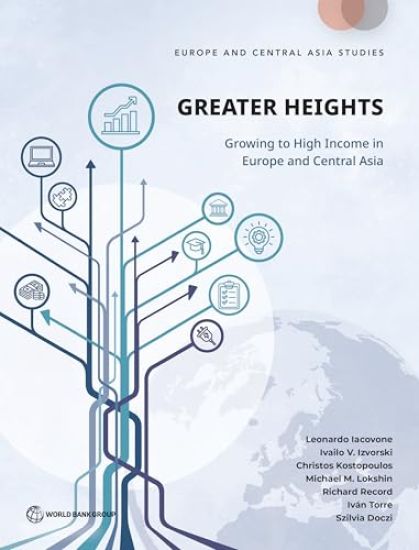
This companion report to the 2024 World Development Report, The Middle Income Trap, uses the '3i' framework-Investment, Infusion, and Innovation-as a strategic approach to address these challenges and provides policy options on how to grow to high income.
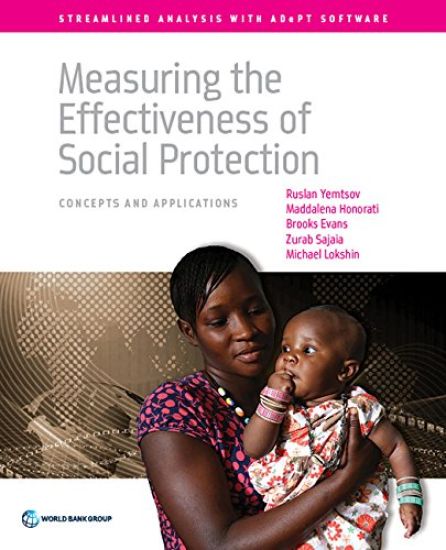
Measuring the Effectiveness of Social Protection provides the conceptual and analytical framework for assessing social protection and labor programs, as well as presenting a guide for individuals seeking to conduct SP performance analysis.
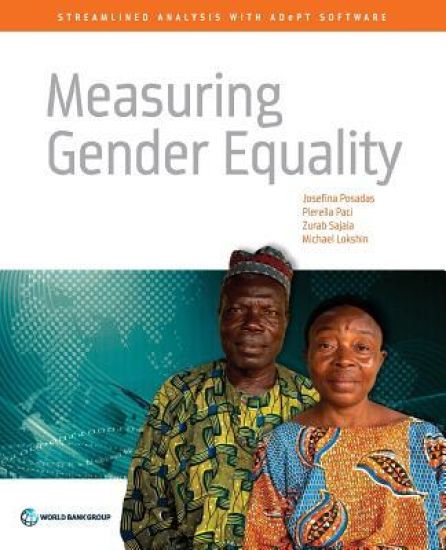
Gender equality is a core development objective in its own right and also smart development policy and business practice. No society can develop sustainably without giving men and women equal power to shape their own lives and contribute to their families, communities, and countries. And yet, critical gender gaps continue to exist in all countries and across multiple dimensions. The gender module of the World Bank’s ADePT software platform produces a comprehensive set of tables and graphs using household surveys to help diagnose and analyse the prevailing gender inequalities at the country level and over time. This book provides a step-by-step guide to the use of the ADePT software and an introduction to its basic economic concepts and econometric methods. The module is organised around the framework proposed by the World Development Report 2012: Gender Equality and Development . It covers gender differences in outcomes in three primary dimensions of gender equality: human capital (or endowments), economic opportunities, and voice and agency. Particular focus is given to the analysis and decomposition techniques that allow for further exploring of gender gaps in economic opportunities.
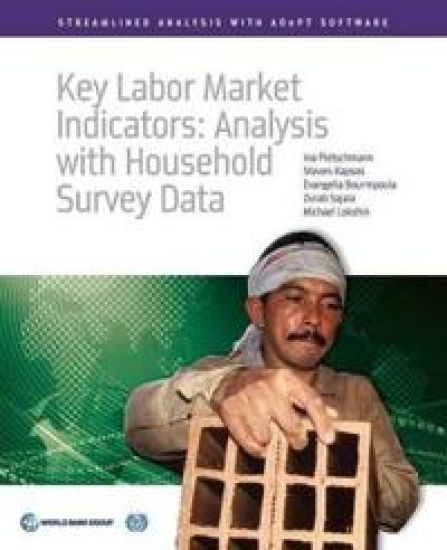
Key Labor Market Indicators: Analysis with Household Survey Data is an introduction to labor market indicator analysis and a guide for analyzing household survey data using the ADePT ILO (International Labour Organization) Labor Market Indicators Module. The analytical framework and approach taken up in this book are based on the ILO’s Key Indicators of the Labour Market (KILM). KILM indicators provide a strong basis on which to address key questions related to productive employment and decent work. The ADePT ILO Labor Market Indicators Module is a powerful tool for producing and analyzing KILM indicators using household survey data. The software allows researchers and practitioners to automate data production, to minimize data production errors, and to quickly produce a wide range of labor market data from labor force surveys or other household surveys that contain labor market information.
Simulating Distributional Impacts of Macro-dynamics: Theory and Practical Applications is a comprehensive guide for analyzing and understanding the effects of macroeconomic shocks on income and consumption distribution, as well as using the ADePT Simulation Module. Since real-time micro data is rarely available, the Simulation Module (part of the ADePT economic analysis software) takes advantage of historical household surveys to estimate how current or proposed macro changes might impact household and individuals welfare. Using examples from different economic and social contexts, the book explains macro-micro linkages in an easy and intuitive way. After developing a sound theoretical foundation, readers are then shown how to explore their own scenarios using the Simulation Module. Step-by-step instructions illustrate data entry and show how to make adjustments using the Module's options. Exercises present how different sections of the simulation process operate independently. This book will be a valuable reference for analysts needing to evaluate the potential impact of structural reforms and to generate projections for hypothetical scenarios. Results created by the Simulation Module will be helpful in informing governmental policymaking.
A Unified Approach to Measuring Poverty and Inequality: Theory and Practice is an introduction to the theory and practice of measuring poverty and inequality, as well as a user's guide for analyzing income or consumption distribution for any standard household dataset using the World Bank's ADePT software. The approach taken here considers income standards as building blocks for basic measurement, then uses them to construct inequality and poverty measures. This unified approach provides advantages in interpreting and contrasting the measures and in understanding the way measures vary over time and space. Several recent initiatives have lowered the cost of accessing household datasets. The ADePT software enables users to analyze microdata from household surveys and other sources and generate print-ready, standardized tables and charts. It can also be used to simulate the impact of economic shocks, cash transfers and other policy instruments on poverty, and inequality. The software automates analysis, helps minimize human errors, and encourages development of new economic analysis methods. Of interest to teachers and students as well as to policy practitioners, A Unified Approach to Measuring Poverty and Inequality will empower researchers to plumb greater depths in searching for regularity in larger and larger datasets. This book should help to enrich discussion and analysis relating to the World Bank's recent effort toward defining new targets and indicators for promoting work on eradicating poverty and enhancing shared prosperity.