Kirjojen hintavertailu – 12 903 724 kirjaa ja 27 kauppaa
Kirjailija
Michael McFaul
Kirjat ja teokset yhdessä paikassa: 14 kirjaa, julkaisuja vuosilta 1993–2025, suosituimpiin kuuluu The Troubled Birth of Russian Democracy. Vertaile teosten hintoja ja tarkista saatavuus suomalaisista kirjakaupoista.
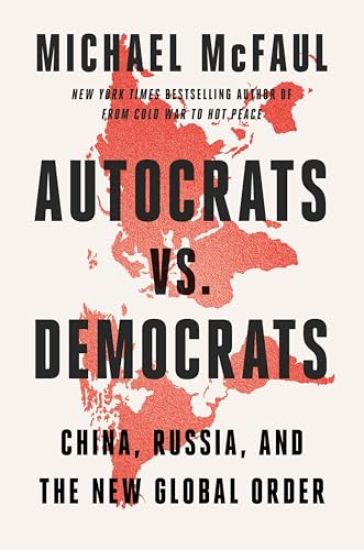
From New York Times bestselling author and former U. S. Ambassador to Russia Michael McFaul comes a bold, clear-eyed look at how the autocracies of China and Russia are challenging the current global order, and how America's future depends on successfully confronting this threat. The rise of China, Russia's invasion of Ukraine, and the reelection of President Donald Trump have reinforced a gloomy yet growing consensus: the old global order has ended, and a new Cold War has begun. And yet, many of the perils we face today are distinctly different from those we encountered from the Soviet Union. The alliance between the autocracies of China and Russia, China's economic might, the rise of the far right in the United States and Europe, and the disturbing isolationist foreign policy shifts of the Trump administration--taken together represent new challenges for the democratic world. They are threats with no precedent in the past century. In this sweeping account of great power competition between the United States, China, and Russia over the past three centuries, Michael McFaul--former ambassador to Russia and international affairs analyst for NBC News--argues persuasively that today's challenges require fresh thinking, not constrained by distant memories of the Cold War or the nationalist dreams of MAGA. One of the preeminent thinkers on American foreign policy for decades, McFaul combines in-depth historical analysis with a forward-looking perspective, crafting a new grand strategy for America in this age of global disorder. Acknowledging how Xi's China, Putin's Russia, and Trump's America are upending the current international system, Autocrats vs Democrats makes the case against America's retreat from the world, detailing why: Russia's disruptive ambitions should not be underestimated. China's capabilities should not be overestimated. Trump's shift toward isolationism and autocracy will weaken America's place in the world. At once a clarion call for American diplomacy and a forceful rebuttal of the Trump administration's policies, Autocrats vs Democrats provides a nuanced assessment of the China and Russia threats, as well as a bold vision for renewing America's leadership on the world stage.
This book offers a broad outline of the Yeltsin government's economic policies for 1992 and 1993. It provides an overview of the privatization process and defense conversion in Russia and discusses regulations on foreign investment in privatizing enterprises.
This volume provides an evaluation of initial efforts to convert post-Soviet Russian industry from that of a highly-centralized, military-oriented economy to that of a civilian economy with a stronger base in private enterprise. The authors address crucial issues of the embattled economic transformation at the level of particular enterprises and geographic regions as well as in the contexts of state policy, finance and planning. Their analyses offer readers an understanding of the various obstacles that impede post-Soviet economic restructuring and point to ways in which they may be overcome.
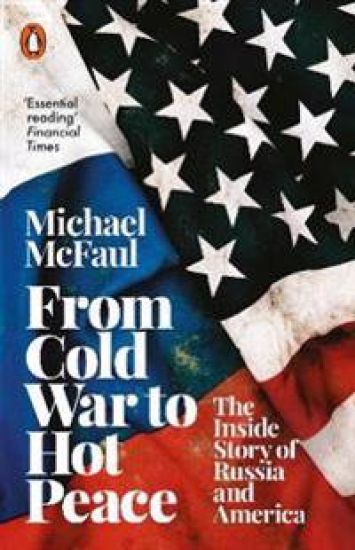
'A fascinating and timely account of the current crisis in the relationship between Russia and the United States' Daniel Beer, The New York Times'Could not be more timely ... crucial reading for anyone interested in what's happening inside Putin's head' Oliver Bullough, ProspectA revelatory, behind-the-scenes account of Russian-American relations, from a former US ambassador and 'Obama's top White House advisor on Russia policy' (The New York Times)In 2008, when Michael McFaul was asked to leave his perch at Stanford and join President-elect Barack Obama's national security team, he had no idea that he would find himself at the beating heart of one of today's most contentious international relationships. McFaul had been studying and visiting Russia for decades, becoming one of America's preeminent scholars on the country during the first Putin era. During President Obama's first term, McFaul helped craft the policy known as "Reset," which fostered unprecedented collaboration between the two countries under Dmitry Medvedev's presidency. Later, as U. S. ambassador from 2012 to 2014, he witnessed firsthand how Vladimir Putin's new rise interrupted this era of cooperation and returned Russian-American relations to a level of hostility not known since the darkest days of the Cold War. From the outset of his ambassadorship, the Kremlin accused McFaul of being sent by Obama to foment revolution against Putin's regime. This resulting insider's account - uniquely combining history, politics and intimate personal knowledge of the corridors of power - takes us from Putin's dacha to ornate Kremlin chambers and the Oval Office, to explain how Russia really works, and why the world has entered a dangerous new era of confrontation.
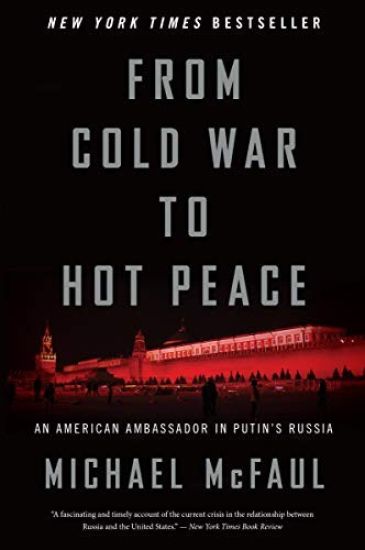
NEW YORK TIMES BESTSELLER From the diplomat Putin wants to interrogate--and has banned from Russia--comes a revelatory inside account of US-Russia relations across the three decades following the Cold War. In 2008, when Michael McFaul was asked to leave his perch at Stanford and join an unlikely presidential campaign, he had no idea that he would find himself at the beating heart of one of today's most contentious and consequential international relationships. As President Barack Obama's adviser on Russian affairs, McFaul helped craft the United States' policy known as "reset" that fostered new and unprecedented collaboration between the two countries. And then, as US ambassador to Russia from 2012 to 2014, he had a front-row seat when this fleeting, hopeful moment crumbled with Vladimir Putin's return to the presidency. This riveting inside account combines history and memoir to tell the full story of US-Russia relations from the fall of the Soviet Union to the new rise of the hostile, paranoid Russian president. From the first days of McFaul's ambassadorship, the Kremlin actively sought to discredit and undermine him, hassling him with tactics that included dispatching protesters to his front gates, slandering him on state media, and tightly surveilling him, his staff, and his family. From Cold War to Hot Peace is an essential account of the most consequential global confrontation of our time.
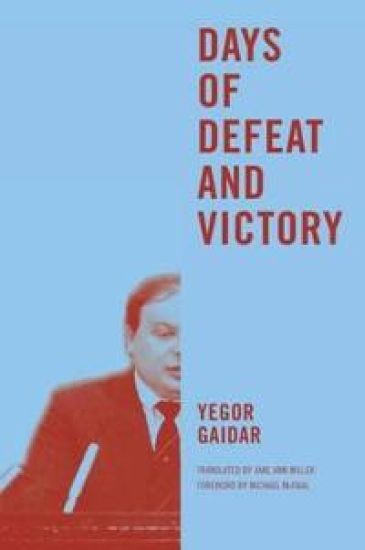
Yegor Gaidar, the first post-Soviet prime minister of Russia and one of the principal architects of its historic transformation to a market economy, here presents his lively account of governing in the tumultuous early 1990s. Though still in his forties, Gaidar has already played a pivotal role in contemporary Russian political history, championing the cause of dramatic economic reform, aggressive privatization of state enterprises, and painful fiscal discipline in the face of widespread popular resistance. Gaidar's youthfulness, energy, and daring are symbolic of a new phenomenon in Russian politics - the emergence of a younger generation of politicians with a distinctly technocratic bent, looking firmly to the United States and Europe for inspiration and sharing little of the old generation's nostalgia for Communist stability. It was largely the implementation of Gaidar's policies that drove the Russian parliament to rebel against Boris Yeltsin in 1993, leading to the bloody tank assault on the parliament itself. Though Yeltsin prevailed, it was clear that the political and social costs of "shock therapy" were too great for Russia's fragile democracy to bear, and Gaidar himself was ousted to appease the conservatives. His unfinished agenda was put on hold, though he later returned when Yeltsin needed to placate international financial forces. Gaidar remains active in Russian politics, having formed his own political party, Russia's Democratic Choice. In this book, he brings his story through Yeltsin's cliffhanger re-election in 1996, and assesses the still-precarious state of the market reforms and democratic politics.
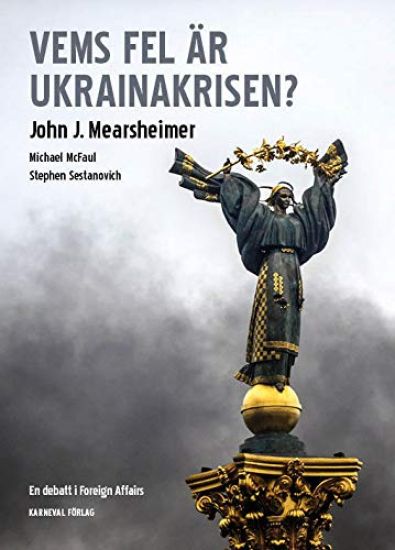
I denna bok har samlats fyra uppmärksammade artiklar som publicerades i Foreign Affairs 2014. I den första artikeln argumenterar statsvetarprofessorn John J. Mearsheimer för att det inte är Ryssland, utan USA och dess allierade, som bär huvudansvaret för den Ukrainakris som intensivt flammade upp åren 2013-2014. I två efterföljande artiklar hävdar tvärtom Michael McFaul och Stephen Sestanovich, tidigare diplomater och regeringsrådgivare, att Ukrainakrisen uteslutande måste skyllas på Ryssland och Putins aggressiva erövringspolitik. I en avslutande reflektion bemöter John J. Mearsheimer dessa invändningar. John J. Mearsheimers föredrag »Why is Ukraine the West's Fault?«, som grundar sig på hans bidrag i denna bok, har haft 28 miljoner visningar på Youtube (University of Chicagos kanal: https://youtu.be/JrMiSQAGOS4). Foreign Affairs, grundad 1922, är USA:s ledande tidskrift för analys och debatt om utrikespolitik, geopolitik och internationella förhållanden. OM FÖRFATTARNA John J. Mearsheimer är professor i statsvetenskap vid University of Chicago. Hans senaste böcker är The Great Delusion: Liberal Dreams and International Realities (2018) och Why Leaders Lie: The Truth About Lying in International Politics (2013). Michael McFaul är professor i statsvetenskap vid Stanford University. Han var rådgivare till president Obamas nationella säkerhetsråd 2009-2012 och ambassadör i Ryssland 2012-2014. Han är författare till From Cold War to Hot Peace: An American Ambassador in Putin's Russia (2018). Stephen Sestanovich är professor i internationell diplomati vid Columbia University och verksam på tankesmedjan Council on Foreign Relations avdelning för ryska och eurasiska studier. Han var under åren 1997-2001 särskild rådgivare till USA:s utrikesminister Madeleine Albright tillika ambassadör för de nya oberoende stater som då nyligen hade bildats på det forna Sovjetunionens territorium. Han är författare till Maximalist: America and the World From Truman to Obama (2014).
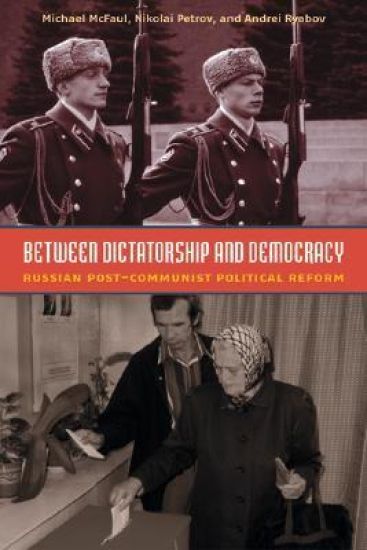
For hundreds of years, dictators have ruled Russia. Do they still? In the late 1980s, Soviet President Mikhail Gorbachev launched a series of political reforms that eventually allowed for competitive elections, the emergence of an independent press, the formation of political parties, and the sprouting of civil society. After the collapse of the Soviet Union in 1991, these proto-democratic institutions endured in an independent Russia. But did the processes unleashed by Gorbachev and continued under Russian President Boris Yeltsin lead eventually to liberal democracy in Russia? If not, what kind of political regime did take hold in post-Soviet Russia? And how has Vladimir Putin's rise to power influenced the course of democratic consolidation or the lack thereof? Between Dictatorship and Democracy seeks to give a comprehensive answer to these fundamental questions about the nature of Russian politics.
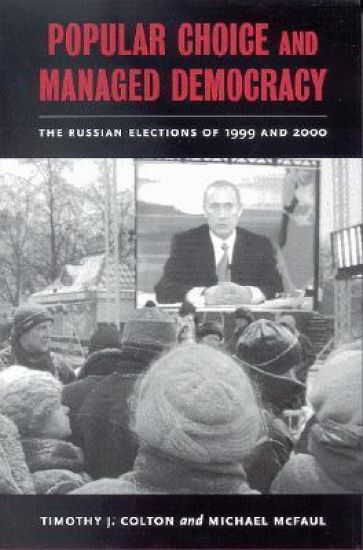
"Twice in the winter of 1999-2000, citizens of the Russian Federation flocked to their neighborhood voting stations and scratched their ballots in an atmosphere of uncertainty, rancor, and fear. This book is a tale of these two elections—one for the 450-seat Duma, the other for President. Despite financial crisis, a national security emergency in Chechnya, and cabinet instability, Russian voters unexpectedly supported the status quo. The elected lawmakers prepared to cooperate with the executive branch, a gift that had eluded President Boris Yeltsin since he imposed a post-Soviet constitution by referendum in 1993. When Yeltsin retired six months in advance of schedule, the presidential mantle went to Vladimir Putin—a career KGB officer who fused new and old ways of doing politics. Putin was easily elected President in his own right. This book demonstrates key trends in an extinct superpower, a troubled country in whose stability, modernization, and openness to the international community the West still has a huge stake."
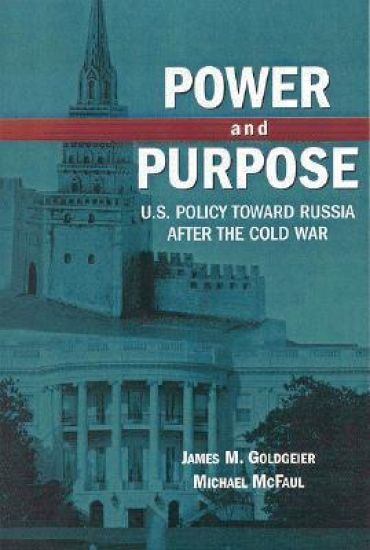
"Russia, once seen as America's greatest adversary, is now viewed by the United States as a potential partner. This book traces the evolution of American foreign policy toward the Soviet Union, and later Russia, during the tumultuous and uncertain period following the end of the cold war. It examines how American policymakers—particularly in the executive branch—coped with the opportunities and challenges presented by the new Russia. Drawing on extensive interviews with senior U. S. and Russian officials, the authors explain George H. W. Bush's response to the dramatic coup of August 1991 and the Soviet breakup several months later, examine Bill Clinton's efforts to assist Russia's transformation and integration, and analyze George W. Bush's policy toward Russia as September 11 and the war in Iraq transformed international politics. Throughout, the book focuses on the benefits and perils of America's efforts to promote democracy and markets in Russia as well as reorient Russia from security threat to security ally. Understanding how three U. S. administrations dealt with these critical policy questions is vital in assessing not only America's Russia policy, but also efforts that might help to transform and integrate other former adversaries in the future."
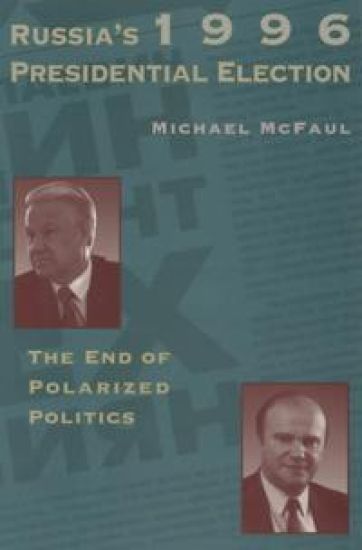
In June 1996, for the first time in thousand years, Russian citizens were given the chance to select their head of state in a democratic election. Michael McFaul analyzes three major factors that combine to explain why Boris Yeltsin's victory, should have been expected, discusses the reasons behind Yeltsin's victory, and examines its impact on electoral politics in post-Soviet Russia.
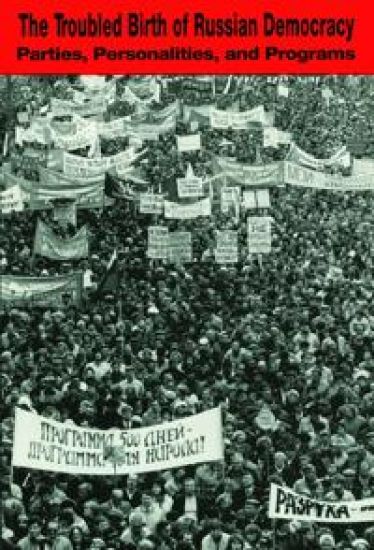
The demise of communism in the Soviet Union could not have occurred without the activism of dissident, anticommunist leaders who created a climate that gave ordinary Russians the courage to stand up to and defeat communist control. But with communism ousted, what new form of government and what new leaders will emerge in Russia, a society that has never known democracy? Michael McFaul, a Western scholar studying at Moscow State University, and Segel Markov, an assistant professor at Moscow State University, interviewed anticommunist parties in the months preceding and immediately following the August 1991 attempted coup d'tetat. To examine the range of the political spectrum in Russia, they also talked to procommunist leaders who emerged to oppose Mikhail Gorbachev's reforms, nationalist and anti-Semitic leaders of movements such as Pamyat', labor unions, Christian movements, and organizations opposed to the division of the Soviet Union.