Kirjojen hintavertailu – 12 903 724 kirjaa ja 27 kauppaa

Kirjailija

Michael Meltzer

Kirjat ja teokset yhdessä paikassa: 9 kirjaa, julkaisuja vuosilta 2011–2015, suosituimpiin kuuluu When Biospheres Collide: A History of NASA's Planetary Protection Programs: A History of NASA's Planetary Protection Programs. Vertaile teosten hintoja ja tarkista saatavuus suomalaisista kirjakaupoista.

9 kirjaa

Kirjojen julkaisuvuodet: 2011–2015.

The Cassini-Huygens Visit to Saturn

The Cassini-Huygens Visit to Saturn

Michael Meltzer

Springer International Publishing AG
2015
nidottu
Cassini-Huygens was the most ambitious and successful space journey ever launched to the outer Solar System. This book examines all aspects of the journey: its conception and planning; the lengthy political processes needed to make it a reality; the engineering and development required to build the spacecraft; its 2.2-billion mile journey from Earth to the Ringed Planet and the amazing discoveries from the mission. The author traces how the visions of a few brilliant scientists matured, gained popularity and eventually became a reality. Innovative technical leaps were necessary to assemble such a multifaceted spacecraft and reliably operate it while it orbited a planet so far from our own. The Cassini-Huygens spacecraft design evolved from other deep space efforts, most notably the Galileo mission to Jupiter, enabling the voluminous, paradigm-shifting scientific data collected by the spacecraft. Some of these discoveries are absolute gems. A small satellite that scientists once thought of as a dead piece of rock turned out to contain a warm underground sea that could conceivably harbor life. And we now know that hiding under the mist of Saturn’s largest moon, Titan, is a world with lakes, fluvial channels, and dunes hauntingly reminiscent of those on our own planet, except that on Titan, it’s not water that fills those lakes but hydrocarbons. These and other breakthroughs illustrate why the Cassini-Huygens mission will be remembered as one of greatest voyages of discovery ever made.
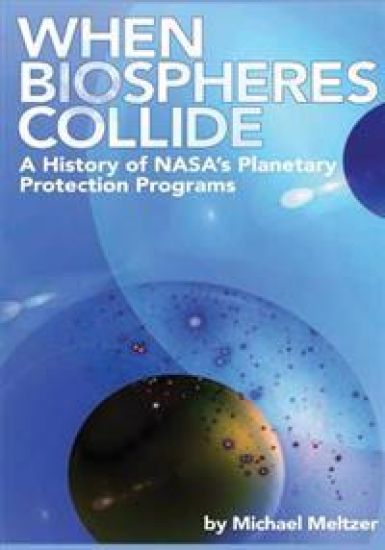
When Biospheres Collide: A History of NASA's Planetary Protection Programs

When Biospheres Collide: A History of NASA's Planetary Protection Programs

Michael Meltzer; National Aeronautics and Administration

Createspace Independent Publishing Platform
2013
nidottu
Each time a space vehicle visits another world it runs the risk of forever changing that extraterrestrial environment. We are surrounded on Earth by a m lange of different microorganisms, and if some of these hitchhike onboard a space mission, they could contaminate and start colonies on a different planet. Such an occurrence would irrevocably alter the nature of that world, compromise all future scientific exploration of the body, and possibly damage any extant life on it. And by inadvertently carrying exotic organisms back to Earth on our spacecraft, we risk the release of biohazardous materials into our own ecosystem. Such concerns were recognized by scientists even before the 1957 launch of Sputnik. This book presents the history of planetary protection by tracing the responses to the above concerns on NASA's missions to the Moon, Mars, Venus, Jupiter, Saturn, and many smaller bodies of our solar system. The book relates the extensive efforts put forth by NASA to plan operations and prepare space vehicles that return exemplary science without contaminating the biospheres of other worlds or our own. As Cassie Conley, NASA's Planetary Protection Officer, has said, "The public can be proud of the way that NASA has responded to planetary protection concerns, with its efforts to act responsibly, communicate openly, and address effectively the potential for contamination." Humans have a powerful urge to explore the unknown, but to protect irreplaceable environments, NASA has committed to conducting space exploration in a manner that is protective of the bodies visited, as well as of our own planet.
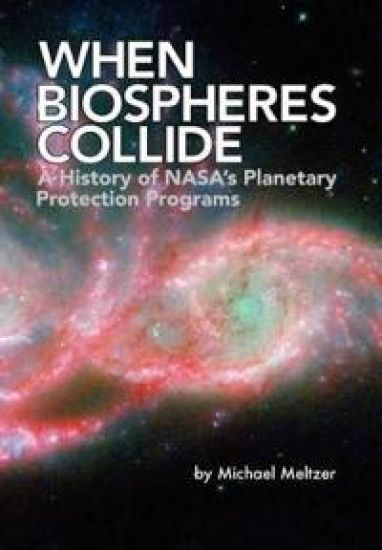
When Biospheres Collide: A History of NASA's Planetary Protection Programs: A History of NASA's Planetary Protection Programs

When Biospheres Collide: A History of NASA's Planetary Protection Programs: A History of NASA's Planetary Protection Programs

Michael Meltzer; National Aeronautics and Space Administr

U.S. National Aeronautics and Space Admi
2011
nidottu
NOTE: NO FURTHER DISCOUNT FOR THIS PRINT PRODUCT- OVERSTOCK SALE-- Significantly reduced list price This new book from the NASA History Series tackles an interesting duo of biological problems that will be familiar to anybody who has seen photos of Apollo astronauts quarantined after their return to Earth. Namely, how do we avoid contaminating celestial bodies with Earthly germs when we send spacecraft to study these bodies, and how do we avoid spreading foreign biological matter from space when our robotic and human spacefarers return to Earth? Biological matter from an external system could potentially cause an unchecked epidemic either on Earth or in space so strict precautions are necessary. Each time a space vehicle visits another world it runs the risk of forever changing that extraterrestrial environment. We are surrounded on Earth by a melange of different microorganisms, and if some of these hitchhike onboard a space mission, they could contaminate and start colonies on a different planet. Such an occurrence would irrevocably alter the nature of that world, compromise all future scientific exploration of the body, and possibly damage any extant life on it. By inadvertently carrying exotic organisms back to Earth on our spacecraft, we also risk the release of biohazardous materials into our own ecosystem. Such concerns were recognized by scientists even before the 1957 launch of Sputnik. This book presents the history of planetary protection by tracing the responses to the above concerns on NASA s missions to the Moon, Mars, Venus, Jupiter, Saturn, and many smaller bodies of our solar system. The book relates the extensive efforts put forth by NASA to plan operations and prepare space vehicles that return exemplary science without contaminating the biospheres of other worlds or our own. To protect irreplaceable environments, NASA has committed to conducting space exploration in a manner that is protective of the bodies visited, as well as of our own planet."
4234 When Biospheres Collide: A History of NASA's Planetary Protection Programs: A History of NASA's Planetary Protection Programs
NOTE: NO FURTHER DISCOUNT FOR THIS PRINT PRODUCT- OVERSTOCK SALE -- Significantly reduced list price This new book from the NASA History Series tackles an interesting duo of biological problems that will be familiar to anybody who has seen photos of Apollo astronauts quarantined after their return to Earth. Namely, how do we avoid contaminating celestial bodies with Earthly germs when we send spacecraft to study these bodies, and how do we avoid spreading foreign biological matter from space when our robotic and human spacefarers return to Earth? Biological matter from an external system could potentially cause an unchecked epidemic either on Earth or in space so strict precautions are necessary. Each time a space vehicle visits another world it runs the risk of forever changing that extraterrestrial environment. We are surrounded on Earth by a melange of different microorganisms, and if some of these hitchhike onboard a space mission, they could contaminate and start colonies on a different planet. Such an occurrence would irrevocably alter the nature of that world, compromise all future scientific exploration of the body, and possibly damage any extant life on it. By inadvertently carrying exotic organisms back to Earth on our spacecraft, we also risk the release of biohazardous materials into our own ecosystem. Such concerns were recognized by scientists even before the 1957 launch of Sputnik. This book presents the history of planetary protection by tracing the responses to the above concerns on NASA s missions to the Moon, Mars, Venus, Jupiter, Saturn, and many smaller bodies of our solar system. The book relates the extensive efforts put forth by NASA to plan operations and prepare space vehicles that return exemplary science without contaminating the biospheres of other worlds or our own. To protect irreplaceable environments, NASA has committed to conducting space exploration in a manner that is protective of the bodies visited, as well as of our own planet. Other products produced by NASA can be found here: https: //bookstore.gpo.gov/agency/550"