Kirjojen hintavertailu – 12 903 737 kirjaa ja 27 kauppaa

Kirjailija

Michael Meredith

Kirjat ja teokset yhdessä paikassa: 7 kirjaa, julkaisuja vuosilta 2009–2025, suosituimpiin kuuluu Vacant Spaces NY. Vertaile teosten hintoja ja tarkista saatavuus suomalaisista kirjakaupoista.

7 kirjaa

Kirjojen julkaisuvuodet: 2009–2025.

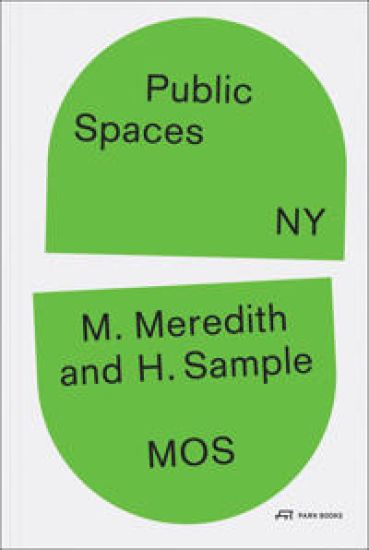
Public Spaces, NY

Public Spaces, NY

Michael Meredith; Hilary Sample

Park Books
2025
nidottu

Halvin toimitettuna 47,40 €

In their new book, Michael Meredith and Hilary Sample, principals of acclaimed New York-based architecture firm MOS, offer a deep dive into the ever-changing nature of public spaces, revealing their complexity, instability, and contested nature. Through a focused examination of New York City—one of the most densely populated and symbolically charged urban environments—the volume explores how public spaces are shaped by legal frameworks, private interests, and community needs. Drawing on historical context, legal principles, and detailed mapping of Manhattan’s public spaces, Meredith and Sample illustrate how spaces like parks, sidewalks, plazas, and even cemeteries serve as arenas for expression, conflict, and negotiation. From anti-homeless measures to inaccessible infrastructure: they highlight the ways in which public spaces can both include and exclude, reflecting the larger social and political structures that govern them. A sequel to their precious Vacant Spaces, NY (2021), Public Spaces, NY invites an imagination of a more inclusive, equitable vision for the shared urban spaces we all navigate.
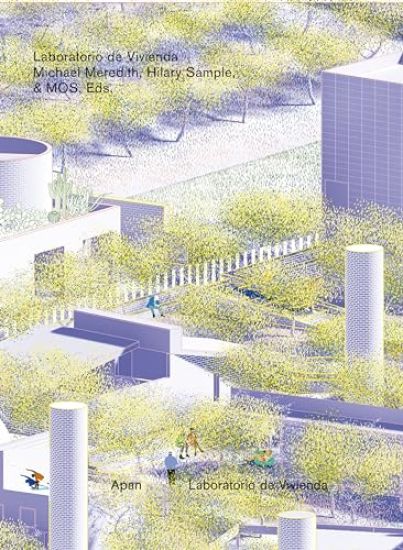
Housing Laboratory / Laboratorio de Vivienda

Housing Laboratory / Laboratorio de Vivienda

Michael Meredith; Hilary Sample

Actar Publishers
2024
sidottu
Laboratorio de Vivienda presents the 32 projects selected and built, including research, drawings, and descriptions by the architects. It considers the problem of low-income housing by bringing thoughtful attention and expertise of architects, considering how these proposals, assembled into a collective, would work together toward creating not an estate but a community for Apan, presenting a model of Housing as a Garden. In 2017, Mexico's Institute for the National Fund for Workers' (INFONAVIT) Center for Research for Sustainable Development launched a program to solicit new approaches to affordable housing. To better understand the possibilities, and to better educate developers, workers, and students about the research, INFONAVIT engaged with MOS to develop a master plan for a campus of 32 built prototypes and design an education center to promote awareness and study of workers' housing typologies. The selection process revealed various categories and themes for which the projects could be classified. Some projects rethink the fundamentals of low-income housing's spatial organization (corridors, courtyards, roofs), some rework labor and construction, and some recast structure or material. The forms of these works are generally economical but, unlike early-modernist projects at the Weissenhof Estate, their attitude is not one of a radical break. If anything, these works relate to the vast, varied world of contemporary vernacular construction - the majority of the built world that Architecture glosses over. Each house responds to different climates, each house maintains their designed solar orientation, each house exhibits potential for growth by aggregation, repetition, or various strategies of extension, infill, and addition. All of the houses retain their individual identities within the larger campus. Presenting the 32 projects selected and built, including research, drawings, and descriptions by the architects, and an essay by Canadian Centre for Architecture Director Giovanna Borasi titled "A Large Urban Garden Where You Can Learn About Architecture," Laboratorio de Vivienda considers the problem of low-income housing by bringing thoughtful attention and expertise of architects, considering how these proposals, assembled into a collective, would work together toward creating not an estate but a community for Apan. For, given the limited resources of such works, each decision gains greater significance and has greater impact on the design and on the life of its inhabitants. With Contributions of: Carlos Zedillo VelascoGiovanna BorasiDVCH DeVillarChacon ArquitectosFrida EscobedoDellekamp Arquitectos Derek Dellekamp & Jachen SchleichRozana Montiel Estudio de ArquitecturaAmbrosi EtchegarayZooburbiaZago ArchitectureTaller Mauricio Rocha + Gabriela CarrilloTaller de Arquitectura XGriffin Enright ArchitectsTatiana Bilbao ESTUDIOFrancisco Pardo ArquitectoEnrique Norten TEN ArquitectosPita & BloomBGP ArquitecturaZeller & MoyeAccidental Estudio de ArquitecturaNu o - Mac Gregor - De Buen Arquitectos SCSAYA+ ArquitectosCanoVera ArquitecturaFernanda CanalesRNThomsen ARCHITECTUREPRODUCTORAAgraz Arquitectos SCRojkind ArquitectosTactic-AGAETA-SPRINGALL ArquitectosTALLER ADGTaller 4:00 A. M. CRO StudioJC ArquitecturaDCPP

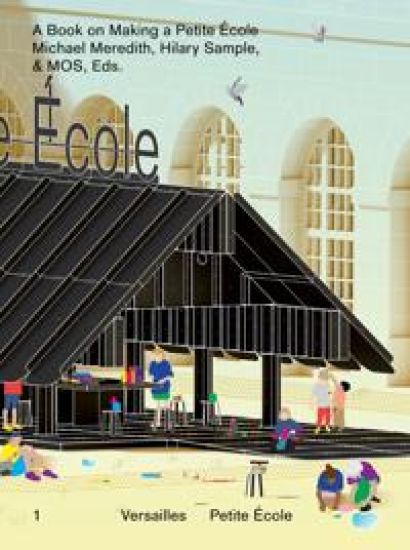
A Book on Making a Petite Ecole

A Book on Making a Petite Ecole

Michael Meredith; Hilary Sample

Actar Publishers
2023
sidottu
A compendium of children's design exercises by architects from around the world accompany illustrations and photographs documenting the construction of the Petite cole pavilion. As part of the 2019 Biennale d'architecture et de paysage in Versailles, France, MOS constructed Petite cole, a small, open-air pavilion to house educational workshops for children. It is a place for looking and making, and for making and looking, constructed with 688 aluminum pieces modeled, flattened, cut, folded, prefabricated, shipped, and then assembled onsite. It is made to be taken down and reassembled elsewhere. It is designed to be easily understood, made of simple building elements: a long, low roof with columns and stacked beams holding it up. Undertaken during various design workshops, single page design exercises written by architects were assembled into a large book and given to children. A Book on Making a Petite cole features an expanded collection of these exercises. Each exercise includes playful illustrations of its steps, starting a conversation about how designers look at, think about, teach, and imagine the foundations of design. Alongside these, the design process of the pavilion is included, as its own design exercise, from colorful illustrations of each step of the pavilion's construction, to actual construction photographs and photographs of the completed pavilion being occupied. A Book on Making a Petite cole considers basic questions of design pedagogy, abstraction, accessibility, experimentation, and equity, while considering and reconsidering architecture.
Vacant Spaces NY

Vacant Spaces NY

Michael Meredith; Sample

Actar Publishers
2021
pokkari
Vacant Spaces NY begins gathering the incomplete data available and documenting vacant spaces in New York City. Organized from large to small, general to specific, vacancy in the United States to case studies of specific vacancies in Manhattan, Michael Meredith, Hilary Sample, and their architecture studio MOS imagine possibilities for repurposing current vacant spaces in New York City. This project began by walking around our neighborhood noticing empty storefronts. Once we saw them, they were everywhere. They followed us, appearing quietly throughout New York City. Many with no signage, no "for rent," no "coming soon." Usually empty, sometimes dusty, sometimes with brown paper covering the glass. Now, vacancy has only increased. In the densest city in the United States. During a housing crisis. Throughout a pandemic. The quantity of vacant spaces is anyone's best guess. It's only partially documented. They hide in plain sight. Vacant Spaces NY is organized from large to small, general to specific. It begins by looking at vacancy within the United States and continues down to each Manhattan neighborhood, where we zoom into specific vacant spaces, where we have provided as case studies that imagine some possibilities for transforming current vacant spaces into housing or social services. There is also a section on Covid 19, which infiltrated New York during our research. As a whole, this document is not meant to provide specific solutions. The data is incomplete. Case studies are limited. We are not policy experts or data analysts or urban planners. Instead, it is simply meant to show something we have taken for granted, vacant spaces, taking part in a collective process of imagining a better city.
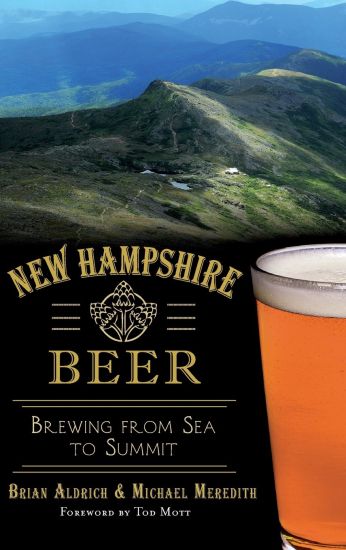
New Hampshire Beer: Brewing from Sea to Summit

New Hampshire Beer: Brewing from Sea to Summit

Brian Aldrich; Michael Meredith

History Press Library Editions
2014
sidottu
In 1859, the legendary Frank Jones Brewery was founded in Portsmouth, paving the way for the booming craft beer scene of today. The surge of budding breweries is bringing exciting styles and flavors to thirsty local palates and neighborhood bars from the White Mountains to the seacoast. Join beer scholars and adventurers Brian Aldrich and Michael Meredith as they explore all of the tastes New Hampshire beer has to offer. They've scoured the taps at Martha's Exchange, peeked around the brew house at Smuttynose and gotten personal with the brewers behind Flying Goose and Moat Mountain. Discover, pint for pint, the craft and trade of the state's unique breweries, from the up-and-comers like Earth Eagle and Schilling to old stalwarts like Elm City and Portsmouth Brewery.
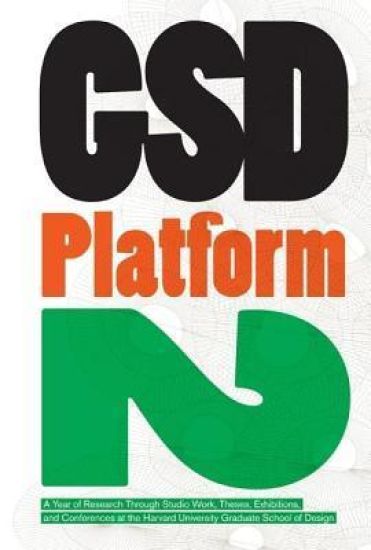
GSD Platform

GSD Platform

Felipe Correa; Michael Meredith; Mohsen Mostafavi

ActarD Inc
2009
sidottu
"Platform 2" provides a sampling of the most salient research and design explorations undertaken at the Harvard Graduate School of Design (GSD) during the 2008-2009 academic year. Organized thematically, the publication identifies underlying congruencies among studio work, theses, research, lectures, conferences, and writings to unfold some of the many critical ideas and interests currently being explored in the School. Ranging in scope from detailed material fabrication to large-scale territorial and infrastructural strategies, the work spans a broad and diverse set of geographies and scenarios. In documenting this work, the publication archives and disseminates the rich intellectual momentum of the GSD. With contributions by Dirk Sijmons, Sissel Tolaas, Scheri Fultiner, Louisa Hutton, Matthias Sauerbruch, Judith Grant Long, Jose Luis Vallejo / Belinda Tato, Joshua Prince Ramus, Chris Reed, among others.