Kirjojen hintavertailu – 12 903 724 kirjaa ja 27 kauppaa

Kirjailija

Michael Middleton

Kirjat ja teokset yhdessä paikassa: 4 kirjaa, julkaisuja vuosilta 2015–2022, suosituimpiin kuuluu Habits of Success. Vertaile teosten hintoja ja tarkista saatavuus suomalaisista kirjakaupoista.

4 kirjaa

Kirjojen julkaisuvuodet: 2015–2022.

Habits of Success

Habits of Success

Alinka Rutkowska; Amauche Chidozie; Andreas Schweitzer; Antony Gordon; Carl Worden; Chris Shockowitz; Christina Alva; David Solyomi; George Putnam; Gordon Wollman; Ingrid Dedecker; James D Shields; Jewel Grutman; Johnny Welsh; Joseph Clark; Joseph Laporta; Kathryn Eriksen; Kathy Oaks; Krishanthi Rondon Fuentes; Laura Gallaher; Lyndon Cerejo; Markus Pfeiler; Michael Middleton; Michelle Beyo; Mika Tienhaara; Moritz Davidesko; Muhammad Arif Anis; Patricia A Talbot; Patrick Thean; Paul L Gunn; Phillip John Campbell; Phillip Meade

Leaders Press SRL
2022
nidottu
For the sleeping giants of our workforce pursuing a more productive life, HABITS OF SUCCESS is an anthology illuminating the varieties of choices, habits and strategies that lead to the same goal: success. READING IS A KEY HABIT OF SUCCESS. FORM THE HABIT WITH ANOTHER STELLAR ANTHOLOGY FROM LEADERS PRESS As the world resumes from a year and a half of pandemic disruption, we find ourselves wondering what to do next? Should we go back to normal or move forward to better? How do we maximize our time and efforts to find our most successful selves? What habits will sustain that success the next time our world is shaken up? You will find these answers reading the brilliant contributors to HABITS OF SUCCESS. This anthology draws wisdom from over a dozen exceptional leaders, ranging from CEOs to Coaches to world-changers. Habits of Success presents a diverse array of habits that you may choose to suit your concept of success. Each chapter in Habits of Success will shed light on different methods for acquiring habits and how to utilize them on your path to success: Adopt the habit of understanding what success means to you. Practice the habit of taking risks, knowing when to diverge from the traditional path and experience the life you've always wanted to live. Thrive through the habit of adaptation to stay productive even as your world turns completely upside down. Develop daily habits of planning to improve collaborations with yourself, your coworkers, and your family. Embrace the habit of renewal as you evolve into this next chapter of life. As the world restarts, take this opportunity to assess the path you are on. Are you taking the most efficient path? How certain are you that success awaits and the end of this journey? Fortunately, habits are products of behavior. You can always adapt them to suit the situation and goals. What habits will accompany you on the next leg of your journey? Get a copy of Habits of Success and pave your path to success today
Participatory Critical Rhetoric

Participatory Critical Rhetoric

Michael Middleton; Aaron Hess; Danielle Endres; Samantha Senda-Cook

Lexington Books
2017
nidottu
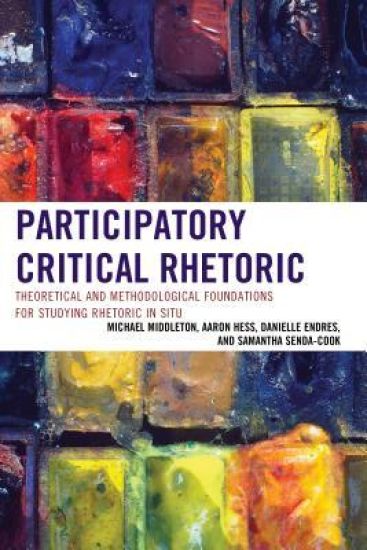
Increasingly, rhetorical scholars are using fieldwork and other ethnographic, performance, and qualitative methods to access, document, and analyze forms of everyday in situ rhetoric rather than using already documented texts. In this book, the authors argue that participatory critical rhetoric, as an approach to in situ rhetoric, is a theoretically, methodologically, and praxiologically robust approach to critical rhetorical studies. This book addresses how participatory critical rhetoric furthers understanding of the significant role that rhetoric plays in everyday life through expanding the archive of rhetorical practices and texts, emplacing rhetorical critics in direct conversation with rhetors and audiences at the moment of rhetorical invention, and highlighting marginalized voices that might otherwise go unnoticed. This book organizes the theoretical and methodological foundations of participatory critical rhetoric through four vectors that enhance conventional rhetorical approaches: 1) the political commitments of the critic; 2) rhetorical reflexivity and the role of the embodied critic; 3) emplaced rhetoric and the interplay between the field, text, and context; and 4) multiperspectival judgment that is informed by direct participation with rhetors and audiences. In addition to laying the groundwork and advocating for the approach, Participatory Critical Rhetoric also offers significant contributions to rhetorical theory and criticism more broadly by revisiting the field’s understanding of core topics such as role of the critic, text/context, audience, rhetorical effect, and the purpose of criticism. Further, it enhances theoretical conversations about material rhetoric, place/space, affect, intersectional rhetoric, embodiment, and rhetorical reflexivity.
Participatory Critical Rhetoric

Participatory Critical Rhetoric

Michael Middleton; Aaron Hess; Danielle Endres; Samantha Senda-Cook

Lexington Books
2015
sidottu
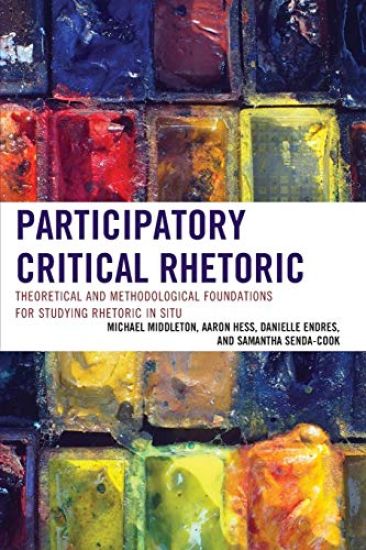
Increasingly, rhetorical scholars are using fieldwork and other ethnographic, performance, and qualitative methods to access, document, and analyze forms of everyday in situ rhetoric rather than using already documented texts. In this book, the authors argue that participatory critical rhetoric, as an approach to in situ rhetoric, is a theoretically, methodologically, and praxiologically robust approach to critical rhetorical studies. This book addresses how participatory critical rhetoric furthers understanding of the significant role that rhetoric plays in everyday life through expanding the archive of rhetorical practices and texts, emplacing rhetorical critics in direct conversation with rhetors and audiences at the moment of rhetorical invention, and highlighting marginalized voices that might otherwise go unnoticed. This book organizes the theoretical and methodological foundations of participatory critical rhetoric through four vectors that enhance conventional rhetorical approaches: 1) the political commitments of the critic; 2) rhetorical reflexivity and the role of the embodied critic; 3) emplaced rhetoric and the interplay between the field, text, and context; and 4) multiperspectival judgment that is informed by direct participation with rhetors and audiences. In addition to laying the groundwork and advocating for the approach, Participatory Critical Rhetoric also offers significant contributions to rhetorical theory and criticism more broadly by revisiting the field’s understanding of core topics such as role of the critic, text/context, audience, rhetorical effect, and the purpose of criticism. Further, it enhances theoretical conversations about material rhetoric, place/space, affect, intersectional rhetoric, embodiment, and rhetorical reflexivity.