Kirjojen hintavertailu – 12 903 724 kirjaa ja 27 kauppaa

Kirjailija

Michael Muhr

Kirjat ja teokset yhdessä paikassa: 3 kirjaa, julkaisuja vuosilta 2023–2024, suosituimpiin kuuluu Partial Discharges (PD). Vertaile teosten hintoja ja tarkista saatavuus suomalaisista kirjakaupoista.

3 kirjaa

Kirjojen julkaisuvuodet: 2023–2024.

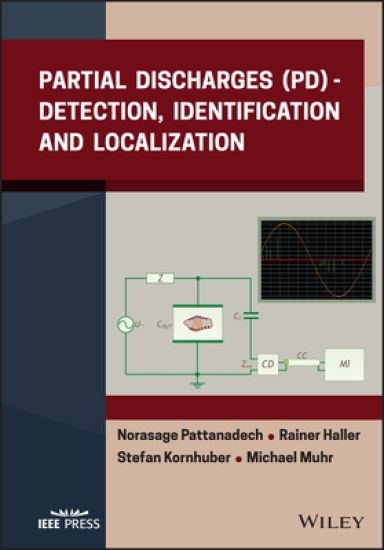
Partial Discharges (PD)

Partial Discharges (PD)

Norasage Pattanadech; Rainer Haller; Stefan Kornhuber; Michael Muhr

JOHN WILEY SONS INC
2023
sidottu
PARTIAL DISCHARGES (PD) — DETECTION, IDENTIFICATION AND LOCALIZATION Explore state-of-the-art partial discharge measurement techniques In Partial Discharges (PD) — Detection, Identification and Localization, a team of distinguished electrical engineers delivers a comprehensive treatment of the behavior, modeling, measurement, monitoring, localization, and evaluation of partial discharges. It includes coverage of all major advancements in the field that have occurred over the last few decades. It also discusses partial discharge phenomena, detection methods, and strategies for analyzing and processing collected data. Mechanisms of insulation failure are explored, as is the denoising of partial discharge measurement data and the localization of partial discharge in large, high-voltage equipment. Non-electric principles and procedures are discussed, and the book offers a variety of tables, figures, and photographs to illustrate the concepts discussed within. Partial Discharges(PD) also provides: A thorough introduction to the physical behavior of partial discharges, including their causes and classificationComprehensive modeling of partial discharge behavior, including classical and dipole dischargesPractical discussions of the measurement of partial discharges, including the electrical method, partial discharge decoupling, and pre- and post-processing of partial dischargesIn-depth examinations of the monitoring of partial discharge behavior, including methods and realization Perfect for electrical engineers engaged in electrical power engineering, Partial Discharges (PD) will also earn a place in the libraries of research and development specialists employed in the manufacturing, quality testing and operation of electrical systems.

Biological Insulating Liquids

Biological Insulating Liquids

Ernst Peter Pagger; Norasage Pattanadech; Frank Uhlig; Michael Muhr

Springer International Publishing AG
2024
nidottu
This book describes the state-of-the-art use of biological insulating liquids in detail. In recent years, more and more transformers filled with esters have been put into operation. This is because people recognize the benefits of ester liquids in terms of their fire safety (high flash and fire points) and environmental characteristics, judging from their biodegradability, their low CO2 footprint (only valid for natural ester) and their beneficial interactions with solid insulation, etc. One of the main reasons is that the water adsorption and absorption characteristics of these liquids are excellent and very different compared to mineral oil. The today’s discussion about climate change and global warming is an additional driver for using natural ester. Another advantage is that transformers filled with biological insulating liquids can operate with an overload of up to 150%. This is advantageous in the case of volatile energy generation from wind and solar power and in the supply of electrical energy for electromobility. Liquid inside electrical equipment is the lifeblood that serves both as a dielectric and a cooling medium. Some properties of these liquids differ from mineral oil, which had to be considered in the transformer design. The dielectric liquid is always in direct contact with transformer materials; therefore, the interaction should be very well understood, especially when retrofilling an existing mineral oil filled device. There are several natural ester fluids derived from various seeds and fruits on the market, and their properties may differ more or less. In the book, the most important properties of the different biological insulating fluids and mineral oil are compared. Ester fluids have already found their way into various standards. The condition of the device can be verified very well from the contents of the insulating liquids. For analysis and testing, the same equipment and devices that are commonly used for mineral oilare used for ester liquid. The chemical and physical behaviors of ester fluids compared to mineral oil are different. This must always be considered when interpreting test results stemming from ester fluids. The book is a guideline for students, original equipment manufacturers, users, laboratories and authorities in the use of biological insulating liquids.
Biological Insulating Liquids

Biological Insulating Liquids

Ernst Peter Pagger; Norasage Pattanadech; Frank Uhlig; Michael Muhr

Springer International Publishing AG
2023
sidottu
This book describes the state-of-the-art use of biological insulating liquids in detail. In recent years, more and more transformers filled with esters have been put into operation. This is because people recognize the benefits of ester liquids in terms of their fire safety (high flash and fire points) and environmental characteristics, judging from their biodegradability, their low CO2 footprint (only valid for natural ester) and their beneficial interactions with solid insulation, etc. One of the main reasons is that the water adsorption and absorption characteristics of these liquids are excellent and very different compared to mineral oil. The today’s discussion about climate change and global warming is an additional driver for using natural ester. Another advantage is that transformers filled with biological insulating liquids can operate with an overload of up to 150%. This is advantageous in the case of volatile energy generation from wind and solar power and in the supply of electrical energy for electromobility. Liquid inside electrical equipment is the lifeblood that serves both as a dielectric and a cooling medium. Some properties of these liquids differ from mineral oil, which had to be considered in the transformer design. The dielectric liquid is always in direct contact with transformer materials; therefore, the interaction should be very well understood, especially when retrofilling an existing mineral oil filled device. There are several natural ester fluids derived from various seeds and fruits on the market, and their properties may differ more or less. In the book, the most important properties of the different biological insulating fluids and mineral oil are compared. Ester fluids have already found their way into various standards. The condition of the device can be verified very well from the contents of the insulating liquids. For analysis and testing, the same equipment and devices that are commonly used for mineral oilare used for ester liquid. The chemical and physical behaviors of ester fluids compared to mineral oil are different. This must always be considered when interpreting test results stemming from ester fluids. The book is a guideline for students, original equipment manufacturers, users, laboratories and authorities in the use of biological insulating liquids.