Kirjojen hintavertailu – 12 903 725 kirjaa ja 27 kauppaa

Kirjailija

Michael Neuman

Kirjat ja teokset yhdessä paikassa: 6 kirjaa, julkaisuja vuosilta 2010–2025, suosituimpiin kuuluu Planning, Urban Design, and Architecture for Climate Action. Vertaile teosten hintoja ja tarkista saatavuus suomalaisista kirjakaupoista.

6 kirjaa

Kirjojen julkaisuvuodet: 2010–2025.

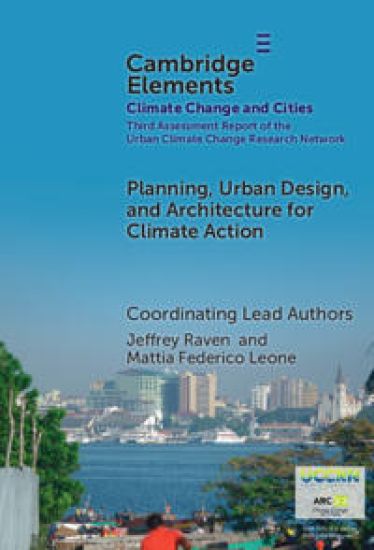
Planning, Urban Design, and Architecture for Climate Action

Planning, Urban Design, and Architecture for Climate Action

Jeffrey Raven; Mattia Federico Leone; Sanjukkta Bhaduri; Christian Braneon; David Corbett; David Driskell; Ursula Eicker; John E. Fernandez; Jing Gan; Anna Hürlimann; Ilana Judah; Michael Neuman; Barbara Norman; Dennis Pamlin; Chao Ren; Rob Roggema; Pourya Salehi; Anne Shellum; Joel Towers; Cristina Visconti

Cambridge University Press
2025
sidottu

Halvin toimitettuna 79,30 €

Embedding climate resilient development principles in planning, urban design, and architecture means ensuring that transformation of the built environment helps achieve carbon neutrality, effective adaptation, and well-being for people and nature. Planners, urban designers, and architects are called to bridge the domains of research and practice and evolve their agency and capacity, developing methods and tools consistent across spatial scales to ensure the convergence of outcomes towards targets. Shaping change necessitates an innovative action-driven framework with multi-scale analysis of urban climate factors and co-mapping, co-design, and co-evaluation with city stakeholders and communities. This Element provides analysis on how urban climate factors, system efficiency, form and layout, building envelope and surface materials, and green/blue infrastructure affect key metrics and indicators related to complementary aspects like greenhouse gas emissions, impacts of extreme weather events, spatial and environmental justice, and human comfort. This title is also available as open access on Cambridge Core.
Planning, Urban Design, and Architecture for Climate Action

Planning, Urban Design, and Architecture for Climate Action

Jeffrey Raven; Mattia Federico Leone; Sanjukkta Bhaduri; Christian Braneon; David Corbett; David Driskell; Ursula Eicker; John E. Fernandez; Gan Jing; Anna Hürlimann; Ilana Judah; Michael Neuman; Barbara Norman; Dennis Pamlin; Ren Chao; Rob Roggema; Pourya Salehi; Anne Shellum; Joel Towers; Cristina Visconti

Cambridge University Press
2025
pokkari
Embedding climate resilient development principles in planning, urban design, and architecture means ensuring that transformation of the built environment helps achieve carbon neutrality, effective adaptation, and well-being for people and nature. Planners, urban designers, and architects are called to bridge the domains of research and practice and evolve their agency and capacity, developing methods and tools consistent across spatial scales to ensure the convergence of outcomes towards targets. Shaping change necessitates an innovative action-driven framework with multi-scale analysis of urban climate factors and co-mapping, co-design, and co-evaluation with city stakeholders and communities. This Element provides analysis on how urban climate factors, system efficiency, form and layout, building envelope and surface materials, and green/blue infrastructure affect key metrics and indicators related to complementary aspects like greenhouse gas emissions, impacts of extreme weather events, spatial and environmental justice, and human comfort. This title is also available as open access on Cambridge Core.

Sustainable Infrastructure for Cities and Societies
The central role of infrastructure to cities, and in particular their sustainability, is essential for proper planning and design since most energy and materials are themselves consumed by or through infrastructures. Moreover, infrastructures of all types affect matters of economic and social equity, due to access that they provide or prevent. Sustainable Infrastructure for Cities and Societies shows how fundamental planning, design, finance, and governance principles can be adapted for sustainable infrastructure to provide solutions to make cities significantly more sustainable. By providing a contemporary overview on infrastructure, cities, planning, economies, and sustainability, the book addresses how to plan, design, finance, and manage infrastructure in ways that reduce consumption and harmful impacts while maintaining and improving life quality. It considers the interrelationships between the economic, political, societal, and institutional frameworks, providing an integrative approach including livability and sustainability, principles and practice, and planning and design. It further translates these approaches that professionals, policymakers, and leaders can use. This approach gives the book wide appeal for students, researchers, and practitioners hoping to build a more sustainable world.
Sustainable Infrastructure for Cities and Societies
The central role of infrastructure to cities, and in particular their sustainability, is essential for proper planning and design since most energy and materials are themselves consumed by or through infrastructures. Moreover, infrastructures of all types affect matters of economic and social equity, due to access that they provide or prevent. Sustainable Infrastructure for Cities and Societies shows how fundamental planning, design, finance, and governance principles can be adapted for sustainable infrastructure to provide solutions to make cities significantly more sustainable. By providing a contemporary overview on infrastructure, cities, planning, economies, and sustainability, the book addresses how to plan, design, finance, and manage infrastructure in ways that reduce consumption and harmful impacts while maintaining and improving life quality. It considers the interrelationships between the economic, political, societal, and institutional frameworks, providing an integrative approach including livability and sustainability, principles and practice, and planning and design. It further translates these approaches that professionals, policymakers, and leaders can use. This approach gives the book wide appeal for students, researchers, and practitioners hoping to build a more sustainable world.
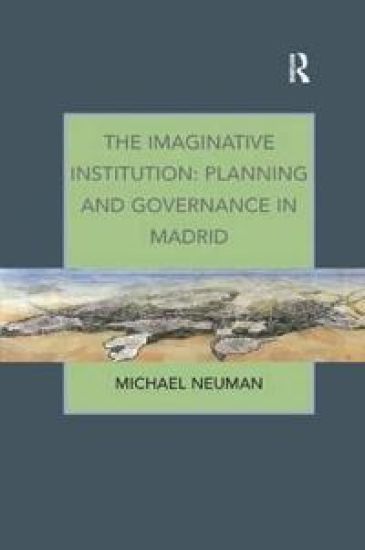
The Imaginative Institution: Planning and Governance in Madrid
Every 20 years since 1920, Madrid has undergone an urban planning cycle in which a city plan was prepared, adopted by law, and implemented by a new institution. This preparation-adoption-institutionalization sequence, along with the institution's structures and procedures, have persisted - with some exceptions - despite frequent upheavals in society. The planning institution itself played a lead role in maintaining continuity, traumatic history notwithstanding. Why and how was this the case? Madrid's planners, who had mostly trained as architects, invented new images for the city and metro region: images of urban space that were social constructs, the products of planning processes. These images were tools that coordinated planning and urban policy. In a complex, fragmented institutional milieu in which scores of organized interests competed in overlapping policy arenas, images were a cohesive force around which plans, policies, and investments were shaped. Planners in Madrid also used their images to build new institutions. Images began as city or metropolitan designs or as a metaphor capturing a new vision. New political regimes injected their principles and beliefs into the governing institution via images and metaphors. These images went a long way in constituting the new institution, and in helping realize each regime's goals. This empirically-based life cycle theory of institutional evolution suggests that the constitutional image sustaining the institution undergoes a change or is replaced by a new image, leading to a new or reformed institution. A life cycle typology of institutional transformation is formulated with four variables: type of change, stimulus for change, type of constitutional image, and outcome of the transformation. By linking the life cycle hypothesis with cognitive theories of image formation, and then situating their synthesis within a frame of cognition as a means of structuring the institution, this book arrives at a new theory
The Imaginative Institution: Planning and Governance in Madrid
Every 20 years since 1920, Madrid has undergone an urban planning cycle in which a city plan was prepared, adopted by law, and implemented by a new institution. This preparation-adoption-institutionalization sequence, along with the institution's structures and procedures, have persisted - with some exceptions - despite frequent upheavals in society. The planning institution itself played a lead role in maintaining continuity, traumatic history notwithstanding. Why and how was this the case? Madrid's planners, who had mostly trained as architects, invented new images for the city and metro region: images of urban space that were social constructs, the products of planning processes. These images were tools that coordinated planning and urban policy. In a complex, fragmented institutional milieu in which scores of organized interests competed in overlapping policy arenas, images were a cohesive force around which plans, policies, and investments were shaped. Planners in Madrid also used their images to build new institutions. Images began as city or metropolitan designs or as a metaphor capturing a new vision. New political regimes injected their principles and beliefs into the governing institution via images and metaphors. These images went a long way in constituting the new institution, and in helping realize each regime's goals. This empirically-based life cycle theory of institutional evolution suggests that the constitutional image sustaining the institution undergoes a change or is replaced by a new image, leading to a new or reformed institution. A life cycle typology of institutional transformation is formulated with four variables: type of change, stimulus for change, type of constitutional image, and outcome of the transformation. By linking the life cycle hypothesis with cognitive theories of image formation, and then situating their synthesis within a frame of cognition as a means of structuring the institution, this book arrives at a new theory