Kirjojen hintavertailu – 12 903 725 kirjaa ja 27 kauppaa

Kirjailija

Michael Nevell

Kirjat ja teokset yhdessä paikassa: 7 kirjaa, julkaisuja vuosilta 2012–2026, suosituimpiin kuuluu Manchester at Work. Vertaile teosten hintoja ja tarkista saatavuus suomalaisista kirjakaupoista.

7 kirjaa

Kirjojen julkaisuvuodet: 2012–2026.

Manchester’s Industrial Heritage

Manchester’s Industrial Heritage

Michael Nevell

AMBERLEY PUBLISHING
2026
nidottu
Manchester was the world’s first industrial city, the shock city of the Victorian age. Its nineteenth-century dominance of world cotton production, as Cottonopolis, saw its city region emerge as one of the largest urban areas in Europe. The city continues to re-invent itself in the post-industrial era, but there is a rich industrial heritage legacy that is still visible, from the Northern Quarter to Ardwick. There are dozens of eighteenth-century weavers’ cottages hiding in plain sight, whilst many of the textile mills of Ancoats and Chorlton-on-Medlock, often converted into apartments, still stand as markers of the city’s role as a textile-manufacturing colossus. Elsewhere in the city, you can find buildings associated with brewing, glass-making, electricity generation, warehousing, and water supply, often in the shadow of the of the twenty-first-century city’s renaissance. Its internationally important canal and railway buildings and structures, saved during the 1970s and 1980s, now provide offices, homes, and leisure facilities for the growing city-centre population. In this wide-ranging book Michael Nevell provides an overview of the surprising and often breathtaking survival of Manchester’s industrial face, helping to tell the physical story of the world’s first industrial city.

The Archaeology of Ironbridge Gorge in 20 Digs

The Archaeology of Ironbridge Gorge in 20 Digs

Michael Nevell

AMBERLEY PUBLISHING
2023
nidottu
The Ironbridge Gorge in Shropshire is one of the cradles of industrialisation. At its heart is the Iron Bridge spanning the River Severn, one of the world’s first iron bridges and an iconic image of the Industrial Revolution. The area’s role in helping to transform Britain into the world’s first industrial society earned it UNESCO World Heritage Site status in 1986. Industrialisation in and around the gorge was shaped and constrained by the landscape and this is reflected in the range of extractive, manufacturing, and transport sites in the area. These include Abraham Darby’s coke-fired iron furnace of 1709, the first steel furnace in England at the Upper Forge, brick and tile works, canals, tramways, and workers’ housing. The Archaeology of Ironbridge Gorge in 20 Digs explores a range of sites and material evidence excavated from the 1970s to the 2010s. It combines archaeological excavation with the analysis of the industrial and domestic buildings that helped to create the Ironbridge industrial community, and which continue to form an integral part of this internationally important twenty-first-century landscape.
The Archaeology of Manchester in 20 Digs

The Archaeology of Manchester in 20 Digs

Michael Nevell

Amberley Publishing
2020
nidottu
Manchester has always had the ability to reinvent itself. Evolving from a Roman fort to an Elizabethan linen market town and a Georgian market centre, it became the world’s largest cotton spinning town in the early nineteenth century. In the Victorian period it was a commercial, engineering and port city. After industry declined in the mid-twentieth century Manchester re-emerged as an education, music and sports destination. The urban regeneration needed to revive Manchester was an archaeological opportunity to explore the city’s deep roots and its more recent radical past. Over fifty digs have been undertaken since 2000, changing our understanding of the city’s origins, which are prehistoric, Roman, and international. Archaeological remains from bricks and cobbles to pots and glass bottles have helped to bring to life the world’s first industrial city, with its pioneering canals and railways, filth and poverty. Even the city’s newer history of live music has been rediscovered through modern archaeology.
Manchester at Work

Manchester at Work

Michael Nevell

Amberley Publishing
2018
nidottu
Manchester is a city with an unparalleled industrial heritage. It gave the world technological innovation as well as manufacturing strength. The city’s wealth came from textile manufacture during the Industrial Revolution. The great majority of cotton spinning took place in south Lancashire and north Cheshire, and Manchester was for a time the most productive centre of cotton processing in the world, earning it the sobriquet ‘Cottonopolis’. Manchester’s population grew at an astonishing rate in the early nineteenth century as people flocked there for work from Scotland, Wales, Ireland and other parts of England. The firms that made machines for the cotton trade diversified into general manufacture, the chemical industry expanded into other areas, financial service industries such as banking and insurance began to flourish and its transport and distribution infrastructure expanded in order to sustain booming trade and agrowing population. Manchester at Work explores the life of the city and its people, from pre-industrial beginnings through to the present day. In a fascinating series of contemporary photographs and illustrations, it takes us through the dramatic rise and fall of the textile industry and the town’s role as a major inland port, the trauma of high unemployment between the wars, post-war industrial decline and late twentieth-century regeneration, and into the twenty-first century, showing how this erstwhile ‘Second City of Empire’ has rediscovered its swagger and successfully transformed itself into a thriving post-industrial centre of arts, culture and commerce.
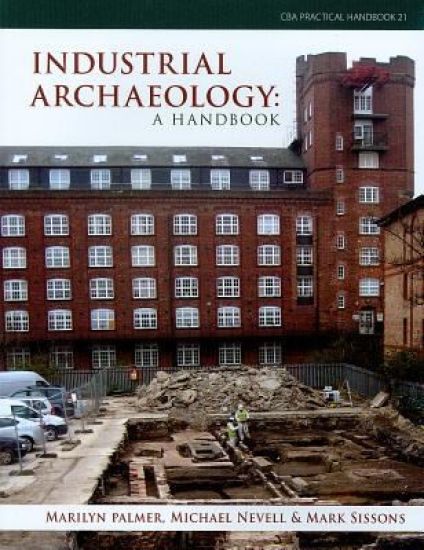
Industrial Archaeology

Industrial Archaeology

Marilyn Palmer; Michael Nevell; Mark Sissons

Council for British Archaeology
2012
nidottu
This Handbook provides an informative and accessible guide to the industrial remains of the UK. It is essential reading for anyone with an interest in our industrial heritage, giving concise summaries of the history of different industries, together with descriptions of the structures and below-ground remains likely to be encountered. The book also considers the power which drove these industries, the transport network which delivered the products and the houses in which the workforce lived. It further reviews the legislation protecting industrial sites and the problems and potential of their adaptive re-use.