Kirjojen hintavertailu – 12 859 828 kirjaa ja 27 kauppaa

Kirjailija

Michael Niblett

Kirjat ja teokset yhdessä paikassa: 6 kirjaa, julkaisuja vuosilta 2012–2024, suosituimpiin kuuluu Tracking Capital. Vertaile teosten hintoja ja tarkista saatavuus suomalaisista kirjakaupoista.

6 kirjaa

Kirjojen julkaisuvuodet: 2012–2024.

Tracking Capital

Tracking Capital

Sharae Deckard; Michael Niblett; Stephen Shapiro

STATE UNIVERSITY OF NEW YORK PRESS
2024
pokkari
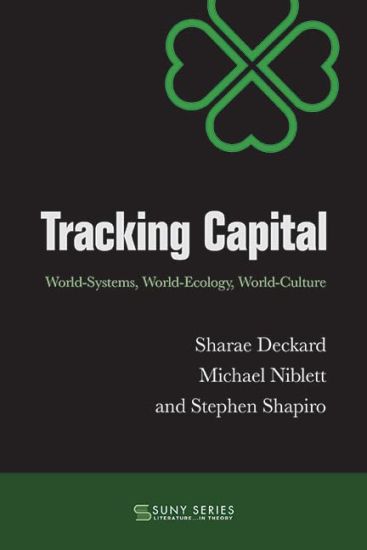
Offers new ways to read the relationship between culture, ecology, and capitalism. Tracking Capital introduces new ways to understand the entanglement of cultural forms and practices in economic, social, and ecological crises and struggles. Building on the fundamental insights of world-systems analysis, the book offers readers a series of rubrics, keywords, and concepts-such as zemiperiphery, registration, and commodity chains-to enable more integrated, transdisciplinary methods of literary and cultural study. Throughout, Sharae Deckard, Michael Niblett, and Stephen Shapiro foreground the role of culture in both consolidating and contesting the classism, racism, sexism, and ecocide constitutive of the modern world-system. In the context of capitalism's ongoing bloody war against the poor, the powerless, and the planet, Tracking Capital provides tools with which to diagnose the morbid symptoms of the present, as well as to plot possible steps on the road to a better future.
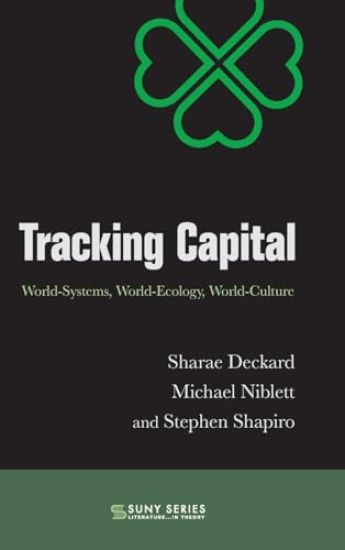
Tracking Capital

Tracking Capital

Sharae Deckard; Michael Niblett; Stephen Shapiro

STATE UNIVERSITY OF NEW YORK PRESS
2024
sidottu
Offers new ways to read the relationship between culture, ecology, and capitalism. Tracking Capital introduces new ways to understand the entanglement of cultural forms and practices in economic, social, and ecological crises and struggles. Building on the fundamental insights of world-systems analysis, the book offers readers a series of rubrics, keywords, and concepts-such as zemiperiphery, registration, and commodity chains-to enable more integrated, transdisciplinary methods of literary and cultural study. Throughout, Sharae Deckard, Michael Niblett, and Stephen Shapiro foreground the role of culture in both consolidating and contesting the classism, racism, sexism, and ecocide constitutive of the modern world-system. In the context of capitalism's ongoing bloody war against the poor, the powerless, and the planet, Tracking Capital provides tools with which to diagnose the morbid symptoms of the present, as well as to plot possible steps on the road to a better future.
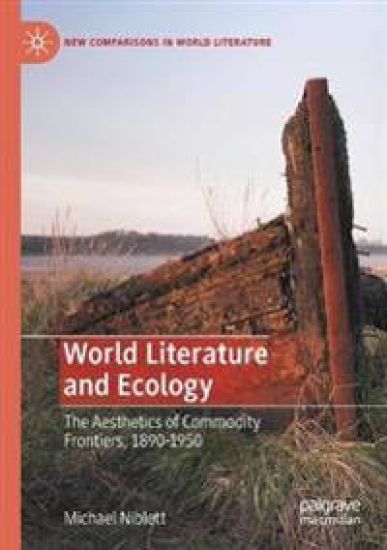
World Literature and Ecology

World Literature and Ecology

Michael Niblett

Springer Nature Switzerland AG
2021
nidottu
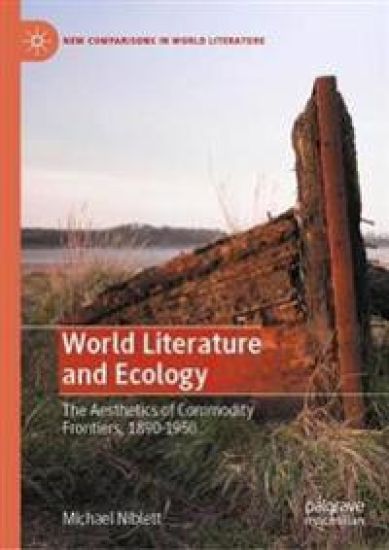
Located at the intersection of world-literary studies and the environmental humanities, this book analyses how fiction and poetry respond to the ecological transformations entailed by commodity frontiers. Examining the sugar, cacao, coal, and oil frontiers in Trinidad, Brazil, and Britain, World Literature and Ecology shows how literary texts have registered the relationship between the re-making of biophysical natures and struggles around class, race, and gender. It combines a materialist theory of world-literature with the insights of the world-ecology perspective to generate compelling new readings of writers such as Rhys Davies, Yseult Bridges, Lewis Jones, José Lins do Rego, Ellen Wilkinson, Jorge Amado, Gwyn Thomas, and Ralph de Boissière. The book represents a timely intervention into a series of field-defining debates around peripheral realisms and modernisms, ecocriticism, and the energy humanities.
World Literature and Ecology

World Literature and Ecology

Michael Niblett

Springer Nature Switzerland AG
2020
sidottu
Located at the intersection of world-literary studies and the environmental humanities, this book analyses how fiction and poetry respond to the ecological transformations entailed by commodity frontiers. Examining the sugar, cacao, coal, and oil frontiers in Trinidad, Brazil, and Britain, World Literature and Ecology shows how literary texts have registered the relationship between the re-making of biophysical natures and struggles around class, race, and gender. It combines a materialist theory of world-literature with the insights of the world-ecology perspective to generate compelling new readings of writers such as Rhys Davies, Yseult Bridges, Lewis Jones, José Lins do Rego, Ellen Wilkinson, Jorge Amado, Gwyn Thomas, and Ralph de Boissière. The book represents a timely intervention into a series of field-defining debates around peripheral realisms and modernisms, ecocriticism, and the energy humanities.
The Caribbean Novel Since 1945

The Caribbean Novel Since 1945

Michael Niblett

University Press of Mississippi
2014
nidottu
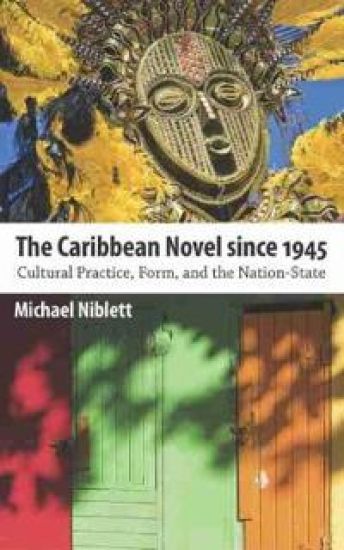
The Caribbean Novel since 1945 offers a comparative analysis of fiction from across the pan-Caribbean, exploring the relationship between literary form, cultural practice, and the nation-state. Engaging with the historical and political impact of capitalist imperialism, decolonization, class struggle, ethnic conflict, and gender relations, it considers the ways in which Caribbean authors have sought to rethink and re-narrate the traumatic past and often problematic 'postcolonial' present of the region's peoples. It pays particular attention to the role cultural practices such as stickfighting and Carnival, as well as religious rituals and beliefs like Vodou and Myal, have played in efforts to reshape the novel form. In so doing, it provides an original perspective on the importance of these practices, with their emphasis on bodily movement, to the development of new philosophies of history. Beginning in the post-WWII period, when optimism surrounding the possibility of social and political change was at a peak, The Caribbean Novel since 1945 interrogates the trajectories of various national projects through to the present. It explores how the textual histories of common motifs in Caribbean writing have functioned to encode the fluctuating fortunes of different political dispensations. The scope of the analysis is varied and comprehensive, covering both critically acclaimed and lesser-known authors from the Anglophone, Francophone, and Hispanophone traditions. These include Jacques Roumain, Sam Selvon, Marie Chauvet, Luis Rafael Sánchez, Earl Lovelace, Patrick Chamoiseau, Erna Brodber, Wilson Harris, Shani Mootoo, Oonya Kempadoo, Ernest Moutoussamy, and Pedro Juan Gutiérrez. Mixing detailed analysis of key texts with wider surveys of significant trends, this book emphasizes the continuing significance of representations of the nation-state to literary articulations of resistance to the imperialist logic of global capital.
The Caribbean Novel Since 1945

The Caribbean Novel Since 1945

Michael Niblett

University Press of Mississippi
2012
sidottu
The Caribbean Novel since 1945 offers a comparative analysis of fiction from across the pan-Caribbean, exploring the relationship between literary form, cultural practice, and the nation-state. Engaging with the historical and political impact of capitalist imperialism, decolonization, class struggle, ethnic conflict, and gender relations, it considers the ways in which Caribbean authors have sought to rethink and re-narrate the traumatic past and often problematic 'postcolonial' present of the region's peoples. It pays particular attention to the role cultural practices such as stickfighting and Carnival, as well as religious rituals and beliefs like Vodou and Myal, have played in efforts to reshape the novel form. In so doing, it provides an original perspective on the importance of these practices, with their emphasis on bodily movement, to the development of new philosophies of history. Beginning in the post-WWII period, when optimism surrounding the possibility of social and political change was at a peak, The Caribbean Novel since 1945 interrogates the trajectories of various national projects through to the present. It explores how the textual histories of common motifs in Caribbean writing have functioned to encode the fluctuating fortunes of different political dispensations. The scope of the analysis is varied and comprehensive, covering both critically acclaimed and lesser-known authors from the Anglophone, Francophone, and Hispanophone traditions. These include Jacques Roumain, Sam Selvon, Marie Chauvet, Luis Rafael Sánchez, Earl Lovelace, Patrick Chamoiseau, Erna Brodber, Wilson Harris, Shani Mootoo, Oonya Kempadoo, Ernest Moutoussamy, and Pedro Juan Gutiérrez. Mixing detailed analysis of key texts with wider surveys of significant trends, this book emphasizes the continuing significance of representations of the nation-state to literary articulations of resistance to the imperialist logic of global capital.