Kirjojen hintavertailu – 12 903 725 kirjaa ja 27 kauppaa

Kirjailija

Michael North

Kirjat ja teokset yhdessä paikassa: 42 kirjaa, julkaisuja vuosilta 1983–2026, suosituimpiin kuuluu Die Geburt Des Kunstmarkts: Rembrandt, Ruisdael, Van Goyen Und Die Kunst Des Goldenen Zeitalters. Vertaile teosten hintoja ja tarkista saatavuus suomalaisista kirjakaupoista.

42 kirjaa

Kirjojen julkaisuvuodet: 1983–2026.

Kommunikation, Handel, Geld und Banken in der Frühen Neuzeit
Kommunikation, Handel, Geld und Banken scheinen auf den ersten Blick heterogene Untersuchungsgegenstände zu sein. Michael North diskutiert in diesem Band gemeinsame Strukturelemente. Hierzu gehört vor allem die gesamteuropäische Prägung, die noch heute in Begriffen wie Post, Bank, Börse oder Bankrott zum Ausdruck kommt. In keinem Sektor der "deutschen" Wirtschaft waren die internationalen Einflüsse so groß wie in der Kommunikation, die hier im umfassenden Sinn verstanden wird, im Handel sowie bei der Entwicklung des Geld- und Bankwesens. Da auf den Gebieten von Handel und Finanz die Adaption süd- und westeuropäischer Innovationen in Deutschland seit dem Mittelalter eine große Rolle spielte, fanden diese Aspekte ebenso Berücksichtigung wie die westdeutsche Forschungsdebatte. Jüngste Forschungsergebnisse, die aktuelle Strömungen und Tendenzen erfassen, und die aktualisierte Bibliographie bereichern die neue Auflage.
Novelty

Novelty

Michael North

University of Chicago Press
2013
sidottu
If art and science have one thing in common, it's a hunger for the new - new ideas and innovations, new ways of seeing and depicting the world. But that desire for novelty carries with it a fundamental philosophical problem: If everything has to come from something, how can anything truly new emerge? Is novelty even possible? In Novelty, Michael North takes us on a dazzling tour of more than two millennia of thinking about the problem of the new, from the puzzles of the pre-Socratics all the way up to the art world of the 1960s and '70s. The terms of the debate, North shows, were established before Plato, and have changed very little since: novelty, philosophers argued, could only arise from either recurrence or recombination. The former, found in nature's cycles of renewal, and the latter, seen most clearly in the workings of language - between them we have accounted for nearly all the ways in which novelty has been conceived of in Western history, including reformation, renaissance, invention, revolution, and even evolution. As he pursues this idea through centuries and across disciplines, North exhibits astonishing range, drawing on figures as diverse as Charles Darwin and Robert Smithson, Thomas Kuhn and Ezra Pound, Norbert Wiener and Andy Warhol, all of whom offer different ways of grappling with the idea of originality. Novelty, North demonstrates, remains a central problem of contemporary science and literature - an ever-receding target that, in its complexity and evasiveness, continues to inspire and propel the modern. A heady, ambitious intellectual feast, Novelty is rich with insight, a masterpiece of perceptive synthesis.
The Expansion of Europe, 1250–1500

The Expansion of Europe, 1250–1500

Michael North

Manchester University Press
2012
nidottu
Later medieval Europe saw a great deal of change and expansion of different kinds. This geographically broad textbook explores these events in a series of core chapters on the different countries, covering the Holy Roman Empire, East-Central Europe, Scandinavia and Russia. It looks not only at political history but also at economy, society and culture, including art, architecture, literature and music. North demonstrates that Europe did not consist of a core and periphery, but of different regions that had divergent developments, and makes sense of these various patterns of historical change. A review of current research debates also introduces readers to the most up to date discussions in the field. This volume provides an excellent, clear and comprehensive survey for students, while also throwing light on these societies from unexpected angles. It offers fresh perspectives on western Europe, comparing English with Scottish and Irish development, looking at the French monarchy in a social context, and incorporating Portugal into the discussion of the Iberian Peninsula.
The Expansion of Europe, 1250–1500

The Expansion of Europe, 1250–1500

Michael North

Manchester University Press
2012
sidottu
Later medieval Europe saw a great deal of change and expansion of different kinds. This geographically broad textbook explores these events in a series of core chapters on the different countries, covering the Holy Roman Empire, East-Central Europe, Scandinavia and Russia. It looks not only at political history but also at economy, society and culture, including art, architecture, literature and music. North demonstrates that Europe did not consist of a core and periphery, but of different regions that had divergent developments, and makes sense of these various patterns of historical change. A review of current research debates also introduces readers to the most up to date discussions in the field. This volume provides an excellent, clear and comprehensive survey for students, while also throwing light on these societies from unexpected angles. It offers fresh perspectives on western Europe, comparing English with Scottish and Irish development, looking at the French monarchy in a social context, and incorporating Portugal into the discussion of the Iberian Peninsula.
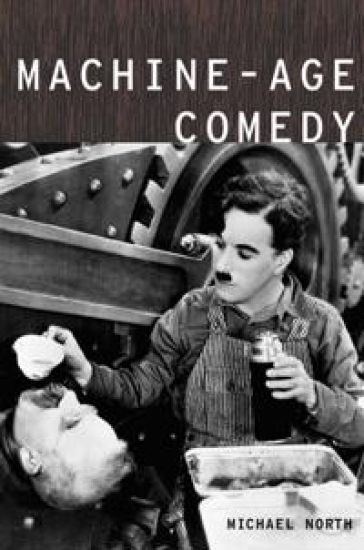
Machine-Age Comedy

Machine-Age Comedy

Michael North

Oxford University Press Inc
2009
sidottu
In this latest addition to Oxford's Modernist Literature & Culture series, renowned modernist scholar Michael North poses fundamental questions about the relationship between modernity and comic form in film, animation, the visual arts, and literature. Machine-Age Comedy vividly constructs a cultural history that spans the entire twentieth century, showing how changes wrought by industrialization have forever altered the comic mode. With keen analyses, North examines the work of a wide range of artists - including Charlie Chaplin, Walt Disney, Marcel Duchamp, Samuel Beckett, and David Foster Wallace - to show the creative and unconventional ways the routinization of industrial society has been explored in a broad array of cultural forms. Throughout, North argues that modern writers and artists found something inherently comic in new experiences of repetition associated with, enforced by, and made inevitable by the machine age. Ultimately, this rich, tightly focused study offers a new lens for understanding the devlopment of comedic structures during periods of massive social, political, and cultural change to reveal how the original promise of modern life can be extracted from its practical disappointment.
Kleine Geschichte des Geldes

Kleine Geschichte des Geldes

Michael North

C.H. BECK
2009
pokkari
Im Zeitalter von Globalisierung und Finanzkrise erscheint eine Besinnung auf die Grundlagen unseres Geldes geboten. Diese Kleine Geschichte des Geldes hilft zu verstehen, daß Kapitalströme noch nie auf den nationalen Rahmen beschränkt waren, sondern in einem weit verzweigten, nicht erst heute globalen Austausch standen. Im historischen Vergleich wird der Eurobesitzer zu schätzen wissen, daß er gegenwärtig in Europa eine unvergleichlich lange Zeit der Geldwertstabilität genießt.
The Political Aesthetic of Yeats, Eliot, and Pound

The Political Aesthetic of Yeats, Eliot, and Pound

Michael North

Cambridge University Press
2009
pokkari
The politics of Yeats, Eliot and Pound have long been a source of discomfort and difficulty for literary critics and cultural historians. In The Political Aesthetic of Yeats, Eliot and Pound, Michael North offers a subtle reading of these issues by linking aesthetic modernism with an attempt in all these writers to resolve basic contradictions in modern liberalism. The many contradictions of modernism, which is seen as inwardly personal yet impersonal, subjective and yet beholden to tradition, fragmented and yet whole, mark the reappearance in art of these political contradictions. Though Yeats, Eliot and Pound certainly attempted to resolve in art problems that could not be resolved in actuality, their very attempt resulted in a politicised aesthetic, one that confessed their inability to do so. Yet this aesthetic retained an element of critical power, precisely because it could not cover up the political contradictions that concerned it; the poetry remains a valid criticism of the status quo and even in its failure suggests the beginnings of an alternative.
Machine-Age Comedy

Machine-Age Comedy

Michael North

Oxford University Press Inc
2008
nidottu
In this latest addition to Oxford's Modernist Literature & Culture series, renowned modernist scholar Michael North poses fundamental questions about the relationship between modernity and comic form in film, animation, the visual arts, and literature. Machine-Age Comedy vividly constructs a cultural history that spans the entire twentieth century, showing how changes wrought by industrialization have forever altered the comic mode. With keen analyses, North examines the work of a wide range of artists - including Charlie Chaplin, Walt Disney, Marcel Duchamp, Samuel Beckett, and David Foster Wallace - to show the creative and unconventional ways the routinization of industrial society has been explored in a broad array of cultural forms. Throughout, North argues that modern writers and artists found something inherently comic in new experiences of repetition associated with, enforced by, and made inevitable by the machine age. Ultimately, this rich, tightly focused study offers a new lens for understanding the devlopment of comedic structures during periods of massive social, political, and cultural change to reveal how the original promise of modern life can be extracted from its practical disappointment.
'Material Delight and the Joy of Living'

'Material Delight and the Joy of Living'

Michael North

Ashgate Publishing Limited
2008
sidottu
Eighteenth-century Europe witnessed a commercialization of culture as it became less courtly and more urban. The marketing of culture became separate from the production of culture. New cultural entrepreneurs entered the stage: the impresario, the publisher, the book seller, the art dealer, the auction house, and the reading society served as middlemen between producers and consumers of culture, and constituted at the same time the beginning of a cultural service sector. Cultural consumption also played a substantial role in creating social identity. One could demonstrate social status by attending an auction, watching a play, or listening to a concert. Moreover, and eventually more significant, one could demonstrate connoisseurship and taste, which became important indicators of social standing. The centres of cultural exchange and consumption were initially the great cities of Europe. In the course of the eighteenth century, however, cultural consumption penetrated much deeper, for example into the numerous residential and university towns in Germany, where a growing number of functional elites and burghers met in coffee houses and reading societies, attended the theatre and opera, and performed orchestral and chamber music together. Journals, novels and letters were also crucial in forming consumer culture in provincial Germany: as the German states were remote from the cultural life of England and France, the material reality of London and Paris often passed as a literary construction to Germany. It is against this background, and stimulated by the research of John Brewer on England, that the book systematically explores this field for the first time in regard to the Continent, and especially to eighteenth-century Germany. Michael North focuses, chapter by chapter, on the new forms of entertainment (concerts, theatre, opera, reading societies, travelling) on the one hand and on the new material culture (fashion, gardens, country houses, furniture) on the other. At the centre of the discussion is the reception of English culture on the Continent, and the competition between English and French fashions in the homes of German elites and burghers attracts special attention. The book closes with an investigation of the role of cultural consumption for identity formation, demonstrating the integration of Germany into a European cultural identity during the eighteenth century.
Camera Works

Camera Works

Michael North

Oxford University Press Inc
2008
nidottu

Halvin toimitettuna 36,10 €

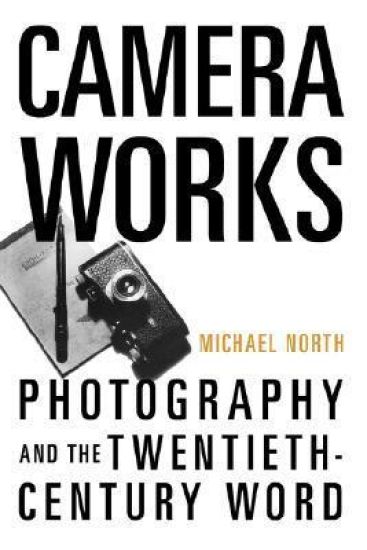
Camera Works is about the impact of photography and film on modern art and literature. For many artists and writers, these new media offered hope of new means of representation, neither linguistic nor pictorial, but hovering in a kind of utopian space between. At the same time, the new media introduced a dramatic element of novelty into the age-old evidence of the senses. For the avant-garde, the challenges of the new media were the modern in its most concentrated form, but even for aesthetically unadventurous writers they constituted an element of modern experience that could hardly be ignored. Camera Works thus traces some of the more utopian projects of transatlantic avant-garde, including the Readie machine of Bob Brown, which was to turn stories and poems into strips of linguistic film. The influence of photography and film on the avant-garde is traced from the early days of Camera Work, through the enthusiasm of Eugene Jolas and the contributors to his magazine transition, to the crisis created by the introduction of sound in the late 1920's. Subseguent chapters describe the entirely new kind of sensory enjoyment brought into modern American fiction by the new media. What Fitzgerald calls "spectroscopic gayety," the enjoyable diorientation of the senses by machine perception, turns out to be a powerful force in much American fiction. The revolutionary possibilities of this new spectatorship and its limitations are pursued through a number of examples, including Dos Passos, James Weldon Johnson, and Hemingway. Together, these chapters offer a new and substantially different account of the relationship between modern American literature and the mediatized society of the early twentieth century. With a comprehensive introduction and detailed particular readings, Camera Works substantiates a new understanding of the formal and historical bases of modernism. It argues that when modern literature and art respond to modernity, on a formal level, they are responding to the intervention of technology in the transmission of meaning, an intervention that unsettles all the terms in the essential relationship of human consciousness to the world of phenomena.
Printed Catalogues of French Book Auctions and Sales by Private Treaty 1643–1830 in the Library of the Grolier Club
Documenting in exhaustive detail the earliest and most interesting portion of the Grolier Club's renowned collection of French book auction catalogues, this book sheds new light on the twin phenomena of private collecting and the antiquarian book trade in France when it was at the height of its political power and cultural influence. It also reveals hitherto neglected physical aspects of this very interesting class of bibliography. Each of the 616 entries includes full title transcription, a detailed collation, and the number of lots, often followed by extensive comments on the circumstances of the sale, as well as the history and subsequent fate of the collection.
Reading 1922

Reading 1922

Michael North

Oxford University Press Inc
2002
nidottu
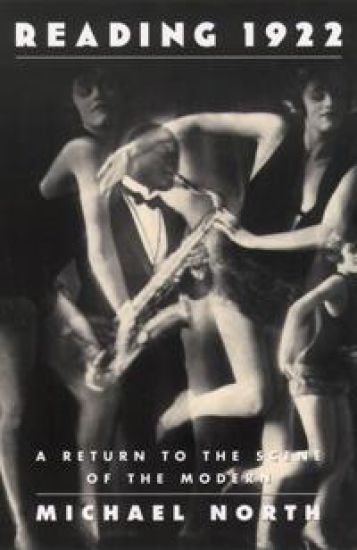
This engaging study returns to a truly remarkable year, the year in which both Ulysses and The Waste Land were published, in which The Great Gatsby was set, and during which the Fascisti took over in Italy, the Irish Free State was born, the Harlem Renaissance reached its peak, Charlie Chaplin's popularity crested, and King Tutankhamen's tomb was discovered. In short, the year which not only in hindsight became the primal scene of literary modernism but which served as the cradle for a host of major political and aesthetic transformations resonating around the globe. In his previous study, the acclaimed Dialect of Modernism (OUP, 1994), Michael North looked at the racial and linguistic struggles over the English language which gave birth to the many strains of modernism. Here, he expands his vision to encompass the global stage, and tells the story of how books changed the future of the world as we know it in one unforgettable year.
Reading 1922

Reading 1922

Michael North

Oxford University Press Inc
1999
sidottu
This study returns to the year in which Ulysses and The Waste Land were published to replace those works among the other cultural productions of the year, in the hope of giving a new start to critical controversies about aesthetic modernism and modern culture. It makes the claim that relations between these are a good deal closer and more complex than recent criticism has been willing to allow, and it illustrates these relations in its mode of organization, in order to reconstruct the larger public world into which these works were introduced.
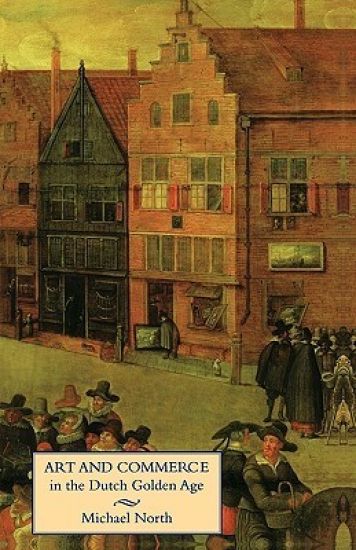
Art and Commerce in the Dutch Golden Age

Art and Commerce in the Dutch Golden Age

Michael North

Yale University Press
1999
pokkari

Halvin toimitettuna 38,70 €

During the seventeenth century, the Netherlands—a small country with just two million inhabitants and virtually no natural resources—enjoyed a "Golden Age" of economic success, world power, and tremendous artistic output. In this book Michael North examines the Dutch Golden Age, when Dutch society boasted Europe's greatest number of cities and highest literacy rate, unusually large numbers of publicly and privately owned art works, religious tolerance, and a highly structured and wide-ranging social network. He explores the reasons for the country's success in trade and industry as it emerged from the Eighty Years' War against Spain, and the ways that art played a role in the innovative climate of the times. North looks at the practical aspects of this Golden Age—the banking system, demographic changes, and what made such industries as textiles and shipbuilding so successful. In this period commercialization not only had far-reaching effects on the economic life of the Netherlands, it also affected art, as market forces proved more powerful than patronage for the first time in Europe. With fascinating information about many artists, including Vermeer, Frans Hals, and Pieter de Hooch, North considers painting as a profession, the exhibitions and sales of art works (including the Dutch lottery system), auctions, and the prices that were paid for art. He compares the prices of different artistic genres and studies patterns of picture ownership. Through a close analysis of the private collection of Rembrandt's money lender, Harman Becker, North reveals the function served by works of art in Dutch households. This rich, in-depth view of the Dutch Golden Age will intrigue all readers with an interest in social, economic, or art history.
Art Markets in Europe, 1400–1800

Art Markets in Europe, 1400–1800

Michael North; David Ormrod

Ashgate Publishing Limited
1998
sidottu
The reinvention of art-history during the 1980s has provided a serious challenge to the earlier formalist and connoisseurial approaches to the discipline, in ways which can only help economic and social historians in the current drive to study past societies in terms of what they consumed, produced, perceived and imagined. This group of essays focuses on three main issues: the demand for art, including the range of art objects purchased by various social groups; the conditions of artistic creativity and communication between different production centres and artistic millieux; and the emergence of art markets which served to link the first two phenomena. The work draws on new research by art historians and economic and social historians from Europe and the United States, and covers the period from the late Middle Ages to the early nineteenth century.
Principles and Applications of Stereochemistry

Principles and Applications of Stereochemistry

Michael North

Nelson Thornes Ltd
1998
nidottu
A thorough understanding of stereochemistry is essential for the comprehension of almost all aspects of modern organic chemistry. It is also of great significance in many biochemical and medicinal disciplines, since the stereoisomers of a compound can have dramatically different biological properties. This text explains how the different properties of stereoisomers of a compound arise, and what processes can be used to prepare and analyze stereoisomerically pure compounds. It also presents prominent coverage of the stereochemistry of inorganic and organometallic compounds, which is likely to increase in importance, as these compounds are used as symmetric catalysts in asymmetric synthesis. Modern stereochemical terminology is used throughout, although reference is also made to older terms which are still widely used. A set of problems at the end of each chapter aims to further the reader's understanding of how the content can be applied. The book is designed mainly as a textbook for undergraduate students and as a reference source for more advanced levels, but is also intended for academic and professional organic chemists.
From the North Sea to the Baltic

From the North Sea to the Baltic

Michael North

Variorum
1996
sidottu
The Baltic in the early modern period has been called a 'Nordic Mediterranean'. In the studies collected here, Professor North is concerned to examine the ways in which this Baltic region became integrated into the international division of labour and the emerging world economy. The volume opens with a new introductory essay, and the first section then focuses on commodities exported to Western Europe - grain, timber, flax, hemp and other raw materials. The following studies examine how this ever growing bulk trade stimulated a flow of money and payments in the opposite direction, and led to the formation of the manorial economy and second serfdom in the grain-producing countries of the Baltic hinterlands.