Kirjojen hintavertailu – 12 859 829 kirjaa ja 27 kauppaa

Kirjailija

Michael Nosonovsky

Kirjat ja teokset yhdessä paikassa: 6 kirjaa, julkaisuja vuosilta 2008–2018, suosituimpiin kuuluu Multiscale Dissipative Mechanisms and Hierarchical Surfaces. Vertaile teosten hintoja ja tarkista saatavuus suomalaisista kirjakaupoista.

6 kirjaa

Kirjojen julkaisuvuodet: 2008–2018.

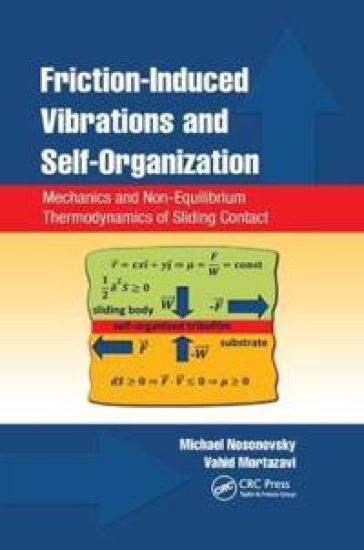
Friction-Induced Vibrations and Self-Organization

Friction-Induced Vibrations and Self-Organization

Michael Nosonovsky; Vahid Mortazavi

CRC Press
2018
nidottu
Many scientists and engineers do not realize that, under certain conditions, friction can lead to the formation of new structures at the interface, including in situ tribofilms and various patterns. In turn, these structures—usually formed by destabilization of the stationary sliding regime—can lead to the reduction of friction and wear. Friction-Induced Vibrations and Self-Organization: Mechanics and Non-Equilibrium Thermodynamics of Sliding Contact combines the mechanical and thermodynamic methods in tribology, thus extending the field of mechanical friction-induced vibrations to non-mechanical instabilities and self-organization processes at the frictional interface. The book also relates friction-induced self-organization to novel biomimetic materials, such as self-lubricating, self-cleaning, and self-healing materials. Explore Friction from a Different Angle—as a Fundamental Force of NatureThe book begins with an exploration of friction as a fundamental force of nature throughout the history of science. It then introduces general concepts related to vibrations, instabilities, and self-organization in the bulk of materials and at the interface. After presenting the principles of non-equilibrium thermodynamics as they apply to the interface, the book formulates the laws of friction and highlights important implications. The authors also analyze wear and lubrication. They then turn their attention to various types of friction-induced vibration, and practical situations and applications where these vibrations are important. The final chapters consider various types of friction-induced self-organization and how these effects can be used for novel self-lubricating, self-cleaning, and self-healing materials. From Frictional Instabilities to Friction-Induced Self-OrganizationDrawing on the authors’ original research, this book presents a new, twenty-first century perspective on friction and tribology. It shows how friction-induced instabilities and vibrations can lead to self-organized structures, and how understanding the structure–property relationships that lead to self-organization is key to designing "smart" biomimetic materials.
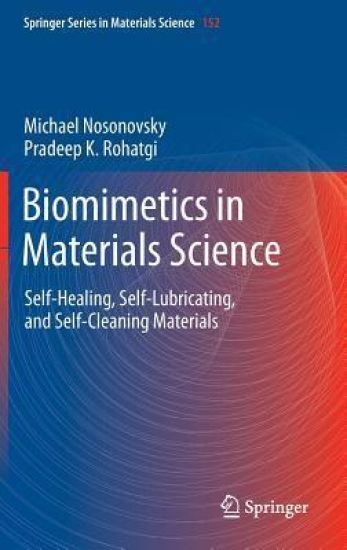
Biomimetics in Materials Science

Biomimetics in Materials Science

Michael Nosonovsky; Pradeep K. Rohatgi

Springer-Verlag New York Inc.
2014
nidottu
Biomimetics in Materials Science provides a comprehensive theoretical and practical review of biomimetic materials with self-healing, self-lubricating and self-cleaning properties. These three topics are closely related and constitute rapidly developing areas of study. The field of self-healing materials requires a new conceptual understanding of this biomimetic technology, which is in contrast to traditional engineering processes such as wear and fatigue. Biomimetics in Materials Science is the first monograph to be devoted to these materials. A new theoretical framework for these processes is presented based on the concept of multi-scale structure of entropy and non-equilibrium thermodynamics, together with a detailed review of the available technology. The latter includes experimental, modeling, and simulation results obtained on self-healing/lubricating/cleaning materials since their emergence in the past decade.
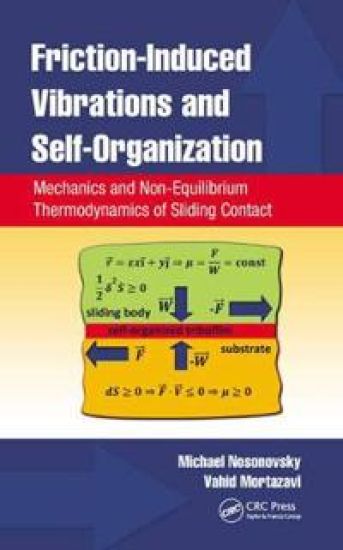
Friction-Induced Vibrations and Self-Organization

Friction-Induced Vibrations and Self-Organization

Michael Nosonovsky; Vahid Mortazavi

CRC Press Inc
2013
sidottu
Many scientists and engineers do not realize that, under certain conditions, friction can lead to the formation of new structures at the interface, including in situ tribofilms and various patterns. In turn, these structures—usually formed by destabilization of the stationary sliding regime—can lead to the reduction of friction and wear. Friction-Induced Vibrations and Self-Organization: Mechanics and Non-Equilibrium Thermodynamics of Sliding Contact combines the mechanical and thermodynamic methods in tribology, thus extending the field of mechanical friction-induced vibrations to non-mechanical instabilities and self-organization processes at the frictional interface. The book also relates friction-induced self-organization to novel biomimetic materials, such as self-lubricating, self-cleaning, and self-healing materials. Explore Friction from a Different Angle—as a Fundamental Force of NatureThe book begins with an exploration of friction as a fundamental force of nature throughout the history of science. It then introduces general concepts related to vibrations, instabilities, and self-organization in the bulk of materials and at the interface. After presenting the principles of non-equilibrium thermodynamics as they apply to the interface, the book formulates the laws of friction and highlights important implications. The authors also analyze wear and lubrication. They then turn their attention to various types of friction-induced vibration, and practical situations and applications where these vibrations are important. The final chapters consider various types of friction-induced self-organization and how these effects can be used for novel self-lubricating, self-cleaning, and self-healing materials. From Frictional Instabilities to Friction-Induced Self-OrganizationDrawing on the authors’ original research, this book presents a new, twenty-first century perspective on friction and tribology. It shows how friction-induced instabilities and vibrations can lead to self-organized structures, and how understanding the structure–property relationships that lead to self-organization is key to designing "smart" biomimetic materials.
Biomimetics in Materials Science

Biomimetics in Materials Science

Michael Nosonovsky; Pradeep K. Rohatgi

Springer-Verlag New York Inc.
2011
sidottu
Biomimetics in Materials Science provides a comprehensive theoretical and practical review of biomimetic materials with self-healing, self-lubricating and self-cleaning properties. These three topics are closely related and constitute rapidly developing areas of study. The field of self-healing materials requires a new conceptual understanding of this biomimetic technology, which is in contrast to traditional engineering processes such as wear and fatigue. Biomimetics in Materials Science is the first monograph to be devoted to these materials. A new theoretical framework for these processes is presented based on the concept of multi-scale structure of entropy and non-equilibrium thermodynamics, together with a detailed review of the available technology. The latter includes experimental, modeling, and simulation results obtained on self-healing/lubricating/cleaning materials since their emergence in the past decade.
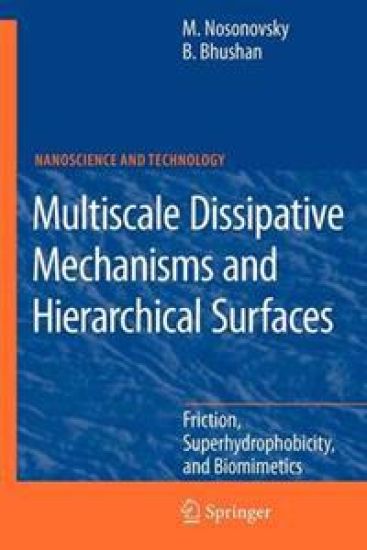
Multiscale Dissipative Mechanisms and Hierarchical Surfaces

Multiscale Dissipative Mechanisms and Hierarchical Surfaces

Michael Nosonovsky; Bharat Bhushan

Springer-Verlag Berlin and Heidelberg GmbH Co. K
2010
nidottu
Multiscale Dissipative Mechanisms and Hierarchical Surfaces covers the rapidly developing topics of hierarchical surfaces, roughness-induced superhydrophobicity and biomimetic surfaces. The research in these topics has been progressing rapidly in the recent years due to the advances in the nanosciences and surfaces science and due to potential applications in nanotechnology. The first in its field, this monograph provides a comprehensive review of these subjects and presents the background introduction as well as recent and new results in the area.
Multiscale Dissipative Mechanisms and Hierarchical Surfaces

Multiscale Dissipative Mechanisms and Hierarchical Surfaces

Michael Nosonovsky; Bharat Bhushan

Springer-Verlag Berlin and Heidelberg GmbH Co. K
2008
sidottu
Multiscale Dissipative Mechanisms and Hierarchical Surfaces covers the rapidly developing topics of hierarchical surfaces, roughness-induced superhydrophobicity and biomimetic surfaces. The research in these topics has been progressing rapidly in the recent years due to the advances in the nanosciences and surfaces science and due to potential applications in nanotechnology. The first in its field, this monograph provides a comprehensive review of these subjects and presents the background introduction as well as recent and new results in the area.