Kirjojen hintavertailu – 12 903 724 kirjaa ja 27 kauppaa

Kirjailija

Michael Nylan

Kirjat ja teokset yhdessä paikassa: 13 kirjaa, julkaisuja vuosilta 1994–2026, suosituimpiin kuuluu The Letter to Ren an and Sima Qian's Legacy. Vertaile teosten hintoja ja tarkista saatavuus suomalaisista kirjakaupoista.

13 kirjaa

Kirjojen julkaisuvuodet: 1994–2026.

The Letter to Ren an and Sima Qian's Legacy

The Letter to Ren an and Sima Qian's Legacy

Stephen Durrant; Wai-yee Li; Michael Nylan; Hans Ess

University of Washington Press
2018
pokkari
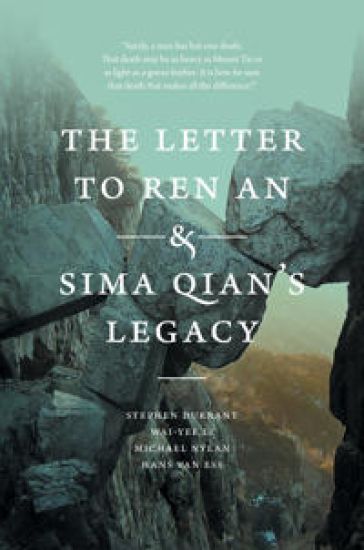
Sima Qian (first century BCE), the author of Record of the Historian (Shiji), is China's earliest and best-known historian, and his "Letter to Ren An" is the most famous letter in Chinese history. In the letter, Sima Qian explains his decision to finish his life's work, the first comprehensive history of China, instead of honorably committing suicide following his castration for "deceiving the emperor." In the twentieth and twenty-first centuries, some scholars have queried the authenticity of the letter. Is it a genuine piece of writing by Sima Qian or an early work of literary impersonation? The Letter to Ren An and Sima Qian's Legacy provides a full translation of the letter and uses different methods to explore issues in textual history. It also shows how ideas about friendship, loyalty, factionalism, and authorship encoded in the letter have far-reaching implications for the study of China.
The Letter to Ren an and Sima Qian's Legacy

The Letter to Ren an and Sima Qian's Legacy

Stephen Durrant; Wai-yee Li; Michael Nylan; Hans Ess

University of Washington Press
2016
sidottu
Sima Qian (first century BCE), the author of Record of the Historian (Shiji), is China's earliest and best-known historian, and his "Letter to Ren An" is the most famous letter in Chinese history. In the letter, Sima Qian explains his decision to finish his life's work, the first comprehensive history of China, instead of honorably committing suicide following his castration for "deceiving the emperor." In the twentieth and twenty-first centuries, some scholars have queried the authenticity of the letter. Is it a genuine piece of writing by Sima Qian or an early work of literary impersonation? The Letter to Ren An and Sima Qian's Legacy provides a full translation of the letter and uses different methods to explore issues in textual history. It also shows how ideas about friendship, loyalty, factionalism, and authorship encoded in the letter have far-reaching implications for the study of China.
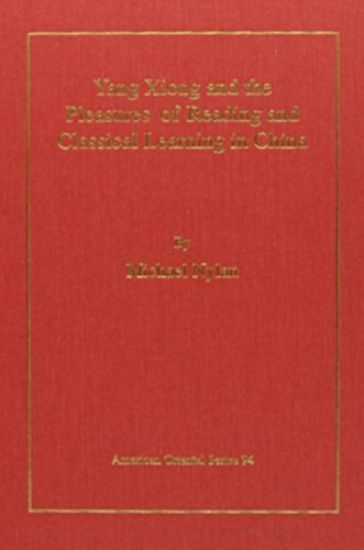
Yang Xiong and the Pleasures of Reading and Classical Learning in China
Yang Xiong (53 BC-AD 18), the Han philosophical master remarks at one point in his Exemplary Figures, “Books are as sexy as women.” Modern readers may frown at a comparison they regard as less than apt. Yang was supremely aware, however, of longstanding traditions, ascribed both to the sages and to the Classics, contrasting the unusual strength of the basic drives for food and sex with the general weakness of the acquired inclinations toward moral behaviour. To say that “books are as sexy as women” was to make bold to add to those traditions, adopting the manner of a sage; also to elevate the value of certain texts, at least, to the level morality itself, insofar as they represented acquired tastes leading to the most desirable aspects of civilized life.
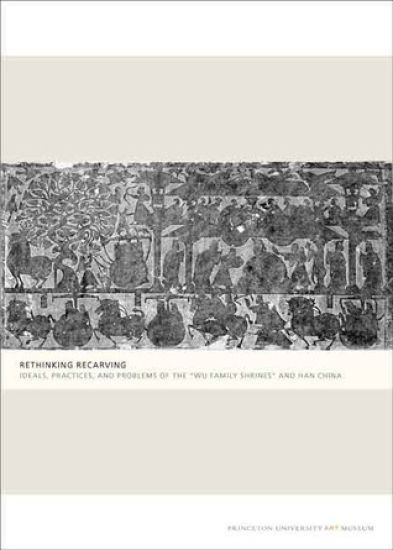
Rethinking Recarving

Rethinking Recarving

Cary Y. Liu; Michael Loewe; Lydia Thompson; Zheng Yan; Susan N. Erickson; Klaas Ruitenbeek; Jiang Yingju; Miranda Brown; Michael Nylan; Hsing I-tien; Eileen Hsiang-ling Hsu; Lillian Lan-ying Tseng; Qianshen Bai

Yale University Press
2008
pokkari
The "Wu Family Shrines" pictorial carvings from Han dynasty China (206 BCE–220 CE) are among the earliest works of Chinese art examined in an international arena. Since the eleventh century, the carvings have been identified by scholars as one of the most valuable and authentic materials for the study of antiquity. This important book presents essays by archaeologists, art and architectural historians, curators, and historians that reexamine the carvings, adding to our understanding of the long cultural history behind them and to our knowledge of Han practices. The authors offer a thorough analysis of surviving physical and visual sources, invoking fresh perspectives from new disciplines. Essays address the ideals, practices, and problems of the "Wu Family Shrines" and Han China; Han funerary art and architecture in Shandong and other regions; architectural functions and carved meanings; Qing Dynasty Reception of the Wu Family Shrines; and more. Distributed for the Princeton University Art Museum
Environmental Equity in China and Beyond

Environmental Equity in China and Beyond

Michael Nylan; Thomas Hahn

BLOOMSBURY PUBLISHING PLC
2026
sidottu
Michael Nylan and Thomas Hahn open up new vistas for thinking ecologically in this introduction to ancient and modern thought in China. Together they explore the environment in the Chinese philosophical tradition and contemporary China through the lens of intergenerational justice. Nylan’s analysis of lesser known texts from ancient China changes our thinking of Chinese political philosophy and legal antiquity codes. Hahn’s comprehensive overview of recent data from China offers a response to the present crisis. Their original approach underscores why environmentalism is always more than a Western issue. By applying ancient ideas to an urgent topic with a unique emphasis on East Asia, this one-of-a-kind guide to environmental thought challenges standard narratives. It is essential reading for anyone looking to understand how classical Chinese concepts can provide the necessary tools to improve how we think about the world we live in.
Environmental Equity in China and Beyond

Environmental Equity in China and Beyond

Michael Nylan; Thomas Hahn

BLOOMSBURY PUBLISHING PLC
2026
nidottu
Michael Nylan and Thomas Hahn open up new vistas for thinking ecologically in this introduction to ancient and modern thought in China. Together they explore the environment in the Chinese philosophical tradition and contemporary China through the lens of intergenerational justice. Nylan’s analysis of lesser known texts from ancient China changes our thinking of Chinese political philosophy and legal antiquity codes. Hahn’s comprehensive overview of recent data from China offers a response to the present crisis. Their original approach underscores why environmentalism is always more than a Western issue. By applying ancient ideas to an urgent topic with a unique emphasis on East Asia, this one-of-a-kind guide to environmental thought challenges standard narratives. It is essential reading for anyone looking to understand how classical Chinese concepts can provide the necessary tools to improve how we think about the world we live in.
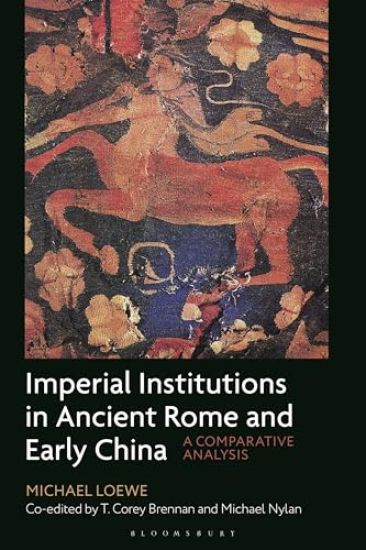
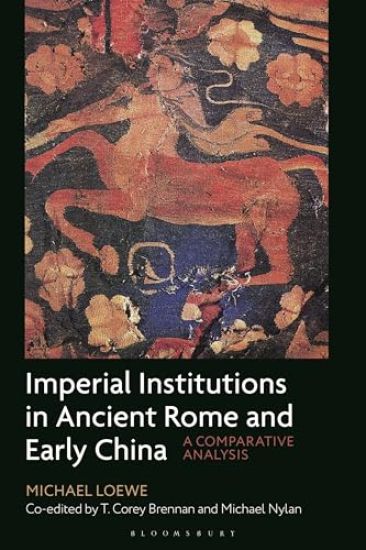
Imperial Institutions in Ancient Rome and Early China

Imperial Institutions in Ancient Rome and Early China

Michael Loewe; Michael Nylan; T. Corey Brennan

BLOOMSBURY PUBLISHING PLC
2025
sidottu
Written by the eminent sinologist Michael Loewe, and edited for publication by T. Corey Brennan and Michael Nylan, this book gives an overview of the considerations and practices of two major world empires that together ruled half of the earth's population in the first centuries BCE: ancient Rome and Han China. Approaching the historical material with a comparative perspective, Loewe examines the strengths and weaknesses, and the successes and failures, which can be seen in the organisation and government of these two political systems. Though each empire was largely ignorant of the other, the problems they faced were similar, given the rudimentary transportation and communication facilities of the time, the high mortality rates and the low levels of literacy. Yet each empire ruled its people in distinctly different ways, with the Roman empire governed largely by military officials, in contrast to the Chinese empire, whose administration was well stocked with roughly 130,000 highly trained professionals. The ten chapters of this book set out to compare the ways that these two contemporary regimes, similar in size and population, sought to control human activities and impose a set of regulated discipline over those who were ruled. Each chapter concerns the degrees and methods of forming a united people; the assumptions that lay behind such attempts; the reliance that imperial authority placed on religious practices; legal impositions and the structure of institutions; and the bases of social cohesion and economic co-operation. The result is an engaging study of two remarkable empires, whose rise and fall are contrasted in a way that deepens our understanding of empire and civilisation.
Imperial Institutions in Ancient Rome and Early China

Imperial Institutions in Ancient Rome and Early China

Michael Loewe; Michael Nylan; T. Corey Brennan

BLOOMSBURY PUBLISHING PLC
2025
nidottu

Halvin toimitettuna 34,40 €

Written by the eminent sinologist Michael Loewe, and edited for publication by T. Corey Brennan and Michael Nylan, this book gives an overview of the considerations and practices of two major world empires that together ruled half of the earth's population in the first centuries BCE: ancient Rome and Han China. Approaching the historical material with a comparative perspective, Loewe examines the strengths and weaknesses, and the successes and failures, which can be seen in the organisation and government of these two political systems. Though each empire was largely ignorant of the other, the problems they faced were similar, given the rudimentary transportation and communication facilities of the time, the high mortality rates and the low levels of literacy. Yet each empire ruled its people in distinctly different ways, with the Roman empire governed largely by military officials, in contrast to the Chinese empire, whose administration was well stocked with roughly 130,000 highly trained professionals. The ten chapters of this book set out to compare the ways that these two contemporary regimes, similar in size and population, sought to control human activities and impose a set of regulated discipline over those who were ruled. Each chapter concerns the degrees and methods of forming a united people; the assumptions that lay behind such attempts; the reliance that imperial authority placed on religious practices; legal impositions and the structure of institutions; and the bases of social cohesion and economic co-operation. The result is an engaging study of two remarkable empires, whose rise and fall are contrasted in a way that deepens our understanding of empire and civilisation.
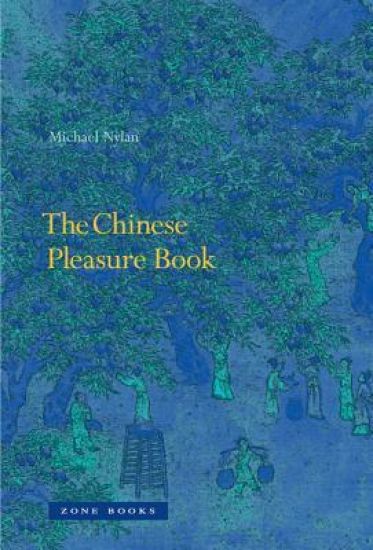
The Chinese Pleasure Book

The Chinese Pleasure Book

Michael Nylan

Zone Books
2018
sidottu
An examination of pleasure-short-term delight and the cultivation of longer-term satisfaction-in early Chinese thought. In The Chinese Pleasure Book, Michael Nylan takes up one of the most important themes in Chinese thought: the relation of pleasurable activities to bodily health and the health of the body politic. In a notable contrast to Western writings on the subject, early Chinese writings oppose pleasure not with pain but with insecurity. All assume that it is right and proper to seek and take pleasure, as well as short-term delight, and all are equally certain that long-term relational pleasures are more easily sustained-as well as potentially more satisfying and less damaging. The pleasures that become deeper and more ingrained over the long term, as one invests time and effort into their cultivation, include friendship and music, sharing with others, developing integrity and greater clarity, reading and classical learning, and going home. Nylan explores each of these fields of activity through the early sources (mainly fourth century BC to the eleventh century AD), providing new translations for both well-known and seldom-cited texts.
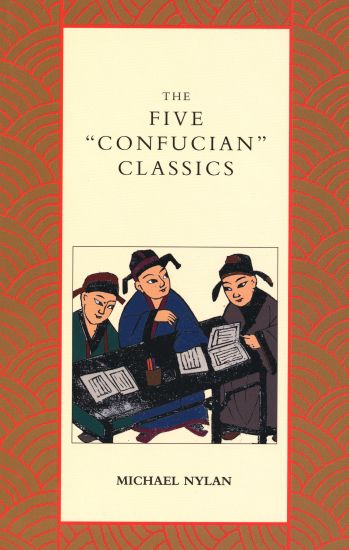
The Five "Confucian" Classics

The Five "Confucian" Classics

Michael Nylan

Yale University Press
2014
pokkari
The Five Classics associated with Confucius formed the core curriculum in the education of Chinese literati throughout most of the imperial period. In this book Michael Nylan offers a sweeping assessment of these ancient texts and shows how their influence spread across East Asia. Nylan begins by tracing the formation of the Five Classics canon in the pre-Han and Han periods, 206 B. C.–A. D. 220, revising standard views on the topic. She assesses the impact on this canon of the invention of a rival corpus, the Four Books, in the twelfth century. She then analyzes each of the Five Classics, discussing when they were written, how they were transmitted and edited in later periods, and what political, historical, and ethical themes were associated with them through the ages. Finally she deliberates on the intertwined fates of Confucius and the Five Classics over the course of the twentieth century and shows how the contents of the Five Classics are relevant to much newer concerns.
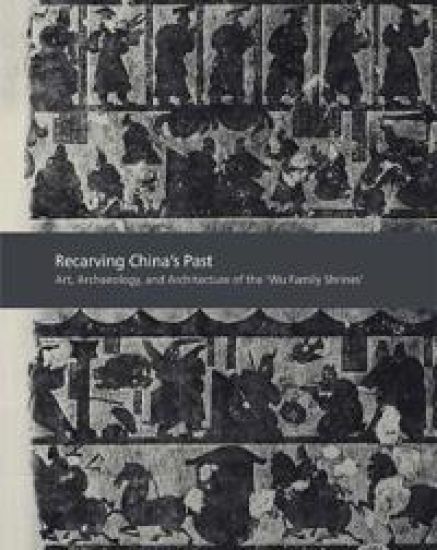
Recarving China’s Past

Recarving China’s Past

Cary Y. Liu; Michael Nylan; Anthony J. Barbieri-Low

Yale University Press
2005
sidottu
The “Wu Family Shrines,” one of the most important cultural monuments of early China, comprise approximately fifty stone slabs from the so-called Wu cemetery in Shandong province. Depicting emperors and kings, heroic women, filial sons, and mythological subjects, these famous carved and engraved reliefs may have been intended to reflect such basic themes as loyalty to the emperor, filial piety, and wifely devotion; centuries later, they vividly bring to life the art, social conditions, and Confucian ideology of the Eastern Han. This generously illustrated book examines the stone slabs and their rubbings as artifacts with a complex cultural history from the second century to the present, and addresses questions about the traditional identification of the structures as Han dynasty shrines of the Wu family. Written by a team of distinguished scholars in the fields of Chinese art and history, the book includes a novel examination of Han burial items in relation to burial belief, pictorial carvings, and funerary architecture. Distributed for the Princeton University Art MuseumExhibition Schedule:Princeton University Art Museum, March 5 – June 26, 2005
The Elemental Changes

The Elemental Changes

Michael Nylan

State University of New York Press
1994
pokkari
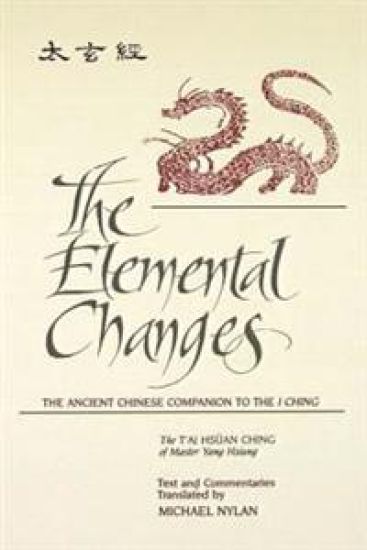
Composed in 2 B. C., as "The I Ching revised and enlarged," The Elemental Changes is a divination manual providing a clear method for distinguishing alternative courses of action. Structured in 81 tetragrams ( as opposed to the 64 hexagrams of the I Ching), the book offers much to the modern reader. Today in the West, The Elemental Changes is an essential tool for understanding the Tao as it operates in the Cosmos, in the minds of sages, and in sacred texts. It is also one of the great philosophical poems in world literature, assessing the rival claims on human attention of fame, physical immortality, wealth, and power while it situates human endeavor within the larger framework of cosmic energies. The complete text of The Elemental Changes and its ten autocommentaries are here translated into accessible and, whenever possible, literal English. Following the Chinese tradition, supplementary comments are appended to each tetragram in order to indicate the main lines of interpretation suggested by earlier commentators.