Kirjojen hintavertailu – 12 903 725 kirjaa ja 27 kauppaa

Kirjailija

Michael P. Nichols

Kirjat ja teokset yhdessä paikassa: 8 kirjaa, julkaisuja vuosilta 1987–2021, suosituimpiin kuuluu Essentials of Family Therapy Value Package (Includes Myhelpinglab Student Access ). Vertaile teosten hintoja ja tarkista saatavuus suomalaisista kirjakaupoista.

8 kirjaa

Kirjojen julkaisuvuodet: 1987–2021.

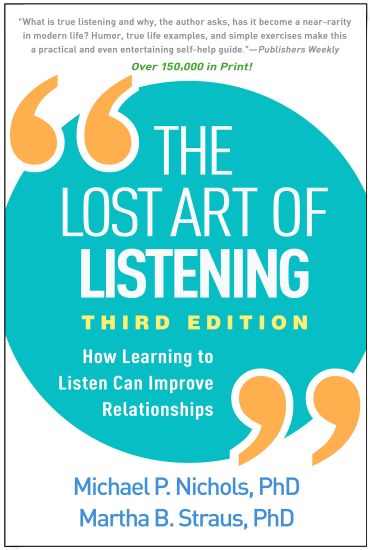
The Lost Art of Listening, Third Edition

The Lost Art of Listening, Third Edition

Michael P. Nichols; Martha B. Strauss

Guilford Press
2021
nidottu

Halvin toimitettuna 21,50 €

"That isn't what I meant!" Truly listening and being heard is far from simple, even between people who care about each other. This perennial bestseller--now revised and updated for the digital age--analyzes how any conversation can go off the rails and provides essential skills for building mutual understanding. Thoughtful, witty, and empathic, the book is filled with vivid stories of couples, coworkers, friends, and family working through tough emotions and navigating differences of all kinds. Learn ways you can: *Hear what people mean, not just what they say. *Share a difference of opinion without sounding dismissive. *Encourage uncommunicative people to open up. *Make sure both sides get heard in heated discussions. *Get through to someone who never seems to listen. *Ask for support without getting unwanted advice. *Reduce miscommunication in texts and online. From renowned therapist Michael P. Nichols and new coauthor Martha B. Straus, the third edition reflects the huge impact of technology and social media on relationships, and gives advice for talking to loved ones across social and political divides
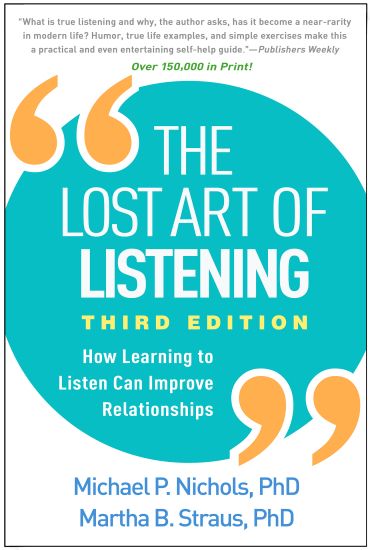
The Lost Art of Listening, Third Edition

The Lost Art of Listening, Third Edition

Michael P. Nichols; Martha B. Strauss

Guilford Press
2021
sidottu
"That isn't what I meant!" Truly listening and being heard is far from simple, even between people who care about each other. This perennial bestseller--now revised and updated for the digital age--analyzes how any conversation can go off the rails and provides essential skills for building mutual understanding. Thoughtful, witty, and empathic, the book is filled with vivid stories of couples, coworkers, friends, and family working through tough emotions and navigating differences of all kinds. Learn ways you can: *Hear what people mean, not just what they say. *Share a difference of opinion without sounding dismissive. *Encourage uncommunicative people to open up. *Make sure both sides get heard in heated discussions. *Get through to someone who never seems to listen. *Ask for support without getting unwanted advice. *Reduce miscommunication in texts and online. From renowned therapist Michael P. Nichols and new coauthor Martha B. Straus, the third edition reflects the huge impact of technology and social media on relationships, and gives advice for talking to loved ones across social and political divides
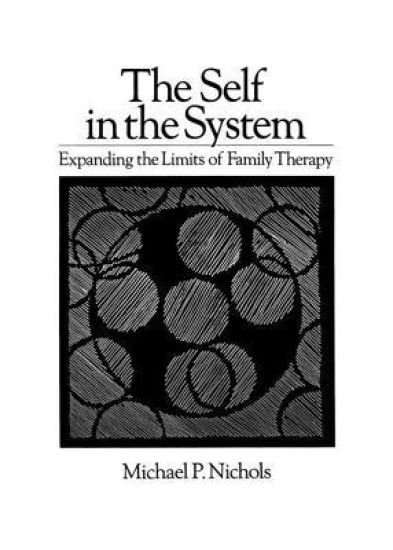
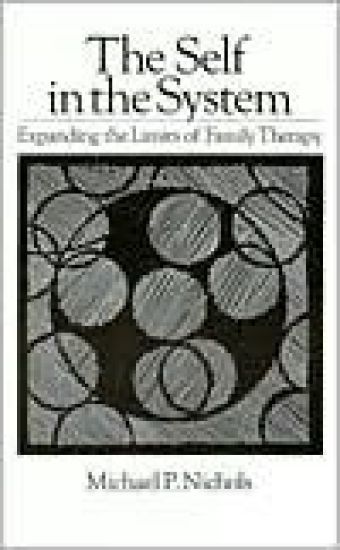
Self In The System

Self In The System

Michael P. Nichols

Routledge
2015
nidottu
First published in 1988. This thought-provoking volume offers a constructive critical anal­ysis of family therapy for its neglect of the self in the system, and provides a therapeutic approach to clinical problems that takes into account both individual and family dynamics. The author shows that by elevating the metaphor of the system to dogma, family therapy has lost sight of much of the richness and complicating influence of personal feeling, motivation, and conflict, resulting in a proliferation of esoteric, abstract theories and highly mechanistic, technical interventions. The Self in the System describes a different reality that is often overlooked: no matter how much their behavior is coordinated within the system, family members remain separate individuals with private hopes and ambitions, motives and expectations, quirks and foibles, and potentials for creative work. This book provides a unique approach that develops a better understanding of family members' individual experiences, and helps in enhancing their personal responsibility and ability to solve their own interactional problems within the family system. The approach, however, is not just another version of psychoanalytic family therapy, but rather one that utilizes the best tools of family therapy and the most useful ideas from individual psychology and psychodynamic psychotherapy. Chapters cover such important topics as finding the family and losing the self; the problem of change; working with interaction; the effective use of empathy; making assessments that include both the whole family system and the psychology of its members; interac­tional psychodynamics; a practical guide to object relations theory; how to develop understanding; and working with resistance.
Stop Arguing with Your Kids

Stop Arguing with Your Kids

Michael P. Nichols

Guilford Publications
2004
nidottu
For parents fed up with constant challenges to their authority-but who dread becoming tyrants in their own homes-this book provides a powerful new alternative to because I said so. Trusted family therapist and author Michael P. Nichols takes on the number-one problem of parents today with the insight and humor that has made his earlier The Lost Art of Listening an enduring bestseller. Presented is a simple, easy-to-follow, yet remarkably effective way to put an end to arguments by refusing to argue back. Instead, the techniques of responsive listening help parents open up better communication in the family; create an atmosphere of respect and cooperation; and take children's feelings into account-without giving in to their demands. Loads of realistic examples help parents defuse whining and defiance and manage common conflicts with preschoolers to teens.
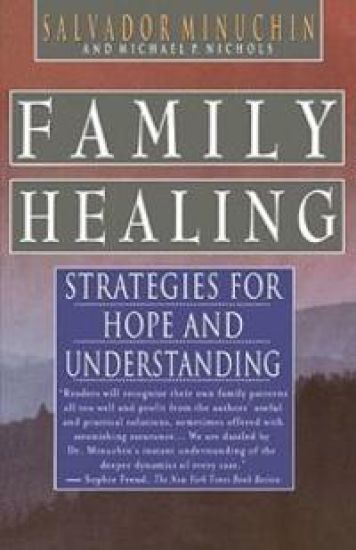
Family Healing

Family Healing

Salvador Minuchin; Michael P. Nichols

The Free Press
1998
pokkari

Halvin toimitettuna 26,00 €

At the center of people’s lives is the family, which can be and should be a haven from the harshness of the outside world. Unfortunately, the source of people’s greatest hope for happiness often turns out to be the source of their worst disappointments. Now, the family therapist, Salvador Minuchin unravels the knots of family dynamics against the background of his own odyssey from an extended Argentinian Jewish family to his innovative treatment of troubled families. Through the stories of families who have sought his help, the reader is taken inside the consulting room to see how families struggle with self-defeating patterns of behavior. Through his confrontational style of therapy, Dr Minuchin demonstrates the strict but unseen rules that trap family members in stifling roles, and illuminates methods for helping families untangle systems of disharmony. In Dr Minuchin’s therapy there are no villains and no victims, only people trying to deal with various problems at each stage of the family life cycle. Minuchin understands the family as a system of interconnected lives, not as a “dysfunctional” group. Each story of a therapeutic encounter brings a new understanding of familiar dilemmas and classic mistakes, and recounts Dr Minuchin’s creative solutions.
No Place to Hide

No Place to Hide

Michael P. Nichols

Prometheus Books
1995
pokkari
Each of us is controlled in some way by shame, one of the ugliest emotions in human experience. It saps our self-respect, builds walls between people, and forces us to create elaborate defenses to protect ourselves. This informative and practical analysis of the role of shame in our lives helps us to understand the root of our insecurity. Only by facing and coming to terms with our shame can we begin to resolve insecurities and become free to participate fully in life. Nichols discusses love and worth, the social sources of humiliation, the frustration of adolescence, and positive parenting, among other important topics, in this wonderful combination of clinical sophistication, common sense, and humanity!
Self In The System

Self In The System

Michael P. Nichols

Brunner-Mazel Inc
1987
sidottu
First published in 1988. This thought-provoking volume offers a constructive critical anal­ysis of family therapy for its neglect of the self in the system, and provides a therapeutic approach to clinical problems that takes into account both individual and family dynamics. The author shows that by elevating the metaphor of the system to dogma, family therapy has lost sight of much of the richness and complicating influence of personal feeling, motivation, and conflict, resulting in a proliferation of esoteric, abstract theories and highly mechanistic, technical interventions. The Self in the System describes a different reality that is often overlooked: no matter how much their behavior is coordinated within the system, family members remain separate individuals with private hopes and ambitions, motives and expectations, quirks and foibles, and potentials for creative work. This book provides a unique approach that develops a better understanding of family members' individual experiences, and helps in enhancing their personal responsibility and ability to solve their own interactional problems within the family system. The approach, however, is not just another version of psychoanalytic family therapy, but rather one that utilizes the best tools of family therapy and the most useful ideas from individual psychology and psychodynamic psychotherapy. Chapters cover such important topics as finding the family and losing the self; the problem of change; working with interaction; the effective use of empathy; making assessments that include both the whole family system and the psychology of its members; interac­tional psychodynamics; a practical guide to object relations theory; how to develop understanding; and working with resistance.