Kirjojen hintavertailu – 12 859 829 kirjaa ja 27 kauppaa

Kirjailija

Michael P. Schafale

Kirjat ja teokset yhdessä paikassa: 3 kirjaa, julkaisuja vuosilta 2024–2025, suosituimpiin kuuluu Classification of the Natural Communities of North Carolina. Vertaile teosten hintoja ja tarkista saatavuus suomalaisista kirjakaupoista.

3 kirjaa

Kirjojen julkaisuvuodet: 2024–2025.

Classification of the Natural Communities of North Carolina

Classification of the Natural Communities of North Carolina

Michael P. Schafale

THE UNIVERSITY OF NORTH CAROLINA PRESS
2025
pokkari
The North Carolina Natural Heritage Program’s Classification of the Natural Communities, now in its fourth edition, is intended as a reference book describing the state’s biodiversity at the community and ecosystem levels. It describes natural patterns of organisms that typically co-occur together in a particular kind of environment. The classification draws on years of use and data collection by North Carolina’s Natural Heritage Program, the extensive vegetation plot data of the Carolina Vegetation Survey, and the National Vegetation Classification. The classification units are intended for detailed conservation planning at the natural community level, for representing the diversity of ecological function, for characterizing the habitats of species, and for contributing to the conservation of the myriad species that are too poorly known to track individually. The 343 community subtypes are grouped into types and are nested within 30 broader ecological themes that have been recognized in North Carolina for decades, retaining continuity with previous editions. Material to aid in identification of the communities includes concept statements, dichotomous keys, and descriptions of the distinctions from closely related communities. Extensive descriptions of each community and each theme include sections on physical settings, soils, hydrology, vegetation, range, abundance, and ecological dynamics, using scientific nomenclature and terminology. Crosswalks to the National Vegetation Classification and to NatureServe’s ecological systems and listings of rare plant and animal species associated with each community provide additional functionality. While technical in style—mostly providing scientific names instead of common names—this book can offer the educated layperson and scientist alike an expanded appreciation of the diversity of natural settings in North Carolina. It is expected to remain a primary reference for years to come.
Wild North Carolina

Wild North Carolina

David Blevins; Michael P. Schafale

THE UNIVERSITY OF NORTH CAROLINA PRESS
2024
pokkari
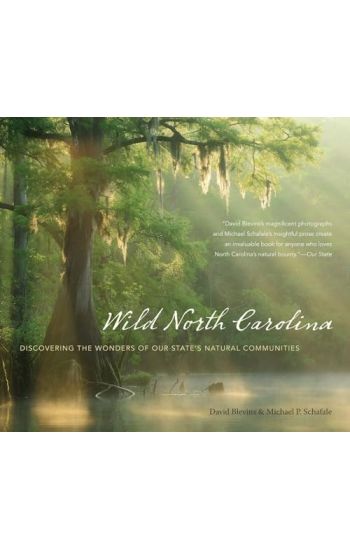
Celebrating the beauty, diversity, and significance of the state's natural landscapes, Wild North Carolina provides an engaging, beautifully illustrated introduction to North Carolina's interconnected webs of plant and animal life. From dunes and marshes to high mountain crags, through forests, swamps, savannas, ponds, pocosins, and flatrocks, David Blevins and Michael Schafale reveal in words and photographs natural patterns of the landscape that will help readers see familiar places in a new way and new places with a sense of familiarity. Wild North Carolina introduces the full range of the state's diverse natural communities, each brought to life with compelling accounts of their significance and meaning, arresting photographs featuring broad vistas and close-ups, and details on where to go to experience them first hand. Blevins and Schafale provide nature enthusiasts of all levels with the insights they need to value the state's natural diversity, highlighting the reasons plants and animals are found where they are, as well as the challenges of conserving these special places.
Classification of the Natural Communities of North Carolina

Classification of the Natural Communities of North Carolina

Michael P. Schafale

THE UNIVERSITY OF NORTH CAROLINA PRESS
2024
sidottu
The North Carolina Natural Heritage Program's Classification of the Natural Communities, now in its fourth edition, is intended as a reference book describing the state's biodiversity at the community and ecosystem levels. It describes natural patterns of organisms that typically co-occur together in a particular kind of environment. The classification draws on years of use and data collection by North Carolina's Natural Heritage Program, the extensive vegetation plot data of the Carolina Vegetation Survey, and the National Vegetation Classification. The classification units are intended for detailed conservation planning at the natural community level, for representing the diversity of ecological function, for characterizing the habitats of species, and for contributing to the conservation of the myriad species that are too poorly known to track individually. The 343 community subtypes are grouped into types and are nested within 30 broader ecological themes that have been recognized in North Carolina for decades, retaining continuity with previous editions. Material to aid in identification of the communities includes concept statements, dichotomous keys, and descriptions of the distinctions from closely related communities. Extensive descriptions of each community and each theme include sections on physical settings, soils, hydrology, vegetation, range, abundance, and ecological dynamics, using scientific nomenclature and terminology. Crosswalks to the National Vegetation Classification and to NatureServe's ecological systems and listings of rare plant and animal species associated with each community provide additional functionality. While technical in style—mostly providing scientific names instead of common names—this book can offer the educated layperson and scientist alike an expanded appreciation of the diversity of natural settings in North Carolina. It is expected to remain a primary reference for years to come. An electronic (pdf) version of this book is available for download from the North Carolina Natural Heritage Program at https://www.ncnhp.org.