Kirjojen hintavertailu – 12 859 829 kirjaa ja 27 kauppaa
Kirjailija
Michael Palmer
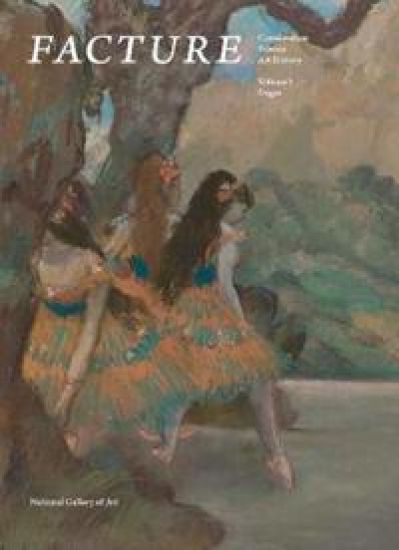
Kirjat ja teokset yhdessä paikassa: 84 kirjaa, julkaisuja vuosilta 1984–2026, suosituimpiin kuuluu Facture: Conservation, Science, Art History. Vertaile teosten hintoja ja tarkista saatavuus suomalaisista kirjakaupoista.
Daphne S. Barbour; Barbara Hepburn Berrie; John K. Delaney; Kathryn A. Dooley; Michelle Facini; Ann Hoenigswald; Kimberly Jones; Richard Kendall; Suzanne Quillen Lomax; Alison Luchs; Michael Palmer; Kimberly Schenck; Shelley G. Sturman
This volume of Facture, a biennial journal that presents the latest conservation research on works of art at the National Gallery of Art, Washington, focuses exclusively on conservation treatment, technical art history, and scientific research related to masterpieces by the beloved French artist Edgar Degas (1834–1917). The National Gallery’s extraordinary collection of sculptures, paintings, and works on paper by Degas, including an incomparable group of his wax sculptures—among them his iconic Little Dancer Aged Fourteen—allows the institution to contribute significantly to understanding the artist’s methods and intentions. This volume features discussions of the notion of “finish” in Degas’s paintings, the complex makeup of his wax sculptures, the casting of posthumous bronzes, his innovative use of multiple layers of pastel and fixative in a late work on paper, and even a sonnet that Degas wrote to his “little dancer.” Distributed for the National Gallery of Art, Washington
Diktene strekker seg fra en konsentrert, rolig intensitet til en mer ekspansiv og ekkofylt utforskning av både dikterens personer og samtidshistoriens stamming og forsvinning.
Tough, ambitious and hardworking, Natalie Reyes finds herself suspended - unjustly - from Harvard Medical School, and it feels like her world has ended.
European Unity (1968) examines how the European Economic Community and other European international organisations transformed the relations between the countries of Western Europe in political, economic and defence affairs. It describes the postwar moves to European cooperation and unity and the resulting establishment of various organisations. Each of these are examined separately, in terms of its history and achievements. The origins and structure of each organisation and the working methods and techniques devised by them are described, and the reasons for the relative success or failure in their allotted tasks are analysed.
A reissue of Michael Palemer’s poetry notebook first published in 1999 and now considered a classic of the genre of poet’s prose. In The Danish Notebook Michael Palmer sets out to discover which images and designs will appear when his reflections (on poetry, collaboration, work, travel) and memories (of chance meetings, conversations among friends, books read and movies seen) are set down on paper. The result is part memoir, part correspondence, travel diary, and poetic essay. Moving from the streets of Paris and San Francisco to the top of a Hawaiian volcano, it reveals a rare, personal look at one of the most original and influential poets of our time.
The short stories in this collection cover a wide range of subjects and themes, many with surprising endings. Some are humorous, some sad and some use historical events to weave a story.
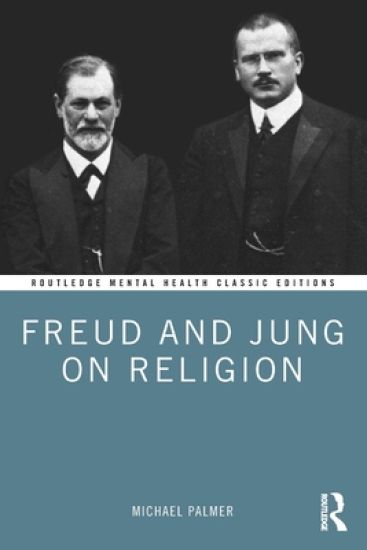
In this outstanding book, originally published in 1997, and subsequently translated into many languages, Michael Palmer presents a detailed and comparative study of the two most famous theories of religion in the history of psychology: those of Freud and Jung. The first part of the book analyses Freud's claim that religion is an obsessional neurosis—a psychological illness fueled by sexual repression—and the second part considers Jung's rejection of Freud's theory and his own assertion that it is the absence of religion, not its presence, which leads to neurosis. Originally given as a series of lectures at Bristol University, this Classic edition of Freud and Jung on Religion is important reading for general and specialist readers alike, as it assumes no prior knowledge of the theories of Freud or Jung and is an invaluable teaching text.