Kirjojen hintavertailu – 12 903 725 kirjaa ja 27 kauppaa

Kirjailija

Michael Parrish

Kirjat ja teokset yhdessä paikassa: 6 kirjaa, julkaisuja vuosilta 1992–2018, suosituimpiin kuuluu Soviet Security and Intelligence Organizations 1917-1990. Vertaile teosten hintoja ja tarkista saatavuus suomalaisista kirjakaupoista.

6 kirjaa

Kirjojen julkaisuvuodet: 1992–2018.

Soviet Security and Intelligence Organizations 1917-1990
One of the hallmarks of the Soviet system was its heavy reliance on internal and foreign security and intelligence organizations. Not surprisingly, given the secrecy surrounding Soviet efforts in these areas, no biographical reference tools and few bibliographies have been published to date. In this context, Michael Parrish's work is a unique undertaking. In the first section to the volume, biographies are provided on some 4,000 officials in senior and mid-level positions who had served in Cheka, NKVD/RFSFR, GPU, KGB, and other organizations. Also included are officials of the Committee for State Control (formerly Ministry of State Control, and, before that, Commissariat of Workers and Peasants' Inspection). Prominent political personalities with earlier ties to security services, such as N. A. Bulganin, are listed even though such service formed only a brief part of their careers. Others listed include party officials, such as A. A. Kuznetsov, who at different times served as the Party's watchdog of security organs. Also included, because of their close association with repression and security organs, are members of Stalin's inner circle. The second part of the volume is a survey of books in English published between 1917 and 1990 which related to Soviet security and intelligence organizations. This is followed by a biographical addendum, a glossary of terms, and material showing the development of Soviet security organizations. No one concerned with current intelligence issues and the role of security organizations in Soviet life can ignore this volume.
Calligraphy For Beginners: Learn How To Write Amazing Handwritten Letters

Calligraphy For Beginners: Learn How To Write Amazing Handwritten Letters

Michael Parrish

Createspace Independent Publishing Platform
2018
nidottu
Calligraphy For Beginners: Learn How To Write Amazing Handwritten Letters Although cursive writing has been on the decline, calligraphy is growing as a trendy skill. This book is aimed at that market, to make the best out of this stylist method of penning the page. Come along with us as we explore the best calligraphy techniques and skills This book takes straight from the pages of Roman Emperors and High School Art teachers alike Calligraphy is a wonderful skill to learn but it takes practice and more importantly it takes good teaching And that teaching must be accurate from the beginning, because just like playing the piano form is very important. This is why it is so imperative to have good learning material to get you started out on the right foot. Getting you started right is the emphasis of this book, from buying the right supplies to creating a good workspace; nothing is left behind as we delve into the very best route to lead you to some uncommonly handsome handwriting Some things covered in this book: History of Calligraphy Setting Up your Workspace What Writing Utensils to Use Finding the Right Design for You Making the perfect background for your Work Download your E book "Calligraphy For Beginners: Learn How To Write Amazing Handwritten Letters" by scrolling up and clicking "Buy Now with 1-Click" button
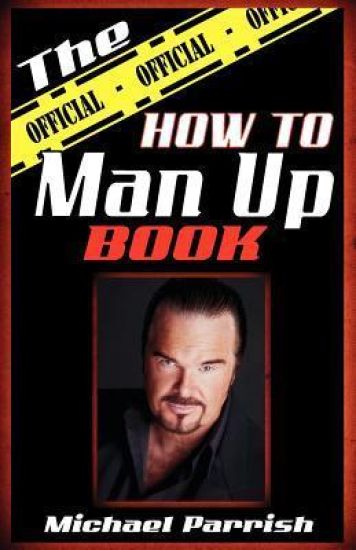
"The Official How To Man Up Book"

"The Official How To Man Up Book"

Michael Parrish

Michaelparrish
2011
nidottu
WARNING WARNING WARNING "The Official How To Man Up Book" Michael Parrish...is now Las Vegas Nevada's, most fiercely talked about: Celebrity talk-show host, entertainer, motivational speaker and author. He is about to take you on a "no-hold's barred, death-match ride"...with his proudly self proclaimed new book "The Official How To Man Up Book" "I dare you...to read this book and to prove me wrong," says Michael. Read for yourself why Julius Caesar, Jesse James, Evel Knievel and a rip-roaring gang of other super-alpha men from history are used in this book, as he assaults the pages using "heat-seeking guided missile" precision in a word attack of admitted, "political-in-correctness." He ignites' these stories with "turbo-testosterone" razor-sharp insight and stinging humorous observation's Follow Michael as he boldly wields his descriptive samurai sword of words as he slices into the mind's of the enemy, exposes the truth and justly identifies all who are responsible for the current attack against men What has happened to the once powerful and strong male role model? Why is it happening and who is responsible for all of the deception and lies? Men have been under siege and now Michael Parrish is saying in a very defiant and loud thunderous voice..." No, not on my watch " It is a startling wake up call for all men to unite and to take action...accept responsibility and to "Man-Up " The time is now...and this book show's exactly how it is done "Many of us have indeed become lost, but don't worry, because we are going to get it all back "
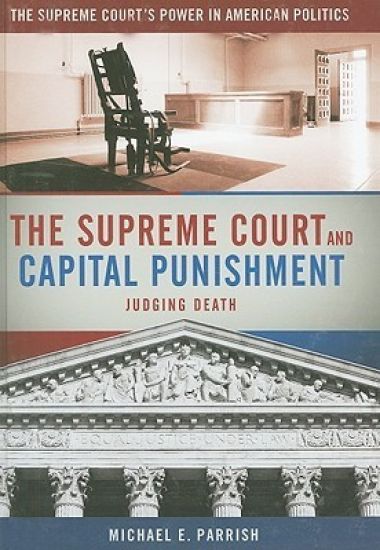
The Supreme Court and Capital Punishment
From the late nineteenth century to the present, decisions by the Supreme Court have played a significant role in how American governments, especially at the state level, have carried out the death penalty. With more than 3,400 prisoners, including 118 foreign nationals, now on death rows, the Court’s role is not likely to diminish in this area over the next several decades, barring a major shift in state laws and public opinion. Supreme Court and Capital Punishment, the second installment in CQ Press's "The Supreme Court's Power in American Government" series, explores how Supreme Court rulings over its history have shaped and reshaped the rules under which Americans have been tried, convicted, sentenced and put to death for capital offenses. Through judicial decisions and other primary documents, this reference explores the impact of these rulings upon the behavior of legislators, judges, prosecutors, defense attorneys and defendants. Considerable emphasis is placed upon the twentieth century, especially the period since the 1972 Furman v. Georgia case. Since Furman, few areas of constitutional doctrine have undergone more abrupt changes than Court-mandated standards for administering capital punishment. A second principal theme of this volume is an examination of the impact of race upon the long evolution of the Court’s death penalty jurisprudence. As defendants and victims, African-Americans on trial for their lives in Southern courts became the central figures in the design and redesign of capital punishment in the twentieth century. The Court’s "effective counsel" decisions have played a major role in how states shape their public defender systems and how they respond to the claims of impoverished defendants charged with capital crimes. The documents section of the volume includes: Selections from key Supreme Court decisions, both majority opinions and dissents Amici briefs by a variety of organizations Selections from proponents and opponents of capital punishment Legislative debates on proposed moratoriums on capital punishment that took place in Nebraska, Vermont and Illinois during the past few years Congressional debate on the Racial Justice Act Statistical studies such as that conducted by Iowa law professor David Baldus Vivid early newspaper accounts of executions and trials Important topics covered in Supreme Court and Capital Punishment include the following: Judicial philosophies on the death penalty throughout the history of the CourtDebate over the execution of juveniles, the mentally retarded, and the insaneRace and capital punishmentConstitutionality of methods of executionChanging public opinion and its impact on capital punishment
Sacrifice of the Generals

Sacrifice of the Generals

Michael Parrish; John Erickson

Scarecrow Press
2004
nidottu
The personnel loss of the Red Army is one of the most controversial aspects of Soviet military history, subject to exaggerations, statistical disagreements, and contemporary Russian politics. This massive biographical dictionary, the result of nearly twenty years of research, attempts to set the record straight with entries for nearly 1,000 senior soviet officers who were captured by the enemy, died of illness, were "repressed" by the Soviet leadership, or were killed in combat between 1939 and 1953. It is considerably enhanced by the use of the Soviet archives that have become available since 1990. Most essays contain extensive bibliographies and a preface contributes important contextual information on personnel organization and losses of the Soviet Army. John Erickson, the foremost Western historian of the Soviet armed forces, contributed a foreword. Based on the latest declassified sources, this unique research tool greatly increases our understanding of the Soviet Union's mighty World War II effort and related Stalinist politics during its greatest hour. Parrish brings into one volume crucial information which was either not easily accessible in the west before or was widely scattered among many places.
The Lesser Terror

The Lesser Terror

Michael Parrish

Praeger Publishers Inc
1996
sidottu
This is the first major study based on Soviet documents and revelations of the Soviet state security during the period 1939-1953—a period about which relatively little is known. The book documents the role of Stalin and the major players in massive crimes carried out during this period against the Soviet people. It also provides the first detailed biography of V. S. Abakumov, Minister of State Security, 1946-1951. Based on Glasnost revelations and recently released archival material, this study covers the operations of Soviet state security from Beriia's appointment in 1938 until Stalin's death. The book pays particular attention to the career of V. S. Abakumov, head of SMERSH counterintelligence during the war and minister in charge of the MGB (the predecessor of the KGB) from 1946 until his removal and arrest in July 1951. The author argues that terror remained the central feature of Stalin's rule even after the Great Terror and he provides examples of how he micromanaged the repressions. The book catalogs the major crimes committed by the security organs and the leading perpetrators and provides evidence that the crimes were similar to those for which the Nazi leaders were punished after the war. Subjects covered include Katyn and its aftermath, the arrest and execution of senior military officers, the killing of political prisoners near Orel in September 1941, and the deportations of various nationalities during the war. The post-war period saw the Aviator and Leningrad affairs as well as the anti-cosmopolitan campaign whose target was mainly Jewish intellectuals. Later chapters cover Abakumov's downfall, the hatching of the Mingrelian and Doctors plots and the events that followed Stalin's death. Finally, there are chapters on the fate of those who ran Stalin's machinery of terror in the last 13 years of his rule. These and other topics will be of concern to all students and scholars of Soviet history and those interested in secret police and intelligence operations.