
Kirjojen hintavertailu – 12 903 724 kirjaa ja 27 kauppaa

Kirjailija

Michael Peneder

Kirjat ja teokset yhdessä paikassa: 3 kirjaa, julkaisuja vuosilta 2001–2025, suosituimpiin kuuluu Wirtschaftsstandort Österreich: Wettbewerbsfähigkeit und nachhaltige Entwicklung. Vertaile teosten hintoja ja tarkista saatavuus suomalaisista kirjakaupoista.

3 kirjaa

Kirjojen julkaisuvuodet: 2001–2025.

Wirtschaftsstandort Österreich: Wettbewerbsfähigkeit und nachhaltige Entwicklung

Wirtschaftsstandort Österreich: Wettbewerbsfähigkeit und nachhaltige Entwicklung

Michael Peneder; Benjamin Bittschi; Anna Burton; Angela Köppl; Thomas Url

Springer-Verlag Berlin and Heidelberg GmbH Co. KG
2025
nidottu
Dieses Buch bietet einen umfassenden Überblick über die Wettbewerbsfähigkeit und nachhaltige Entwicklung Österreichs im internationalen Vergleich. Die Untersuchung folgt dem Drei-Säulen-Modell der Wettbewerbsfähigkeit „Beyond GDP“, das neben Kennzahlen zur wirtschaftlichen Leistungsfähigkeit auch Aspekte des sozialen Ausgleichs und der ökologischen Transformation einbezieht. Die Untersuchung liefert differenzierte und faktenbasierte Einsichten über die aktuelle Dynamik und Herausforderungen des österreichischen Wirtschaftsstandorts. Sie basiert auf dem WIFO-Radar der Wettbewerbsfähigkeit sowie einer Hintergrundstudie aus dem Jahr 2023. Für dieses Buch wurden die Kapitelstruktur und die Auswahl der Indikatoren überarbeitet sowie alle Datensätze aktualisiert und neu ausgewertet.
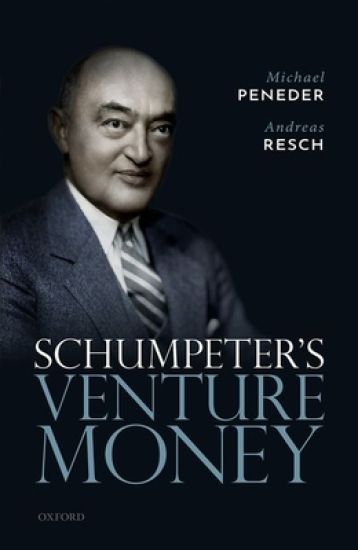
Schumpeter's Venture Money

Schumpeter's Venture Money

Michael Peneder; Andreas Resch

Oxford University Press
2021
sidottu
Distinctively tying history with theory, political economist Joseph A. Schumpeter reached far back in time to understand what drives economic development and determines its course. Historical and empirical research provided a laboratory for learning. At the same time, he reached for a long-term vision through theoretical inspection and utmost abstraction, seeking to distil a phenomenon's essential nature and function. He believed that good theory can indicate where the economy is headed in the future. Schumpeter's attention to history and theory also informed the plan for this book. Part I trails the historical stream of financial innovations and the scholarly struggle to assimilate them in monetary thought, while Part II focuses on Schumpeter's own monetary theory. Its deliberate reconstruction from scattered sources reveals a strikingly original and still modern conception. Drawing from the detailed study of documents at various archives in Austria, Part III then concentrates on the business history of Schumpeter's failed personal endeavours in banking and as a proto-venture capitalist. Finally, Part IV casts light on the legacy of Schumpeter's monetary ideas on contemporary thought. It depicts how monetary theory initially left them behind, yet has more recently set out to return to his ideas on money, financial innovation, and growth. Overall, a surprisingly coherent picture emerges from the study of Schumpeter's neglected monetary theory, his personal history, and his intellectual legacy on the present day.
Entrepreneurial Competition and Industrial Location

Entrepreneurial Competition and Industrial Location

Michael Peneder

Edward Elgar Publishing Ltd
2001
sidottu
Entrepreneurial Competition and Industrial Location explores the notion of entrepreneurial competition from its theoretical foundations in early Austrian and contemporary evolutionary economics. Focusing on the structural development of the intangible factors of production such as labour skills, advertising and research and development, the book's empirical implications are tested in a comparative study of competitive performance in the EU, Japan and the USA. Typical mechanisms of external spillovers, shaping industrial location by means of Marshallian cluster formation, highlight the dimension of industrial location. Peneder finally employs the three evolutionary principles of variation, cumulation and selection to establish entrepreneurship, learning and fair markets as the main pillars of modern competitiveness policy. This volume paves the way for a better understanding of the market process, demonstrating the importance of intangible factors as sources of competitive advantage both by conclusive theoretical argument and careful empirical investigation.