Kirjojen hintavertailu – 12 870 087 kirjaa ja 27 kauppaa
Kirjailija
Michael Robbins
Kirjat ja teokset yhdessä paikassa: 27 kirjaa, julkaisuja vuosilta 1998–2023, suosituimpiin kuuluu Evaluation of the Strength Aptitude Test and Other Fitness Tests to Qualify Air Force Recruits for Physically Demanding Specialties. Vertaile teosten hintoja ja tarkista saatavuus suomalaisista kirjakaupoista.
Sean Robson; Stephanie Pezard; Maria C Lytell; Carra S Sims; John E Boon; Jason Michel Etchegaray; Michael Robbins; David Schulker; Jerry M Sollinger; Jason H Campbell; Anthony Atler; Stephan B Seabrook; Deborah L Gebhardt; Todd A Baker; Erica K Volpe; Kathryn A Linnenkohl
The Air Force uses the Strength Aptitude Test (SAT) to determine whether recruits meet the fitness levels needed to perform the duties of various Air Force specialties with physical strength requirements. However, these duties may have changed since the SAT was developed. This report evaluates the SAT and related fitness tests to identify strategies for ensuring airmen can meet job-related physical requirements.
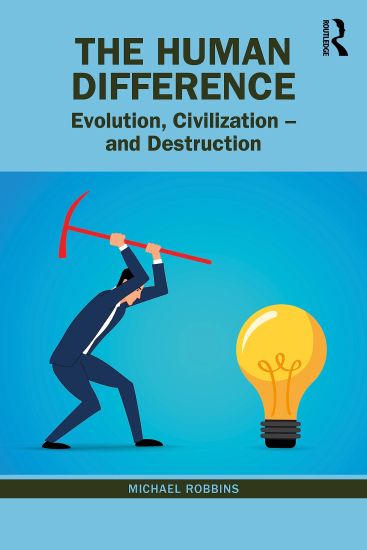
From a multidisciplinary perspective grounded in psychoanalysis, this book explores the manifestations of mind that distinguish humans from other species, culture, civilization, and destructiveness. Psychoanalysis was created by Freud in an effort to understand neurosis and psychosis, the names he gave to individual human destructiveness. His understanding was limited and incorrect because the science of evolution and the disciplines of sociology and cultural anthropology were in their infancy when he formulated his ideas. He did not comprehend that destructiveness is qualitatively different in humans than in other species and he ignored the problem of how biological instincts become mental processes. These limitations left psychoanalysis with one of its most perplexing unsolved problems, the mysterious leap from mind to body. This book explains how neoteny, the prolonged period of postnatal immaturity that distinguishes humans from other animals, requires and enables complex learning from caregivers. It is the knowledge acquired from this learning and its intergenerational transmission that links the biological theory of evolution with the psychosocial theory of psychoanalysis and explains how the human species is unique. This book will be of interest to those who want to learn about how integrating the findings of evolutionary science, primatology, sociology, and cultural anthroplogy with the theory of psychoanalysis expands our understanding of what makes humans unique and its implications for the future of our species, and how it empowers us to influence the destiny of humankind.
From a multidisciplinary perspective grounded in psychoanalysis, this book explores the manifestations of mind that distinguish humans from other species, culture, civilization, and destructiveness. Psychoanalysis was created by Freud in an effort to understand neurosis and psychosis, the names he gave to individual human destructiveness. His understanding was limited and incorrect because the science of evolution and the disciplines of sociology and cultural anthropology were in their infancy when he formulated his ideas. He did not comprehend that destructiveness is qualitatively different in humans than in other species and he ignored the problem of how biological instincts become mental processes. These limitations left psychoanalysis with one of its most perplexing unsolved problems, the mysterious leap from mind to body. This book explains how neoteny, the prolonged period of postnatal immaturity that distinguishes humans from other animals, requires and enables complex learning from caregivers. It is the knowledge acquired from this learning and its intergenerational transmission that links the biological theory of evolution with the psychosocial theory of psychoanalysis and explains how the human species is unique. This book will be of interest to those who want to learn about how integrating the findings of evolutionary science, primatology, sociology, and cultural anthroplogy with the theory of psychoanalysis expands our understanding of what makes humans unique and its implications for the future of our species, and how it empowers us to influence the destiny of humankind.
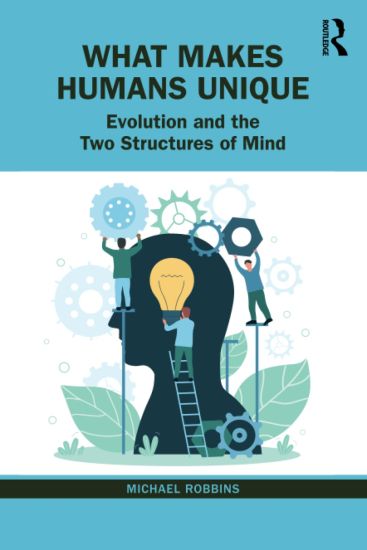
Through an integrated multi-disciplinary theory, Michael Robbins proposes that the human mind consists of two mental structures: the one we share with other animate creatures and a capacity for reflective representational thought which is unique. As an alternative to Freud’s model of the human mind as structured by the id, ego, and superego, this book contends that the prolonged period of post-natal immaturity – otherwise known as neoteny – which is specific to humans, gives rise to reflective representational thought that in turn allows for the acquisition of complex knowledge. Robbins examines how Freud’s conception of the human mind was limited by his ignorance of the related disciplines of sociology, primatology, cultural anthropology, and most notably evolution, which were then in their infancy, to explore the implications of the non-unitary nature of the human mind for us as individuals, as a society, and for our future as a species. Drawing on a broad range of influences from psychoanalysis to anthropology, biology, psychology, sociology, and politics, this book will be of interest to students and scholars of these disciplines alike.
Through an integrated multi-disciplinary theory, Michael Robbins proposes that the human mind consists of two mental structures: the one we share with other animate creatures and a capacity for reflective representational thought which is unique. As an alternative to Freud’s model of the human mind as structured by the id, ego, and superego, this book contends that the prolonged period of post-natal immaturity – otherwise known as neoteny – which is specific to humans, gives rise to reflective representational thought that in turn allows for the acquisition of complex knowledge. Robbins examines how Freud’s conception of the human mind was limited by his ignorance of the related disciplines of sociology, primatology, cultural anthropology, and most notably evolution, which were then in their infancy, to explore the implications of the non-unitary nature of the human mind for us as individuals, as a society, and for our future as a species. Drawing on a broad range of influences from psychoanalysis to anthropology, biology, psychology, sociology, and politics, this book will be of interest to students and scholars of these disciplines alike.
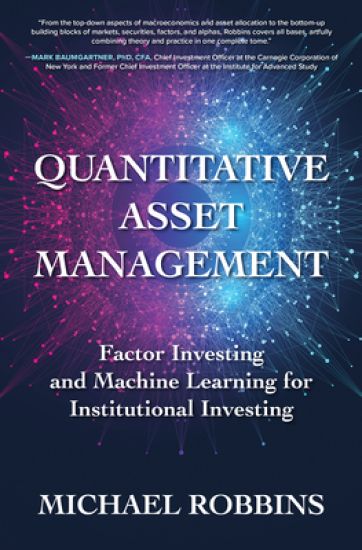
Augment your asset allocation strategy with machine learning and factor investing for unprecedented returns and growthWhether you’re managing institutional portfolios or private wealth, Quantitative Asset Management will open your eyes to a new, more successful way of investing—one that harnesses the power of big data and artificial intelligence. This innovative guide walks you through everything you need to know to fully leverage these revolutionary tools. Written from the perspective of a seasoned financial investor making use of technology, it details proven investing methods, striking a rare balance between providing important technical information without burdening you with overly complex investing theory. Quantitative Asset Management is organized into four thematic sections:Part I reveals invaluable lessons for planning and governance of investment decision-making. Part 2 discusses quantitative financial modeling, covering important topics like overfitting, mitigating unrealistic assumptions, managing substitutions, enhancing minority classes, and missing data imputation. Part 3 shows how to develop a strategy into an investment product, including the alpha models, risk models, implementation, backtesting, and cost optimization. Part 4 explains how to measure performance, learn from mistakes, manage risk, and survive financial tragedies. With Quantitative Asset Management, you have everything you need to build your awareness of other markets, ask the right questions and answer them effectively, and drive steady profits even through times of great uncertainty.
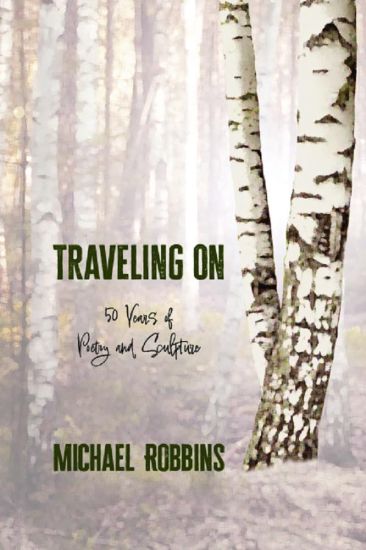
In the course of my long professional career as a psychoanalyst I have written about how mind works, about personality and self-development, dreaming, language, culture, destructiveness, psychosis and more. I have never thought of myself as a poet. Over the past half-century, emotions surrounding particular experiences have moved me to write poems. Recently I realized that I had accumulated 26 of them. They describe aspects of my journey through life. To my pleasant surprise, IPbooks has agreed to help me offer them to you.
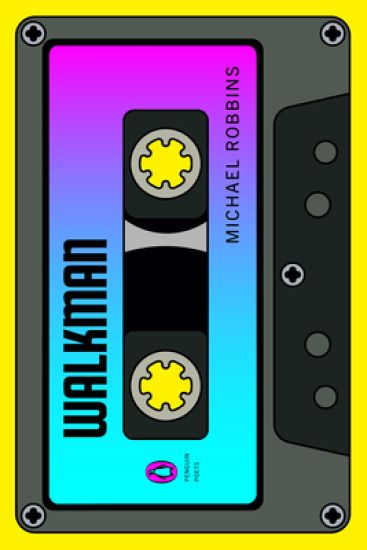
A new collection from an audacious, humorous poet celebrated for his "sky-blue originality of utterance" (Dwight Garner, The New York Times) Michael Robbins's first two books of poetry were raucous protests lodged from the frontage roads and big-box stores of off-ramp America. With Walkman, he turns a corner. These new poems confront self-pity and nostalgia in witty-miserable defiance of our political and ecological moment. It's the end of the world, and Robbins has listened to all the tapes in his backpack. So he's making music from whatever junk he finds lying around.
Psychoanalysis Meets Psychosis proposes a major revision of the psychoanalytic theory of the most severe mental illnesses including schizophrenia. Freud believed that psychosis is the consequence of a biologically determined inability to attain and sustain a normal or neurotic mental organization. Michael Robbins proposes instead that psychosis is the outcome of a different developmental pathway. Conscious mind functions in two qualitatively different ways, primordial conscious mentation and reflective representational thought, and psychosis is the result of persistence of a primordial mental process, which is adaptive in infancy, in later situations in which it is neither appropriate nor adaptive. In Part I Robbins describes how the medical model of psychosis underlies the current approach of both psychiatry and psychoanalysis, despite the fact that neuroscience has failed to confirm the model’s basic organic assumption. In Part II Robbins examines two of Freud’s models of psychosis that are based on the assumption of a constitutional inability to develop a normal or neurotic mind. The theories of succeeding generations of analysts have for the most part reiterated the biases of Freud’s two models, so that psychoanalysis considers the psychoses beyond its scope. In Part III Robbins proposes that the psychoses are the result of disturbances in the attachment-separation phase of development, leading to maladaptive persistence of a primordial form of mental activity related to Freud’s primary process. Finally, in Part IV Robbins describes a psychoanalytic approach to treatment based on his model. The book is richly illustrated with material from Robbins’ clinical practice. Psychoanalysis Meets Psychosis has the potential to undo centuries of alienation between society and psychotic persons. The book offers an understanding of severe mental illness that will be novel and inspiring not only to psychoanalysts but to all mental health professionals.
An eclectic collection of poetry by one of 17th century England's boldest, smartest, and independent women. "What a vision of loneliness and riot the thought of Margaret Cavendish brings to mind " Virginia Woolf wrote in A Room of One's Own. Cavendish, the Duchess of Newcastle-upon-Tyne, was a groundbreaking woman writer--a utopian visionary, a scientist, a science-fiction pioneer. She interacted with Thomas Hobbes and Rene Descartes. And she produced startlingly modern poems unlike anything else published in the seventeenth century for their mixture of scientific and proto-Blakean vision, their deep sympathy with the non-human world, and their feminist passion.
Psychoanalysis Meets Psychosis proposes a major revision of the psychoanalytic theory of the most severe mental illnesses including schizophrenia. Freud believed that psychosis is the consequence of a biologically determined inability to attain and sustain a normal or neurotic mental organization. Michael Robbins proposes instead that psychosis is the outcome of a different developmental pathway. Conscious mind functions in two qualitatively different ways, primordial conscious mentation and reflective representational thought, and psychosis is the result of persistence of a primordial mental process, which is adaptive in infancy, in later situations in which it is neither appropriate nor adaptive. In Part I Robbins describes how the medical model of psychosis underlies the current approach of both psychiatry and psychoanalysis, despite the fact that neuroscience has failed to confirm the model’s basic organic assumption. In Part II Robbins examines two of Freud’s models of psychosis that are based on the assumption of a constitutional inability to develop a normal or neurotic mind. The theories of succeeding generations of analysts have for the most part reiterated the biases of Freud’s two models, so that psychoanalysis considers the psychoses beyond its scope. In Part III Robbins proposes that the psychoses are the result of disturbances in the attachment-separation phase of development, leading to maladaptive persistence of a primordial form of mental activity related to Freud’s primary process. Finally, in Part IV Robbins describes a psychoanalytic approach to treatment based on his model. The book is richly illustrated with material from Robbins’ clinical practice. Psychoanalysis Meets Psychosis has the potential to undo centuries of alienation between society and psychotic persons. The book offers an understanding of severe mental illness that will be novel and inspiring not only to psychoanalysts but to all mental health professionals.
Butterfly and Serpent is about isolation, the isolation others impose on us and that we impose on ourselves. Whenever we feel worthless, often wrongly, we sometimes have an overwhelming feeling that we're alone. We've always been alone and maybe it's something we deserve. But that's not really true. We're not alone; we don't have to be alone. Jamai Dlamini has lived a life of isolation in her own community. She has a gift she doesn't understand and can't control. Other forces with sinister intentions have set their sights on her, including a disembodied spirit from another dimension who understands her situation all too well. Details of her story emerge slowly as she is interviewed (by whom we don't know). Jamai fights to discover her own background, beginning with her birth and loss of her mother, who she feels watches over her, keeping her safe. But she soon learns of family connections that disturb her and she seeks answers to what is expected of her. Time plays a strong role in her confusion, her birth post-dating the year 2025 by 500 years. As she grows, she discovers strange powers that cause further confusion. Characters both good and evil wind their way into her life as she struggles to understand. As events in her life spin out of control, even her best friend Youssou is drawn into the net tightening around her. Along the way, she will find that she has unexpected allies among the living...and the dead. The author worked on developing this character work by unlearning everything he thought he knew about Africa. He never wanted Jamai to be a bitch-in-britches like Tasha Yar, or the space marines in the Alien movies. He wanted her to be a strong capable person; He wanted readers to see their own possibilities. This novel is the first step in her journey, which begins like this: My first memories were of water, all warm and clingy, and a steady thrum-thrum as of a drum. I also remember a song whispered by an angel. What the words were I couldn't recall, other than one which was repeated over and over: e-ay-as. No, that wasn't exactly what it was. Time blurs all things.
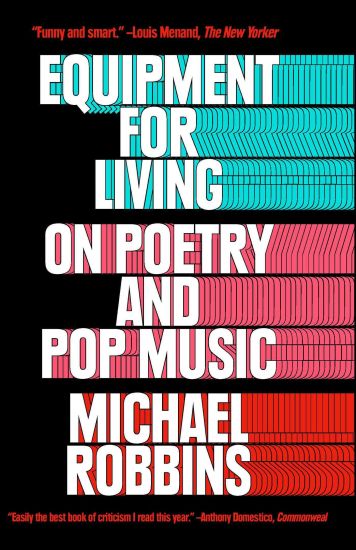
"Funny and smart" (The New Yorker) criticism of why we turn to art--specifically to poetry and popular music--and how it serves as an essential tool to understanding life. How can art help us make sense--or nonsense--of the world? If wrong life cannot be lived rightly, as Theodor Adorno had it, what weapons and strategies for living wrongly can art provide? With the same intelligence that animates his poetry, Michael Robbins addresses this weighty question while contemplating the idea of how strange it is that we need art at all. Ranging from Prince to Def Leppard, Lucille Clifton to Frederick Seidel, Robbins's mastery of poetry and popular music shines in Equipment for Living. He has a singular ability to illustrate points with seemingly disparate examples (Friedrich Kittler and Taylor Swift, to W. B. Yeats and Anna Kendrick's "Cups"). Robbins weaves a discussion on poet Juliana Spahr with the different subsets of Scandinavian black metal music, illuminating subjects in ways that few scholars can achieve. As Dwight Garner said in The New York Times about Robbins: "This man can write." Equipment for Living is a "freakishly original" (Elle) look at how works of art, specifically poetry and popular music, can help us understand our own lives.
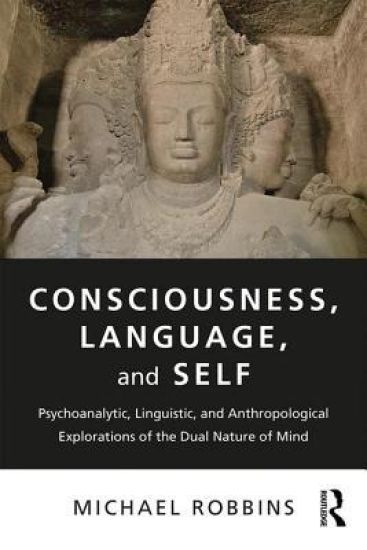
Consciousness, Language, and Self proposes that the human self is innately bilingual. Conscious mind includes two qualitatively distinct mental processes, each of which uses the same formal elements of language differently. The "mother tongue," the language of primordial consciousness, begins in utero and our second language, reflective symbolic thought, begins in infancy. Michael Robbins describes the respective roles the two conscious mental processes and their particular use of language play in the course of normal and pathological development, as well as the role the language of primordial consciousness plays in adult life in such phenomena as dreaming, infant-caregiver attachment, creativity, belief systems and their effects on social and political life, cultural differences, and psychosis. Examples include creative persons, extreme political figures and psychotic individuals. Five original essays, written by the author’s current and former patients, describe what they learned about their aberrant uses of language and their origins. This book sheds new light on several controversies that have been limited by the incorrect assumption that reflective representational thought and its language is the only conscious mental state. These include the debate within linguistics about whether language is the expression of a hardwired instinct whose identifying feature is recursion; within psychoanalysis about the nature of conscious and unconscious mental processes, and within cognitive philosophy about whether language and thought are isomorphic. Consciousness, Language, and Self will be of great value to psychoanalysts, as well as students and scholars of linguistics, cognitive philosophy and cultural anthropology.
Consciousness, Language, and Self proposes that the human self is innately bilingual. Conscious mind includes two qualitatively distinct mental processes, each of which uses the same formal elements of language differently. The "mother tongue," the language of primordial consciousness, begins in utero and our second language, reflective symbolic thought, begins in infancy. Michael Robbins describes the respective roles the two conscious mental processes and their particular use of language play in the course of normal and pathological development, as well as the role the language of primordial consciousness plays in adult life in such phenomena as dreaming, infant-caregiver attachment, creativity, belief systems and their effects on social and political life, cultural differences, and psychosis. Examples include creative persons, extreme political figures and psychotic individuals. Five original essays, written by the author’s current and former patients, describe what they learned about their aberrant uses of language and their origins. This book sheds new light on several controversies that have been limited by the incorrect assumption that reflective representational thought and its language is the only conscious mental state. These include the debate within linguistics about whether language is the expression of a hardwired instinct whose identifying feature is recursion; within psychoanalysis about the nature of conscious and unconscious mental processes, and within cognitive philosophy about whether language and thought are isomorphic. Consciousness, Language, and Self will be of great value to psychoanalysts, as well as students and scholars of linguistics, cognitive philosophy and cultural anthropology.
This report examines alternative policies and practices to better align post-promotion board reporting with the objectives of promoting officers who have served on the Joint Staff and OSD staff at at least the same rate as those with service headquarters staff experience and of promoting joint-qualified officers and Acquisition Corps members at at least the same rate as line or equivalent officers in their services.
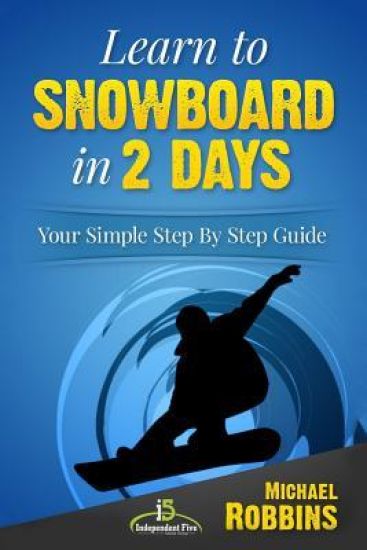
So you want to learn to Snowboard? Look no further In Learn to Snowboard in 2 Days you will find a simple step by step program that has been designed to give you the best possible start on your Snowboarding journey - guaranteed You will get to know insider secrets to get you up and riding in your very first session, how to avoid painful beginner's mistakes, how to choose the right gear for YOU, and much much more This comprehensive no-nonsense guide has all the information you need to know to get started in Snowboarding - all about the gear, how to ride a lift, all the best techniques to get you up and riding in no time, and lots of other beginner's tips Here's what the book will tell you in detail: - The hands down fastest and easiest techniques for getting up and riding in your very first session - How to choose the right board and bindings for YOU - The best ways to avoid mistakes that can be painful, costly or even really dangerous - If you take snowboarding lessons, know how to make the most out of them and save money- if you take just one less hour of lessons, this book will have re-paid itself several times over. - How to dramatically reduce your overall learning curve - A complete Gear Guide going through the different types of boards, bindings, boots, and other accessories - How to care for your gear to make sure it lasts longer and doesn't fail you in a bad situation - How to easily put your body in the correct position for the type of snowboarding you do - How to snowboard safely with minimal risk to yourself and others - How to get on and off a lift with ease - Tips and video to show you how to tackle beginning snowboarding skills, like skating, gliding, and linking turns - Descriptions of common snowboarding terrain features - Advice and videos describing how to perform advanced techniques and tricks, such as jumps, grinds, and 360s - A guide to the best Snowboard Terrain Parks in the U. S. - A glossary of common snowboarding terms to help you speak like a pro - And much, much more... In short, this guide is tailor made to make sure you get the best possible start at Snowboarding - right now If you still haven t made up your mind, please take my word for it: as a Snowboarder you'll get to enjoy the snow in a way that most people will never experience - you will NOT regret giving the sport a shot One last piece of advice if you re the kind of person who can't wait to go out there and just do it - of course not everyone who gives Snowboarding a shot with some old, borrowed gear and no clue gets hurt in the process, but I can assure you that the people who are well informed and properly instructed learn a LOT faster and walk away from their first sessions with a lot less bruises and frustration. So what are you waiting for? Grab your copy right now and start learning TODAY You'll save time, cash AND make sure to get a great start Snowboarding - it can't get any better than this
This is not merely the story of the origins of the world's largest urban passenger transport system: it is also, as it must be, the story of the growth of London itself from teh early days of the nineteenth century. This volume traces the developmen down to 1900 of every kind of public transport which either produced the great expansion of London in this period, or took up the opportunities it offered. Passenger transport is related throughout to the social, economic, and historical factors which shaped its course. This is more than a history of the founding and operation of this or that bus, railway or tram company. It is an authentic portrait of an age of prodigious energy, which, for better or worse, made London what it is and laid the foundations for today's London Transport system. This book was first published in 1963.
A second collection from a poet of "sheer joy and dizzy command" (The New York Times) Upon its publication in 2012, Alien vs. Predator, the debut collection by Michael Robbins, became one of the hottest and most celebrated works of poetry in the country, winning acclaim for its startling freshness and originality, and leading critics to say that it was the most likely book in years to open up poetry to a new readership. Robbins's poems are strange, wonderful, wild, and irrationally exuberant, mashing up high and low culture with "a sky-blue originality of utterance" (The New York Times). The thirty-six new poems in The Second Sex carry over the music, attitude, hilarity, and vulgarity of Alien vs. Predator, while also working deeper autobiographical and political veins.
Following the untimely death's of their parents, Matthew and Jason must put their differences aside and overcome the challenges thrown at them from the new plague, which turns the once living into bloodthirsty monsters after becoming infected. As they continue to fight for survival, Matthew and Jason quickly realize that the scariest monsters aren't the ones that we run from, but the ones we become.