Kirjojen hintavertailu – 12 859 824 kirjaa ja 27 kauppaa

Kirjailija

Michael Russell

Kirjat ja teokset yhdessä paikassa: 72 kirjaa, julkaisuja vuosilta 1985–2026, suosituimpiin kuuluu The Unfounding of America. Vertaile teosten hintoja ja tarkista saatavuus suomalaisista kirjakaupoista.

72 kirjaa

Kirjojen julkaisuvuodet: 1985–2026.

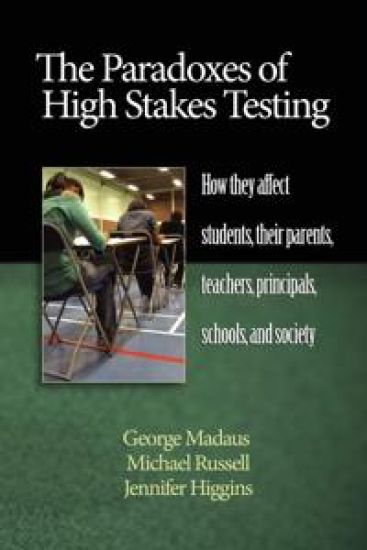
The Paradoxes of High Stakes Testing

The Paradoxes of High Stakes Testing

George F. Madaus; Michael Russell; Jennifer Higgins

Information Age Publishing
2009
nidottu
As a nation, we spend more than $1 billion a year on federally mandated educational tests that 30 million students must take each year. The country spends an additional $1.2 billion on test preparation materials designed to help students pass these tests. While test mandates were put in place with good intentions, increasingly educational leaders and policy makers are questioning these test based reform efforts. Some question whether these programs are doing more harm than good. Others call for the development of more and better tests. Given the vast amount of resources our nation pours into testing, is it time we pay closer attention to these testing programs? Is it time we hold the testing industry and policy makers accountable for the tests they make and use? Is it time we invest resources to develop new ways of testing our students? The Paradoxes of High-Stakes Testing explores these and other questions, as it helps parents, teachers, educational leaders, and policy makers better understand the complexities of educational policies that use tests as a lever for improving the quality of education. The book explores: -how testing is used to enable teachers and schools to be more effective and improve student learning, -why testing is so ingrained in the American psyche and why policy makers rely on testing policies to reform our educational system, -what we can learn from a long history of test-based reform efforts that have occurred over centuries and across continents, -what effects testing has on teaching and learning in our schools when it is used to solve political, social, or economic problems. Most importantly, the book describes several ways in which testing can be improved to provide more accurate and more useful measures of student learning. Many of these improvements capitalize on technology to provide teachers with more detailed, diagnostic information about student learning and measure skills that some leaders argue are essential for the 21st century work force. Exploring what is within reach is critical because current testing policies are hindering these improvements. Finally, given that testing is and will continue to be an integral part of our educational system, the book concludes that, like other sectors of our society, educational testing must be more closely monitored to ensure that high quality tests are used to measure student achievement and to minimize the negative effects that testing has on students, schools, and our society. Given the opportunity our nation has to rethink and redesign its testing policies, The Paradoxes of High-Stakes Testing presents a clear strategy to maximize the positive effects of educational testing.
The Paradoxes of High Stakes Testing

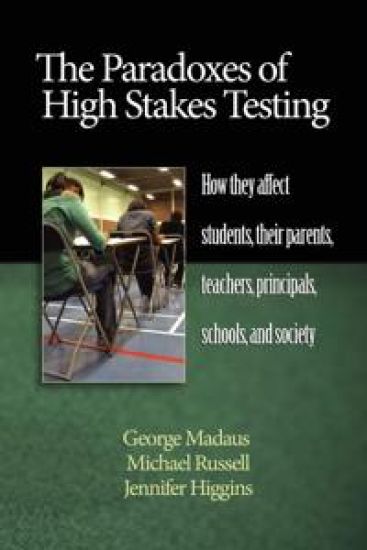
The Paradoxes of High Stakes Testing

George F. Madaus; Michael Russell; Jennifer Higgins

Information Age Publishing
2009
sidottu
As a nation, we spend more than $1 billion a year on federally mandated educational tests that 30 million students must take each year. The country spends an additional $1.2 billion on test preparation materials designed to help students pass these tests. While test mandates were put in place with good intentions, increasingly educational leaders and policy makers are questioning these test based reform efforts. Some question whether these programs are doing more harm than good. Others call for the development of more and better tests. Given the vast amount of resources our nation pours into testing, is it time we pay closer attention to these testing programs? Is it time we hold the testing industry and policy makers accountable for the tests they make and use? Is it time we invest resources to develop new ways of testing our students? The Paradoxes of High-Stakes Testing explores these and other questions, as it helps parents, teachers, educational leaders, and policy makers better understand the complexities of educational policies that use tests as a lever for improving the quality of education. The book explores: -how testing is used to enable teachers and schools to be more effective and improve student learning, -why testing is so ingrained in the American psyche and why policy makers rely on testing policies to reform our educational system, -what we can learn from a long history of test-based reform efforts that have occurred over centuries and across continents, -what effects testing has on teaching and learning in our schools when it is used to solve political, social, or economic problems. Most importantly, the book describes several ways in which testing can be improved to provide more accurate and more useful measures of student learning. Many of these improvements capitalize on technology to provide teachers with more detailed, diagnostic information about student learning and measure skills that some leaders argue are essential for the 21st century work force. Exploring what is within reach is critical because current testing policies are hindering these improvements. Finally, given that testing is and will continue to be an integral part of our educational system, the book concludes that, like other sectors of our society, educational testing must be more closely monitored to ensure that high quality tests are used to measure student achievement and to minimize the negative effects that testing has on students, schools, and our society. Given the opportunity our nation has to rethink and redesign its testing policies, The Paradoxes of High-Stakes Testing presents a clear strategy to maximize the positive effects of educational testing.
Technology and Assessment

Technology and Assessment

Michael Russell

Information Age Publishing
2006
nidottu
Together, the words technology and assess-ment have different meaning for different people. Those who work with educational or instructional technology take these words to mean assessing the impacts of technology on teaching and learning. Test developers and psychometricians, however, consider ways in which computer-based technologies can be used to enhance current approaches to student assessment. This book examines technology and assessment from both perspectives by examining past, current and promising methodol-ogies and applications in both fields. The influences instructional uses of technology and the increasing reliance on testing to gauge student and school performance have on one another are also explored. The book concludes by describing an organizational structure that could bring instructional applications of technology and assessment practices into closer alignment.
Technology and Assessment

Technology and Assessment

Michael Russell

Information Age Publishing
2006
sidottu
Together, the words technology and assess-ment have different meaning for different people. Those who work with educational or instructional technology take these words to mean assessing the impacts of technology on teaching and learning. Test developers and psychometricians, however, consider ways in which computer-based technologies can be used to enhance current approaches to student assessment. This book examines technology and assessment from both perspectives by examining past, current and promising methodol-ogies and applications in both fields. The influences instructional uses of technology and the increasing reliance on testing to gauge student and school performance have on one another are also explored. The book concludes by describing an organizational structure that could bring instructional applications of technology and assessment practices into closer alignment.
Nubia and Abyssinia

Nubia and Abyssinia

Michael Russell

DARF PUBLISHERS LTD
1985
sidottu
In this informative volume, first published in 1833, the author brings together a wealth of fascinating detail on every aspect of lifea s it then was in Nubia (now part of Sudan) and Abyssinia (Ethiopia). His information is drawn from the accounts of well-known explorers, such as James Bruce, who discovered the source of the Blue Nile, as well as previously unpublished material from travellers known personally to the author. Geographical and historical surveys are given of this area which extends from the Nile in the west to the Red Sea in the east. The reader is taken on perilous journeys over the cataracts of the Nile and into remote regions to discover temples long buried under the desert sand. The customs of the inhabitants are described through the experiences of an Englishman who lived for some years in the region. As a clergyman, the author discusses in some detail the history of Christianity in Abyssinia through the medium of his own religious views. The volume is rounded off by accounts of the architecture, zoology and botany of this fascinating region.
Palestine or the Holy Land

Palestine or the Holy Land

Michael Russell

Darf Publishers Ltd
1985
sidottu
Reprint of the fourth edition of 'Palestine' published 1837, the author in his preface says he 'has made it his study to leave no source of information unexplored' in recounting the events that shaped this land from its earliest known history. Similarly topographical description is drawn from the works of numerous travellers and pilgrims.