Kirjojen hintavertailu – 12 903 724 kirjaa ja 27 kauppaa

Kirjailija

Michael S. Roth

Kirjat ja teokset yhdessä paikassa: 10 kirjaa, julkaisuja vuosilta 1995–2024, suosituimpiin kuuluu Beyond the University. Vertaile teosten hintoja ja tarkista saatavuus suomalaisista kirjakaupoista.

10 kirjaa

Kirjojen julkaisuvuodet: 1995–2024.

The Student

The Student

Michael S. Roth

YALE UNIVERSITY PRESS
2024
pokkari
From the president of Wesleyan University, an illuminating history of the student, spanning from antiquity to Zoom “[Roth] has a clear vision for what it ought to mean to be a student: Learn what you love to do, get better at it, and then share it with others.”—David Perry, Washington Post In this sweeping book, Michael S. Roth narrates a vivid and dynamic history of students, exploring some of the principal models for learning that have developed in very different contexts, from the sixth century BCE to the present. Beginning with the followers of Confucius, Socrates, and Jesus and moving to medieval apprentices, students at Enlightenment centers of learning, and learners enrolled in twenty-first-century universities, he explores how students have been followers, interlocutors, disciples, rebels, and children becoming adults. There are many ways to be a student, Roth argues, but at their core is developing the capacity to think for oneself by learning from others, and thereby finding freedom. In an age of machine learning, this book celebrates the student who develops more than mastery, cultivating curiosity, judgment, creativity, and an ability to keep learning beyond formal schooling. Roth shows how the student throughout history has been someone who interacts dynamically with the world, absorbing its lessons and creatively responding to them.
The Student

The Student

Michael S. Roth

YALE UNIVERSITY PRESS
2023
sidottu
From the president of Wesleyan University, an illuminating history of the student, spanning from antiquity to Zoom “[Roth] has a clear vision for what it ought to mean to be a student: Learn what you love to do, get better at it, and then share it with others.”—David Perry, Washington Post In this sweeping book, Michael S. Roth narrates a vivid and dynamic history of students, exploring some of the principal models for learning that have developed in very different contexts, from the sixth century BCE to the present. Beginning with the followers of Confucius, Socrates, and Jesus and moving to medieval apprentices, students at Enlightenment centers of learning, and learners enrolled in twenty-first-century universities, he explores how students have been followers, interlocutors, disciples, rebels, and children becoming adults. There are many ways to be a student, Roth argues, but at their core is developing the capacity to think for oneself by learning from others, and thereby finding freedom. In an age of machine learning, this book celebrates the student who develops more than mastery, cultivating curiosity, judgment, creativity, and an ability to keep learning beyond formal schooling. Roth shows how the student throughout history has been someone who interacts dynamically with the world, absorbing its lessons and creatively responding to them.
Safe Enough Spaces

Safe Enough Spaces

Michael S. Roth

Yale University Press
2022
pokkari
From the president of Wesleyan University, a compassionate and provocative manifesto on the crises confronting higher education In this bracing book, Michael S. Roth stakes out a pragmatist path through the thicket of issues facing colleges today to carry out the mission of higher education. With great empathy, candor, subtlety, and insight, Roth offers a sane approach to the noisy debates surrounding affirmative action, political correctness, and free speech, urging us to envision college as a space in which students are empowered to engage with criticism and with a variety of ideas. Countering the increasing cynical dismissal—from both liberals and conservatives—of the traditional core values of higher education, this book champions the merits of different diversities, including intellectual diversity, with a timely call for universities to embrace boldness, rigor, and practical idealism.
Redesigning Liberal Education

Redesigning Liberal Education

Michael S. Roth

Johns Hopkins University Press
2020
sidottu
Redesigning liberal education requires both pragmatic approaches to discover what works and radical visions of what is possible. The future of liberal education in the United States, in its current form, is fraught but full of possibility. Today's institutions are struggling to maintain viability, sustain revenue, and assert value in the face of rising costs. But we should not abandon the model of pragmatic liberal learning that has made America's colleges and universities the envy of the world. Instead, Redesigning Liberal Education argues, we owe it to students to reform liberal education in ways that put broad and measurable student learning as the highest priority. Written by experts in higher education, the book is organized into two sections. The first section focuses on innovations at 13 institutions: Brown University, College of the Holy Cross, Connecticut College, Elon University, Florida International University, George Mason University, Georgetown University, Lasell College, Northeastern University, Rollins College, Smith College, Susquehanna University, and the University of Wisconsin–Green Bay. Chapters about these institutions consider the vast spectrum of opportunities and challenges currently faced by students, faculty, staff, and administrators, while also offering "radical visions" of the future of liberal education in the United States. Accompanying vision chapters written by some of the foremost leaders in higher education touch on a wide array of subjects and themes, from artificial intelligence and machines to the role that human dispositions, mindsets, resilience, and time play in how we guide students to ideas for bringing playful concepts of creativity and openness into our work. Ultimately, Redesigning Liberal Education reveals how humanizing forces, including critical thinking, collaboration, cross-cultural competencies, resilience, and empathy, can help drive our world. This uplifting collection is a celebration of the innovative work being done to achieve the promise of a valuable, engaging, and practical undergraduate liberal education. Isis Artze-Vega, Denise S. Bartell, Randy Bass, John Bodinger de Uriarte, Laurie Ann Britt-Smith, Jacquelyn Dively Brown, Phillip M. Carter, Nancy L. Chick, Michael J. Daley, Maggie Debelius, Janelle Papay Decato, Peter Felten, Ashley Finley, Dennis A. Frey Jr., Chris W. Gallagher, Evan A. Gatti, Lisa Gring-Pemble, Kristína Moss Gudrún Gunnarsdóttir, Anthony Hatcher, Toni Strollo Holbrook, Derek Lackaff, Leo Lambert, Kristin Lange, Sherry Lee Linkon, Anne M. Magro, Maud S. Mandel, Jessica Metzler, Borjana Mikic, William Moner, Phillip Motley, Matthew Pavesich, Uta G. Poiger, Rebecca Pope-Ruark, Michael Reder, Michael S. Roth, Emily Russell, Heather Russell, Ann Schenk, Michael Shanks, Susan Rundell Singer, Andrea A. Sinn, Christina Smith, Allison K. Staudinger, William M. Sullivan, Connie Svabo, Meredith Twombly, Betsy Verhoeven, David J. Voelker, Scott Windham, Mary C. Wright, Catherine Zeek

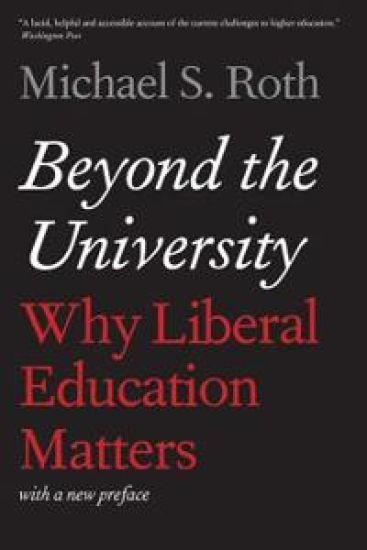
Beyond the University

Beyond the University

Michael S. Roth

Yale University Press
2015
pokkari
From the president of Wesleyan University, an eloquent defense of liberal education, seen against the backdrop of its contested history in America Winner of the 2016 Frederic W. Ness Book Award sponsored by the Association of American Colleges and Universities Contentious debates over the benefits—or drawbacks—of a liberal education are as old as America itself. From Benjamin Franklin to the Internet pundits, critics of higher education have attacked its irrelevance and elitism—often calling for more vocational instruction. Thomas Jefferson, by contrast, believed that nurturing a student’s capacity for lifelong learning was useful for science and commerce while also being essential for democracy. In this provocative contribution to the disputes, university president Michael S. Roth focuses on important moments and seminal thinkers in America’s long-running argument over vocational vs. liberal education. Conflicting streams of thought flow through American intellectual history: W. E. B. DuBois’s humanistic principles of pedagogy for newly emancipated slaves developed in opposition to Booker T. Washington’s educational utilitarianism, for example. Jane Addams’s emphasis on the cultivation of empathy and John Dewey’s calls for education as civic engagement were rejected as impractical by those who aimed to train students for particular economic tasks. Roth explores these arguments (and more), considers the state of higher education today, and concludes with a stirring plea for the kind of education that has, since the founding of the nation, cultivated individual freedom, promulgated civic virtue, and instilled hope for the future.
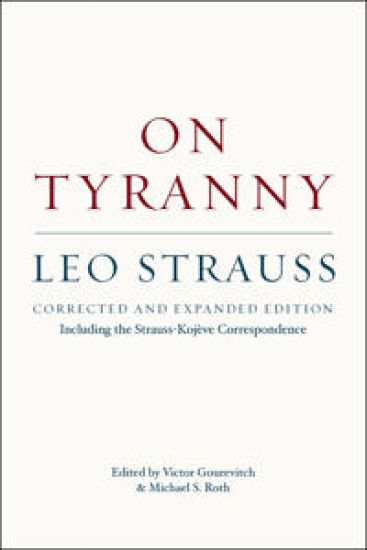
On Tyranny – Corrected and Expanded Edition, Including the Strauss–Kojève Correspondence

On Tyranny – Corrected and Expanded Edition, Including the Strauss–Kojève Correspondence

Leo Strauss; Victor Gourevitch; Michael S. Roth

University of Chicago Press
2013
nidottu
"On Tyranny" is Leo Strauss' classic reading of Xenophon's dialogue Hiero, or Tyrannicus, in which the tyrant Hiero and the poet Simonides discuss the advantages and disadvantages of exercising tyranny. Included are a translation of the dialogue from its original Greek, a critique of Strauss' commentary by the French philosopher Alexandre Kojeve, and the complete correspondence between the two. This corrected and expanded edition introduces important revisions throughout and expands Strauss' restatement of his position in light of Kojeve's commentary to bring it into conformity with the text as it was originally published in France.
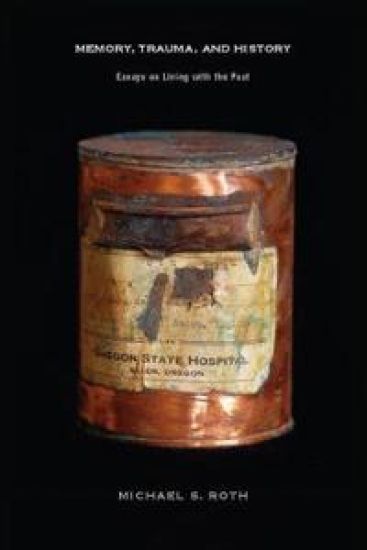
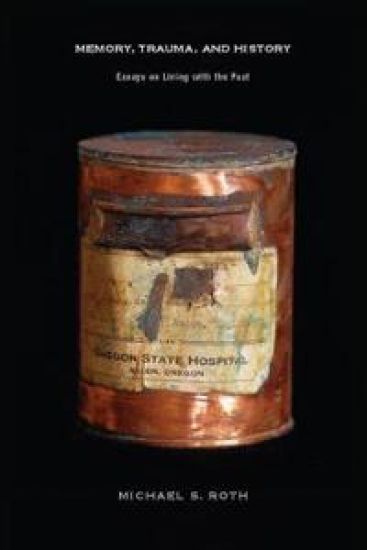
Memory, Trauma, and History

Memory, Trauma, and History

Michael S. Roth

Columbia University Press
2011
sidottu
In these essays, Michael S. Roth uses psychoanalysis to build a richer understanding of history, and then takes a more expansive conception of history to decode the cultural construction of memory. He first examines the development in nineteenth-century France of medical criteria for diagnosing memory disorders, which signal fundamental changes in the understanding of present and past. He next explores links between historical consciousness and issues relating to the psyche, including trauma and repression and hypnosis and therapy. Roth turns to the work of postmodern theorists in connection with the philosophy of history and then examines photography's capacity to capture traces of the past. He considers how we strive to be faithful to the past even when we don't care about getting it right or using it productively. Roth concludes with essays defending pragmatic and reflexive liberal education. Drawing on his experiences as a teacher and academic leader, he speaks of living with the past without being dominated by it.
Memory, Trauma, and History

Memory, Trauma, and History

Michael S. Roth

Columbia University Press
2011
pokkari
In these essays, Michael S. Roth uses psychoanalysis to build a richer understanding of history, and then takes a more expansive conception of history to decode the cultural construction of memory. He first examines the development in nineteenth-century France of medical criteria for diagnosing memory disorders, which signal fundamental changes in the understanding of present and past. He next explores links between historical consciousness and issues relating to the psyche, including trauma and repression and hypnosis and therapy. Roth turns to the work of postmodern theorists in connection with the philosophy of history and then examines photography's capacity to capture traces of the past. He considers how we strive to be faithful to the past even when we don't care about getting it right or using it productively. Roth concludes with essays defending pragmatic and reflexive liberal education. Drawing on his experiences as a teacher and academic leader, he speaks of living with the past without being dominated by it.