

Kirjailija
Michael Sanderson
Kirjat ja teokset yhdessä paikassa: 12 kirjaa, julkaisuja vuosilta 1995–2025, suosituimpiin kuuluu When My Eyes Opened. Vertaile teosten hintoja ja tarkista saatavuus suomalaisista kirjakaupoista.
12 kirjaa
Kirjojen julkaisuvuodet: 1995–2025.
Originally published in 1972, The University and British Industry examines the lively and controversial relationship between British industry and the university. The book looks at the impact of industry on the development of British universities from the 1850s to the 1970s, and with contribution from the universities to industry through scientific research and the supply of graduate skills. The book argues that the close involvement of the universities and industry has been one of the chief beneficial forces shaping the British universities movement in the last hundred years. It gives an account of the changes which took place within the universities to make them more suitable for industries purposes, describing for example the early rise of the English civic universities, strongly financed by, and closely supporting industry. The book also considers how, during the two world wars, industry became highly reliant on the universities for the war technology, and how, despite the depression between the wars, university research and graduate employment embraced the widening opportunities of the new industries. The book also discusses the expansion of the university in the sixties and points out that industrial motives have merged with those of social justice, posing dilemmas for present and future relations between universities and industry.

The Saguaro Cactus
David Yetman; Alberto Búrquez; Kevin Hultine; Michael Sanderson
University of Arizona Press
2020
nidottu
The saguaro, with its great size and characteristic shape - its arms stretching heavenward, its silhouette often resembling a human - has become the emblem of the Sonoran Desert of southwestern Arizona and northwestern Mexico. The largest and tallest cactus in the United States, it is both familiar and an object of fascination and curiosity. This book offers a complete natural history of this enduring and iconic desert plant. Gathering everything from the saguaro's role in Sonoran Desert ecology to its adaptations to the desert climate and its sacred place in Indigenous culture, this book shares precolonial through current scientific findings. The saguaro is charismatic and readily accessible but also decidedly different from other desert flora. The essays in this book bear witness to our ongoing fascination with the great cactus and the plant's unusual characteristics, covering the saguaro's history of discovery,place in the cactus family,ecology,anatomy and physiology,genetics, andethnobotany. The Saguaro Cactus offers testimony to the cactus's prominence as a symbol, the perceptions it inspires, its role in human society, and its importance in desert ecology.

"I'm sick and tired of being sick and tired"-Fannie Lou HamerThis statement was made back in the 60s by a great African American woman, a civil rights activist named Ms. Fannie Lou Hamer who was sick and tired of the inequality and injustice that Black people were suffering during that time in the south. Unfortunately, this statement is still true today when it comes to the violence that we see in our communities-and I must say that I am sick and tired of being tired, seeing our young people constantly falling victim to random shootings within our neighborhoods.
Originally published in 1972, The University and British Industry examines the lively and controversial relationship between British industry and the university. The book looks at the impact of industry on the development of British universities from the 1850s to the 1970s, and with contribution from the universities to industry through scientific research and the supply of graduate skills. The book argues that the close involvement of the universities and industry has been one of the chief beneficial forces shaping the British universities movement in the last hundred years. It gives an account of the changes which took place within the universities to make them more suitable for industries purposes, describing for example the early rise of the English civic universities, strongly financed by, and closely supporting industry. The book also considers how, during the two world wars, industry became highly reliant on the universities for the war technology, and how, despite the depression between the wars, university research and graduate employment embraced the widening opportunities of the new industries. The book also discusses the expansion of the university in the sixties and points out that industrial motives have merged with those of social justice, posing dilemmas for present and future relations between universities and industry.

I was a truck driver who had a bad accident. I swerved to miss another accident in which I would have taken three lives. The truck turned over, and I went down headfirst, which left me internally decapitated. So this book is about God bringing me through this and being able to live my life after the facts.

In this book, the author Michael Sanderson shares his amazing story of survival against all odds. He was internally decapitated in an horrific accident that 97% of victims do not survive--and which leaves most of the remaining 3% paralyzed for the rest of their lives. He fought back from the brink of death to tell his story of survival--and his testimony of God's grace and deliverance.
Starting with the creation of the early technical schools before the First Wold War and finishing with John Patten’s policies as Secretary of State for Education in 1993, Sanderson examines the development of the technical school sector and the factors which weakened it and led to its demise. The book argues that the neglect of technical schools has resulted in poor levels of skill formation and industrial performance in Britain, especially since the Second World War.
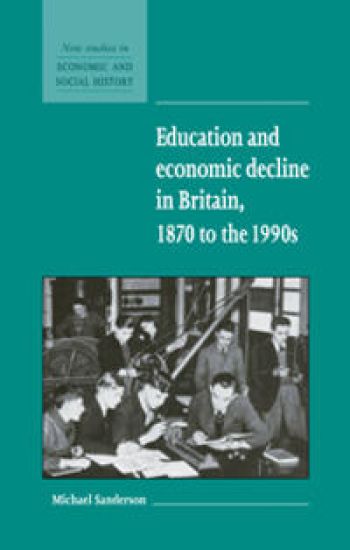
Education and Economic Decline in Britain, 1870 to the 1990s
Michael Sanderson
Cambridge University Press
1999
pokkari
Since the 1870s the British economy has steadily declined from its position as the ‘workshop of the world’ to that of a low-ranking European power. Michael Sanderson examines the question of how far defects in education and training have contributed to this economic decline. By looking at issues such as literacy, the quality of scientific and technical training, the supposed anti-industrial bias of public schools and the older universities, the neglect of vocational and technical training and the neglect of the non-academic teenager, Michael Sanderson demonstrates that education was far from the sole cause of economic decline, but that its deficiencies have certainly played a part. This book offers an accessible and concise analysis of a topic of current importance, interest and debate and will be of interest to students and teachers of the history of education and its impact on British economic development in the twentieth century.
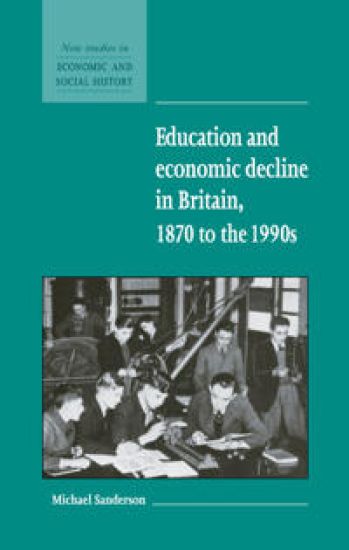
Education and Economic Decline in Britain, 1870 to the 1990s
Michael Sanderson
Cambridge University Press
1999
sidottu
Since the 1870s the British economy has steadily declined from its position as the ‘workshop of the world’ to that of a low-ranking European power. Michael Sanderson examines the question of how far defects in education and training have contributed to this economic decline. By looking at issues such as literacy, the quality of scientific and technical training, the supposed anti-industrial bias of public schools and the older universities, the neglect of vocational and technical training and the neglect of the non-academic teenager, Michael Sanderson demonstrates that education was far from the sole cause of economic decline, but that its deficiencies have certainly played a part. This book offers an accessible and concise analysis of a topic of current importance, interest and debate and will be of interest to students and teachers of the history of education and its impact on British economic development in the twentieth century.
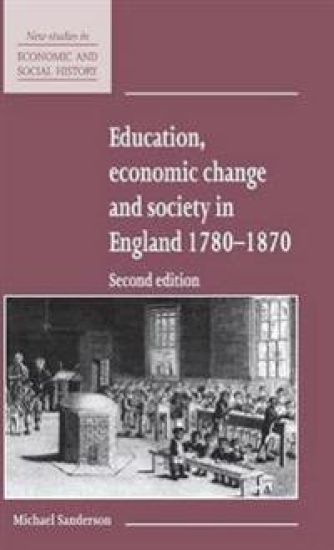
Education, Economic Change and Society in England 1780–1870
Michael Sanderson
Cambridge University Press
1995
sidottu
In recent years the study of the history of education has flourished and expanded. It has moved from being a specialist interest to one which concerns economic and social historians, who see that education has played a central part in the discussion of industrial development and the formation of the social structure. In this study, revised and updated throughout, Dr Sanderson reviews the history of education in the nineteenth century and the academic debates surrounding it. He examines the discussion surrounding literacy, its trends and significance in the creation of an industrial labour force. He also considers the successful development of a middle-class scientific culture in the eighteenth century and the relative failure to develop technical education in the nineteenth. This period was marked by the development of the Victorian public school and by reforms in the universities. It also saw the involvement in education by radical working class and feminist groups, who were struggling for recognition. As this study shows, the education system could be highly responsive in some areas and yet insensitive in others to the far-reaching economic and social advances of the first industrial Revolution.
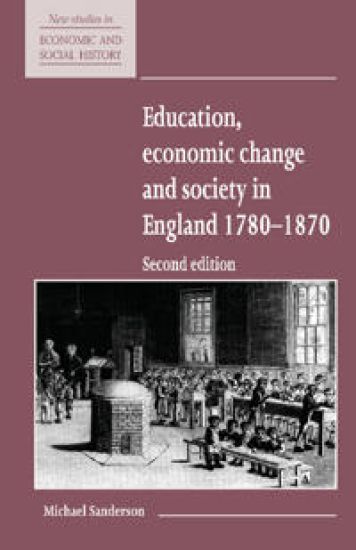
Education, Economic Change and Society in England 1780–1870
Michael Sanderson
Cambridge University Press
1995
pokkari
In recent years the study of the history of education has flourished and expanded. It has moved from being a specialist interest to one which concerns economic and social historians, who see that education has played a central part in the discussion of industrial development and the formation of the social structure. In this study, revised and updated throughout, Dr Sanderson reviews the history of education in the nineteenth century and the academic debates surrounding it. He examines the discussion surrounding literacy, its trends and significance in the creation of an industrial labour force. He also considers the successful development of a middle-class scientific culture in the eighteenth century and the relative failure to develop technical education in the nineteenth. This period was marked by the development of the Victorian public school and by reforms in the universities. It also saw the involvement in education by radical working class and feminist groups, who were struggling for recognition. As this study shows, the education system could be highly responsive in some areas and yet insensitive in others to the far-reaching economic and social advances of the first industrial Revolution.