Kirjojen hintavertailu – 12 859 826 kirjaa ja 27 kauppaa

Kirjailija

Michael Share

Kirjat ja teokset yhdessä paikassa: 13 kirjaa, julkaisuja vuosilta 2007–2026, suosituimpiin kuuluu Hermias: On Plato Phaedrus 257c-279c, with 'Syrianus': Introduction to Hermogenes on Styles. Vertaile teosten hintoja ja tarkista saatavuus suomalaisista kirjakaupoista.

13 kirjaa

Kirjojen julkaisuvuodet: 2007–2026.

Hermias: On Plato Phaedrus 257c-279c, with 'Syrianus': Introduction to Hermogenes on Styles
This third and final volume concludes Hermias' commentary on Plato's Phaedrus. Here, Plato delivers a celebrated critique of writing, and its relationship to orality. Hermias follows him, and adds a general account of good writing. In addition, this volume offers the first English translation of the brief Introduction to Hermogenes' On Styles, which manuscripts attribute-probably mistakenly-to Hermias' teacher Syrianus. Baltzly and Share discuss the Introduction's authorship and its relation to the genuine commentaries of Syrianus on the rhetorical treatises of Hermogenes. They illuminate the relationship between philosophy and rhetoric in the Neoplatonic schools, and provide a novel explanation of Neoplatonic commentaries as performances of Platonic literacy in ancient elite education. This translation offers novel evidence of interest for students of ancient philosophy, rhetorical education, and literature more broadly. It is accompanied by explanatory notes, an introduction, and scholarly apparatus, including indices, glossaries, and bibliography.
Hermias: On Plato Phaedrus 257C-279C, with ‘Syrianus’

Hermias: On Plato Phaedrus 257C-279C, with ‘Syrianus’

Michael Share; Dirk Baltzly

BLOOMSBURY PUBLISHING PLC
2025
sidottu
This third and final volume concludes Hermias' commentary on Plato's Phaedrus. Here, Plato delivers a celebrated critique of writing, and its relationship to orality. Hermias follows him, and adds a general account of good writing. In addition, this volume offers the first English translation of the brief Introduction to Hermogenes' On Styles, which manuscripts attribute—probably mistakenly—to Hermias' teacher Syrianus. Baltzly and Share discuss the Introduction’s authorship and its relation to the genuine commentaries of Syrianus on the rhetorical treatises of Hermogenes. They illuminate the relationship between philosophy and rhetoric in the Neoplatonic schools, and provide a novel explanation of Neoplatonic commentaries as performances of Platonic literacy in ancient elite education. This translation offers novel evidence of interest for students of ancient philosophy, rhetorical education, and literature more broadly. It is accompanied by explanatory notes, an introduction, and scholarly apparatus, including indices, glossaries, and bibliography.
Hermias: On Plato Phaedrus 245E–257C

Hermias: On Plato Phaedrus 245E–257C

Michael Share; Dirk Baltzly

BLOOMSBURY PUBLISHING PLC
2024
nidottu
This commentary records, through notes taken by Hermias, Syrianus' seminar on Plato's Phaedrus, one of the world's most influential celebrations of erotic beauty and love. It is the only Neoplatonic commentary on Plato's Phaedrus to have survived in its entirety. Further interest comes from the recorded interventions by Syrianus' pupils - including those by Proclus, his eventual successor as head of the Athenian school, who went on to teach Hermias' father, Ammonius. The second of two volumes of Hermias' commentary, the chapters translated here begin with a discussion of how the discarnate soul is visualised as a winged chariot team whose charioteer may gain some glimpse of beauty itself, which can explain subsequent erotic longing. This volume provides a translation is accompanied by explanatory notes, an introduction detailing the significance and context of the treatise and a scholarly apparatus including multiple indexes, glossaries and a bibliography.
Hermias: On Plato Phaedrus 245E–257C

Hermias: On Plato Phaedrus 245E–257C

Michael Share; Dirk Baltzly

BLOOMSBURY PUBLISHING PLC
2022
sidottu
This commentary records, through notes taken by Hermias, Syrianus' seminar on Plato's Phaedrus, one of the world's most influential celebrations of erotic beauty and love. It is the only Neoplatonic commentary on Plato's Phaedrus to have survived in its entirety. Further interest comes from the recorded interventions by Syrianus' pupils - including those by Proclus, his eventual successor as head of the Athenian school, who went on to teach Hermias' father, Ammonius. The second of two volumes of Hermias' commentary, the chapters translated here begin with a discussion of how the discarnate soul is visualised as a winged chariot team whose charioteer may gain some glimpse of beauty itself, which can explain subsequent erotic longing. This volume provides a translation is accompanied by explanatory notes, an introduction detailing the significance and context of the treatise and a scholarly apparatus including multiple indexes, glossaries and a bibliography.
Philoponus: On Aristotle Categories 6-15

Philoponus: On Aristotle Categories 6-15

Michael Share

BLOOMSBURY PUBLISHING PLC
2022
nidottu
This volume completes, starting from chapter 6, the commentary by the young Philoponus on Aristotle’s Categories, of which chapters 1–5 were previously published in this series (Philoponus: On Aristotle Categories 1–5 with Philoponus: A Treatise Concerning the Whole and the Parts). This ancient commentary was the first work in the Aristotelian syllabus after a general introduction to Aristotle by the same author. It is influenced by an extant short anonymous record of Philoponus’ teacher Ammonius’ lectures on the same work, but Philoponus’ commentary is two and a half times as long as that anonymous record, and includes special contributions of Philoponus’ own, for example in philology, Christian theology and in disagreements with Aristotle. This English translation of Philoponus' work is the latest volume in the Ancient Commentators on Aristotle series and makes this philosophical work accessible to a modern readership. The translation is accompanied by an introduction, comprehensive commentary notes, bibliography, glossary of translated terms and a subject index.
Hermias: On Plato Phaedrus 227A–245E

Hermias: On Plato Phaedrus 227A–245E

Dirk Baltzly; Michael Share

Bloomsbury Academic
2019
nidottu

Halvin toimitettuna 54,80 €

This commentary records, through notes taken by Hermias, Syrianus' seminar on Plato's Phaedrus, one of the world's most influential celebrations of erotic beauty and love. It is the only Neoplatonic commentary on Plato's Phaedrus to have survived in its entirety. Further interest comes from the recorded interventions by Syrianus' pupils - including those by Proclus, his eventual successor as head of the Athenian school, who went on to teach Hermias' father, Ammonius. The first of two volumes of Hermias' commentary, the chapters translated here discuss the argument that the soul can be proved immortal as being the self-moving source of eternal motion. Aristotle explicitly disagreed with Plato on this treatment of the soul and Syrianus, having previously (in a commentary on the Metaphysics) criticised Aristotle severely when he disagreed with Plato, feels obliged here, too, to address the apparent disagreement. This new translation is thus vital for understanding Syrianus' attitude to Aristotle.
Philoponus: On Aristotle Categories 6-15

Philoponus: On Aristotle Categories 6-15

Michael Share

Bloomsbury Academic
2019
sidottu
This volume completes, starting from chapter 6, the commentary by the young Philoponus on Aristotle’s Categories, of which chapters 1–5 were previously published in this series (Philoponus: On Aristotle Categories 1–5 with Philoponus: A Treatise Concerning the Whole and the Parts). This ancient commentary was the first work in the Aristotelian syllabus after a general introduction to Aristotle by the same author. It is influenced by an extant short anonymous record of Philoponus’ teacher Ammonius’ lectures on the same work, but Philoponus’ commentary is two and a half times as long as that anonymous record, and includes special contributions of Philoponus’ own, for example in philology, Christian theology and in disagreements with Aristotle. This English translation of Philoponus' work is the latest volume in the Ancient Commentators on Aristotle series and makes this philosophical work accessible to a modern readership. The translation is accompanied by an introduction, comprehensive commentary notes, bibliography, glossary of translated terms and a subject index.
The Central Workers' Circle of St. Petersburg, 1889-1894
Filling an important gap in a neglected area of Russian history, namely the 1880s and early 1890s, this volume, originally published in 1987, examines the labour movement from the perspective of the politicized workers themselves. It examines not only their attitudes toward student intellectuals but also toward the rank and file workers, as well as themselves. These attitudes are essential to understand the extent and the focus of the ‘workers intelligentsia’s’ political and cultural activities. The period the book focusses on was one of relative labour calm whilst at the same time being a period of rapid industrial development. St. Petersburg was chosen because it was the largest city and also the locale of Russia’s most technologically advanced industries.
Hermias: On Plato Phaedrus 227A–245E

Hermias: On Plato Phaedrus 227A–245E

Dirk Baltzly; Michael Share

Bloomsbury Academic
2018
sidottu
This commentary records, through notes taken by Hermias, Syrianus' seminar on Plato's Phaedrus, one of the world's most influential celebrations of erotic beauty and love. It is the only Neoplatonic commentary on Plato's Phaedrus to have survived in its entirety. Further interest comes from the recorded interventions by Syrianus' pupils - including those by Proclus, his eventual successor as head of the Athenian school, who went on to teach Hermias' father, Ammonius. The first of two volumes of Hermias' commentary, the chapters translated here discuss the argument that the soul can be proved immortal as being the self-moving source of eternal motion. Aristotle explicitly disagreed with Plato on this treatment of the soul and Syrianus, having previously (in a commentary on the Metaphysics) criticised Aristotle severely when he disagreed with Plato, feels obliged here, too, to address the apparent disagreement. This new translation is thus vital for understanding Syrianus' attitude to Aristotle.
The Central Workers' Circle of St. Petersburg, 1889-1894
Filling an important gap in a neglected area of Russian history, namely the 1880s and early 1890s, this volume, originally published in 1987, examines the labour movement from the perspective of the politicized workers themselves. It examines not only their attitudes toward student intellectuals but also toward the rank and file workers, as well as themselves. These attitudes are essential to understand the extent and the focus of the ‘workers intelligentsia’s’ political and cultural activities. The period the book focusses on was one of relative labour calm whilst at the same time being a period of rapid industrial development. St. Petersburg was chosen because it was the largest city and also the locale of Russia’s most technologically advanced industries.
Simplicius: On Aristotle Physics 8.1-5

Simplicius: On Aristotle Physics 8.1-5

István Bodnár; Michael Chase; Michael Share

Bloomsbury Academic
2014
nidottu
In this commentary on Aristotle Physics book eight, chapters one to five, the sixth-century philosopher Simplicius quotes and explains important fragments of the Presocratic philosophers, provides the fragments of his Christian opponent Philoponus' Against Aristotle On the Eternity of the World, and makes extensive use of the lost commentary of Aristotle's leading defender, Alexander of Aphrodisias. This volume contains an English translation of Simplicius' important commentary, as well as a detailed introduction, explanatory notes and a bibliography.
Simplicius: On Aristotle Physics 8.1-5

Simplicius: On Aristotle Physics 8.1-5

István Bodnár; Michael Chase; Michael Share

Bristol Classical Press
2012
sidottu
In this commentary on Aristotle Physics book eight, chapters one to five, the sixth-century philosopher Simplicius quotes and explains important fragments of the Presocratic philosophers, provides the fragments of his Christian opponent Philoponus' Against Aristotle On the Eternity of the World, and makes extensive use of the lost commentary of Aristotle's leading defender, Alexander of Aphrodisias. This volume contains an English translation of Simplicius' important commentary, as well as a detailed introduction, explanatory notes and a bibliography.
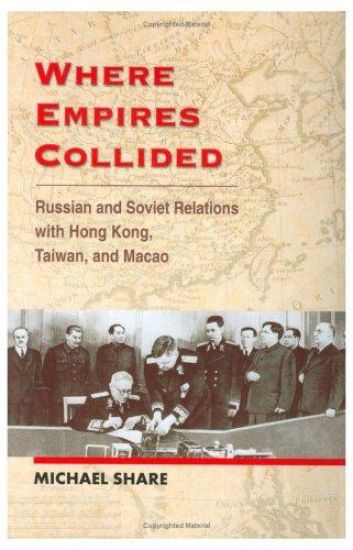
Where Empires Collided

Where Empires Collided

Michael Share

The Chinese University Press
2007
sidottu
This book deals with the past relationship between Russia and the Chinese Eastern Periphery (Hong Kong, Taiwan and Macao) - an area of study that received only marginal academic attention. The author has done extensive research into the topic, making use of materials collected from various archives. The book is full of illuminating details on how Russian and Soviet dealings with the China Eastern Periphery were inextricably linked to the broader international relationships among Russia, China, Great Britain, Japan and the United States. This book enables readers to learn more of the history and future prospects of Russian relations with Hong Kong, Macao and Taiwan.