Kirjojen hintavertailu – 12 903 725 kirjaa ja 27 kauppaa

Kirjailija

Michael Shin

Kirjat ja teokset yhdessä paikassa: 7 kirjaa, julkaisuja vuosilta 2018–2021, suosituimpiin kuuluu Mapping Populism. Vertaile teosten hintoja ja tarkista saatavuus suomalaisista kirjakaupoista.

7 kirjaa

Kirjojen julkaisuvuodet: 2018–2021.

Korean National Identity under Japanese Colonial Rule
Modern Korean nationalism has been shaped by the turbulent historical forces that shook and transformed the peninsula during the twentieth century, including foreign occupation, civil war, and division. This book examines the emergence of the nation as the hegemonic form of collective identity after the March First Movement of 1919, widely seen as one of the major turning points of modern Korean history. The analysis focuses on Yi Gwangsu (1892–1950), a pioneering novelist, newspaper editor, and leader of the nationalist movement, who was directly involved in many aspects of its emergence during the Japanese occupation period. Yi Gwangsu was one of the few intellectuals who not only wrote for almost the entirety of the colonial period but who also was centrally involved in many institutions related to the production of identity. By focusing on Yi Gwangsu the book provides a different kind of historical narrative linking the various fragments of the nation, puts forward a new understanding of the March First Movement and its role in the emergence of the nation, and demonstrates how central to the emergence of the nation were the development of the print industry, the rise of a modern readership, and the emergence of a capitalist market for print. This book shows how the March First Movement catalyzed the confluence of these factors, enabling the nation to emerge as the dominant form of collective identity.
Geography

Geography

Jan Nijman; Michael Shin; Peter O. Muller

John Wiley Sons Inc
2020
nidottu
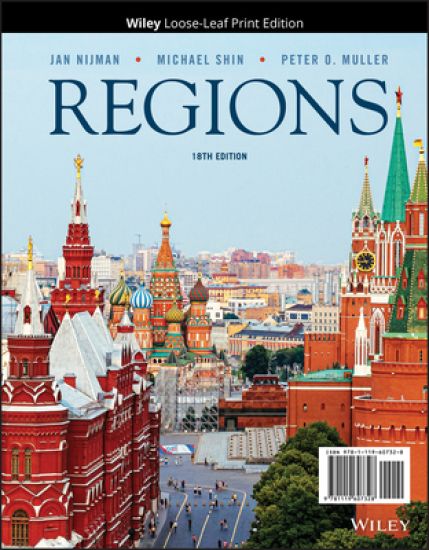
Since its first appearance, Geography: Realms, Regions, and Concepts has consistently broken new ground in the interpretation and teaching of world regional geography. For more than four decades it has explained the contemporary world’s geographic realms and their natural environments and human dimensions. The authors look at the ways people have organized their living space, adapted to changing social as well as environmental circumstances, and continue to confront forces largely beyond their control ranging from globalization to climate change. This book was the first to introduce an approach to Geography that meshes theoretical concepts with regional realities. The evolving regional content of the chapters in the 18th edition reflects the dynamic nature of the world’s geography; the changing and growing number of concepts mirror the progress of the discipline; and the ongoing introduction of new digital features reflects the instructional possibilities of new technologies.
Geography: Realms, Regions, and Concepts

Geography: Realms, Regions, and Concepts

Jan Nijman; Michael Shin; Peter O. Muller

WILEY
2020
irtolehti
Since its first appearance, Geography: Realms, Regions, and Concepts has consistently broken new ground in the interpretation and teaching of world regional geography. For more than four decades, REGIONS, as it has come to be called, has explained the contemporary world's geographic realms and their natural environments and human dimensions. The authors look at the ways people have organized their living space, adapted to changing social as well as environmental circumstances, and continue to confront forces largely beyond their control, ranging from globalization to climate change. This book was the first to introduce an approach to Geography that meshes theoretical concepts with regional realities. The evolving regional content of the chapters in REGIONS, 18th Edition, reflects the dynamic nature of the world's geography; the changing and growing number of concepts mirror the progress of the discipline; and the ongoing introduction of new digital features reflects the instructional possibilities of new technologies.
Mapping Populism

Mapping Populism

John Agnew; Michael Shin

Rowman Littlefield
2019
nidottu
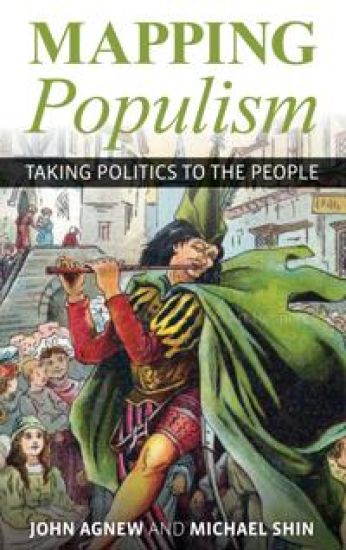
Brexit. Trump. LePen. The Five Star Movement. The recent success of populist movements and politicians is extraordinary, though the rise of populism is understandable in light of increasing political polarization, disappointing politicians, and exhausting election campaigns. With the future trajectory of democracy uncertain, two important questions remain unanswered. How did we get here? And why did we get here? Exploring how and why populism succeeded, John Agnew and Michael Shin consider the reasons for the Brexit vote, who voted—and who did not vote —for Donald Trump and Marine Le Pen, and the rise of an Italian populist government, Through comparative geographical analyses, the authors literally and figuratively map the rise of populism across the United Kingdom, the United States, France, and Italy. Geography tells us who the people are who have supported populism and the limits and possibilities of its claim to represent all of “the people,” wherever they are. Organized around recurring central themes of turnout, leadership, and media, and using compelling maps, their book encourages thought and discussion on an increasingly important topic—and on the future of democracy itself.
Mapping Populism

Mapping Populism

John Agnew; Michael Shin

Rowman Littlefield
2019
sidottu
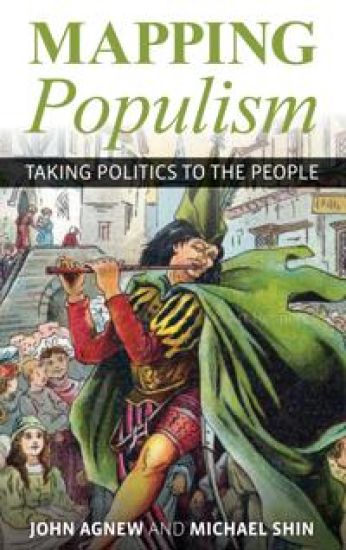
Brexit. Trump. LePen. The Five Star Movement. The recent success of populist movements and politicians is extraordinary, though the rise of populism is understandable in light of increasing political polarization, disappointing politicians, and exhausting election campaigns. With the future trajectory of democracy uncertain, two important questions remain unanswered. How did we get here? And why did we get here? Exploring how and why populism succeeded, John Agnew and Michael Shin consider the reasons for the Brexit vote, who voted—and who did not vote —for Donald Trump and Marine Le Pen, and the rise of an Italian populist government, Through comparative geographical analyses, the authors literally and figuratively map the rise of populism across the United Kingdom, the United States, France, and Italy. Geography tells us who the people are who have supported populism and the limits and possibilities of its claim to represent all of “the people,” wherever they are. Organized around recurring central themes of turnout, leadership, and media, and using compelling maps, their book encourages thought and discussion on an increasingly important topic—and on the future of democracy itself.
Korean National Identity under Japanese Colonial Rule
Modern Korean nationalism has been shaped by the turbulent historical forces that shook and transformed the peninsula during the twentieth century, including foreign occupation, civil war, and division. This book examines the emergence of the nation as the hegemonic form of collective identity after the March First Movement of 1919, widely seen as one of the major turning points of modern Korean history. The analysis focuses on Yi Gwangsu (1892–1950), a pioneering novelist, newspaper editor, and leader of the nationalist movement, who was directly involved in many aspects of its emergence during the Japanese occupation period. Yi Gwangsu was one of the few intellectuals who not only wrote for almost the entirety of the colonial period but who also was centrally involved in many institutions related to the production of identity. By focusing on Yi Gwangsu the book provides a different kind of historical narrative linking the various fragments of the nation, puts forward a new understanding of the March First Movement and its role in the emergence of the nation, and demonstrates how central to the emergence of the nation were the development of the print industry, the rise of a modern readership, and the emergence of a capitalist market for print. This book shows how the March First Movement catalyzed the confluence of these factors, enabling the nation to emerge as the dominant form of collective identity.