Kirjojen hintavertailu – 12 903 733 kirjaa ja 27 kauppaa
Kirjailija
Michael Spence
Kirjat ja teokset yhdessä paikassa: 16 kirjaa, julkaisuja vuosilta 1999–2024, suosituimpiin kuuluu The Law of Comparative Advertising. Vertaile teosten hintoja ja tarkista saatavuus suomalaisista kirjakaupoista.
This book consists of a careful analysis of the comparative advertising directive,giving background both to the regulation of comparative advertising in the United Kingdom and Germany and to the passing of the directive. It will bring to a UK reader the latest in thinking on comparative advertising from Germany, where the directive has been the subject of very extensive recent debate. The book also has four appendices in which UK, German and European material is given (all in English). The directive applies to any advertisement (or indeed any representation of any kind made to promote goods or services) that explicitly or implicitly identifies a competitor. It therefore has the potential to regulate such claims as
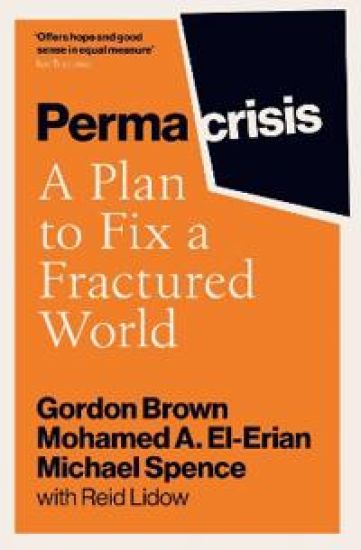
'Offers hope and good sense in equal measure' Ian Bremmer 'A sensible plan for reform that can help us create a fairer and more equitable world' Sheryl Sandberg Problems are mounting. We face sputtering growth, an escalating climate emergency, worsening inequality, poor policy responses, increasing nationalism and a decline in global co-operation. But a permacrisis need not be permanent. In this book, three of the most internationally respected and experienced thinkers of our time, Gordon Brown, Mohamed A. El-Erian and Michael Spence, writing with Reid Lidow, explain where we’ve gone wrong and set out what could be done to bring about a brighter future for generations to come. They look beyond today’s headlines and political rhetoric to offer a bold, big-picture vision and nuanced, achievable solutions for fixing our broken approaches to growth, economic management, and governance. The world is changing. What that change looks like is up to us.
'An insightful playbook for getting out of the permacrisis we seem mired in’ - Walter Isaacson‘A sensible plan for reform that can help us create a fairer and more equitable world’ - Sheryl SandbergDo you feel like we’re in a permacrisis? Chances are you feel some anxiety about the state of the world. Gordon Brown, Mohamed A. El-Erian and Michael Spence certainly did. Three of the most internationally respected and experienced thinkers of our time, these friends found their pandemic Zooms increasingly focused on a cascade of crises: sputtering growth, surging inflation, poor policy responses, an escalating climate emergency, worsening inequality, increasing nationalism and a decline in global co-operation. They shared their fears and frustrations. And the more they talked, the more they realised that while past mistakes had set the world on this bumpy course, a better path leading to a brighter future exists. Informed by their different perspectives, they sought a common goal: achievable solutions to fix our fractured world. This book is the product of that thinking. At the heart of today’s permacrisis are broken approaches to growth, economic management, and governance. While these approaches are broken, they are not beyond repair. An explanation of where we’ve gone wrong, and a provocative, inspiring plan to do nothing less than change the world, Permacrisis: A Plan to Fix a Fractured World, written with Reid Lidow, sets out how we can prevent crises and better manage the future for the benefit of the many and not the few. The longer a problem goes unresolved, the worse it will get; that’s what happens in a permacrisis – and that’s why we must act now.
Morning's Curtain is a collection of poems written by author, Michael Spence. With headings such as I Am . . . Hope, Never Quarantine Your Dreams, We Died For You, and Roll Back Your Stone, his poems will warm your heart and invigorate your soul. His poetry reminds us that-in good times or bad-the currency we exchange with each other must always be hope. With each rise of Morning's Curtain, our hope for a better today and brighter tomorrow rises with it.
Morning's Curtain is a collection of poems written by author, Michael Spence. With headings such as I Am . . . Hope, Never Quarantine Your Dreams, We Died For You, and Roll Back Your Stone, his poems will warm your heart and invigorate your soul. His poetry reminds us that-in good times or bad-the currency we exchange with each other must always be hope. With each rise of Morning's Curtain, our hope for a better today and brighter tomorrow rises with it.
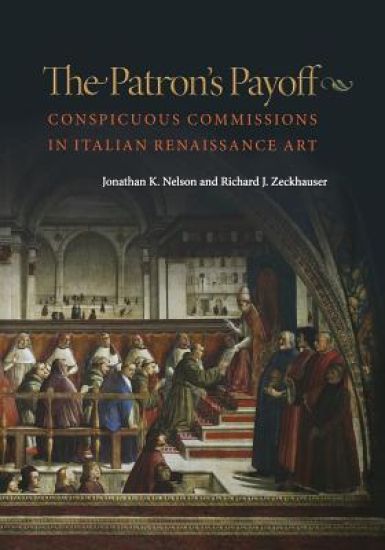
In The Patron's Payoff, Jonathan Nelson and Richard Zeckhauser apply the innovative methods of information economics to the study of art. Their findings, written in highly accessible prose, are surprising and important. Building on three economic concepts--signaling, signposting, and stretching--the book develops the first systematic methodology for assessing the meaning of art patronage and provides a broad and useful framework for understanding how works of art functioned in Renaissance Italy. The authors discuss how patrons used conspicuous commissions to establish and signal their wealth and status, and the book explores the impact that individual works had on society. The ways in which artists met their patrons' needs for self-promotion dramatically affected the nature and appearance of paintings, sculptures, and buildings. The Patron's Payoff presents a new conceptual structure that allows readers to explore the relationships among the main players in the commissioning game--patrons, artists, and audiences--and to understand how commissioned art transmits information. This book facilitates comparisons of art from different periods and shows the interplay of artists and patrons working to produce mutual benefits subject to an array of limiting factors. The authors engage several art historians to look at what economic models reveal about the material culture of Italy, ca. 1300?1600, and beyond. Their case studies address such topics as private chapels and their decorations, donor portraits, and private palaces. In addition to the authors, the contributors are Molly Bourne, Kelley Helmstutler Di Dio, Thomas J. Loughman, and Larry Silver.
'Emerson was really a working together - a sum total of all the life's paths, the working of karma and the fulfilling of pre-birth impulses and intentions of so many people, both staff and students. Every person who came to Emerson in some way touched it and changed it. Each year had its own biography. It was never an institution to which people came and passed through without leaving any mark on it.' - Michael Spence What was it about Emerson College that played such an important part in the lives of so many young people? Having joined the college early in its genesis, Michael Spence served as a key decision maker, administrator and teacher for more than a quarter of a century. In this first biography of Emerson, he gives a vivid picture of how the college came to be such a special place. But this is not a dry history of an organisation: it is brought to life with vibrant descriptions of many people, including the college's founders Francis and Elizabeth Edmunds and John Davy, but also students, teachers, cooks, gardeners, accountants, administrators, and many others. Michael Spence studies the anthroposophical spiritual basis that formed the bedrock of the college. As he states: 'It was the recognition of the reality of the spirit, which informed all aspects of the college life and organisation, that made it such a unique place to which so many people came. Did they find at Emerson an expression of something which, in their descent from spiritual worlds into this life between birth and death they had already sensed, of the social and spiritual life of humanity that was striving to come into being?'
A Washington Post Notable Nonfiction Book for 2011With the British Industrial Revolution, part of the world's population started to experience extraordinary economic growth leading to enormous gaps in wealth and living standards between the industrialized West and the rest of the world. This pattern of divergence reversed after World War II, and now we are midway through a century of high and accelerating growth in the developing world and a new convergence with the advanced countries a trend that is set to reshape the world. Michael Spence, winner of the Nobel Prize in Economic Sciences, explains what happened to cause this dramatic shift in the prospects of the five billion people who live in developing countries. The growth rates are extraordinary, and continuing them presents unprecedented challenges in governance, international coordination, and ecological sustainability. The implications for those living in the advanced countries are great but little understood. Spence clearly and boldly describes what's at stake for all of us as he looks ahead to how the global economy will develop over the next fifty years. The Next Convergence is certain to spark a heated debate how best to move forward in the post-crisis period and reset the balance between national and international economic interests, and short-term fixes and long-term sustainability."
Why is productivity higher in cities? Does urbanization cause growth or does growth cause urbanization? Do countries achieve rapid growth or high incomes without urbanization? How can policy makers reap the benefits of urbanization without paying too high a cost? Does supporting urbanization imply neglecting rural areas? Why do so few governments welcome urbanization? What should governments do to improve housing conditions in cities as they urbanize? Are innovations in housing finance a blessing or a curse for developing countries? How will governments finance the trillions of dollars of infrastructure spending needed for cities in developing countries? First in a series of thematic volumes, this book was prepared for the Commission on Growth and Development to evaluate the state of knowledge of the relationship between urbanization and economic growth. It does not pretend to provide all the answers, but it does identify insights and policy levers to help countries make urbanization work as part of a national growth strategy. Written by prominent academics in their fields, ""Urbanization and Growth"" seeks to create a better understanding of the role of urbanization in growth and to inform policy makers tackling the formidable challenges it poses.
To offer a core concept of intellectual property, to consider various justifications for the recognition of intellectual property rights and to expound their operation in particular areas of activity is the purpose of this book. It is essential to examine both the concept of intellectual property and the reasons why a legal system might incorporate such a concept. We are increasingly told that the wealth of nations, consists in 'intangible assets'. These are the intangible products of human creativity, ingenuity and effort. It is frequently argued that these assets represent the future of the developed economies and that their adequate protection by the intellectual property regimes is essential to national, regional, and even global, prosperity. We are also told that the creators of such assets have a strong moral claim to them, and that developed legal systems should recognise this claim. This text examines the ethical issues and debates surrounding intellectual property law and focuses on three aspects of the major intellectual property regimes: subject matter; the allocation of the first ownership of rights; and the scope of protection. These three aspects of the major regimes provide readers with a strong sense of the shape and purpose of the most important intellectual property systems.
To offer a core concept of intellectual property, to consider various justifications for the recognition of intellectual property rights and to expound their operation in particular areas of activity is the purpose of this book. It is essential to examine both the concept of intellectual property and the reasons why a legal system might incorporate such a concept. We are increasingly told that the wealth of nations consists in 'intangible assets'. These are the intangible products of human creativity, ingenuity and effort. It is frequently argued that these assets represent the future of the developed economies and that their adequate protection by the intellectual property regimes is essential to national, regional, and even global, prosperity. We are also told that the creators of such assets have a strong moral claim to them, and that developed legal systems should recognise this claim. This text examines the ethical issues and debates surrounding intellectual property law and focuses on three aspects of the major intellectual property regimes: subject matter; the allocation of the first ownership of rights; and the scope of protection. These three aspects of the major regimes provide readers with a strong sense of the shape and purpose of the most important intellectual property systems.
One party induces an assumption in the mind of another. Australian law has arguably given expression to three moral duties relating to induced assumptions: the duty to keep promises,the duty not to lie and the duty to ensure the reliability of induced assumptions. This book expounds the third of these duties and shows how it can be used to shape 'equitable' estoppel, a doctrine emerging from the decisions of the High Court of Australia in Waltons Stores and Verwayen. It does not purport to cover the entire law of estoppel, but does examine, analytically, how the doctrine might operate in a series of problematic cases at the edge of contract law.