Kirjojen hintavertailu – 12 903 725 kirjaa ja 27 kauppaa

Kirjailija

Michael Stohl

Kirjat ja teokset yhdessä paikassa: 7 kirjaa, julkaisuja vuosilta 1984–2011, suosituimpiin kuuluu The State as Terrorist. Vertaile teosten hintoja ja tarkista saatavuus suomalaisista kirjakaupoista.

7 kirjaa

Kirjojen julkaisuvuodet: 1984–2011.

Fragile States

Fragile States

Lothar Brock; Hans-Henrik Holm; Georg Sorenson; Michael Stohl

Polity Press
2011
nidottu
Today a billion people, including about 340 million of the world's extreme poor, are estimated to live in 'fragile states'. This group of low-income countries are often trapped in cycles of conflict and poverty, which make them acutely vulnerable to a range of shocks and crises. This engaging book defines and clarifies what we mean by fragile states, examining their characteristics in relation to "weak" and "failed" states in the global system, and explaining their development from pre-colonial times to the present day. It explores the connections between fragile statehood and violent conflict, and analyses the limitations of outside intervention from international society. The complexities surrounding 'successes' such as Costa Rica and Botswana - countries which ought to be fragile, but which are not - are analysed alongside the more precarious cases of the Democratic Republic of the Congo, Afghanistan and Haiti. Absorbing and authoritative, Fragile States will be an invaluable resource for students and scholars of international relations, security studies and development.
Fragile States

Fragile States

Lothar Brock; Hans-Henrik Holm; Georg Sorenson; Michael Stohl

Polity Press
2011
sidottu
Today a billion people, including about 340 million of the world's extreme poor, are estimated to live in 'fragile states'. This group of low-income countries are often trapped in cycles of conflict and poverty, which make them acutely vulnerable to a range of shocks and crises. This engaging book defines and clarifies what we mean by fragile states, examining their characteristics in relation to "weak" and "failed" states in the global system, and explaining their development from pre-colonial times to the present day. It explores the connections between fragile statehood and violent conflict, and analyses the limitations of outside intervention from international society. The complexities surrounding 'successes' such as Costa Rica and Botswana - countries which ought to be fragile, but which are not - are analysed alongside the more precarious cases of the Democratic Republic of the Congo, Afghanistan and Haiti. Absorbing and authoritative, Fragile States will be an invaluable resource for students and scholars of international relations, security studies and development.
Dependence, Development, and State Repression

Dependence, Development, and State Repression

George Lopez; Michael Stohl

Praeger Publishers Inc
1989
sidottu
Although the repressive violence of governments against their own citizens has received some scholarly attention in the past decade, our understanding of this phenomenon is far from complete. At least one central question remains: To what extent is government repression a function of a nation's political or economic development situation? This volume addresses the question through case studies of repressive regimes in second and third world nations. Of interest both for the study of repression and the analysis of development processes, it examines the links between development, dependence, and state repression in a variety of political and cultural settings. Individual essays examine repression and development in specific countries in Central and South America, Africa, Asia, and Europe. Regimes as diverse as Marcos' Philippines and Communist Poland are considered. The analyses focus on a wide rrange of topics, including strikes against transnational corporations, the relation between political development and martial law, economic choices as a function of military-security dependence, the new international division of labor, and state violence in agriculturally modernizing nations. While deomonstrating that repression is interwoven with local culture and the perceived options of local elites, this book provides clear evidence of the links between repression and the larger economic and political factors that bind states together in international affairs. Written by a distinguished group of specialists in contemporary political economy, it offers new insights and information of interest to scholars, students, and agency officials. It also provides an agenda for further research in this controversial and vitally important area.
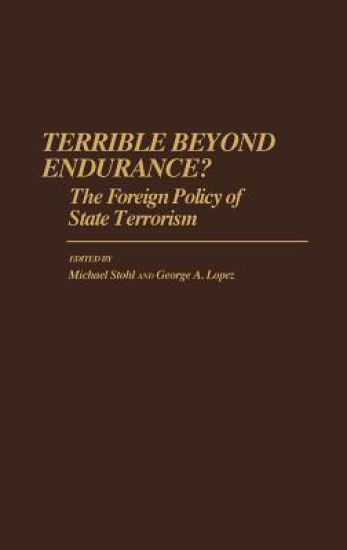
Terrible Beyond Endurance?

Terrible Beyond Endurance?

George Lopez; Michael Stohl

Praeger Publishers Inc
1988
sidottu
Stohl and Lopez argue that such developments in international aggressive policies demand more serious scholarly attention than has up to now been paid them, and they suggest a number of emerging trends that warrant examination by political scientists. Such trends include superpower deployment of the troops of regional power centers to avoid direct military action in the Third World; renewed efforts by the United States to develop counterterrorist and rapid deployment approaches; and the rise of terror bombing and related military acts even in arenas where conventional warfare is already being conducted. The editors also argue that these trends will intensify in the future.
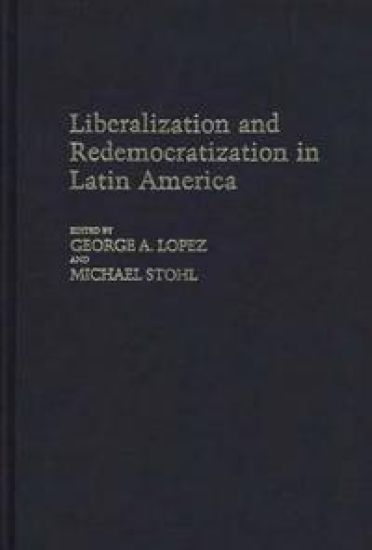
Liberalization and Redemocratization in Latin America

Liberalization and Redemocratization in Latin America

George Lopez; Michael Stohl

Praeger Publishers Inc
1987
sidottu
This volume is the product of three coalitions of research interests focused on a single topic of inquiry: the processes of liberalization and democratization within authoritarian regimes in Latin America. The three branches of research may be characterized as, first, individuals researching the changing character of human rights violations, repression, and state terror in various Latin American nations; second, scholars of redemocratization (the process through which governments gradually revert to a more democratic regime); and third, experts in the comparative analysis of Latin American politics who believe that a cross-national perspective is necessary to complement current theoretical and case study work on liberalization and redemocratization. The opening chapter provides a theoretical basis for the discussion, and the closing essay analyzes the relationship between redemocratization in Latin America and U. S. foreign assistance policies there. A bibliographic essay and an index complete the volume.
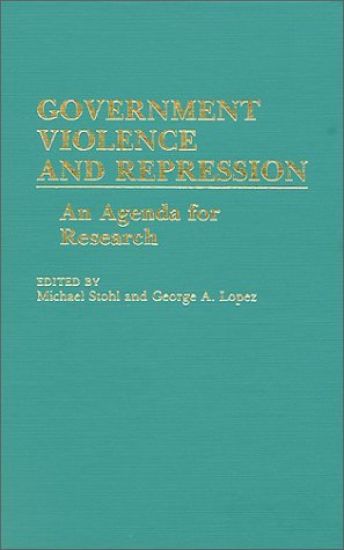
Government Violence and Repression

Government Violence and Repression

George Lopez; Michael Stohl

Praeger Publishers Inc
1986
sidottu
A form of terrorism that is receiving increased attention is human rights abuses on the part of individual states. This study, written by specialists from several countries, attempts to define the parameters of state terrorism, analyze its causes, and identify the types of data and methods needed for policy-relevant research. It focuses on state use of acts of terror to intimidate, pacify, coerce, or destroy whole populations, groups, or classes of citizens. The problems encountered in the study of state terrorism, particularly in the areas of definition and measurement and in the difficulty of obtaining complete and reliable data, are first discussed. The political origins of state violence and the mechanisms that sustain it are traced in a theoretical analysis, and the relation of national security ideology to the imposition of terrorist measures is explored. The forms of state terrorism and repression encountered in the Third World are considered next. Other topics covered include genocide, terrorism and counterterrorism in the context of democratic society, and the international terrorist impact of superpower politics. Finally, the prospects of bringing state terrorism under the control of international law are assessed.
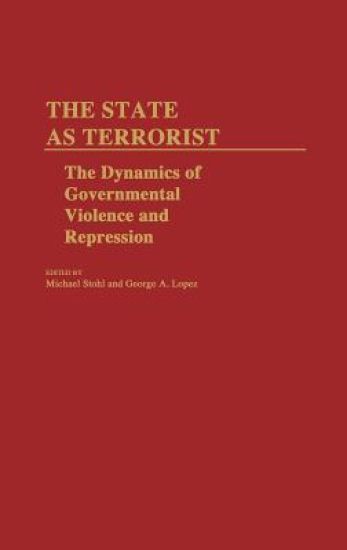
The State as Terrorist

The State as Terrorist

George Lopez; Michael Stohl

Praeger Publishers Inc
1984
sidottu
This volume examines the causes, consequences, and dynamics of that style of governance by force that has come to be known as state terror. The collection deals with theoretical issues and examines case applications as well. The editors distinguish among the study of oppression, repression, and state terror systems. State terrorism in the form of enforcement terrorism, economic repression, military control, and the legal oppression of apartheid in Latin America, Argentina, the Philippines, and South Africa is discussed. One chapter explores American containment policy. Theoretical chapters on state terrorism include editor George Lopez's scheme for the analysis of government terror, editor Michael Stohl's discussion of the international dimensions of this problem, and an agenda for continued investigation.