Kirjojen hintavertailu – 12 903 725 kirjaa ja 27 kauppaa

Kirjailija

Michael T. Maksimchuk

Kirjat ja teokset yhdessä paikassa: 3 kirjaa, julkaisuja vuodelta 2026, suosituimpiin kuuluu Empowering Educators of Newcomers. Vertaile teosten hintoja ja tarkista saatavuus suomalaisista kirjakaupoista.

Nimi esiintyy myös muodoissa: Michael T Maksimchuk

3 kirjaa

Empowering Educators of Newcomers

Empowering Educators of Newcomers

Luis Javier Pentón Herrera; Sam Finn; Manuel de Jesús Gómez Portillo; Rabia Hos; Michael T Maksimchuk; Fernanda Marinho Kray; Fenglan Nancy Yi-Cline; Efraín Tovar

TESOL Press
2026
nidottu
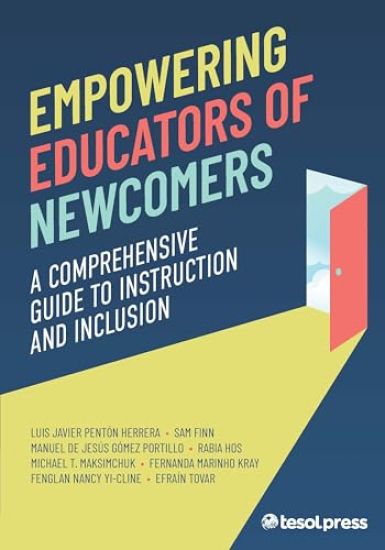
This accessible volume bridges research and classroom practice to help educators create inclusive, equitable learning environments for newcomer multilingual learners. Empowering Educators of Newcomers: A Comprehensive Guide to Instruction and Inclusion considers the cultural, community, language, and academic backgrounds of newcomers as well as their social-emotional needs. This book includes strategies and best practices for language assessment and academic instruction for this population and guidance on newcomer education advocacy for English language teachers.
Supporting Equitable Assessment for Multilingual Learners of English

Supporting Equitable Assessment for Multilingual Learners of English

Michael T. Maksimchuk; Luis Javier Pentón Herrera

TAYLOR FRANCIS LTD
2026
sidottu
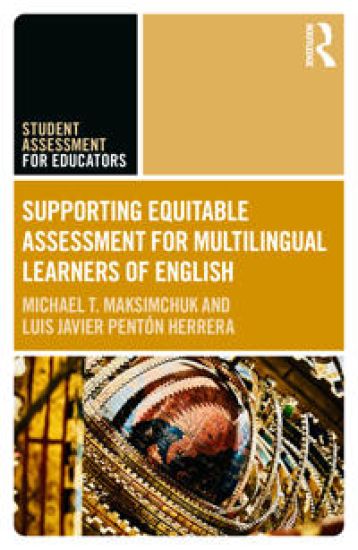
Supporting Equitable Assessment for Multilingual Learners of English introduces the E5 Model of Equitable Assessment, an original framework developed by the authors to guide fair and culturally responsive evaluation of multilingual learners of English. The model integrates five guiding principles: equity, equality, educational justice, equanimity, and empowerment, across three interrelated dimensions: affective, social-moral, and technical. Drawing on research, professional expertise, and lived classroom experience, the book examines the historical context of language assessment as well as its policies, the central role of emotional well-being, and the balance between content rigor and language accessibility. Each chapter combines conceptual foundations with practical tools, adaptable rubrics, and reflection prompts that enable educators to design assessments fostering student agency, cultural relevance, and academic mastery. The authors also address emerging opportunities and challenges, including the integration of technology, the impacts of global migration, and shifts in educational policy. By centering student voice and identity, this book provides educators, leaders, and policymakers with actionable strategies for building assessment systems that are academically rigorous, culturally grounded, and responsive to the evolving needs of today’s students.
Supporting Equitable Assessment for Multilingual Learners of English

Supporting Equitable Assessment for Multilingual Learners of English

Michael T. Maksimchuk; Luis Javier Pentón Herrera

TAYLOR FRANCIS LTD
2026
nidottu
Supporting Equitable Assessment for Multilingual Learners of English introduces the E5 Model of Equitable Assessment, an original framework developed by the authors to guide fair and culturally responsive evaluation of multilingual learners of English. The model integrates five guiding principles: equity, equality, educational justice, equanimity, and empowerment, across three interrelated dimensions: affective, social-moral, and technical. Drawing on research, professional expertise, and lived classroom experience, the book examines the historical context of language assessment as well as its policies, the central role of emotional well-being, and the balance between content rigor and language accessibility. Each chapter combines conceptual foundations with practical tools, adaptable rubrics, and reflection prompts that enable educators to design assessments fostering student agency, cultural relevance, and academic mastery. The authors also address emerging opportunities and challenges, including the integration of technology, the impacts of global migration, and shifts in educational policy. By centering student voice and identity, this book provides educators, leaders, and policymakers with actionable strategies for building assessment systems that are academically rigorous, culturally grounded, and responsive to the evolving needs of today’s students.