
Kirjailija
Michael Tomasello
Kirjat ja teokset yhdessä paikassa: 26 kirjaa, julkaisuja vuosilta 1992–2026, suosituimpiin kuuluu Eine Naturgeschichte der menschlichen Moral. Vertaile teosten hintoja ja tarkista saatavuus suomalaisista kirjakaupoista.
26 kirjaa
Kirjojen julkaisuvuodet: 1992–2026.
First published in 1997, Primate Cognition was a groundbreaking and highly successful book that set the agenda for a new field of study. Borrowing theoretical constructs and paradigms from human cognitive science and developmental psychology, the book reviewed all of the empirical research existing at that time concerning both physical cognition (space and objects, tools and causality, features and categories, and quantities) as well as social cognition (social knowledge and interaction, social strategies and communication, social learning and culture, and theory of mind). Since that time research on primate cognition has burgeoned, and this all-new second edition mainly focuses on research conducted after 1997. It is divided into two volumes, the current volume on Primate Social Cognition and a forthcoming volume on Primate Physical Cognition. Existing areas of research are updated with the latest findings, and there are several areas of research that for all practical purposes did not exist at the time of the first edition, for example, on prosocial behavior, behavior in social dilemmas, and metacognition. There is also a chapter on theories of primate social cognition and an account of how the human primate fits into the overall evolutionary picture. This second edition of Primate Cognition provides an up-to-date survey of the field.
Children of different ages live in different worlds. This is partly due to learning: as children learn more and more about the world they experience it in different ways. But learning cannot be the whole story or else children could learn anything at any age - which they cannot. In a startlingly original proposal, Michael Tomasello argues that children of different ages live and learn in different worlds because their capacities to cognitively represent and operate on their experience change in significant ways over the first years of life. These capacities change because they are elements in a maturing cognitive architecture evolved for agentive decision making and action, including in shared agencies in which individuals must mentally coordinate with others. The developmental proposal is that from birth infants are goal-directed agents who cognitively represent and learn about actualities; at 9 -12 months toddlers become intentional (and joint) agents who also imaginatively and perspectivally represent and learn about possibilities; and at 3-4 years preschool youngsters become metacognitive (and collective) agents who also metacognitively represent and learn about objective/normative necessities. These developing agentive architectures - originally evolved in humans' evolutionary ancestors for particular types of decision making and action - help to explain why children learn what they do when they do. This novel agency-based model of cognitive development recognizes the important role of (Bayesian) learning, but at the same time places it in the context of the overall agentive organization of children at particular developmental periods.


Pariisis Jean Nicod' Instituudis 2006. aasta kevadel peetud loengutes puudutas Michael Tomasello järgmisi teemasid: hominiidide zhestsuhtlus, väikelaste zhestsuhtlus ja väikelaste keeleline areng. Ta oli põhjalikult uurinud sotsiaalseid ja kultuurilisi protsesse inimeste suhtlemises ja koostöös. Selle materjali esitab ta raamatus "Inimeste suhtlemise lätted" ühtse ja sidusa kirjeldusena suhtlemise evolutsioonist ja arengust inimesel. Teos on kokkuvõte autori enda, tema kolleegide ja õpilaste töödest ning omavahelistest mõttevahetustest - rohkem kui ühe põlvkonna teadlaste jõupingutusest leida inimliiki teistest hominiididest nii palju erinevaks muutva eripära allikad. Köite ulatuslik bibliograafia innustab lugejate iseseisvale tööle avardamaks oma teadmisi selles valdkonnas veelgi. Toomas Rosina tõlkele on saatesõna kirjutanud toimetaja Jaan Aru.
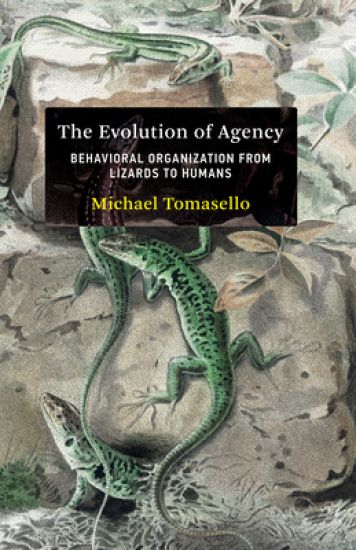
A leading developmental psychologist proposes an evolutionary pathway to human psychological agency. Nature cannot build organisms biologically prepared for every contingency they might possibly encounter. Instead, Nature builds some organisms to function as feedback control systems that pursue goals, make informed behavioral decisions about how best to pursue those goals in the current situation, and then monitor behavioral execution for effectiveness. Nature builds psychological agents. In a bold new theoretical proposal, Michael Tomasello advances a typology of the main forms of psychological agency that emerged on the evolutionary pathway to human beings. Tomasello outlines four main types of psychological agency and describes them in evolutionary order of emergence. First was the goal-directed agency of ancient vertebrates, then came the intentional agency of ancient mammals, followed by the rational agency of ancient great apes, ending finally in the socially normative agency of ancient humans. Each new form of psychological organization represented increased complexity in the planning, decision-making, and executive control of behavior. Each also led to new types of experience of the environment and, in some cases, of the organism's own psychological functioning, leading ultimately to humans' experience of an objective and normative world that governs all of their thoughts and actions. Together, these proposals constitute a new theoretical framework that both broadens and deepens current approaches in evolutionary psychology.
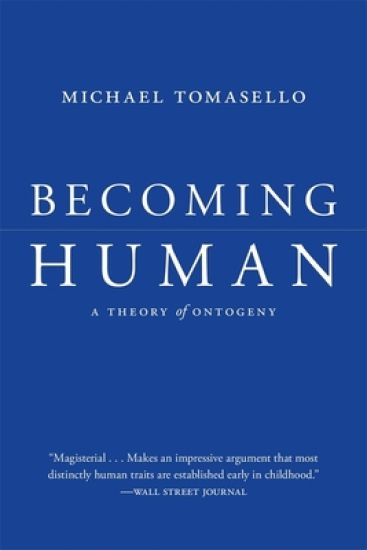
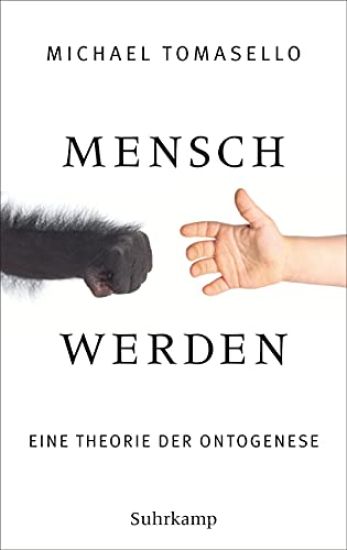
Winner of the William James Book AwardWinner of the Eleanor Maccoby Book Award“A landmark in our understanding of human development.”—Paul Harris, author of Trusting What You’re Told“Magisterial…Makes an impressive argument that most distinctly human traits are established early in childhood and that the general chronology in which these traits appear can…be identified.”—Wall Street JournalVirtually all theories of how humans have become such a distinctive species focus on evolution. Becoming Human looks instead to development and reveals how those things that make us unique are constructed during the first seven years of a child’s life. In this groundbreaking work, Michael Tomasello draws from three decades of experimental research with chimpanzees, bonobos, and children to propose a new framework for psychological growth between birth and seven years of age. He identifies eight pathways that differentiate humans from their primate relatives: social cognition, communication, cultural learning, cooperative thinking, collaboration, prosociality, social norms, and moral identity. In each of these, great apes possess rudimentary abilities, but the maturation of humans’ evolved capacities for shared intentionality transform these abilities into uniquely human cognition and sociality.“How does human psychological growth run in the first seven years, in particular how does it instill ‘culture’ in us? …Most of all, how does the capacity for shared intentionality and self-regulation evolve in people? This is a very thoughtful and also important book.”—Tyler Cowen, Marginal Revolution“Theoretically daring and experimentally ingenious, Becoming Human squarely tackles the abiding question of what makes us human.”—Susan Gelman“Destined to become a classic. Anyone who is interested in cognitive science, child development, human evolution, or comparative psychology should read this book.”—Andrew Meltzoff
Haciendo una revisi n de su trabajo anterior, Tomasello argumenta que los simios est n cognitivamente mucho m s cerca de los humanos de lo que se cre a hace solo una d cada. La gran virtud de Una historia natural del pensamiento humano es su an lisis conceptual de los pasos acumulativos que se requirieron en t rminos de cognici n para transformarnos de simios en humanos. Stephen Levinson, Science. En Una historia natural del pensamiento humano Michael Tomasello argumenta que la interacci n social cooperativa es la clave de la singularidad cognitiva de los humanos. Una vez que nuestros ancestros aprendieron a pensar juntos para lograr unas metas comunes, la raza humana se forj un camino evolutivo propio. Nuestros ancestros humanos, como los grandes simios actuales, eran seres sociales que pod an resolver problemas por medio del pensamiento, pero eran competitivos y apuntaban solo a sus metas individuales. A medida que los cambios ecol gicos los obligaron a ser m s cooperativos, los humanos primigenios tuvieron que coordinar sus acciones y comunicar sus pensamientos, lo que engendr nuevas formas de interacci n colaborativa. La hip tesis de la intencionalidad compartida que Tomasello propone en este libro explica c mo estas formas de vida socialmente m s complejas condujeron a formas de pensamiento conceptualmente m s complejas. Para sobrevivir, los humanos tuvieron que aprender a ver el mundo desde m ltiples perspectivas sociales, a hacer inferencias socialmente recursivas y a monitorizar su propio pensamiento seg n los est ndares normativos del grupo. Incluso el lenguaje y la cultura surgieron de la necesidad preexistente de trabajar en conjunto. Una historia natural del pensamiento humano es el an lisis cient fico m s detallado que se ha publicado a la fecha de la conexi n entre la sociabilidad humana y la cognici n.
Si lo que se busca es una gu a definitiva que explique c mo los humanos se convirtieron en una especie ultracooperativa y, eventualmente, moral, Una historia natural de la moralidad humana es el libro indicado. Despu s de Una historia natural del pensamiento humano, el antrop logo evolutivo Michael Tomasello nos brinda otra contribuci n seminal. New Scientist. Una historia natural de la moralidad humana ofrece la explicaci n m s detallada de la evoluci n de la psicolog a moral humana. Seg n Tomasello, hubo dos etapas clave en esta evoluci n. La primera se dio en la medida en que los retos ecol gicos obligaron a los humanos primigenios a recolectar en grupo o morir. Para coordinar estas actividades colaborativas, los humanos desarrollaron habilidades cognitivas de intencionalidad conjunta que aseguraban que los socios supieran los est ndares normativos de cada rol y los compromet an a repartirse lo recolectado seg n un sentido compartido de confianza, respeto y responsabilidad. La segunda etapa se dio en la medida en que la poblaci n humana creci y la divisi n del trabajo se hizo m s compleja. Surgieron distintos grupos culturales que exig an de sus miembros lealtad, acuerdo e identidad cultural. Al ser miembros de un nuevo nosotros cultural, los humanos modernos desarrollaron habilidades cognitivas de intencionalidad colectiva, que dieron lugar a normas del bien y del mal, creadas y objetivadas culturalmente, que todos en el grupo pudieran ver como leg timas para aquellos que fueran uno de nosotros . As, Tomasello reconstruye, basado en extensos datos experimentales que comparan a los grandes simios con los ni os, la manera en que los humanos primigenios se convirtieron gradualmente en una especie ultracooperativa y, eventualmente, moral.
A Natural History of Human Thinking
Michael Tomasello
Harvard University Press
2018
nidottu
Halvin toimitettuna 31,80 €
A Wall Street Journal Favorite Read of the YearA Guardian Top Science Book of the YearTool-making or culture, language or religious belief: ever since Darwin, thinkers have struggled to identify what fundamentally differentiates human beings from other animals. In this much-anticipated book, Michael Tomasello weaves his twenty years of comparative studies of humans and great apes into a compelling argument that cooperative social interaction is the key to our cognitive uniqueness. Once our ancestors learned to put their heads together with others to pursue shared goals, humankind was on an evolutionary path all its own.“Michael Tomasello is one of the few psychologists to have conducted intensive research on both human children and chimpanzees, and A Natural History of Human Thinking reflects not only the insights enabled by such cross-species comparisons but also the wisdom of a researcher who appreciates the need for asking questions whose answers generate biological insight. His book helps us to understand the differences, as well as the similarities, between human brains and other brains.”—David P. Barash, Wall Street Journal
Winner of the Eleanor Maccoby Book Award in Developmental Psychology, American Psychological AssociationWinner of a PROSE Award, Association of American PublishersShortlist, Cognitive Development Society Book AwardA Choice Outstanding Academic Title of the YearA Natural History of Human Morality offers the most detailed account to date of the evolution of human moral psychology. Based on extensive experimental data comparing great apes and human children, Michael Tomasello reconstructs how early humans gradually became an ultra-cooperative and, eventually, a moral species.“Tomasello is convincing, above all, because he has run many of the relevant studies (on chimps, bonobos and children) himself. He concludes by emphasizing the powerful influence of broad cultural groups on modern humans… Tomasello also makes an endearing guide, appearing happily amazed that morality exists at all.”—Michael Bond, New Scientist“Most evolutionary theories picture humans as amoral ‘monads’ motivated by self-interest. Tomasello presents an innovative and well-researched, hypothesized natural history of two key evolutionary steps leading to full-blown morality.”—S. A. Mason, Choice
Vi har lätt att uppfatta små barn som självcentrerade varelser, men i själva verket är de påfallande samarbetsvilliga. Tvååringar har betydligt lättare att sinsemellan dela upp någonting åtråvärt några bananer, till exempel än vad schimpanser har. Det är alltså inte enbart vårt abstrakta tänkande som skiljer oss från våra närmaste släktingar bland djuren, utan också förmågan att samarbeta och att dela intentioner. Schimpanser och andra människoapor är kapabla att samarbeta, men väljer av olika skäl ofta att inte göra det. Det som är naturligt för oss är helt enkelt inte lika naturligt för dem. Utvecklingspsykologen och primatforskaren Michael Tomasello har genomfört en rad sofistikerade experiment för att belysa de beteendemässiga skillnaderna mellan människobarn och schimpanserochblottläggadeevolutionäragrundvalarna för vår kultur och våra institutioner. Enligt Tomasello har den mänskliga kulturen två utmärkande egenskaper som inte vore möjliga utan en för arten unik förmåga och vilja till samarbete. Den ligger till grund för den mänskliga kulturens kumulativitet, att människans artefakter och beteendemönster utvecklas och blir med tiden alltmer komplexa, och för sociala institutioner, det vill säga den uppsättning beteendemönster som styrs av olika slags ömsesidigt erkända normer och regler. Sedan århundraden har två ståndpunkter präglat debatten om människans natur. Å ena sidan uppfattningen att människor är egoistiska av naturen och måste uppfostras till samarbete. Å andra sidan uppfattningen att människan av naturen är inställd på samarbete och av sin omgivning görs till egoist. I Därför samarbetar vi kastar Tomasello nytt ljus över denna gamla fråga.
Early Social Cognition in Three Cultural Contexts
Tara Callaghan; Henrike Moll; Hannes Rakoczy; Felix Warneken; Ulf Liszkowski; Tanya Behne; Michael Tomasello
Wiley-Blackwell (an imprint of John Wiley Sons Ltd)
2011
nidottu
The influence of culture on cognitive development is well established for school age and older children. But almost nothing is known about how different parenting and socialization practices in different cultures affect infants' and young children's earliest emerging cognitive and social-cognitive skills. In the current monograph, we report a series of eight studies in which we systematically assessed the social-cognitive skills of 1- to 3-year-old children in three diverse cultural settings.


A leading expert on evolution and communication presents an empirically based theory of the evolutionary origins of human communication that challenges the dominant Chomskian view. Human communication is grounded in fundamentally cooperative, even shared, intentions. In this original and provocative account of the evolutionary origins of human communication, Michael Tomasello connects the fundamentally cooperative structure of human communication (initially discovered by Paul Grice) to the especially cooperative structure of human (as opposed to other primate) social interaction. Tomasello argues that human cooperative communication rests on a psychological infrastructure of shared intentionality (joint attention, common ground), evolved originally for collaboration and culture more generally. The basic motives of the infrastructure are helping and sharing: humans communicate to request help, inform others of things helpfully, and share attitudes as a way of bonding within the cultural group. These cooperative motives each created different functional pressures for conventionalizing grammatical constructions. Requesting help in the immediate you-and-me and here-and-now, for example, required very little grammar, but informing and sharing required increasingly complex grammatical devices. Drawing on empirical research into gestural and vocal communication by great apes and human infants (much of it conducted by his own research team), Tomasello argues further that humans' cooperative communication emerged first in the natural gestures of pointing and pantomiming. Conventional communication, first gestural and then vocal, evolved only after humans already possessed these natural gestures and their shared intentionality infrastructure along with skills of cultural learning for creating and passing along jointly understood communicative conventions. Challenging the Chomskian view that linguistic knowledge is innate, Tomasello proposes instead that the most fundamental aspects of uniquely human communication are biological adaptations for cooperative social interaction in general and that the purely linguistic dimensions of human communication are cultural conventions and constructions created by and passed along within particular cultural groups.
Understanding cooperation as a distinctly human combination of innate and learned behavior. Drop something in front of a two-year-old, and she's likely to pick it up for you. This is not a learned behavior, psychologist Michael Tomasello argues. Through observations of young children in experiments he himself has designed, Tomasello shows that children are naturally-and uniquely-cooperative. Put through similar experiments, for example, apes demonstrate the ability to work together and share, but choose not to. As children grow, their almost reflexive desire to help-without expectation of reward-becomes shaped by culture. They become more aware of being a member of a group. Groups convey mutual expectations, and thus may either encourage or discourage altruism and collaboration. Either way, cooperation emerges as a distinctly human combination of innate and learned behavior. In Why We Cooperate, Tomasello's studies of young children and great apes help identify the underlying psychological processes that very likely supported humans' earliest forms of complex collaboration and, ultimately, our unique forms of cultural organization, from the evolution of tolerance and trust to the creation of such group-level structures as cultural norms and institutions. Scholars Carol Dweck, Joan Silk, Brian Skyrms, and Elizabeth Spelke respond to Tomasello's findings and explore the implications.