Kirjojen hintavertailu – 12 859 818 kirjaa ja 27 kauppaa

Kirjailija

Michael Toolan

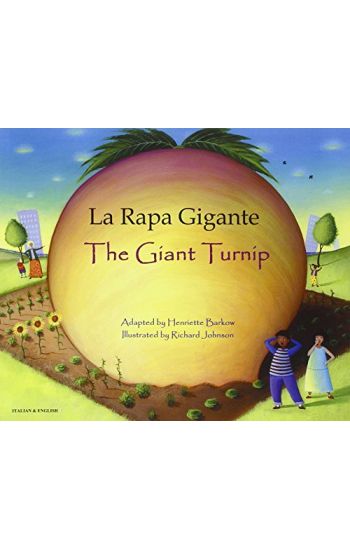
Kirjat ja teokset yhdessä paikassa: 9 kirjaa, julkaisuja vuosilta 1996–2024, suosituimpiin kuuluu La rapa gigante - The giant turnip. Vertaile teosten hintoja ja tarkista saatavuus suomalaisista kirjakaupoista.

9 kirjaa

Kirjojen julkaisuvuodet: 1996–2024.

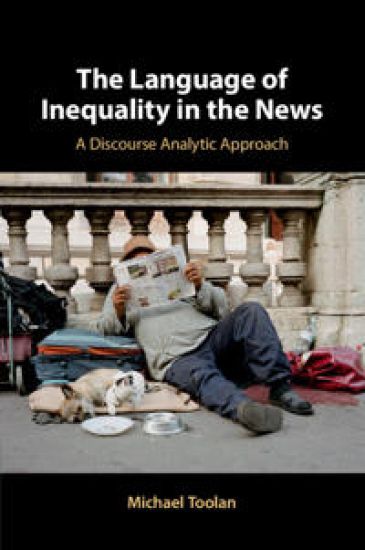
The Language of Inequality in the News

The Language of Inequality in the News

Michael Toolan

Cambridge University Press
2024
pokkari
Why in the early 1970s does The Times reject the idea of a national lottery, as rewarding luck not merit and effort, but warmly welcome one by the 1990s? Why in the 1970s do the Daily Mail's TV reviews address serious contemporary themes such as class- and race-relations, whereas forty years later they are largely concerned with celebrities, talent shows, and nostalgia? Why does the Conservative Chancellor in the 2010s mention 'Britain' so very often, when the Conservative Chancellor in the 1970s scarcely does at all? Covering news stories spanning fort-five years, Michael Toolan explores how wealth inequality has been presented in centre-right British newspapers, focusing on changes in the representation may have helped present-day inequality seem justifiable. Toolan employs corpus linguistic and critical discourse analytic methods to identify changing lexis and verbal patterns and gaps, all of which contribute to the way wealth inequality was represented in each of the decades from the 1970s to the present.
The Language of Inequality in the News

The Language of Inequality in the News

Michael Toolan

Cambridge University Press
2018
sidottu
Why in the early 1970s does The Times reject the idea of a national lottery, as rewarding luck not merit and effort, but warmly welcome one by the 1990s? Why in the 1970s do the Daily Mail's TV reviews address serious contemporary themes such as class- and race-relations, whereas forty years later they are largely concerned with celebrities, talent shows, and nostalgia? Why does the Conservative Chancellor in the 2010s mention 'Britain' so very often, when the Conservative Chancellor in the 1970s scarcely does at all? Covering news stories spanning fort-five years, Michael Toolan explores how wealth inequality has been presented in centre-right British newspapers, focusing on changes in the representation may have helped present-day inequality seem justifiable. Toolan employs corpus linguistic and critical discourse analytic methods to identify changing lexis and verbal patterns and gaps, all of which contribute to the way wealth inequality was represented in each of the decades from the 1970s to the present.
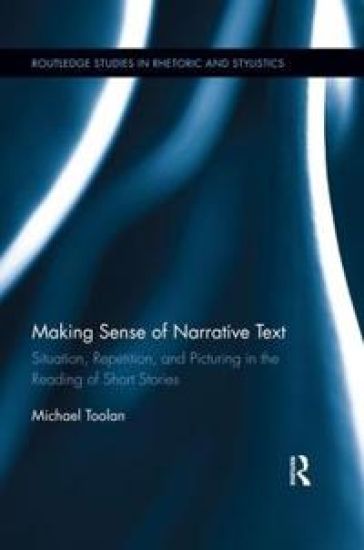
Making Sense of Narrative Text

Making Sense of Narrative Text

Michael Toolan

Routledge
2018
nidottu
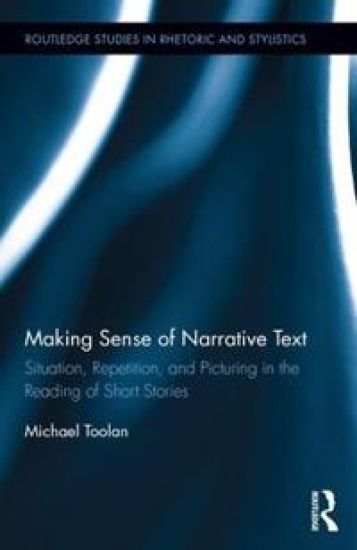
This book takes the following question as its starting point: What are some of the crucial things the reader must do in order to make sense of a literary narrative? The book is a study of the texture of narrative fiction, using stylistics, corpus linguistic principles (especially Hoey’s work on lexical patterning), narratological ideas, and cognitive stylistic work by Werth, Emmott, and others. Michael Toolan explores the textual/grammatical nature of fictional narratives, critically re-examining foundational ideas about the role of lexical patterning in narrative texts, and also engages the cognitive or psychological processes at play in literary reading. The study grows out of the theoretical questions that stylistic analyses of extended fictional texts raise, concerning the nature of narrative comprehension and the reader’s experience in the course of reading narratives, and particularly concerning the role of language in that comprehension and experience. The ideas of situation, repetition and picturing are all central to the book’s argument about how readers process story, and Toolan also considers the ethical and emotional involvement of the reader, developing hypotheses about the text-linguistic characteristics of the most ethically and emotionally involving portions of the stories examined. This book makes an important contribution to the study of narrative text and is in dialogue with recent work in corpus stylistics, cognitive stylistics, and literary text and texture.
Making Sense of Narrative Text

Making Sense of Narrative Text

Michael Toolan

Routledge
2016
sidottu
This book takes the following question as its starting point: What are some of the crucial things the reader must do in order to make sense of a literary narrative? The book is a study of the texture of narrative fiction, using stylistics, corpus linguistic principles (especially Hoey’s work on lexical patterning), narratological ideas, and cognitive stylistic work by Werth, Emmott, and others. Michael Toolan explores the textual/grammatical nature of fictional narratives, critically re-examining foundational ideas about the role of lexical patterning in narrative texts, and also engages the cognitive or psychological processes at play in literary reading. The study grows out of the theoretical questions that stylistic analyses of extended fictional texts raise, concerning the nature of narrative comprehension and the reader’s experience in the course of reading narratives, and particularly concerning the role of language in that comprehension and experience. The ideas of situation, repetition and picturing are all central to the book’s argument about how readers process story, and Toolan also considers the ethical and emotional involvement of the reader, developing hypotheses about the text-linguistic characteristics of the most ethically and emotionally involving portions of the stories examined. This book makes an important contribution to the study of narrative text and is in dialogue with recent work in corpus stylistics, cognitive stylistics, and literary text and texture.
Narrative

Narrative

Michael Toolan

Routledge
2001
sidottu
This classic text has been substantially rewritten. Narrative explores a range of written, spoken, literary and non-literary narratives. It shows what systematic attention to language can reveal about the narratives themselves, their tellers, and those to whom they are addressed. New material includes sections on gendered narrative, film narrative and a discussion of ways in which the internet and global television are changing conceptions of narrative.
Language in Literature

Language in Literature

Michael Toolan

Hodder Education
1998
nidottu
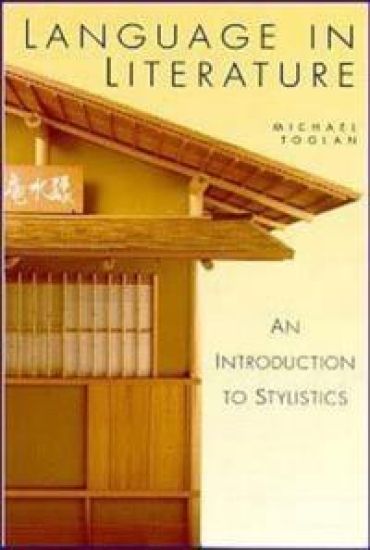
An activity-based introduction to stylistics, this textbook explains some of the topics in literary linguistics and helps students in analysing written texts. How can you tell good writing - the excellent, the brilliant and the ingenious - from bad writing - the weak, the banal and the confusing? By looking at the technique and the craft of writing, Language in Literature examines the ways in which language is organised to create particular meanings or effects. Covering a range of topics - naming patterns, modality and evaluation, the structure of simple narratives, the recording of character speech and thought, the dynamics of dialogue, presuppositions and textual revision - the book presents the structuring principles within the English language. Activities and end-of-chapter commentaries encourage a 'learning by doing' approach and equips the reader with the main linguistic terms necessary for the analysis of literary and non-literary texts.
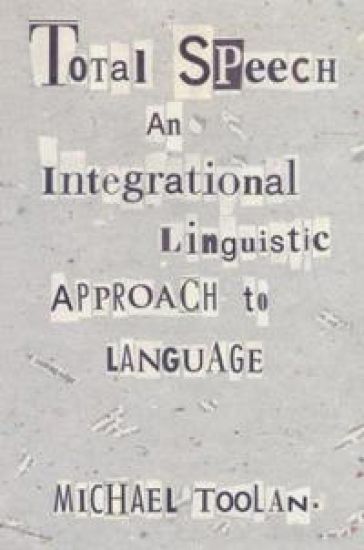
Total Speech

Total Speech

Michael Toolan

Duke University Press
1996
pokkari
Units, rules, codes, systems: this is how most linguists study language. Integrationalists such as Michael Toolan, however, focus instead on how language functions in seamless tandem with the rest of human activity. In Total Speech, Toolan provides a clear and comprehensive account of integrationalism, a major new theory of language that declines to accept that text and context, language and world, are distinct and stable categories. At the same time, Toolan extends the integrationalist argument and calls for a radical change in contemporary theorizing about language and communication. In every foundational area of linguistics-from literal meaning and metaphor to the nature of repetition to the status of linguistic rules-Toolan advances fascinating and provocative criticisms of received linguistic assumptions. Drawing inspiration from the writings of language theorist Roy Harris, Toolan brings the integrationalist perspective to bear on legal cases, the reception of Salman Rushdie, poetry, and the language of children. Toolan demonstrates that the embeddedness of language and the situation-sensitive mutability of meaning reveal language as a tool for re-fashioning and renewal. Total Speech breaks free of standard linguistics’ fascinated attraction with “cognitive blueprints” and quasi-algorithmic processing to characterize language anew. Toolan’s reflections on the essence of language, including his important discussion of intention, have strong implications for students and scholars of discourse analysis, literature, the law, anthropology, philosophy of language, communication theory, and cognitive science, as well as linguistics.
Total Speech

Total Speech

Michael Toolan

Duke University Press
1996
sidottu
Units, rules, codes, systems: this is how most linguists study language. Integrationalists such as Michael Toolan, however, focus instead on how language functions in seamless tandem with the rest of human activity. In Total Speech, Toolan provides a clear and comprehensive account of integrationalism, a major new theory of language that declines to accept that text and context, language and world, are distinct and stable categories. At the same time, Toolan extends the integrationalist argument and calls for a radical change in contemporary theorizing about language and communication. In every foundational area of linguistics-from literal meaning and metaphor to the nature of repetition to the status of linguistic rules-Toolan advances fascinating and provocative criticisms of received linguistic assumptions. Drawing inspiration from the writings of language theorist Roy Harris, Toolan brings the integrationalist perspective to bear on legal cases, the reception of Salman Rushdie, poetry, and the language of children. Toolan demonstrates that the embeddedness of language and the situation-sensitive mutability of meaning reveal language as a tool for re-fashioning and renewal. Total Speech breaks free of standard linguistics’ fascinated attraction with “cognitive blueprints” and quasi-algorithmic processing to characterize language anew. Toolan’s reflections on the essence of language, including his important discussion of intention, have strong implications for students and scholars of discourse analysis, literature, the law, anthropology, philosophy of language, communication theory, and cognitive science, as well as linguistics.