Kirjojen hintavertailu – 12 859 819 kirjaa ja 27 kauppaa

Kirjailija

Michael Trimble

Kirjat ja teokset yhdessä paikassa: 5 kirjaa, julkaisuja vuosilta 2004–2023, suosituimpiin kuuluu Sudden Death in Opera. Vertaile teosten hintoja ja tarkista saatavuus suomalaisista kirjakaupoista.

5 kirjaa

Kirjojen julkaisuvuodet: 2004–2023.

Sudden Death in Opera

Sudden Death in Opera

Michael Trimble; Robert Ignatius Letellier; Dale Hesdorffer

CAMBRIDGE SCHOLARS PUBLISHING
2023
nidottu
An aspect of dying in opera, rarely observed or commented on, is Sudden Unexpected Death. There are many deaths in this melodramatic genre: most follow expected causes like murder, suicide, or old age. This book explores those deaths which occur without obvious natural causes. These are often central to the overall drama of the opera, representing denouements forming the epiphany of the story and the apotheosis for the audience. The book identifies 50 operas where such events occur, exploring the role of the dramatis personae, the circumstances of their dying, and specific themes that emerge. These include a preponderance of females, especially in the 19th century, who die mainly at the end of the operas, often in the context of tragedy. It charts the growing awareness in the medical sciences of the unconscious forces driving human behaviour, including liminal mental states and trances, which influenced these operas and continue to affect human behaviour to the present day. In addition, the changing philosophies that are intertwined with operatic narratives, in particular stemming from Kant, Hegel, Schopenhauer and Nietzsche, are important in the book’s exegesis, as is the special role of Wagner’s compositions. This leads to the exploration of recurrent concepts such as the Liebestod, the ewig Weibliche and redemption itself.

Why Humans Like to Cry

Why Humans Like to Cry

Michael Trimble

Oxford University Press
2014
nidottu
Human beings are the only species to have evolved the trait of emotional crying. We weep at tragedies in our lives and in those of others - remarkably even when they are fictional characters in film, opera, music, novels, and theatre. Why have we developed art forms - most powerfully, music - which move us to sadness and tears? This question forms the backdrop to Michael Trimble's discussion of emotional crying, its physiology, and its evolutionary implications. His exploration examines the connections with other distinctively human features: the development of language, self-consciousness, religious practices, and empathy. Neuroanatomy and neurophysiology of the brain have uncovered unique human characteristics; mirror neurones, for example, explain why we unconsciously imitate actions and behaviour. Whereas Nietzsche argued that artistic tragedy was born with the ancient Greeks, Trimble places its origins far earlier. His neurophysiological and evolutionary insights shed fascinating light onto this enigmatic part of our humanity.
Somatoform Disorders

Somatoform Disorders

Michael Trimble

Cambridge University Press
2011
pokkari
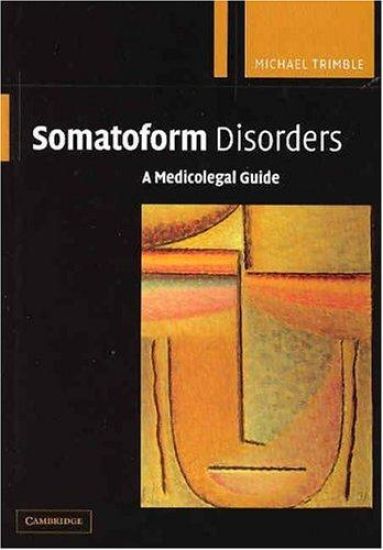
People with somatoform disorder (which used to be known as hysteria) present with a range of symptoms that typically last for years and can't be traced to a specific physical cause. Such symptoms may include frequent headaches; back pain; abdominal cramping and pelvic pain; pain in the joints, legs and arms; chest or abdominal pain, and gastrointestinal problems. This book is an in-depth, clinically orientated review of the somatoform disorders and related clinical presentations (such as chronic fatigue syndrome) and how they present in a medico-legal setting. It is aimed at both clinicians and lawyers who deal with injury claims where these disorders impact much more frequently than is generally recognised.
Anatomy of Neuropsychiatry

Anatomy of Neuropsychiatry

Lennart Heimer; Gary W. Van Hoesen; Michael Trimble; Daniel S. Zahm

Academic Press Inc
2007
sidottu
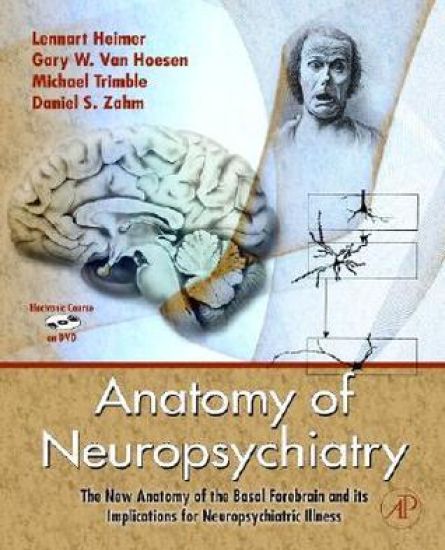
Anatomy of Neuropsychiatry presents the anatomical systems that take part in the scientific and clinical study of emotional functions and neuropsychiatric disorders. It discusses the limbic system—the cortical and subcortical structures in the human brain involved in emotion, motivation, and emotional association with memory—at length and how this is no longer a useful guide to the study of psychiatric disorders. The book provides an understanding of brain anatomy, with an emphasis on the new anatomical framework which has emerged during the last quarter century. The goal is to help the reader develop an understanding of the gross anatomical organization of the human forebrain.
Somatoform Disorders

Somatoform Disorders

Michael Trimble

Cambridge University Press
2004
sidottu
People with somatoform disorder (which used to be known as hysteria) present with a range of symptoms that typically last for years and can't be traced to a specific physical cause. Such symptoms may include frequent headaches; back pain; abdominal cramping and pelvic pain; pain in the joints, legs and arms; chest or abdominal pain, and gastrointestinal problems. This book is an in-depth, clinically orientated review of the somatoform disorders and related clinical presentations (such as chronic fatigue syndrome) and how they present in a medico-legal setting. It is aimed at both clinicians and lawyers who deal with injury claims where these disorders impact much more frequently than is generally recognised.