Kirjojen hintavertailu – 12 903 725 kirjaa ja 27 kauppaa
Kirjailija
Michael Walzer
Kirjat ja teokset yhdessä paikassa: 25 kirjaa, julkaisuja vuosilta 1901–2023, suosituimpiin kuuluu Liberties Journal of Culture and Politics. Vertaile teosten hintoja ja tarkista saatavuus suomalaisista kirjakaupoista.
Michael Ignatieff; Mary Gaitskill; Sergei Lebedev; Antonia Bouis; Karen Solie; Michael Walzer; David A. Bell; Justin E.H. Smith; Michael C. Kimmage; Andrew Scull; Robert Alter; Steven B. Smith; Benjamin Moser; Helen Vendler; John Hodgen; Adam Zagajewski
Liberties, a Journal of Culture and Politics, is essential reading for those engaged in the cultural and political issues of our time. In this issue of Liberties: Michael Ignatieff - The Mind’s Emancipation; Mary Gaitskill - The Trials of the Young; Sergei Lebedev - Putin’s Philosopher: A Memoir; Michael Walzer - Moral Concern; Justin E. H. Smith – The Happiness Industrial Complex; Andrew Scull – The Fashions in Trauma; David A. Bell – The Triumph of Anti-Politics in America; Michael Kimmage – A Defense of Delight in a Dark Time; Robert Alter – Proust and the Mystification of the Jews; Steven B. Smith – What is a Statesman?; Benjamin Moser – Rembrandt’s shadows; Helen Vendler – The Poetry of Charm; Celeste Marcus – Priorism, or the Joshua Katz Affair; Leon Wieseltier – Problems and Struggles; and, new poems by Karen Solie, Adam Zagajewski, and John Hodgen. Published quarterly, Liberties, is a collection of the most significant writers today as well as launching the voices of tomorrow. Liberties features serious, independent, stylish, and controversial essays by significant writers and introduces the next generation of writers and poets to inspire and impact the intellectual and creative lifeblood of today’s culture and politics. Nobel Prize winners, leading op-ed writers, well-known non-fiction writers, rising talents, and poets from around the world are part of the Liberties series. There’s a reason why engaged citizens, cultural warriors, political leaders, opinion makers, and activists from across the cultural and political spectrum read and cherish Liberties.
A testament to what it means to be liberal by one of the most prominent political philosophers of our era “Walzer is perhaps our foremost pilot on these rocky shoals. In his preface, he writes that this may be his last book. One hopes not.”—James Traub, New York Times There was a time when liberalism was an ism like any other, but that time, writes Michael Walzer, is gone. “Liberal” now conveys not a specific ideology but a moral stance, so the word is best conceived not as a noun but as an adjective—one is a “liberal democrat” or a “liberal nationalist.” Walzer itemizes the characteristics described by “liberal” in an inventory of his own deepest political and moral commitments—among other things, to the principle of equality, to the rule of law, and to a pluralism that is both political and cultural. Unabashedly asserting that liberalism comprises a universal set of values (“they must be universal,” he writes, “since they are under assault around the world”), Walzer reminds us in this inspiring book why those values are worth fighting for.
Michael Walzer is one of the pre-eminent political theorists in the world today and also a prominent public intellectual. His conception of social justice and his work on just and unjust wars have been hugely influential in political theory and, at the same time, he has taken a public stand on many of the great issues of our time, from the civil rights movement and the Vietnam War to 9/11, the Israeli-Palestinian conflict and the Iraq War. He stands out among political theorists and philosophers by virtue of his attention to historical reality and his sensitivity to social and political context. Convinced that philosophical debate is only useful if it is rooted in the concrete practices and morality of societies, he develops a form of social critique that is opposed to a disembodied philosophy which does not respond to concerns of ordinary people. For Walzer, it is useless to try to write a theory of justice: the challenge is to think through issues of justice in relation to the particular contexts in which people live out their lives. The core strength of his work is his practical instinct: if individuals are contextualized, critique must be too. This book takes the form of an extended conversation between Walzer and Astrid von Busekist, ranging from Walzer’s biography and political activism to his work on war, justice and Judaism. Weaving together his theoretical work and his political activism, it provides an outstanding introduction to the life and work of one of the most influential political theorists of our time.
Thick and Thin: Moral Argument at Home and Abroad frames ideas about justice, social criticism, and national identity in light of the new political world that has arisen in the past three decades. Michael Walzer focuses on two different but interrelated kinds of moral argument: maximalist and minimalist, local and universal—thick and thin. He revises and extends the arguments in his influential Spheres of Justice to reflect his additional analysis and interrogation as well as the shift in world politics. This edition has a new preface and afterword, written by the author, describing how the reasoning of the book connects with arguments he made in Just and Unjust Wars. Walzer's highly literate and fascinating blend of philosophy and historical analysis will appeal to any and all intelligent readers who want to understand the arguments about the morality of warfare and engage with them.
Political theorist Michael Walzer's classic guide is a perfect introduction to social activism, including what-to-do advice for deciding which issues to take on, organizing, fundraising, and providing effective leadership Michael Walzer is one of the finest political philosophers of our time, but Political Action is, true to its title, not a book of theory but a manual for taking action. Written in the early 1970s and drawing on Walzer's own experience as an activist in the civil rights and anti-war movements of the 1960s, Political Action concisely sets out the goals and constraints of movement politics and describes how activists can keep going in the face of disappointment and even defeat. The book offers more than a "how-to"; it provides a "what-to-do." It covers in careful detail the problems that inevitably arise when people come together from shared outrage or fear of looming disaster: whether to focus on one issue or many; whether and how to work in electoral politics; how to raise money; when to and when not to join coalitions; how to organize democratically; how to provide effective leadership--and much more. Through it all, Walzer insists on the centrality of political resistance to the life of a democratic society, and talks of the deep satisfaction that can only come from active political engagement. Political Action remains as clear-sighted, practical, inspiring, and necessary a book today as when came it out almost fifty years ago.
Something that has been needed for decades: a leftist foreign policy with a clear moral basis Foreign policy, for leftists, used to be relatively simple. They were for the breakdown of capitalism and its replacement with a centrally planned economy. They were for the workers against the moneyed interests and for colonized peoples against imperial (Western) powers. But these easy substitutes for thought are becoming increasingly difficult. Neo-liberal capitalism is triumphant, and the workers’ movement is in radical decline. National liberation movements have produced new oppressions. A reflexive anti-imperialist politics can turn leftists into apologists for morally abhorrent groups. In Michael Walzer’s view, the left can no longer (in fact, could never) take automatic positions but must proceed from clearly articulated moral principles. In this book, adapted from essays published in Dissent, Walzer asks how leftists should think about the international scene—about humanitarian intervention and world government, about global inequality and religious extremism—in light of a coherent set of underlying political values.
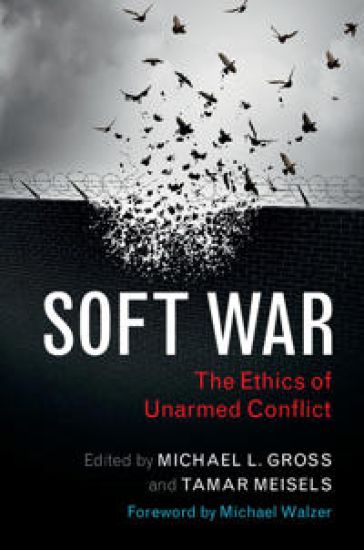
Just war theory focuses primarily on bodily harm, such as killing, maiming, and torture, while other harms are often largely overlooked. At the same time, contemporary international conflicts increasingly involve the use of unarmed tactics, employing 'softer' alternatives or supplements to kinetic power that have not been sufficiently addressed by the ethics of war or international law. Soft war tactics include cyber-warfare and economic sanctions, media warfare, and propaganda, as well as non-violent resistance as it plays out in civil disobedience, boycotts, and 'lawfare.' While the just war tradition has much to say about 'hard' war - bullets, bombs, and bayonets - it is virtually silent on the subject of 'soft' war. Soft War: The Ethics of Unarmed Conflict illuminates this neglected aspect of international conflict.
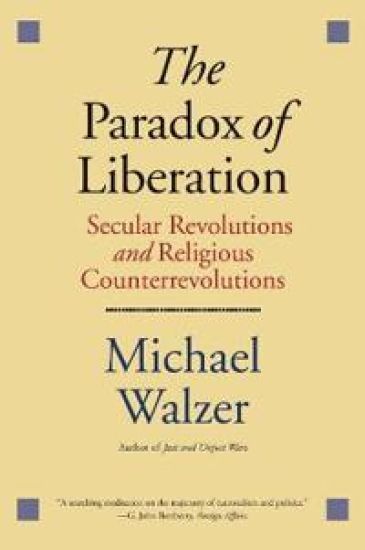
A thought-provoking reflection on why secular national liberation movements are so often challenged by militant religious revivals Many of the successful campaigns for national liberation in the years following World War II were initially based on democratic and secular ideals. Once established, however, the newly independent nations had to deal with entirely unexpected religious fierceness. Michael Walzer, one of America’s foremost political thinkers, examines this perplexing trend by studying India, Israel, and Algeria, three nations whose founding principles and institutions have been sharply attacked by three completely different groups of religious revivalists: Hindu militants, ultra-Orthodox Jews and messianic Zionists, and Islamic radicals. In his provocative, well-reasoned discussion, Walzer asks, Why have these secular democratic movements been unable to reproduce their political culture beyond one or two generations? In a postscript, he compares the difficulties of contemporary secularism to the successful establishment of secular politics in the early American republic—thereby making an argument for American exceptionalism but gravely noting that we may be less exceptional today.
Teaching Plato in Palestine is part intellectual travelogue, part plea for integrating philosophy into our personal and public life. Philosophical toolkit in tow, Carlos Fraenkel invites readers on a tour around the world as he meets students at Palestinian and Indonesian universities, lapsed Hasidic Jews in New York, teenagers from poor neighborhoods in Brazil, and the descendants of Iroquois warriors in Canada. They turn to Plato and Aristotle, al-Ghaz?l? and Maimonides, Spinoza and Nietzsche for help to tackle big questions: Does God exist? Is piety worth it? Can violence be justified? What is social justice and how can we get there? Who should rule? And how shall we deal with the legacy of colonialism? Fraenkel shows how useful the tools of philosophy can be--particularly in places fraught with conflict--to clarify such questions and explore answers to them. In the course of the discussions, different viewpoints often clash. That's a good thing, Fraenkel argues, as long as we turn our disagreements on moral, religious, and philosophical issues into what he calls a "culture of debate." Conceived as a joint search for the truth, a culture of debate gives us a chance to examine the beliefs and values we were brought up with and often take for granted. It won't lead to easy answers, Fraenkel admits, but debate, if philosophically nuanced, is more attractive than either forcing our views on others or becoming mired in multicultural complacency--and behaving as if differences didn't matter at all.
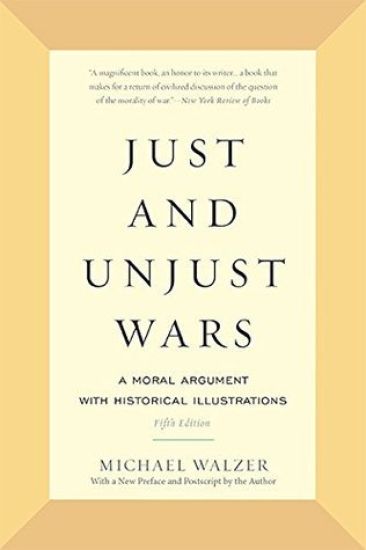
"A classic in the field" (New York Times), this is a penetrating investigation into moral and ethical questions raised by war, drawing on examples from antiquity to the present. Just and Unjust Wars has forever changed how we think about the ethics of conflict. In this modern classic, political philosopher Michael Walzer examines the moral issues that arise before, during, and after the wars we fight. Reaching from the Athenian attack on Melos, to the Mai Lai massacre, to the war in Afghanistan and beyond, Walzer mines historical and contemporary accounts and the testimony of participants, decision makers, and victims to explain when war is justified and what ethical limitations apply to those who wage it.
Teaching Plato in Palestine is part intellectual travelogue, part plea for integrating philosophy into our personal and public life. Philosophical toolkit in tow, Carlos Fraenkel invites readers on a tour around the world as he meets students at Palestinian and Indonesian universities, lapsed Hasidic Jews in New York, teenagers from poor neighborhoods in Brazil, and the descendants of Iroquois warriors in Canada. They turn to Plato and Aristotle, al-Ghaz?l? and Maimonides, Spinoza and Nietzsche for help to tackle big questions: Does God exist? Is piety worth it? Can violence be justified? What is social justice and how can we get there? Who should rule? And how shall we deal with the legacy of colonialism? Fraenkel shows how useful the tools of philosophy can be--particularly in places fraught with conflict--to clarify such questions and explore answers to them. In the course of the discussions, different viewpoints often clash. That's a good thing, Fraenkel argues, as long as we turn our disagreements on moral, religious, and philosophical issues into what he calls a "culture of debate." Conceived as a joint search for the truth, a culture of debate gives us a chance to examine the beliefs and values we were brought up with and often take for granted. It won't lead to easy answers, Fraenkel admits, but debate, if philosophically nuanced, is more attractive than either forcing our views on others or becoming mired in multicultural complacency--and behaving as if differences didn't matter at all.
A collection of the most important writings of Michael Walzer, one of the world’s most influential political thinkers Michael Walzer is widely regarded as one of the world’s leading political theorists. In a career spanning more than fifty years, he has wrestled with some of the most crucial political ideas and questions of the day, developing original conceptions of democracy, social justice, liberalism, civil society, nationalism, multiculturalism, and terrorism. Thinking Politically brings together some of Walzer’s most important work to provide a wide-ranging survey of his thinking and the vision that underlies his responses to contemporary political debates. The book also includes a previously unpublished essay on human rights. David Miller’s substantial introduction presents a detailed analysis of the development of Walzer’s ideas and connects them to wider currents of political thought. In addition, the book includes a recent interview with Walzer on a range of topical issues, and a detailed bibliography of his works. This collection will be welcomed by scholars in politics and philosophy, as well as anyone keen to engage in discussion on some of the key issues of our times.
A provocative discussion of recent wars and the issues that surround them, written by a preeminent political theorist Michael Walzer is one of the world’s most eminent philosophers on the subject of war and ethics. Now, for the first time since his classic Just and Unjust Wars was published almost three decades ago, this volume brings together his most provocative arguments about contemporary military conflicts and the ethical issues they raise. The essays in the book are divided into three sections. The first deals with issues such as humanitarian intervention, emergency ethics, and terrorism. The second consists of Walzer’s responses to particular wars, including the first Gulf War, Kosovo, Afghanistan, and Iraq. And the third presents an essay in which Walzer imagines a future in which war might play a less significant part in our lives. In his introduction, Walzer reveals how his thinking has changed over time. Written during a period of intense debate over the proper use of armed force, this book gets to the heart of difficult problems and argues persuasively for a moral perspective on war.
"What role should religion play in shaping and implementing U. S. foreign policy? The dominant attitude over the last half century on the subject of religion and international relations was expressed well by Dean Acheson, Harry Truman's secretary of state: ""Moral Talk was fine preaching for the Final Day of Judgment, but it was not a view I would entertain as a public servant."" Was Acheson right? How a nation ""commits itself to freedom"" has long been at the heart of debates about foreign aid, economic sanctions, and military intervention. Moral and faith traditions have much to say about what is required to achieve this end. And after September 11, no one can doubt the importance of religious beliefs in influencing relations among peoples and nations. The contributors to this volume come at the issue from very different perspectives and offer exceptional and unexpected insights on a question now at the forefront of American foreign policy."
What do social critics do? I How do they go about doing it? Where do their principles come from? How do critics establish their distance from the people and institutions they criticize? Michael Walzer addresses these problems in succinct and engaging fashion, providing a philosophical framework for understanding social criticism as a social practice. Walzer maintains that social criticism is an ordinary activity—less the offspring of scientific knowledge than the “educated cousin of common complaint”—and does not depend for its force or accuracy upon any sort of high theory. In his view, the social critic is not someone radically detached and disinterested, who looks at society as a total stranger and applies objective and universal principles. The true social critic must stand only a little to the side of his society—unlike Jean-Paul Sartre during the Algerian war, for example, who described himself as an enemy of his own people. And unlike Lenin, who judged Russian society against a standard worked out with reference to other places far away. The “connected” critic is the model Walzer offers, one whose distance is measured in inches but who is highly critical nevertheless. John Locke is one example of the connected critic who argued for religious toleration not as a universal right ordained by reason but as a practical consequence of Protestant theology. The biblical prophets, such as Amos, were also men of their own day, with a particular quarrel to conduct with their fellows; the universalism of that quarrel is our own extrapolation. Walzer explains where critical principles come from, how much distance is “critical distance,” and what the historical practice of criticism has actually been like in the work of social philosophers such as Marx, Gramsci, Koestler, Lenin, Habermas, and Rawls. Walzer posits a moral world already in existence, a historical product, that gives structure to our lives but whose ordinances are always uncertain and in need of scrutiny, argument, and commentary. The social critic need bring to his task only the ordinary tools of interpretation. Philosophers, political theorists, and all readers seriously interested in the possibility of a moral life will find sustenance and inspiration in this book.
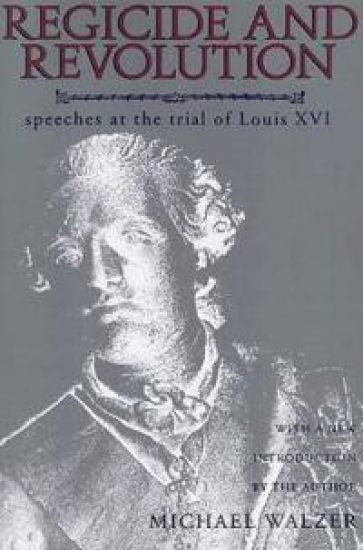
Maintaining that the trial and public execution of Louis XVI was an absolutely essential part of the French Revolution, Walzer discusses two types of regicide: the first, committed by would-be kings or their agents, left the monarchy's mystique and divine right intact, while the second was a revolutionary act intended to destroy it completely. Walzer defends the trial and execution of Louis XVI as necessary, since it not only tried to destroy the monarchy's mystique and divine right, but also required the deputies to fully explain their guiding philosophies and applied the rules of judicial process to establish equality before the law. New to this edition is an appendix containing "Revolutionary Justice," Ferenc Feher's classic rebuttal to Walzer's thesis, and Walzer's response, "The King's Trial and the Political Culture of the Revolution."