Kirjojen hintavertailu – 12 859 819 kirjaa ja 27 kauppaa
Kirjailija
Michael Wilson
Kirjat ja teokset yhdessä paikassa: 74 kirjaa, julkaisuja vuosilta 1993–2026, suosituimpiin kuuluu Government Girls. Vertaile teosten hintoja ja tarkista saatavuus suomalaisista kirjakaupoista.
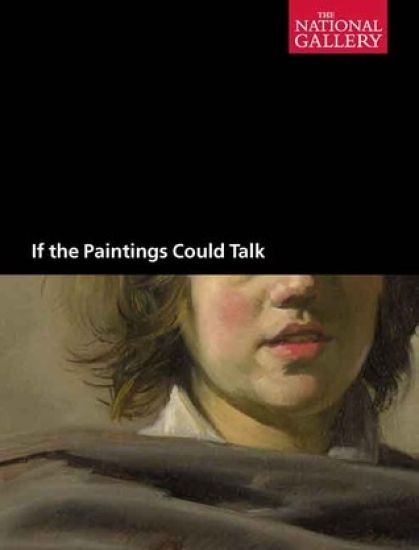
If the Paintings Could Talk reveals the hidden histories of paintings in the National Gallery, London. With a treasury of fascinating facts, discoveries, and tales, this book describes the flight a work took down a mountainside and the portrait that appeared in a James Bond film, among many other entertaining events and stories. An engaging, accessible, and highly original gallery guide that cross-references entries throughout, the book provides a unique tour of this remarkable collection. Published by National Gallery Company/Distributed by Yale University Press
The British financial pages are a minefield of jargon and impenetrable terminology - they are also your key to having a true understanding of how the financial markets work, and taking full control of your investments. This plain-English guide to the financial pages demystifies the tables, charts and analysis, so you can keep on top of the latest developments in the City and have confidence that you are maximising your investment returns. Reading the Financial Pages For Dummies includes: The Financial Pages What the Financial Pages AreHow the Financial Pages WorkHow the Financial Pages Relate to the Stock Market How You Can Use the Pages to Work for You Using the Financial Pages to Make Basic Investments Investing in SharesInvesting in BondsInvesting in Cash Investments Delving Deeper Into the Financial Pages Sharpening Your UnderstandingWatching Out For the PitfallsUsing Charts To Monitor The Market’s Psychology Using the Pages for More Advanced Investments Going InternationalDelving into DerivativesMaking Money from CommoditiesInvesting in Trusts and FundsDiscovering More Ways to Use Managed Funds Other Places to Go for Financial Information Using the Alternatives Company Accounts Part of Tens Ten Things to Know About a ShareTen Ways to Get Your Asset Allocation RightTen Warning Signs that a Company Might be on the RopesTen Red-Hot Clues to an Opportunity
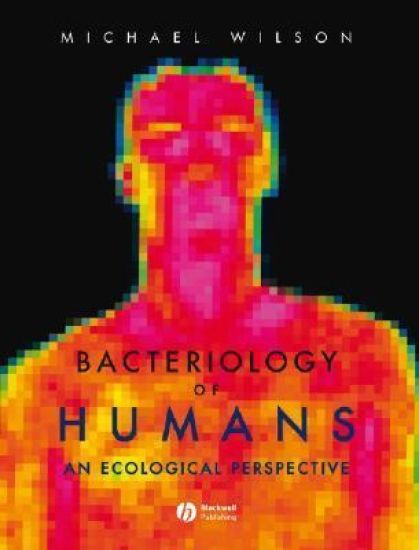
1st Prize, 'New Authored Books' category, Royal Society of Medicine and Society of Authors Medical Book Awards 2008 “Overall, I am impressed by the up-to date information content and structure provided in Bacteriology of Humans. It is truly an ecological perspective helpful for undergraduate/graduate majors in microbiology and immunology.” –American Society for Microbiology, June 2009 "Wilson provides the reader with an up-to-date, comprehensive census of the indigenous microorganisms that inhabit the human body and in so doing contributes significantly to this rapidly advancing area of study. The narrative is clearly written; the index is excellent; there are numerous bibliographic citations. Each chapter is rich with tables, diagrams, color micrographs, and charts … Highly recommended." –Choice Reviews "This comprehensive, yet accessible text... is an excellent and informative reference book… it should be on the shelf of every major science and medical library. The content, organization, and presentation make this book a unique resource." –Doody's Book Reviews Until recently, the indigenous microbiota of humans has been a relatively neglected area of microbiology with most attention being focused on those microbes that cause disease in humans, rather than on those that co-exist with us in the disease-free state. However, in the past decade research has shown that not only is the indigenous microbiota involved in protecting humans from exogenous pathogens but it is also involved in our development and nutrition. Consequently, interest has grown substantially among health professionals and scientists in analyzing and understanding these microbial (largely bacterial) communities. This comprehensive, yet accessible text provides an up-to-date guide to the development, composition and distribution of indigenous microbial communities of humans. With the aid of abundant colour figures, diagrams, tables and maps, it establishes links between the physicochemical factors prevailing at an anatomical site and the types of microbes to be found there. The book includes an introduction to the human-microbe symbiosis as well as an in-depth look at the main systems and organs of the human body that have an indigenous microbiota. Each chapter includes a list of references for further study. This is an excellent and informative reference book that is useful to anyone with an interest in microbiology, medical microbiology, microbial ecology, infectious diseases, immunology, human biology, medicine, dentistry, nursing, health sciences, biomedical sciences or pharmacy – it should be on the shelf of every major science and medical library. Hallmark Features: Provides a comprehensive, yet accessible, reference book on the human microbiotaLavishly illustrated with colour figures, diagrams, tables and mapsEach chapter provides a list of references to promote further studyEach chapter contains links to key websitesOffers an ecological approach that explains why certain organisms are associated with a particular anatomical site
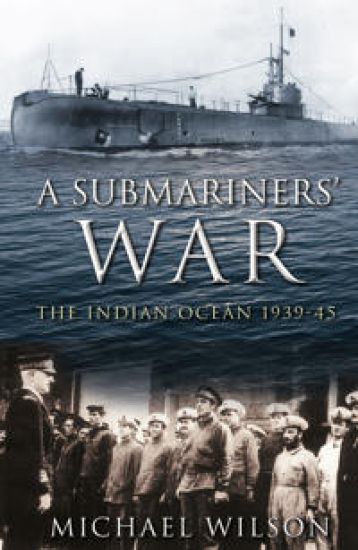
The Indian Ocean submarine war engaged men and submarines of every major combatant nation. Submarines of seven nations fought a war of attrition from 1939-45. This book details the war.
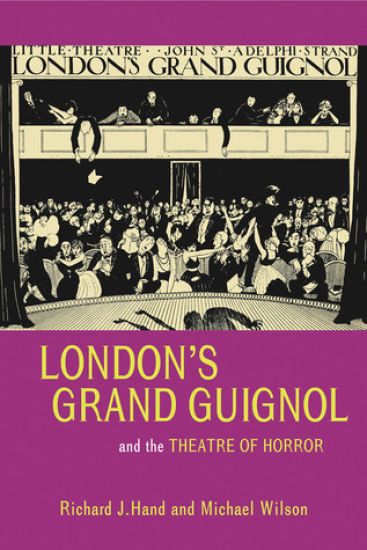
A companion to UEP’s Grand-Guignol: The French Theatre of Horror (now in its third reprint). A genre that has left more of a mark on British and American culture than we may imagine” (Gothic Studies). London’s Grand Guignol was established in the early 1920s at the Little Theatre in the West End. It was a high-profile venture that enjoyed popular success as much as critical controversy. On its side were some of the finest actors on the English stage, in the shape of Sybil Thorndike and Lewis Casson, and a team of extremely able writers, including Noël Coward. London's Grand Guignol and the Theatre of Horror considers the importance and influence of the English Grand Guignol within its social, cultural and historical contexts. It also presents a selection of ten remakarble English-language Grand Guignol plays, some of which were banned by the Lord Chamberlain, the censor of the day, and have never been published or publicly performed. Among the plays in the book is a previously unpublished work by Noël Coward, The Better Half, first performed at the Little Theatre in 1922. The reviewer in the journal Gothic Studies wrote, of the authors’ previous book: “having recently taught a module on Grand Guignol with third year drama students, it is also worth noting that this book captured their imaginations in a way that few other set texts seem to manage.”
A companion to UEP’s Grand-Guignol: The French Theatre of Horror (now in its third reprint). A genre that has left more of a mark on British and American culture than we may imagine” (Gothic Studies). London’s Grand Guignol was established in the early 1920s at the Little Theatre in the West End. It was a high-profile venture that enjoyed popular success as much as critical controversy. On its side were some of the finest actors on the English stage, in the shape of Sybil Thorndike and Lewis Casson, and a team of extremely able writers, including Noël Coward. London's Grand Guignol and the Theatre of Horror considers the importance and influence of the English Grand Guignol within its social, cultural and historical contexts. It also presents a selection of ten remakarble English-language Grand Guignol plays, some of which were banned by the Lord Chamberlain, the censor of the day, and have never been published or publicly performed. Among the plays in the book is a previously unpublished work by Noël Coward, The Better Half, first performed at the Little Theatre in 1922. The reviewer in the journal Gothic Studies wrote, of the authors’ previous book: “having recently taught a module on Grand Guignol with third year drama students, it is also worth noting that this book captured their imaginations in a way that few other set texts seem to manage.”
Littlewood-Paley theory is an essential tool of Fourier analysis, with applications and connections to PDEs, signal processing, and probability. It extends some of the benefits of orthogonality to situations where orthogonality doesn’t really make sense. It does so by letting us control certain oscillatory infinite series of functions in terms of infinite series of non-negative functions. Beginning in the 1980s, it was discovered that this control could be made much sharper than was previously suspected. The present book tries to give a gentle, well-motivated introduction to those discoveries, the methods behind them, their consequences, and some of their applications.
This advanced textbook provides a unique overview of the microbial communities (normal indigenous microbiota) inhabiting those regions of the human body that are exposed to the external environment, including the skin, eyes, oral cavity and the respiratory, urinary, reproductive and gastrointestinal tracts. In order to understand why particular organisms are able to colonise an anatomical region and why the resulting microbial community has a particular composition, an ecological approach is essential. Consequently, the key anatomical and physiological characteristics of each body site are described throughout the book. The crucial roles of the indigenous microbiota in protecting against exogenous pathogens, regulating the development of our immune system and mucosae, and providing nutrients are also discussed. The involvement of these organisms in infections of healthy and debilitated individuals are discussed throughout and methods of manipulating the composition of the indigenous microbiota for the benefit of human health are also described.
Since the Theatre du Grand-Guignol closed its doors, the genre has been overlooked by critics and theatre historians. This book reconsiders the importance and influence of the Grand-Guignol within its social, cultural and historical contexts.
A book of selected scenes from Shakespeare's most recognisable plays. Designs to solve classroom or workshop performance needs: only scenes with small casts are included; each scene contains two to seven characters; scenes are between five and twenty minutes in length; each scene is preceded by a plot synopsis and setting; scenes include character descriptions and motivation; excellent contest material.
Cellular microbiology is an exciting new area of microbiology research which bridges the gap between microbiology and cell biology. Drawing on their own teaching and research experience, the authors have provided a timely and comprehensive introduction to the molecular and cellular biology of bacterial interactions with host cells, and their relevance to human diseases. Cellular Microbiology introduces the key concepts of prokaryotic and eukaryotic cell biology, cell signalling mechanisms and current molecular biological techniques used in cellular microbiology before describing how bacteria interact with host eukaryotic cells during infections and health, and explaining the interactions with the immune system which enable an individual to recover from infections. This book will be invaluable to advanced undergraduate and postgraduate students studying microbiology, virology, pathology, pharmacology and cell biology. It will also be useful for those researchers interested in bacterial infection.
Cellular microbiology is an exciting new area of microbiology research which bridges the gap between microbiology and cell biology. Drawing on their own teaching and research experience, the authors have provided a timely and comprehensive introduction to the molecular and cellular biology of bacterial interactions with host cells, and their relevance to human diseases. Cellular Microbiology introduces the key concepts of prokaryotic and eukaryotic cell biology, cell signalling mechanisms and current molecular biological techniques used in cellular microbiology before describing how bacteria interact with host eukaryotic cells during infections and health, and explaining the interactions with the immune system which enable an individual to recover from infections. This book will be invaluable to advanced undergraduate and postgraduate students studying microbiology, virology, pathology, pharmacology and cell biology. It will also be useful for those researchers interested in bacterial infection.