Kirjailija
Michael Wood
Kirjat ja teokset yhdessä paikassa: 97 kirjaa, julkaisuja vuosilta 1981–2026, suosituimpiin kuuluu Maybe Tomorrow. Vertaile teosten hintoja ja tarkista saatavuus suomalaisista kirjakaupoista.
97 kirjaa
Kirjojen julkaisuvuodet: 1981–2026.
Policy and management decisions are often made on financial grounds. However, the economic value of the benefits that people derive from ecosystems, that is, ecosystem services, may not be fully recognised and hence ecosystem considerations may not be incorporated adequately into decision-making processes. This is particularly true for regulating services, the benefits obtained from the regulation of ecosystem processes, the valuation of which requires an interdisciplinary approach. In essence, valuation is a problem solving strategy and a problem is a problem, it does not respect the boundary of any particular discipline. The valuation of regulating services is an evolving field of ecological economics. In this book, Dr. Pushpam Kumar and Dr. Michael D. Wood have invited some of the foremost international experts in the field of ecosystem services valuation to contribute chapters on the valuation of regulating services and highlight some of the main obstacles to the implementation and acceptance of these methodologies in the context of decision-making. The contributors explore the theoretical underpinning of valuation of ecosystem services and demonstrate ways in which these theories can be applied to case-specific problems in order to inform decision-making processes. This collection clarifies some of the doubt and uncertainty regarding the valuation of regulating services. Innovative methodologies in this field have started to emerge and in coming years there may be much further discussion on this topic as methodologies and understanding continue to evolve. This is a highly active area of interdisciplinary research with far reaching social and environmental implications, and this book should be of interest to those who are new to the field, as well as established experts, in moving both theory and practice forward.
Film is considered by some to be the most dominant art form of the twentieth century. It is many things, but it has become above all a means of telling stories through images and sounds. The stories are often offered to us as quite false, frankly and beautifully fantastic, and they are sometimes insistently said to be true. But they are stories in both cases, and there are very few films, even in avant-garde art, that don't imply or quietly slip into narrative. This story element is important, and is closely connected with the simplest fact about moving pictures: they do move. Even the older meanings of the word 'film' - a membrane, a covering, a veil, an emanation - now seem to have something to do with moving pictures. Many people believe films are an instrument of illusion, an emphatic way of seeing what is not there; and this capacity has been both celebrated and condemned. 'Like a movie' mostly means like some sort of fairy-tale. But what about the reverse proposition: that more than any other invention film brings us close to the world as it actually is? 'Photography is truth', a character says in a film by Jean-Luc Godard. 'And cinema is the truth twenty-four times per second'. The same claim is made every day, albeit less epigrammatically, by newsreels and surveillance cameras. In this Very Short Introduction Michael Wood provides a brief history and examination of the nature of the medium of film, considering its role and impact on society as well as its future in the digital age. ABOUT THE SERIES: The Very Short Introductions series from Oxford University Press contains hundreds of titles in almost every subject area. These pocket-sized books are the perfect way to get ahead in a new subject quickly. Our expert authors combine facts, analysis, perspective, new ideas, and enthusiasm to make interesting and challenging topics highly readable.
Rosabeth Moss Kanter (b. 1943)—described by The Economist as ‘one of the few women in recent years to have achieved genuine guru status’—introduced the concept of ‘empowerment’ into management thought. She is the subject of this new collection from Routledge’s acclaimed Critical Evaluations in Business and Management series. It brings together in two volumes the best critical assessments of her work. The collection is supplemented with the editors’ expert introduction which places the gathered materials in their historical and intellectual context.
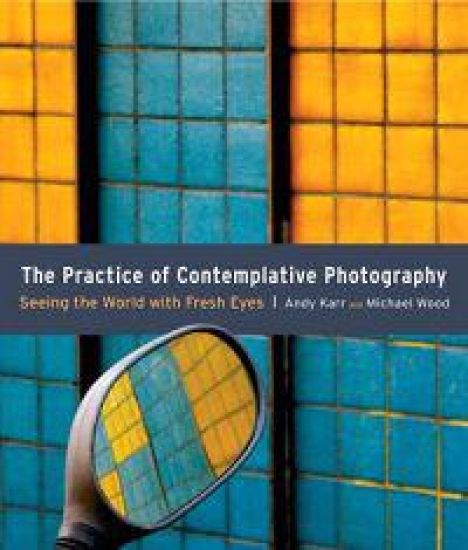
The Practice of Contemplative Photography
Andy Karr; Michael Wood
Shambhala Publications Inc
2011
pokkari
This book teaches us how to fully connect with the visual richness of our ordinary, daily experience. Photography is not just a mechanical process; it requires learning how to see. As you develop your ability to look and see, you will open, more and more, to the natural inspiration of your surroundings. Filled with practical exercises, photographic assignments, and techniques for working with texture, light, and color, this book offers a system of training that draws on both Buddhist mindfulness practice and the insights of master photographers such as Alfred Stieglitz, Edward Weston, and Henri Cartier-Bresson.
The night can sweat with terror as before We pieced our thoughts into philosophy, And planned to bring the world under a rule, Who are but weasels fighting in a hole. W. B. Yeats, 'Nineteen Hundred and Nineteen' This is a book about how poetry, seen through the instance of a single poem, seeks to make sense of a turbulent and dangerous world. Poetry must introduce order and shape where there is none, and also, in certain crucial cases, remain faithful to the disorder and shapelessness of experience. Many poems manage the first of these tasks; very few manage both. W. B. Yeats 'Nineteen Hundred and Nineteen' (written and first published in 1921) is one of them. It is a work which asks what happens when what is taken to be civilization crumbles. What apocalyptic events wait in the wings? What are history's victims (and executors) to do except mock and mourn? Successive chapters investigate the six parts of the poem, connecting them to Yeats' broader poetic practice, his interest in the occult and his changing vision of Irish nationalism; to the work of other poets (Irish, English, Russian German); and to Irish and European history between 1916 (the date of the Easter Uprising in Dublin) and 1923 (the date of the end of the Irish Civil War). Theoretical considerations of the shape and meaning of violence, both political and religious, link the chapters to each other.
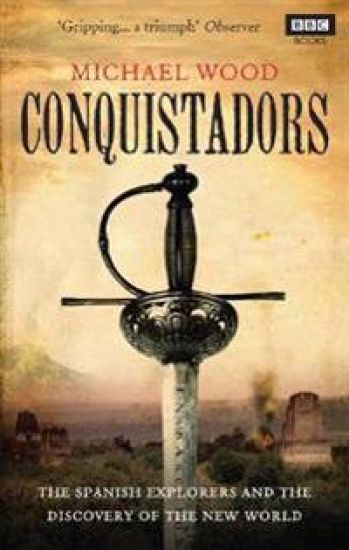
The Spanish conquest of the Americas in the 16th century was one of the most important and cataclysmic events in history. Spanish expeditions endured incredible hardships in order to open up the lands of the 'New World', and few stories in history can match these for drama and endurance. In Conquistadors, Michael Wood follows in the footsteps of some of the greatest of the Spanish adventurers travelling from the forests of Amazonia to Lake Titicaca, the deserts of North Mexico, the snowpeaks of the Andes and the heights of Machu Picchu. He experiences the epic journeys of Cortes, Pizarro, Orellana and Cabeza de Vaca, and explores the turbulent and terrifying events surrounding the Spanish conquest of the Aztec and Inca empires. Wood brings these stories to vivid life, highlighting both the heroic accomplishments and the complex moral legacy of the European invasion. Conquistadors is Michael Wood at his best - thoughtful, provocative and gripping history.
Leading historians select and describe the 20 most significant events in British History.
Weaves a narrative out of the 10,000-year history of the subcontinent. This book is a mixture of history and travelogue, and a portrait of India.
Intermediate Microeconomics B&W
Walter Nicholson; Christopher Snyder; Peter Luke; Michael Wood
Cengage Learning EMEA
2008
nidottu
Intermediate Microeconomics offers a clear and concise treatment of microeconomic principles in a useful pedagogic framework. The mathematical level is approachable and uses basic algebra with extensions to calculus where it helps the analysis. The book is also strongly applied in focus and shows the relevance of theory in the "real world". Whilst these features make the book approachable to students, the theoretical content and overall learning experience is a rigorous one. In this adapted edition Peter Luke and Michael Wood have been brought in to adapt the text for the UK, European and South African market. Applications features in the book have been internationalised, and the European Social Model/US-UK model debate on the macroeconomy discussed at a micro level. This book is designed for students specifically studying economics at an undergraduate or postgraduate level such as MBA within the UK and EU in general, and South Africa. These students would be predominantly second-year students who have already taken an introductory course in microeconomics.
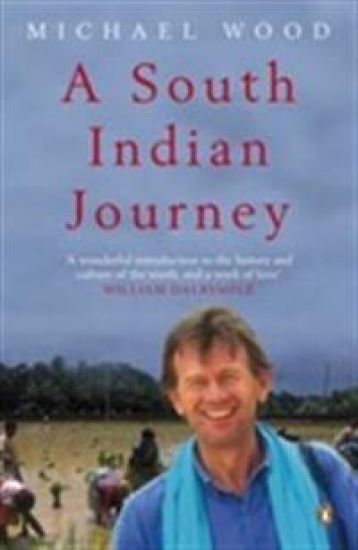
Michael Wood's A South Indian Journey is a brilliantly written travel narrative of personal and geographical exploration. Inspired by a temple astrologer (who had accurately predicted his marriage and the birth of his two daughters), the writer and broadcaster Michael Wood travelled on a magical journey through south-east India. A South Indian Journey is a magical mixture of history and travelogue, and an unforgettable portrait of India - past, present and future.'A wonderful introduction to the history and culture of the south, and a work of love' William Dalrymple'A supremely well-informed and affectionate portrait of Tamil Nadu and its people... One of the most enlightening books on South India ever written' Rough Guide to IndiaMichael Wood was born and educated in Manchester. He was an open scholar in Modern History at Oriel College, Oxford, where he held a Bishop Fraser scholarship in Medieval History as a postgraduate. He has made a number of internationally successful tv series, including In the Footsteps of Alexander the Great, and four of his books have been UK non-
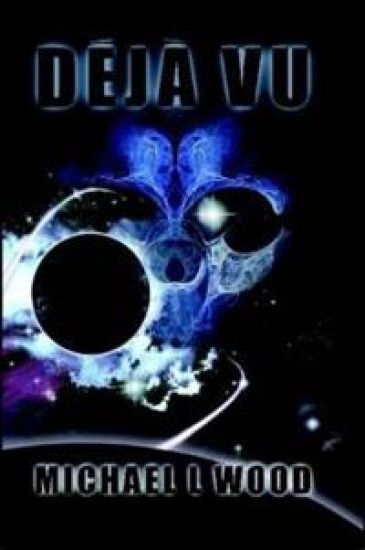
Exciting 'keep you guessing' science fiction adventure set in the year 2092. Good 'Earth against the Aliens' base storyline, with many intriguing additional sub-plots and plenty of twists. If you have any imagination, you should enjoy this book. Donation made to COMIC RELIEF from each sale!
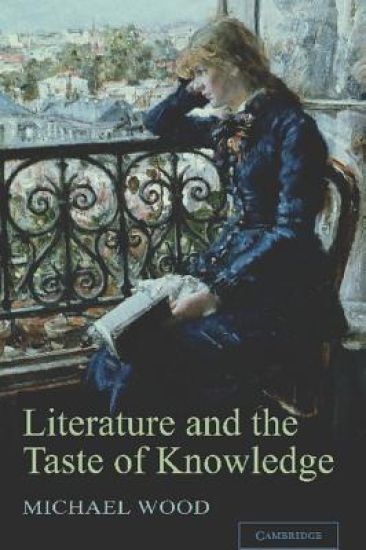
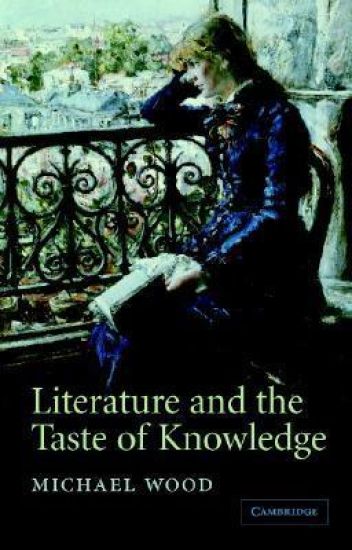
A lively study of the forms of knowledge in literature.
What does literature know? Does it offer us knowledge of its own or does it only interrupt and question other forms of knowledge? This 2005 book seeks to answer and to prolong these questions through the close examination of individual works and the exploration of a broad array of examples. Chapters on Henry James, Kafka, and the form of the villanelle are interspersed with wider-ranging inquiries into forms of irony, indirection and the uses of fiction, with examples ranging from Auden to Proust and Rilke, and from Calvino to Jean Rhys and Yeats. Literature is a form of pretence. But every pretence could tilt us into the real, and many of them do. There is no safe place for the reader: no literalist's haven where fact is always fact; and no paradise of metaphor, where our poems, plays and novels have no truck at all with the harsh and shifting world.
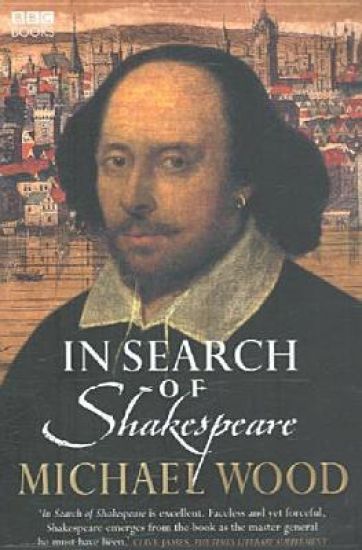
Almost 400 years after his death, William Shakespeare is still acclaimed as the world's greatest writer, and yet the man himself remains shrouded in mystery.
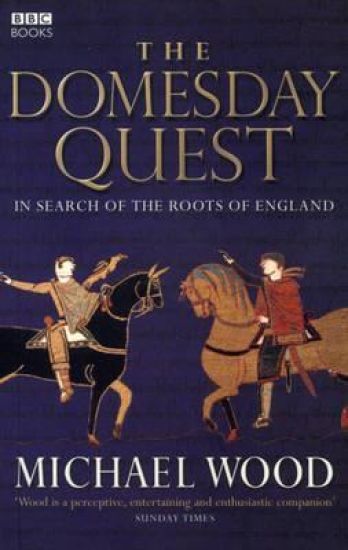
In 1086, Domesday Book, perhaps the most remarkable historical document in existence, was compiled. By skilful use of the Domesday record historian Michael Wood examines Norman society and the Anglo-Saxon, Roman, and even the Iron Age cultures that preceded it.
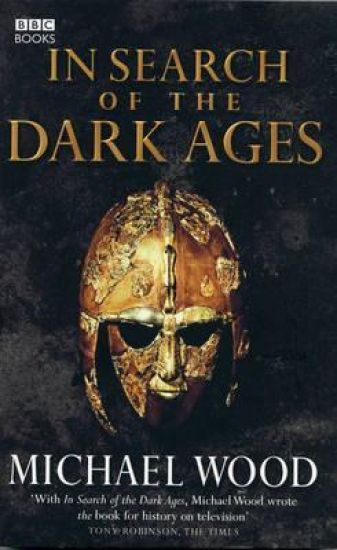
'With In Search of the Dark Ages, Michael Wood wrote the book for history on TV.' The Times 'Michael Wood is the maker of some of the best TV documentaries ever made on history and archaeology.' Times Literary Supplement