Kirjojen hintavertailu – 12 903 724 kirjaa ja 27 kauppaa
Kirjailija
Michael Woolcock
Kirjat ja teokset yhdessä paikassa: 8 kirjaa, julkaisuja vuosilta 2004–2023, suosituimpiin kuuluu God's People and the Seduction of Empire. Vertaile teosten hintoja ja tarkista saatavuus suomalaisista kirjakaupoista.
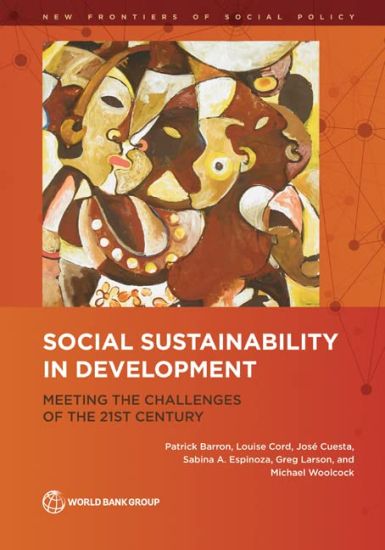
The overlapping crises of COVID-19, climate change, and rising levels of conflict are exacerbating global inequalities. This book offers a definition and framework for social sustainability, as well as examples and concrete guidance on how development can foster progress towards it.
Whether understood as a long-run historical process or an intentional political project, international development transforms not only societies and economies but also key ideas about how the world works and how problems should be solved. In this compelling book, Michael Woolcock demonstrates that achieving peace and prosperity for all is supremely contingent and often contentious: the means and ends of development are often perceived as alien, unjust, and disruptive, its benefits and costs unequally borne. Many development challenges are not technical problems amenable to an expert’s solution, but require extensive deliberation to find and fit context-specific responses. Woolcock insists that it is each generation’s challenge to find shared, legitimate, and durable solutions to the moral imperative to reduce human suffering while simultaneously redressing the challenges that development success (let alone failure) inexorably brings. This skillful guide will be essential reading for students and practitioners working in this complex field, and for anyone seeking to help “make the world a better place.”
Whether understood as a long-run historical process or an intentional political project, international development transforms not only societies and economies but also key ideas about how the world works and how problems should be solved. In this compelling book, Michael Woolcock demonstrates that achieving peace and prosperity for all is supremely contingent and often contentious: the means and ends of development are often perceived as alien, unjust, and disruptive, its benefits and costs unequally borne. Many development challenges are not technical problems amenable to an expert’s solution, but require extensive deliberation to find and fit context-specific responses. Woolcock insists that it is each generation’s challenge to find shared, legitimate, and durable solutions to the moral imperative to reduce human suffering while simultaneously redressing the challenges that development success (let alone failure) inexorably brings. This skillful guide will be essential reading for students and practitioners working in this complex field, and for anyone seeking to help “make the world a better place.”
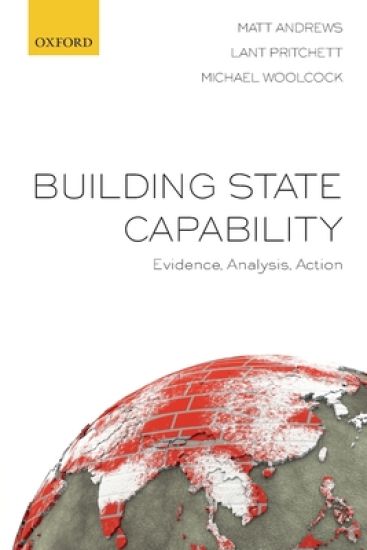
Governments play a major role in the development process, and constantly introduce reforms and policies to achieve developmental objectives. Many of these interventions have limited impact, however; schools get built but children don't learn, IT systems are introduced but not used, plans are written but not implemented. These achievement deficiencies reveal gaps in capabilities, and weaknesses in the process of building state capability. This book addresses these weaknesses and gaps. It starts by providing evidence of the capability shortfalls that currently exist in many countries, showing that many governments lack basic capacities even after decades of reforms and capacity building efforts. The book then analyses this evidence, identifying capability traps that hold many governments back - particularly related to isomorphic mimicry (where governments copy best practice solutions from other countries that make them look more capable even if they are not more capable) and premature load bearing (where governments adopt new mechanisms that they cannot actually make work, given weak extant capacities). The book then describes a process that governments can use to escape these capability traps. Called PDIA (problem driven iterative adaptation), this process empowers people working in governments to find and fit solutions to the problems they face. The discussion about this process is structured in a practical manner so that readers can actually apply tools and ideas to the capability challenges they face in their own contexts. These applications will help readers devise policies and reforms that have more impact than those of the past.
This is an open access title available under the terms of a CC BY-NC-ND 4.0 licence. It is free to read at Oxford Scholarship Online and offered as a free PDF download from OUP and selected open access locations. Governments play a major role in the development process, and constantly introduce reforms and policies to achieve developmental objectives. Many of these interventions have limited impact, however; schools get built but children don't learn, IT systems are introduced but not used, plans are written but not implemented. These achievement deficiencies reveal gaps in capabilities, and weaknesses in the process of building state capability. This book addresses these weaknesses and gaps. It starts by providing evidence of the capability shortfalls that currently exist in many countries, showing that many governments lack basic capacities even after decades of reforms and capacity building efforts. The book then analyses this evidence, identifying capability traps that hold many governments back - particularly related to isomorphic mimicry (where governments copy best practice solutions from other countries that make them look more capable even if they are not more capable) and premature load bearing (where governments adopt new mechanisms that they cannot actually make work, given weak extant capacities). The book then describes a process that governments can use to escape these capability traps. Called PDIA (problem driven iterative adaptation), this process empowers people working in governments to find and fit solutions to the problems they face. The discussion about this process is structured in a practical manner so that readers can actually apply tools and ideas to the capability challenges they face in their own contexts. These applications will help readers devise policies and reforms that have more impact than those of the past.
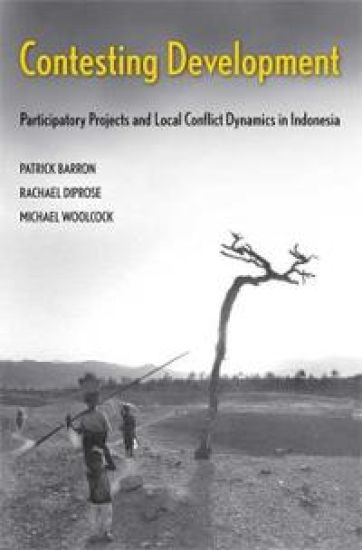
This pathbreaking book analyzes a highly successful participatory development program in Indonesia, exploring its distinctive origins and design principles and its impacts on local conflict dynamics and social institutions.
Measuring Social Capital: An Integrated Questionnaire is part of the World Bank Working Paper series. These papers are published to communicate the results of the Bank's ongoing research and to stimulate public discussion. The idea of social capital has enjoyed a remarkable rise to prominence in both the theoretical and applied social science literature over the last decade. While lively debate has accompanied that journey, thereby helping to advance our thinking and clarifying areas of agreement and disagreement, much still remains to be done. One approach that could help bring further advances for both scholars and practitioners is providing a set of empirical tools for measuring social capital. The purpose of this paper is to introduce such a tool with a focus on applications in developing countries. The tool aims to generate quantitative data on various dimensions of social capital as part of a larger household survey (such as the Living Standards Measurement Survey or a household income/expenditure survey). The paper also provides detailed guidance for the use and analysis of the data. In having better empirical information on social capital, the authors aim is to enable greater dialogue between researchers, policy makers, task managers, and poor people themselves, ultimately leading to the design and implementation of more effective poverty reduction strategies.