Kirjojen hintavertailu – 12 875 465 kirjaa ja 26 kauppaa

Kirjailija

Michael Wooldridge

Kirjat ja teokset yhdessä paikassa: 12 kirjaa, julkaisuja vuosilta 2004–2027, suosituimpiin kuuluu Life Lessons from Game Theory. Vertaile teosten hintoja ja tarkista saatavuus suomalaisista kirjakaupoista.

12 kirjaa

Kirjojen julkaisuvuodet: 2004–2027.

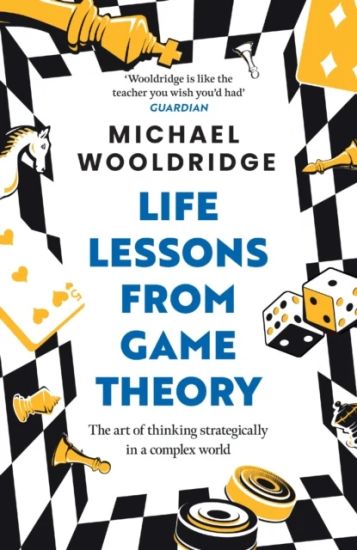
Life Lessons from Game Theory

Life Lessons from Game Theory

Michael Wooldridge

HEADLINE PUBLISHING GROUP
2027
pokkari
'Fresh, clever and playful . . . an absorbing book' MATT RIDLEY, AUTHOR OF THE ORIGINS OF VIRTUE 'A wonderful book' YOAV SHOHAM, STANFORD UNIVERSITY 'Michael explains the complex, strategic structures of our world with masterful beauty' - MILIND TAMBE, HARVARD UNIVERSITY 'Effortlessly covers a broad swath of core ideas in game theory, with a sprinkle of British humour' - EDITH ELKIND, NORTHWESTERN UNIVERSITY ______ A fascinating deep-dive into game theory, its history and its practical applications by award-winning expert on computer science and artificial intelligence. Most of us have some idea about game theory. Concepts like zero-sum games and the prisoner's dilemma crop up in films, novels and casual conversation, often as shorthand for cut-throat competition or inevitable betrayal. But game theory, the science behind these ideas, is widely misunderstood. All too often it's seen solely as the science of conflict and greed. In fact, this field has a lot to teach us about how to make a better world. It shows us just what it takes to enable cooperation and mutual benefit. This essential primer presents twenty one 'life lessons from game theory', which illustrate the key ideas in the field, and which are packed with real world examples: from overfishing in the Atlantic; to the Cuban Missile Crisis; to security measures at international airports; to advertising wars between major brands. This is a hopeful and practical book that highlights the value of game theory and provides a course correction for its integration into the real world.
Life Lessons from Game Theory

Life Lessons from Game Theory

Michael Wooldridge

HEADLINE PUBLISHING GROUP
2026
sidottu
Most of us have some idea about game theory. Concepts like zero-sum games and the prisoner's dilemma crop up in films, novels and casual conversation, often as shorthand for cut-throat competition or inevitable betrayal. But game theory, the science behind these ideas, is widely misunderstood. All too often it's seen solely as the science of conflict and greed. In fact, this field has a lot to teach us about how to make a better world. It shows us just what it takes to enable cooperation and mutual benefit. This essential primer presents twenty one 'life lessons from game theory', which illustrate the key ideas in the field, and which are packed with real world examples: from overfishing in the Atlantic; to the Cuban Missile Crisis; to security measures at international airports; to advertising wars between major brands. This is a hopeful and practical book that highlights the value of game theory and provides a course correction for its integration into the real world.
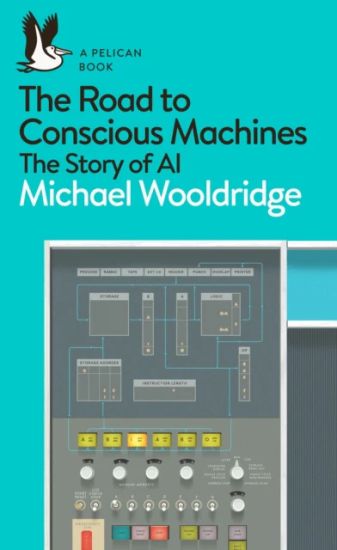
The Road to Conscious Machines

The Road to Conscious Machines

Michael Wooldridge

Pelican
2021
nidottu

Halvin toimitettuna 17,00 €

'A terrific book - essential reading for everyone seeking to make sense of Artificial Intelligence' Professor Sir Adrian Smith, Director and Chief Executive of the Alan Turing InstituteIn this myth-busting guide to AI past and present, one of the world's leading researchers shows why our fears for the future are misplaced. The ultimate dream of AI is to build machines that are like us: conscious and self-aware. While this remains a remote possibility, rapid progress in AI is already transforming our world. Yet the public debate is still largely centred on unlikely prospects, from sentient machines to dystopian robot takeovers. In this lively and clear-headed guide, Michael Wooldridge challenges the prevailing narrative, revealing how the hype distracts us from both the more immediate risks that this technology poses - from algorithmic bias to fake news - and the true life-changing potential of the field. The Road to Conscious Machines elucidates the discoveries of AI's greatest pioneers from Alan Turing to Demis Hassabis, and what today's researchers actually think and do.'Nobody understands the past, the present, the promise and the peril of this new technology better than Michael Wooldridge. The definitive account' Matt Ridley, author of The Rational Optimist'Effortlessly readable. The perfect guide to the history and future of AI' Tom Chivers, author of The AI Does Not Hate You
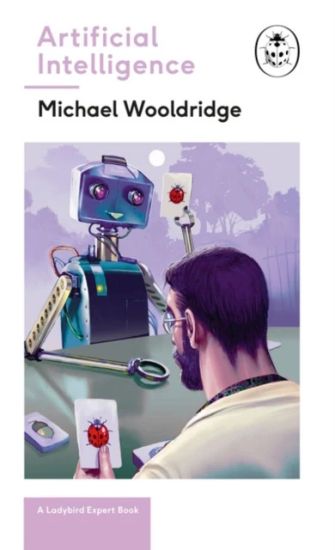
Artificial Intelligence

Artificial Intelligence

Michael Wooldridge

Michael Joseph Ltd
2018
sidottu

Halvin toimitettuna 18,90 €

THE PERFECT INTRODUCTION TO AI FROM THE PRESENTER OF THE 2023 ROYAL INSTITUTION CHRISTMAS LECTURE'I propose to consider the question, 'Can machines think?' Alan Turing (1950)Part of the ALL-NEW Ladybird Expert series. This book is for everyone living in the age of Artificial Intelligence. And this is an accessible and authoritative introduction to one of the most important conversations of our time . . . Written by computer scientist Michael Wooldridge, Artificial Intelligence chronicles the development of intelligent machines, from Turing's dream of machines that think, to today's digital assistants like Siri and Alexa. AI is not something that awaits us in the future. Inside you'll learn how we have come to rely on embedded AI software and what a world of ubiquitous AI might look like. What's inside?- The British mathematician Alan Turing- Can machines 'understand'?- Logical and Behavioural AI- The reality of AI today- AI tomorrow- And much more . . . For an adult readership, the Ladybird Expert series is produced in the same iconic small hardback format pioneered by the original Ladybirds. Each beautifully illustrated book features the first new illustrations produced in the original Ladybird style for nearly forty years.
Principles of Automated Negotiation

Principles of Automated Negotiation

Fatima Shaheen; Kraus Sarit; Michael Wooldridge

Cambridge University Press
2014
sidottu
With an increasing number of applications in the context of multi-agent systems, automated negotiation is a rapidly growing area. Written by top researchers in the field, this state-of-the-art treatment of the subject explores key issues involved in the design of negotiating agents, covering strategic, heuristic, and axiomatic approaches. The authors discuss the potential benefits of automated negotiation as well as the unique challenges it poses for computer scientists and for researchers in artificial intelligence. They also consider possible applications and give readers a feel for the types of domains where automated negotiation is already being deployed. This book is ideal for graduate students and researchers in computer science who are interested in multi-agent systems. It will also appeal to negotiation researchers from disciplines such as management and business studies, psychology and economics.
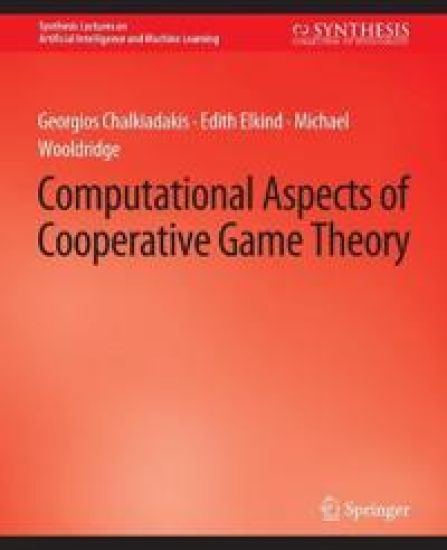
Computational Aspects of Cooperative Game Theory

Computational Aspects of Cooperative Game Theory

Georgios Chalkiadakis; Edith Elkind; Michael Wooldridge

Springer International Publishing AG
2011
nidottu
Cooperative game theory is a branch of (micro-)economics that studies the behavior of self-interested agents in strategic settings where binding agreements among agents are possible. Our aim in this book is to present a survey of work on the computational aspects of cooperative game theory. We begin by formally defining transferable utility games in characteristic function form, and introducing key solution concepts such as the core and the Shapley value. We then discuss two major issues that arise when considering such games from a computational perspective: identifying compact representations for games, and the closely related problem of efficiently computing solution concepts for games. We survey several formalisms for cooperative games that have been proposed in the literature, including, for example, cooperative games defined on networks, as well as general compact representation schemes such as MC-nets and skill games. As a detailed case study, we consider weighted voting games:a widely-used and practically important class of cooperative games that inherently have a natural compact representation. We investigate the complexity of solution concepts for such games, and generalizations of them. We briefly discuss games with non-transferable utility and partition function games. We then overview algorithms for identifying welfare-maximizing coalition structures and methods used by rational agents to form coalitions (even under uncertainty), including bargaining algorithms. We conclude by considering some developing topics, applications, and future research directions.
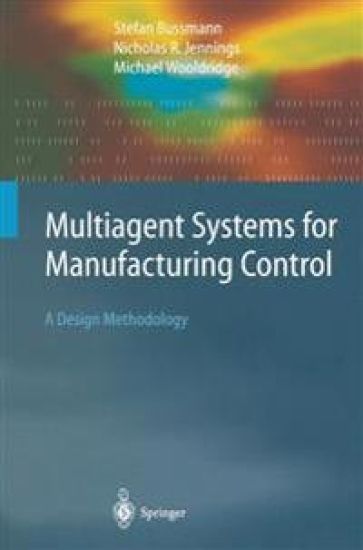
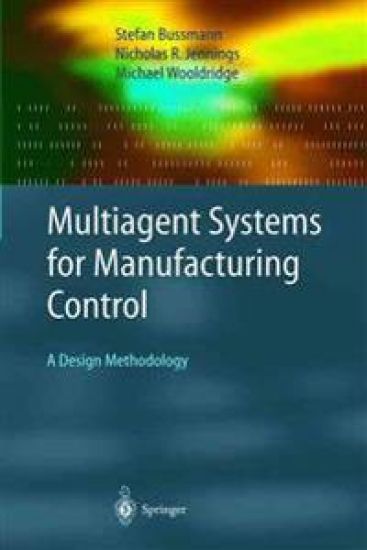
Multiagent Systems for Manufacturing Control

Multiagent Systems for Manufacturing Control

Stefan Bussmann; Nicolas R. Jennings; Michael Wooldridge

Springer-Verlag Berlin and Heidelberg GmbH Co. K
2010
nidottu
The ability of production companies to rapidly develop and deploy effective and efficient control systems is critical for success in the consumer-driven environment of contemporary manufacturing. This book presents a novel approach to the design of manufacturing control systems, based around the idea of agents, semiautonomous decision makers that cooperate to process goods and meet orders. This new methodology is DACS – Designing Agent-based Control Systems. Developed at DaimlerChrysler’s research labs in Berlin, DACS is the first methodology specifically produced for the design of agent-based control systems. Beginning with a detailed overview of agent technologies, manufacturing control, and design methodologies, the book explains the DACS methodology and illustrates it by way of detailed case studies. The book will be of interest to researchers and practitioners in agent systems, manufacturing control, and software methodologies.
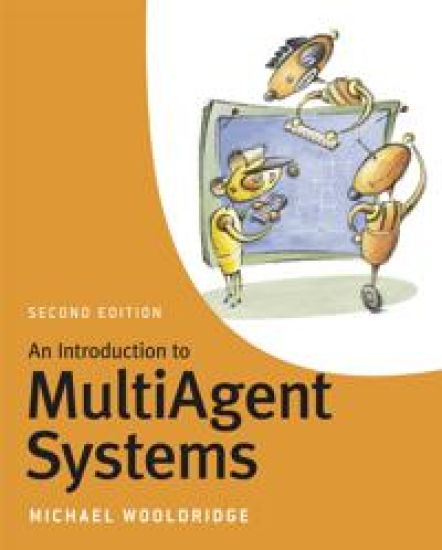
An Introduction to MultiAgent Systems

An Introduction to MultiAgent Systems

Michael Wooldridge

John Wiley Sons Inc
2009
nidottu

Halvin toimitettuna 63,90 €

The study of multi-agent systems (MAS) focuses on systems in which many intelligent agents interact with each other. These agents are considered to be autonomous entities such as software programs or robots. Their interactions can either be cooperative (for example as in an ant colony) or selfish (as in a free market economy). This book assumes only basic knowledge of algorithms and discrete maths, both of which are taught as standard in the first or second year of computer science degree programmes. A basic knowledge of artificial intelligence would useful to help understand some of the issues, but is not essential. The book’s main aims are: To introduce the student to the concept of agents and multi-agent systems, and the main applications for which they are appropriateTo introduce the main issues surrounding the design of intelligent agentsTo introduce the main issues surrounding the design of a multi-agent societyTo introduce a number of typical applications for agent technology After reading the book the student should understand: The notion of an agent, how agents are distinct from other software paradigms (e.g. objects) and the characteristics of applications that lend themselves to agent-oriented softwareThe key issues associated with constructing agents capable of intelligent autonomous action and the main approaches taken to developing such agentsThe key issues in designing societies of agents that can effectively cooperate in order to solve problems, including an understanding of the key types of multi-agent interactions possible in such systemsThe main application areas of agent-based systems
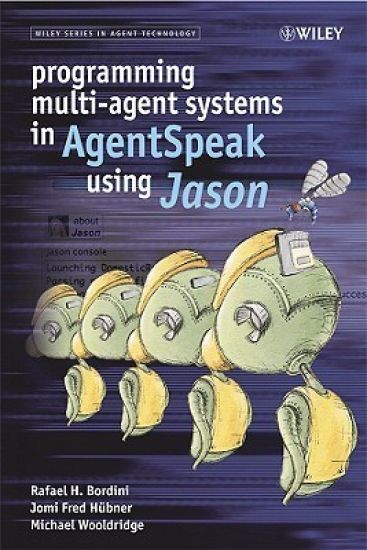
Programming Multi-Agent Systems in AgentSpeak using Jason

Programming Multi-Agent Systems in AgentSpeak using Jason

Rafael H. Bordini; Jomi Fred Hübner; Michael Wooldridge

John Wiley Sons Inc
2007
sidottu
Jason is an Open Source interpreter for an extended version of AgentSpeak – a logic-based agent-oriented programming language – written in Java™. It enables users to build complex multi-agent systems that are capable of operating in environments previously considered too unpredictable for computers to handle. Jason is easily customisable and is suitable for the implementation of reactive planning systems according to the Belief-Desire-Intention (BDI) architecture. Programming Multi-Agent Systems in AgentSpeak using Jason provides a brief introduction to multi-agent systems and the BDI agent architecture on which AgentSpeak is based. The authors explain Jason’s AgentSpeak variant and provide a comprehensive, practical guide to using Jason to program multi-agent systems. Some of the examples include diagrams generated using an agent-oriented software engineering methodology particularly suited for implementation using BDI-based programming languages. The authors also give guidance on good programming style with AgentSpeak. Programming Multi-Agent Systems in AgentSpeak using Jason Describes and explains in detail the AgentSpeak extension interpreted by Jason and shows how to create multi-agent systems using the Jason platform. Reinforces learning with examples, problems, and illustrations. Includes two case studies which demonstrate the use of Jason in practice. Features an accompanying website that provides further learning resources including sample code, exercises, and slides This essential guide to AgentSpeak and Jason will be invaluable to senior undergraduate and postgraduate students studying multi-agent systems. The book will also be of interest to software engineers, designers, developers, and programmers interested in multi-agent systems.
Multiagent Systems for Manufacturing Control

Multiagent Systems for Manufacturing Control

Stefan Bussmann; Nicolas R. Jennings; Michael Wooldridge

Springer-Verlag Berlin and Heidelberg GmbH Co. K
2004
sidottu
The ability of production companies to rapidly develop and deploy effective and efficient control systems is critical for success in the consumer-driven environment of contemporary manufacturing. This book presents a novel approach to the design of manufacturing control systems, based around the idea of agents, semiautonomous decision makers that cooperate to process goods and meet orders. This new methodology is DACS – Designing Agent-based Control Systems. Developed at DaimlerChrysler’s research labs in Berlin, DACS is the first methodology specifically produced for the design of agent-based control systems. Beginning with a detailed overview of agent technologies, manufacturing control, and design methodologies, the book explains the DACS methodology and illustrates it by way of detailed case studies. The book will be of interest to researchers and practitioners in agent systems, manufacturing control, and software methodologies.