Kirjojen hintavertailu – 12 859 824 kirjaa ja 27 kauppaa
Kirjailija
Michal Shamir
Kirjat ja teokset yhdessä paikassa: 9 kirjaa, julkaisuja vuosilta 2000–2024, suosituimpiin kuuluu The Elections in Israel 2009. Vertaile teosten hintoja ja tarkista saatavuus suomalaisista kirjakaupoista.
Forty years after becoming an independent state, Israel is still involved in deadly strife with many of its Arab neighbors and with the Palestinians under its military control. The protracted Arab-Israeli conflict is one of the most fundamental features of the Israeli experience; it overshadows economic and social decisions, and often sets the poli
Forty years after becoming an independent state, Israel is still involved in deadly strife with many of its Arab neighbors and with the Palestinians under its military control. The protracted Arab-Israeli conflict is one of the most fundamental features of the Israeli experience; it overshadows economic and social decisions, and often sets the poli
The Elections in Israel--2003 brings together leading Israeli and North American social scientists and their state-of-the-art, in-depth analysis of the 2003 Israeli national elections. These elections returned Ariel Sharon and the Likud to power amid one of the bloodiest rounds of conflict between Israel and the Palestinians and a severe economic downturn in Israel. Contributors analyze the electoral behavior of the voters as a whole and various subgroups, highlighting social cleavages and identity, as well as issues and other strategic considerations. Three chapters analyze in detail the Arab, the national-religious, and the "Russian" vote. The 2003 elections saw Israel's return to the family of parliamentary nations after it experimented with the direct election of the prime minister from 1996 through 2001. The impact of the adoption and repeal of this unique Israeli system of government is another major topic covered in this volume, and several contributions explore the impact of these changes upon the electorate, the party system, and party financing. Other unusual features of the 2003 elections were the low turnout levels among Jewish and Arab voters; political moves to disqualify Arab candidates and lists from running for office, which were overruled by the Supreme Court of Israel; the collapse of the left, the spectacular showing of the centrist Shinui party, and the dominant status of the Likud in the Knesset and in Israeli politics. Through its focus on the 2003 elections, this volume also illuminates developments and changes in Israeli society and politics. Many of these developments--multiculturalism, changes in social stratification, the growing role of the judiciary and of the media, and political reforms--characterize other Western democracies as well, and these are discussed from a comparative perspective. The Elections in Israel--2003 will be of particular interest to those concerned with politics in Israel as well as those concerned with comparative politics and elections in general.
Several dramatic events preceded the elections to the Seventeenth Knesset on March 28, 2006, beginning with the unilateral withdrawal from Gaza in August 2005 and its attendant and unprecedented removal of Jewish settlements and settlers, followed by major shifts among and within the various political parties. Most dramatic was the split in Likud when Prime Minister Ariel Sharon decided to form a new party, Kadima, leading to the breakup of the Likud party that Sharon had formed in 1973. This volume charts the 2006 elections.
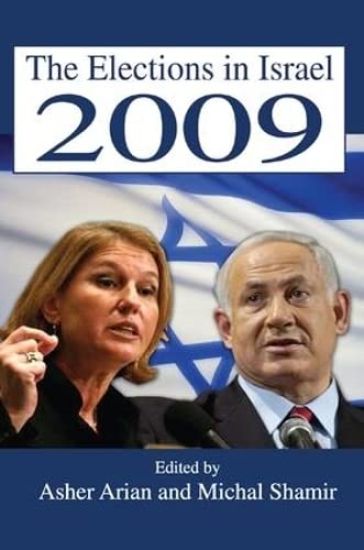
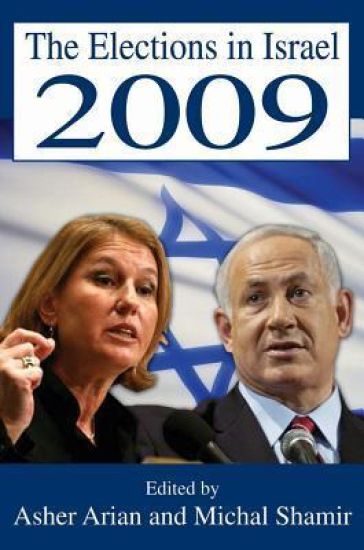
The elections to the 18th Knesset (legislature of Israel) were held on February 10, 2009, almost three years after the elections to the 17th Knesset and approximately twenty months before the original date set for them to be held. The elections are best understood in the context of the wars that were at each end of Ehud Olmert's government tenure, corruption scandals involving the prime minister, and the failure of Tzipi Livni, the newly elected head of the ruling center party, Kadima to form a new coalition following Olmert's resignation. The election campaign of 2009 began with the resignation of Ehud Olmert in the shadow of his corruption scandals and issues of integrity and clean government. This was followed by the world financial crisis, which directed attention towards the economic dimension and performance of the candidates. On the face of it, the campaign was cut short when military action began in Gaza. Still, the election was on the minds of candidates, and the question of who can best ensure security prevailed in the campaign. It becamepersonalized and focused on the candidates: the two candidates who had once headed the government and aspired to return, Benjamin Netanyahu and Ehud Barak, and the chairperson of Kadima, Tzipi Livni, who was running for the first time as head of a party. The Elections in Israel 2009 will be of particular interest to those concerned with comparative politics and elections in an open society. This volume is the latest in the series begun in 1969.
The elections to the 18th Knesset (legislature of Israel) were held on February 10, 2009, almost three years after the elections to the 17th Knesset and approximately twenty months before the original date set for them to be held. The elections are best understood in the context of the wars that were at each end of Ehud Olmert's government tenure, corruption scandals involving the prime minister, and the failure of Tzipi Livni, the newly elected head of the ruling center party, Kadima to form a new coalition following Olmert's resignation. The election campaign of 2009 began with the resignation of Ehud Olmert in the shadow of his corruption scandals and issues of integrity and clean government. This was followed by the world financial crisis, which directed attention towards the economic dimension and performance of the candidates. On the face of it, the campaign was cut short when military action began in Gaza. Still, the election was on the minds of candidates, and the question of who can best ensure security prevailed in the campaign. It becamepersonalized and focused on the candidates: the two candidates who had once headed the government and aspired to return, Benjamin Netanyahu and Ehud Barak, and the chairperson of Kadima, Tzipi Livni, who was running for the first time as head of a party. The Elections in Israel 2009 will be of particular interest to those concerned with comparative politics and elections in an open society. This volume is the latest in the series begun in 1969.
Several dramatic events preceded the elections to the Seventeenth Knesset on March 28, 2006, beginning with the unilateral withdrawal from Gaza in August 2005 and its attendant and unprecedented removal of Jewish settlements and settlers, followed by major shifts among and within the various political parties. Most dramatic was the split in Likud when Prime Minister Ariel Sharon decided to form a new party, Kadima, leading to the breakup of the Likud party that Sharon had formed in 1973. This volume charts the 2006 elections.
The Elections in Israel--2003 brings together leading Israeli and North American social scientists and their state-of-the-art, in-depth analysis of the 2003 Israeli national elections. These elections returned Ariel Sharon and the Likud to power amid one of the bloodiest rounds of conflict between Israel and the Palestinians and a severe economic downturn in Israel. Contributors analyze the electoral behavior of the voters as a whole and various subgroups, highlighting social cleavages and identity, as well as issues and other strategic considerations. Three chapters analyze in detail the Arab, the national-religious, and the "Russian" vote. The 2003 elections saw Israel's return to the family of parliamentary nations after it experimented with the direct election of the prime minister from 1996 through 2001. The impact of the adoption and repeal of this unique Israeli system of government is another major topic covered in this volume, and several contributions explore the impact of these changes upon the electorate, the party system, and party financing. Other unusual features of the 2003 elections were the low turnout levels among Jewish and Arab voters; political moves to disqualify Arab candidates and lists from running for office, which were overruled by the Supreme Court of Israel; the collapse of the left, the spectacular showing of the centrist Shinui party, and the dominant status of the Likud in the Knesset and in Israeli politics. Through its focus on the 2003 elections, this volume also illuminates developments and changes in Israeli society and politics. Many of these developments--multiculturalism, changes in social stratification, the growing role of the judiciary and of the media, and political reforms--characterize other Western democracies as well, and these are discussed from a comparative perspective. The Elections in Israel--2003 will be of particular interest to those concerned with politics in Israel as well as those concerned with comparative politics and elections in general.
This book probes the anatomy of public opinion by analyzing its components, their interrelations and dynamics. Building upon recent work in communication, social psychology, social cognition, and political science, Jacob Shamir and Michal Shamir approach public opinion as a multidimensional concept with a multitude of expressions. Public opinion is not comprised merely of a distribution of attitudes obtained in the polls. It also expresses and is expressed by a climate of opinion, expectations, public speeches and political actions, including aggregate distributions of individual values, beliefs, and attitudes. Often these different facets coincide, but they may also diverge. Public opinion can evolve along different dynamic paths; the nature of the information environment is a major factor in determining which dynamic path will be set in motion. While social information and social construction are important in public opinion processes, major information events play a central role in moving public opinion and in constraining processes of social construction. In this book these postulates are explored on the micro and macro levels, but the focus is on public opinion dynamics at the system level: how the facets of public opinion respond to the variability in information technology. This is approached from different directions and with different parameters. The authors use as their case study Israeli public opinion on issues of peace and terrorism during the Intifada. The Anatomy of Public Opinion will form an important part in the body of study on the role of information in public opinion processes. It will be of interest to students and scholars of political science, communication, public opinion, and political psychology. Jacob Shamir is Lecturer of Communication and Journalism, The Hebrew University, Jerusalem. Michal Shamir is Associate Professor of Political Science, Tel Aviv University.