Kirjailija
Michel de Montaigne
Kirjat ja teokset yhdessä paikassa: 159 kirjaa, julkaisuja vuosilta 1973–2026, suosituimpiin kuuluu Essais De Michel De Montaigne. Vertaile teosten hintoja ja tarkista saatavuus suomalaisista kirjakaupoista.
159 kirjaa
Kirjojen julkaisuvuodet: 1973–2026.

Zweihundert Jahre vor Goethe reist Michel de Montaigne nach Italien - mit neugierigem und staunendem Blick hält er 17 Monate und 8 Tage lang die Zustände und kulturellen Kuriositäten im Europa des 16. Jahrhunderts fest - ein Lesevergnügen nicht nur für Liebhaber von Reiseberichten.
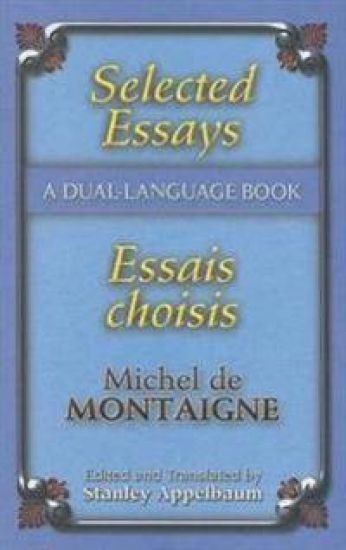
Selected Essays/Essais Choisis
Michel de Montaigne; Stanley Appelbaum
Dover Publications Inc.
2007
nidottu
Montaigne's Essays V2: In Three Books With Notes And Quotations
Michel De Montaigne
KESSINGER PUBLISHING, LLC
2007
sidottu
Montaigne's Essays V2: In Three Books With Notes And Quotations
Michel De Montaigne
KESSINGER PUBLISHING, LLC
2007
nidottu

A Handbook to the Essays of Michel De Montaigne
Michel De Montaigne; George B. (TRN) Ives
Kessinger Pub
2005
sidottu
A Handbook to the Essays of Michel De Montaigne
Michel De Montaigne; George B. (TRN) Ives
Kessinger Pub
2005
pokkari
Essays of Michel De Montaigne Parts Two and Three
Michel de Montaigne
KESSINGER PUBLISHING CO
2005
pokkari
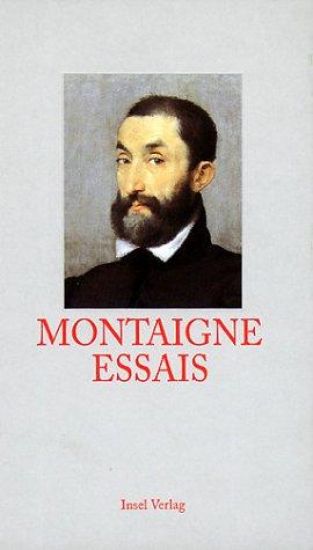
Montaigne hat seine Essays nicht thematisch geordnet; sie stehen vielmehr unverbunden hintereinander. Auch die Argumentation ist oft sprunghaft, da es Montaigne weniger auf Systematik als vielmehr auf eine universale Schau seiner Sicht auf die Welt und ihre Zusammenhänge ankommt. Montaigne schildert einen ganzen Kosmos von sittlichen Betrachtungen. Für die Beantwortung seiner oft moralischen Fragen kann er sich auf seine hervorragenden Kenntnisse literarischer und philosophischer Schriften stützen. Gleichzeitig finden sich zahlreiche Alltagsbeobachtungen und Skurrilitäten, die stets in übergeordnete Zusammenhänge seiner dem Skeptizismus nahe stehenden Weltanschauung eingebunden werden. Die Überschriften seiner Essays spiegeln bereits inhaltliche Programmpunkte: Von der Eitelkeit, Über das Gewissen oder Von der Eitelkeit der Worte. Nichts bleibt von seinen Beobachtungen ausgeschlossen; die Trunksucht wird ebenso erörtert wie die Möglichkeiten der Kindererziehung. Für Montaigne steht der ganze Mensch im Vordergrund. Erst durch die Betrachtung seines Inneren und die dafür nötige Aufnahmebereitschaft kann er sich von allen äußeren Widrigkeiten erholen und zu sich selbst finden. Gerade indem Montaigne auf moralische Belehrungen verzichtet und an ihre Stelle seine persönlichen Erfahrungen setzt, gewinnen seine Aussagen Überzeugungskraft und eine gleich bleibende Aktualität. Indem er etwa seinen unzureichenden Stil, seine fehlende Anmut der Darstellung beklagt, weist er auf die grundsätzliche Relativität von Aussagen hin. Zu seinem selbst gewählten und oft zitierten Wahlspruch wurde daher die Frage: >>Was weiß ich?
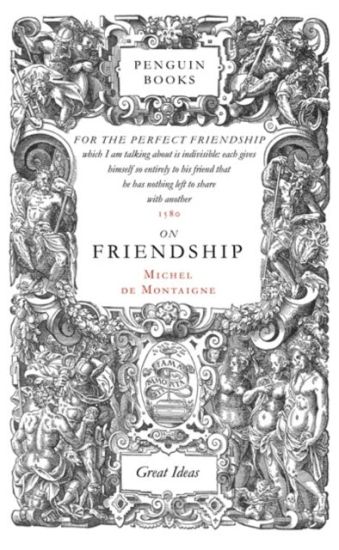
Throughout history, some books have changed the world. They have transformed the way we see ourselves - and each other. They have inspired debate, dissent, war and revolution. They have enlightened, outraged, provoked and comforted. They have enriched lives - and destroyed them. Now Penguin brings you the works of the great thinkers, pioneers, radicals and visionaries whose ideas shook civilization, and helped make us who we are. Michel de Montaigne was the originator of the modern essay form; in these diverse pieces he expresses his views on relationships, contemplates the idea that man is no different from any animal, argues that all cultures should be respected, and attempts, by an exploration of himself, to understand the nature of humanity.
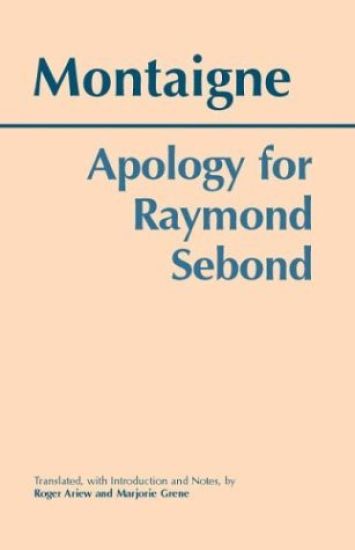
Under the pretense of defending an obscure treatise by a Catalan theologian, Sebond, Montaigne attacks the philosophers who attempt rational explanations of the universe and argues for a skeptical Christianity based squarely on faith rather than reason. The result is the Apology for Raymond Sebond, a classic of Counter-Reformation thought and a masterpiece of Renaissance literature. This new translation by Roger Ariew and Marjorie Grene achieves both accuracy and fluency, conveying at once the nuances of Montaigne’s arguments and his distinctive literary style.
Under the pretense of defending an obscure treatise by a Catalan theologian, Sebond, Montaigne attacks the philosophers who attempt rational explanations of the universe and argues for a skeptical Christianity based squarely on faith rather than reason. The result is the Apology for Raymond Sebond , a classic of Counter-Reformation thought and a masterpiece of Renaissance literature. This new translation by Roger Ariew and Marjorie Grene achieves both accuracy and fluency, conveying at once the nuances of Montaignes arguments and his distinctive literary style.

Describing his collection of Essays as ‘a book consubstantial with its author’, Montaigne identified both the power and the charm of a work which introduces us to one of the most attractive figures in European literature. A humanist, a sceptic, an acute observer of himself and others, he reflects the great themes of existence through the prism of his own self-consciousness. Apparent in every line he wrote, his virtues of tolerance, moderation and disinterested inquiry amount to an undeclared manifesto for the Enlightenment, whose prophet he is. This complete edition of his works supplements the Essays with travel diaries and letters, thereby completing the portrait of a true Renaissance man.
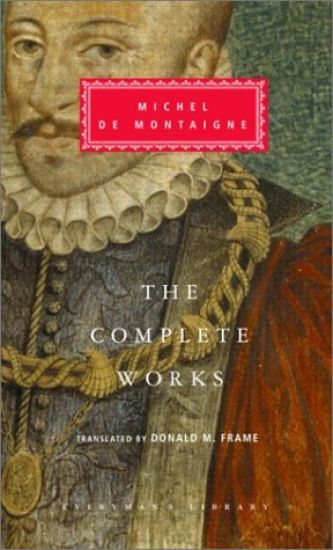
The Complete Works of Michel de Montaigne: Introduction by Stuart Hampshire
Michel de Montaigne
Everyman's Library
2003
sidottu
A stunning collector's hardcover edition of Michel de Montaigne, the father of the essay. Translated by Donald M. Frame with an Introduction by Stuart Hampshire. Humanist, skeptic, acute observer of himself and others, Michel de Montaigne (1533-92) was the first to use the term "essay" to refer to the form he pioneered, and he has remained one of its most famous practitioners. He reflected on the great themes of existence in his wise and engaging writings, his subjects ranging from proper conversation and good reading, to the raising of children and the endurance of pain, from solitude, destiny, time, and custom, to truth, consciousness, and death. Having stood the test of time, his essays continue to influence writers nearly five hundred years later. Also included in this complete edition of his works are Montaigne's letters and his travel journal, fascinating records of the experiences and contemplations that would shape and infuse his essays. Montaigne speaks to us always in a personal voice in which his virtues of tolerance, moderation, and understanding are dazzlingly manifest. Donald M. Frame's masterful translation is widely acknowledged to be the classic English version. Everyman's Library pursues the highest production standards, printing on acid-free cream-colored paper, with full-cloth cases with two-color foil stamping, decorative endpapers, silk ribbon markers, European-style half-round spines, and a full-color illustrated jacket. Everyman's Library Classics include an introduction, a select bibliography, and a chronology of the author's life and times.