Kirjojen hintavertailu – 12 859 827 kirjaa ja 27 kauppaa

Kirjailija

Michel Fabre

Kirjat ja teokset yhdessä paikassa: 14 kirjaa, julkaisuja vuosilta 1992–2024, suosituimpiin kuuluu Richard Wright. Vertaile teosten hintoja ja tarkista saatavuus suomalaisista kirjakaupoista.

14 kirjaa

Kirjojen julkaisuvuodet: 1992–2024.

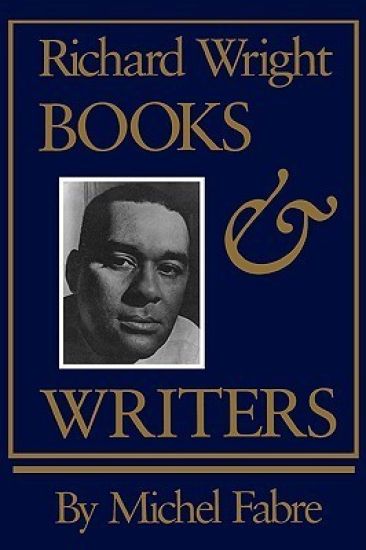
Richard Wright

Richard Wright

Michel Fabre

University Press of Mississippi
2008
nidottu
This bibliography of Richard Wright's library and reading serves as a key to understanding the development, philosophies, and aesthetics of this great writer and provides accurate information for the study of intertextuality in his works. Richard Wright, born in Mississippi in 1908, was largely self-taught. His only formal schooling was high school. As he recounts in Black Boy, he used a white friend's library card at the Memphis Public Library, where blacks were not allowed. That books were almost ""living companions"" for Wright is easily understandable. Through books and, later, through relationships with writers, he broadened his perspectives, his understanding of society, and the very craft of writing. In the history of Richard Wright, perhaps more than with other writers, a knowledge of what he actually read, and of what authors he preferred, is essential in explaining his intellectual development. Michel Fabre, Wright's biographer and foremost Wright scholar, details the volumes in Wright's library and the facts of Wright's reading habits. This listing of books that formed and influenced him includes second-hand books he bought while living in extreme poverty in Chicago, some borrowed books never returned, books purchased in New York and Paris, books Wright deemed required reading for a growing novelist, gift books, and others in a comprehensive list on such subjects as contemporary American literature, classic European works, criminology, psychiatry, and social sciences. In compiling this listing Fabre goes beyond the actual contents of Wright's library, for he includes also titles drawn from references in Wright's works and from accounts of people who knew him and his reading habits. Included also is an appendix that collects for the first time reviews written by Wright, his prefaces, forewords, and blurbs. They show his appreciation of diverse genres and styles, although his ideological commitment remained the same. In them one sees Wright as an author ready to help younger writers, black and white, American and French.
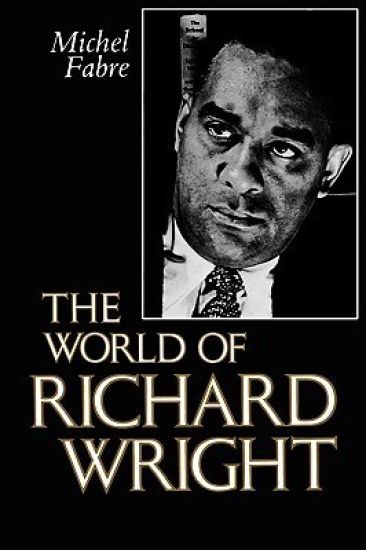
The World of Richard Wright

The World of Richard Wright

Michel Fabre

University Press of Mississippi
2007
nidottu
Richard Wright, the Mississippi-born black writer, saw himself as ""an outsider between two cultures,"" a man searching. In these twelve essays written over the last two decades Michel Fabre, Wright's biographer, follows Wright's search in an investigation of the novelist's life and career. Although the essays were not originally intended as a collection, their organization her underscores Wright's literary and intellectual development. The essays range in time from a bibliographical study of Wright's first scanty personal library to his interest at the end of his life in Negritude and African writing. Other essays probe his first use of the Gothic and his subsequent first efforts at ""naturalistic"" fiction, in which he moved away from the ideology of the American Communist Party, to which he belonged for some ten years after 1933, to more personal modes of self-expression. Also explored within these pieces are Wright's use of the psychological approach, his interest in the link between sex and racism, and his obsessive exploration of the unconscious determinants in so-called criminal behavior. One essay examines Wright's poetry from the days when he wrote ideological poems published in New Masses and other radical magazines, to his later composition of blues, to his final mastery of the Japanese poetic form of haiku. Included is an interview with Simone De Beauvoir, who discusses her friendship with Wright, and in an essay never before published, Fabre explores the relationship of Wright--""as much as soon of Mississippi as is William Faulkner""--not only to the South but to his illiterate sharecropper father and Wright's use of both as negative metaphors in his work. Fabre also delves into Wright's view of his past and his use of it in an ideological construction that asserts, in the best Afro-American literary tradition, the development of a Promethean will towards education and literacy. The final essays address Wright's career and intellectual development during the last sixteen years of his life, spent as an American expatriate in Paris. A final essay focuses on Wright's turn at the end of his life to nofiction and his introduction of African readers to the complexities of the racial situation in the United States and the aims of the Civil Rights Movement then taking place in the U. S.
Qu'est-Ce Que Problematiser?

Qu'est-Ce Que Problematiser?

Michel Fabre

Librarie Philosophique J. Vrin
2017
nidottu
Le but de cet ouvrage sera de tenter, par-dela les usages communs et souvent maladroits du vocabulaire du probleme, une definition rigoureuse de la notion de problematisation qui en devoile les enjeux philosophiques. A quoi reconnait-on que l'on a affaire a une problematisation veritable? Nous proposerons quatre criteres. Problematiser c'est: a) l'examen d'une question; b) par une pensee articulant donnees et conditions du probleme, dans un cadre determine; c) par une pensee qui se surveille elle-meme; d) dans une perspective heuristique. L'etude de Menon, ce contre-exemple instructif et celle de la Logique. Theorique de l'enquete de John Dewey, permettent de preciser les caracteristiques de la demarche de problematisation ainsi que son interet.
Education Et Humanisme: Lecture de John Dewey

Education Et Humanisme: Lecture de John Dewey

Michel Fabre

Librarie Philosophique J. Vrin
2015
nidottu
John Dewey (1859-1952) est l'auteur d'une oeuvre considerable qui ne se reduit pas a la pedagogie, meme si la problematique educative constitue le fil conducteur de sa pensee. A l'instar des grandes philosophies modernes, il deploie une ontologie, une logique, une ethique, une esthetique et une politique. Dewey, des le debut du XXe siecle, s'efforce de penser la problematicite du monde lorsque les reperes des societes traditionnelles et meme ceux de la modernite s'estompent. Il milite pour une secularisation integrale de la pensee et de la culture, mais sans reductionnisme. Il entend debarrasser la pensee des dualismes qui l'encombrent et s'efforce de proposer une logique d'enquete susceptible de reguler l'autoquestionnement de la societe. Il propose une nouvelle vision de l'education comme praxis, n'ayant d'autre fin qu'elle-meme et definit les principes d'une pedagogie de l'experience qui soit en meme temps une entree dans la culture. Il elabore un nouvel humanisme fonde sur l'idee d'ouverture de l'experience, dans une visee de perfectionnement, respectueuse du pluralisme des valeurs. Sa pensee politique recuse le communisme, le capitalisme et la technocratie et esquisse un liberalisme radical qui fait retour aux fondamentaux democratiques du liberalisme politique. Son oeuvre culmine dans la definition d'un bien-vivre qui synthetise le religieux sans la religion et le beau sans les beaux-arts sous les symboles de la grace et de l'intensite. Cet ouvrage propose une approche a la fois genetique et structurale de l'ensemble de la philosophie de Dewey et particulierement des ouvrages majeurs, dont certains n'ont pas encore ete traduits en francais. Il s'efforce de dissiper quelques malentendus sur le pragmatisme, trop souvent incompris et caricature. Il tente un questionnement des textes a partir des preoccupations educatives et plus largement philosophiques contemporaines. Comment Dewey repond-il aux questionnements d'un monde problematique qui est desormais le notre et qu'il avait deja largement anticipe?
Philosophie Et Pedagogie

Philosophie Et Pedagogie

Michel Fabre

Librarie Philosophique J. Vrin
2009
nidottu
Le vocabulaire du probleme et de la problematisation envahit le champ de l'education et de la formation. On s'en rejouirait s'il s'agissait bien de conjuguer apprentissage et pensee, selon le souhait de Dewey. Malheureusement, une sorte de malediction affecte les bonnes idees qui ne manquent pas de se denaturer au fur et a mesure qu'elles se repandent, au point de susciter l'indignation des peres la rigueur, prompts a jeter le bebe avec l'eau du bain. Il importe donc de poser la question dans sa radicalite: qu'est-ce qu'un probleme? Que veut dire problematiser? On s'efforcera de retracer la genese plurielle du paradigme du probleme a travers les philosophies de John Dewey, de Gaston Bachelard, de Gilles Deleuze et de Michel Meyer qui toutes s'efforcent d'imaginer des alternatives au dilemme de Menon et a ses avatars modernes. Comment penser la recherche et l'apprentissage autrement que comme reminiscence? Quel role y joue le questionnement, la problematisation? Peut-on imaginer - contre toutes les theories de la connaissance de la modernite - une epistemologie, voire une logique de la decouverte, de l'invention? Et une pedagogie du probleme? Car epistemologie et pedagogie s'averent inseparables des le debut, comme Socrate l'avait bien vu, dans la lecon du Menon. A travers ces etudes philosophiques, il s'agira d'eclairer si possible les questions pedagogiques ou didactiques qui se posent aujourd'hui a l'enseignant ou au formateur en mal de problematisation.
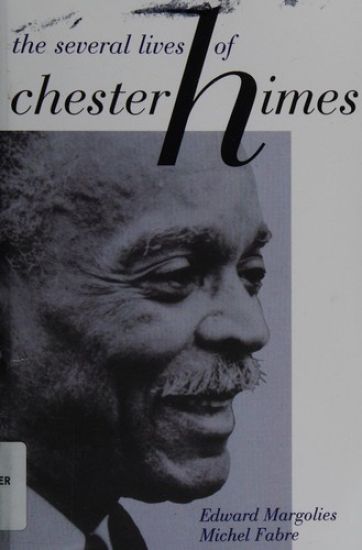
The Several Lives of Chester Himes

The Several Lives of Chester Himes

Edward Margolies; Michel Fabre

University Press of Mississippi
2008
nidottu

Halvin toimitettuna 35,70 €

A fascinating blend of hatred and tenderness, of hard-boiled realism and generous idealism colors the writings of Chester Himes. How did this gifted son of the respectable southern black family become a juvenile delinquent? How did he acquire self-esteem and a new sense of identity by writing short stories while in the Ohio state penitentiary? Chester Himes (1909-1984) had literary genius. Yet in his native country, he is recalled more as the author of successful detective novels (Cotton Comes to Harlem) than as a practitioner of the art of fiction. The genesis of his books is his own autobiography. In If He Hollers, Let Him Go and in the fratricidal shootout of his black detectives Grave Digger and Coffin Ed in Plan B he was an unsparing witness to our changing times. His painful experiences in American indelibly marked his fiction, which is filled with reflections on his difficult relationships, especially with women--his fair-complexioned mother, his African-American first wife Jean, his many white lovers, and finally his English wife Leslie. His career was beset by controversy, and he left America to live on the Left Bank in the colony of expatriates and as a colleague of Richard Wright. Eventually, he settled in Spain. Drawn from his letters, notebooks, memoirs, and his fiction, this straightforward account of Hime's varied, episodic life attempts to trace the origins of his significant literary gift. It details the socioeconomic, familial, and cultural background which fed his ambivalent views on race in America. Hime's Deep South childhood, his adolescence in the Midwest, his young manhood in prison (1928-1936), his years as a menial laborer, his struggles as an author in California and New York City, and finally his glory days as an expatriate and celebrity in France and Spain are plumbed deeply for their effects upon his works. This is the bittersweet story of a man who found salvation in writing. Edward Margolies is Professor Emeritus, English, and American Studies, College of Staten Island, City University of New York. Michel Fabre is Professor Emeritus, American Studies, Universite de la Sorbonne.
The French Critical Reception of African-American Literature
The first real reviewing of African-American literature in France began in 1844, when audiences welcomed the romantic dramas of Victor Sejour. With the passing of time, African-American works have become increasingly known in France, where they are now translated almost as soon as they come out in the United States. This bibliography charts the French critical response to African-American literature from the 19th century to 1970. The bulk of the items selected were published between 1900 and 1970, and all were printed in French. The selection has been limited to responses to the works of creative writers, along with some important and influential autobiographical writings. Entries are arranged in chronological sections, and then alphabetically within each section. Annotations summarize the critical views expressed in the work cited. As a whole, the bibliography is a valuable guide to changing French critical attitudes toward African-American literature and is an index to the growing popularity of African-American literature in France.
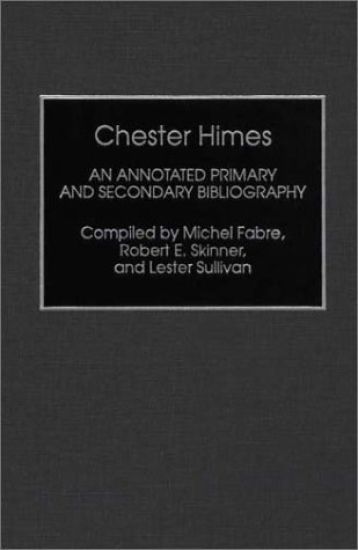
Chester Himes

Chester Himes

Michel Fabre; Robert E. Skinner

Greenwood Press
1992
sidottu
A contemporary of Richard Wright, James Baldwin, and Ralph Ellison, Chester Himes wrote with perhaps more angry fire than his celebrated colleagues about black protagonists doomed by white racisim and self-hate. Among his writings is a series of hard-boiled detective novels featuring black detectives and a host of Harlem hustlers. The acclaimed Harlem series and much of his later work were written in France where Himes lived as an American expatriate from 1953 until his death in 1984. Exhaustively researched and well constructed, this comprehensive bibliography clears up mysteries and dispels misconceptions about the extent of Himes's work and its critical reception. The primary bibliography identifies all United States, French, and British first and second editions of Himes's novels, the first appearances in periodicals of his short stories, his collected fiction, and his magazine and book-length nonfiction pieces. It includes manuscript materials and a filmography of adaptations of his novels. The annotated secondary bibliography provides a key to the biographical and critical work produced about Himes in the United States, Britain, and France since the late 1940s. Chronologically organized, it is indexed by author and by titles of the relevant Himes's works. The volume's introduction outlines Himes's life and career, discusses gaps in his writing history, and attempts to provide a more realistic picture of his critical reception in the United States based on an analysis of the secondary bibliography rather than on previous views influenced by Himes's own negative perceptions. A chronology of Himes's career is also included, and the volume's preface explains the organization of the bibliography and how to use it. This work will be of special value to university libraries offering programs in popular culture, American literature, and African American studies as well as to individual scholars and researchers in these fields and scholars and collectors interested particularly in Himes and his works.