Kirjojen hintavertailu – 12 903 725 kirjaa ja 27 kauppaa

Kirjailija

Michel Tremblay

Kirjat ja teokset yhdessä paikassa: 51 kirjaa, julkaisuja vuosilta 1975–2026, suosituimpiin kuuluu Virus Life in Diagrams. Vertaile teosten hintoja ja tarkista saatavuus suomalaisista kirjakaupoista.

51 kirjaa

Kirjojen julkaisuvuodet: 1975–2026.

The Driving Force

The Driving Force

Michel Tremblay

Talonbooks
2006
pokkari
In Act 1, Claude, 55, visits his father Alex, 77, in an Alzheimer's ward, intimately tending to his bodily functions and needs while hopelessly trying to reach his silent, vacant father with a series of monologues--to settle old scores and misunderstandings between them. In an astonishing and eerie reversal of roles, in Act 2 it is Alex who visits his son Claude in the same Alzheimer's ward and it is Alex's turn to rant and rail at what he perceives to be his mute son's contempt for his own working class life. With a cruel and disconsolate irony, we come to see that his father's lifelong attempt to mock and censure Claude's work as consisting of nothing but mediocre, misrepresentative lies, has been the very driving force behind Claude's compulsion to continue to reveal the "truth" of human relationships as he so desperately wants his father to understand it.

Some Night My Prince Will Come

Some Night My Prince Will Come

Michel Tremblay

Talonbooks
2004
pokkari
An evening at the opera spills out onto the street and into an odyssey through Montreal by night. The narrator, both innocent and cynical, rushes headlong down what appears to be the road to ruin--or perhaps merely to the loss of his virginity. We follow him from a cafe called El Cortijo (Spanish for a country house with a farm building attached) to a nightclub called the Four Corners of the World. This is an urban metaphor for the classic story of the shrewd country boy bedazzled and led astray by the bright lights of the big city. We discover along with him a burlesque world of transgression and madness, where pleasures are far from simple and love is somewhat less than pure. On the street, as at the opera, passions are on the loose and truth and falsehood leave their marks in the service of the urgencies of desire. Will our hero find love and pleasure after all? This evocative account of his adventure is stamped with the ironic and the affectionate wit and humour that characterize all of Michel Tremblay's novels and memoirs. Drawing its fiction from many of the autobiographical sketches to be found in Bambi and Me, Twelve Opening Acts and Birth of a Bookworm, and from a collision of the Francophone east and the Anglophone west of Montreal, this novel marks a hiatus between Tremblay's six-volume Chroniques and his more contemporary novel, The Heart Laid Bare.
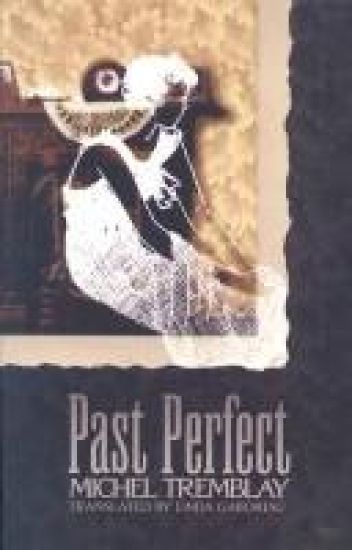
Past Perfect

Past Perfect

Michel Tremblay

Talonbooks
2004
pokkari
In Albertine in Five Times, Michel Tremblay portrayed one of his most unforgettable characters during five decades of her life, beginning in her thirties. Now, in Past Perfect, we meet Albertine at twenty and discover the dark secret of her being. Still reeling from the heartbreak that plunged her into a nervous breakdown, Albertine sets out to re-conquer the beau she has lost to her younger sister. On this fated Thursday evening, will she find the strength to survive the crisis that grips her very essence in this dark night of her soul? Or will she spend the rest of her days foundering in an endless rage that could extinguish all hope of love ever lighting up her life? In the eyes of her mother, Victoire, her brother, Edouard, and her sister, Madeleine, Albertine is a soul on fire that devours everything she touches. But in her own eyes, Albertine is sensitive, selfless, and devoted to the objects of her desires. In this extremity of contradiction between the way we see ourselves and the way others see us, Tremblay stages the agony of the imagination in chains, the tragedy of an understanding of the imagination as a way to the "truth," rather than as a path to understanding. Caught in this dilemma, Albertine, who has cast herself as a sacrificial lamb, a victim of destiny, the queen of unhappiness, descends into a hell of lucidity as she confronts Alex, the great hope and passion of her youth. Cast of three women and two men.
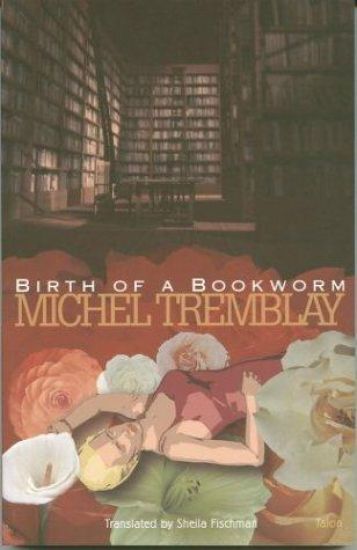
Birth of a Bookworm

Birth of a Bookworm

Michel Tremblay

Talonbooks
2003
pokkari
In Birth of a Bookworm, Michel Tremblay takes the reader on a tour of the books that have had a formative influence on the birth and early development of his creative imagination. Included are his readings of and reactions to some of the great classics of world literature by such writers as the Comtesse de Segur, Jules Verne, Robert Louis Stevenson and, above all, the Brothers Grimm. One of the great moments in this very personal voyage of literary discovery is Tremblay's astonishingly revelatory and prescient account of a summer spent regaling his little friends with his invented alternate endings to the story of Snow White. Here, more than anywhere else, do we get a sense of an author emerging from the received magic of his encounters with stories, and discovering his own need to tell them anew, with the fresh, contemporary sensibility of his own time, place and circumstance. As in the other two volumes in "the education of Michel Tremblay"--his memoir of the formative films in his life, Bambi and Me, and his first encounters with the world of the theatre, Twelve Opening Acts -- Birth of a Bookworm is first and foremost a love story of Michel for his muses, ushered into his life and hovered over with the acute care and concern of his match-making mother. As in all of Tremblay's work, the physical and emotional world of his childhood is celebrated as the fertile ground on which his new, vivid way of seeing and imagining is built.
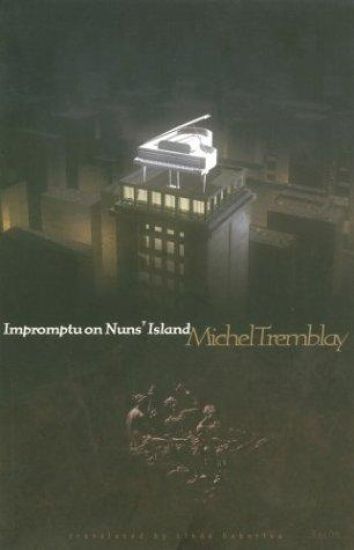
Impromptu on Nuns' Island

Impromptu on Nuns' Island

Michel Tremblay

Talonbooks
2002
pokkari
An opera diva, Patricia, (almost 50) meets her Waterloo singing Salome at the Opera Bastille in Paris. In an impromptu get-together in her Nuns' Island penthouse, on the afternoon of her return from Europe, her mother, a popular Montreal stage and television actress (pushing 70), and her idealistic committed-to-new-work daughter (pushing 30) goad her: What is the sense of an international career if your art doesn't contribute to change (or at least to wide-spread pleasure and inspiration) in the society you live in? An international opera star lives in hotel rooms around the world, so what is the meaning (and the impact) of her art, and on what, or who's society? Is Patricia right in thinking that in this age of globalization an artist who chooses to stay home is doomed to mediocrity? These questions, this tri-generational drama, are framed by the diva's gay pianist who packs his bags and comes running to accompany her, whenever and wherever she calls. Like all of Tremblay's plays, Impromptu on Nuns' Island is a multi-layered tour-de-force about art, life and politics from a matchless writer of tragicomic women. Grounded in the myth of the eternal return, the universal and chthonic story of the triple goddess and her androgynous male consort, this impromptu also interrogates the evolution of the role of the artist in Quebec's increasingly distinct culture and society.
The Heart Laid Bare

The Heart Laid Bare

Michel Tremblay

Talonbooks
2002
pokkari
Talonbooks is pleased to announce a new edition of one of Michel Tremblay's most unusual novels. First published in English translation by M&S in 1989 under the title The Heart Laid Bare [Le coeur decouvert, Lemeac, 1986], British and American rights to this novel were sold to Serpent's Tail, who published this same book under a different title, Making Room, which is now out of print. This new Talonbooks edition proudly restores this novel to its rightful place in Tremblay's sweeping and compassionate imagination of human sensibility and passion. Jean-Marc has fallen in love. The object of his affection is Mathieu, a young actor working as a salesman at Eaton's while waiting for his big break. As a dowry to their new relationship, Mathieu brings Sebastien, his son. Jean-Marc, a fusty academic, is not sure about being able to make room in his life for this four-year-old boy. While daring, for some even shocking when it first appeared in the 1980s, this story has, like Tremblay's entire ouevre, stood the test of time and revealed itself to be a work of both enduring and prophetic vision The Heart Laid Bare marks a significant departure for Michel Tremblay, because it is the first of his mature novels which is not set in the semi-autobiographical milieu of his childhood. Yet this thoroughly contemporary love story is told with all the warmth and empathy that is so characteristic of all of his other work.
Twelve Opening Acts

Twelve Opening Acts

Michel Tremblay

Talonbooks
2002
pokkari
Alongside his dozens of fascinating and award-winning plays, and in addition to this great Chronicles of the Plateau Mont-Royal series of six epic novels, his translations, adaptations, librettos, and acute portrayals of human emotions in a state of both crisis and redemption, Michel Tremblay has left his readers with three magical keys to the secrets of his great literary achievements. The first of these, Bambi and Me [Les Vues animes, Lemeac, 1990], is a memoir of the movies that shaped his imagination as a child-those he watched in fascination and spent hours deconstructing with his mother, and those he watched on his own. The second, Twelve Opening Acts [Douze Coups de Theatre, Lemeac, 1992], is an account of Tremblay's discovery of the theatre as an adolescent: from his first breathtaking recognition of how the imagination is actually a public construct, while watching a performance of Babar the Elephant at the age of six; to his winning of the CBC drama competition with his first play, Le Train. Between these parenthetical stories, Michel Tremblay offers the reader an entrance into his discovery of the theatricality of life itself-the personal dramas of his homosexuality, the death of his mother, the increasingly frail withdrawing of his father, even the completely unintentional, almost apolitical creation of his nationalist awareness-are recounted in narratives at once devoid of judgment, but at the same time ennobled with a complexity and intensity of passion operatic in its scope and merciless in its sweep. This is the most ruthless and unsparing, yet tender and evocative insight Tremblay has ever offered into the creation of his literary genius.
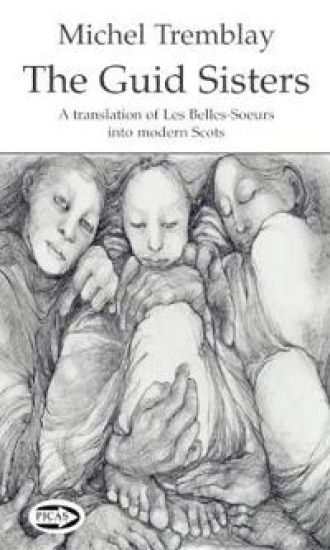
The Guid Sisters

The Guid Sisters

Michel Tremblay

Exile Editions
2000
nidottu
This classic play has been translated before, but only into a pallid approximation of the original joual. Scots, however, is an energetic and earthy vernacular with a distinctive sound system equal to joual. The play, a landmark in Canadian theatre, can now be truly appreciated in this superb translation, just as audiences in Glasgow and Moscow have learned to laugh with these ladies.
News from douard

News from douard

Michel Tremblay

Talonbooks
2000
pokkari
Edouard, whom we met in The Duchess and the Commoner, a common shoe salesman at the feet of the well-heeled by day; but the "Duchess of Langeais," star of the transvestite shows on the Main by night, has been left an inheritance by his mother, Victoire. With this money, he sails on the ocean-liner Liberte to Paris, an idealized, glorious foreign place, the art, culture and architecture of which he imagines will be familiar to him from the books and movies he has read and seen. But when he arrives in Paris, his constant encounters with the realities of the primitive and inconvenient aspects of daily life in Europe bring him face to face with the recognition that France is not exclusively the liberating, glorious place he had imagined it to be. The divine Paris, it turns out, does indeed have feet of clay. All of this he records in a diary, which he will send to his sister-in-law, "the fat woman." Will Edouard survive the disillusionment of both his journey to the imperial centre, and his return to what he previously considered the dull and dreary reality of his life in Montreal? While all of the six novels in this series recount the moving, hilarious, angry and exotic lives of the generation inhabiting the "Plateau" of Montreal just on the cusp of Quebec's metamorphosis from the oppression of colonialism to a culture with its own identity and language, News from Edouard, volume four in this six-part series of semi-autobiographical novels, is the most pointedly explicit at the level of Tremblay's sweeping metaphor of Quebec's search for identity, dignity, pride and independence from both its French and its British (Canadian) colonial past.
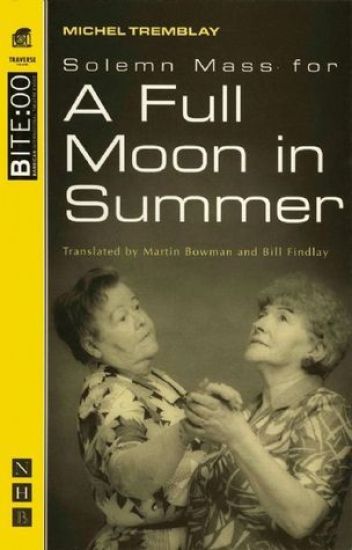
Solemn Mass for a Full Moon in Summer

Solemn Mass for a Full Moon in Summer

Michel Tremblay

Nick Hern Books
2000
nidottu
A bold, quirky play from the renowned Quebecois writer, translated into a robust and earthy Scots. On six moonlit Montreal balconies on a sultry summer's evening, eleven people tell their stories of love. Isabelle and Yannick are alive and ecstatic with the thrill of first love. Jeannine and Louise are in torment that their love may be dying. Rose and her son, Mathieu, are suspended in silent complicity, fearful of the other's pain. Gaston and his daughter, Mireille, are caught in a trap of need and blame. Yvon and Gérard are bound to one another through longing and guilt. The Widow sits alone with the memory of a perfect love... Inspired by the discovery of a lost mass by Berlioz, Solemn Mass for a Full Moon in Summer dispenses with religion but keeps the ritual to lay its characters bare. Michel Tremblay's play, Messe solennelle pour une pleine lune d'été, was first staged in 1996. This translation, by Martin Bowman and Bill Findlay, was first performed at the Traverse Theatre, Edinburgh, in 2000, transferring to the Barbican, London.
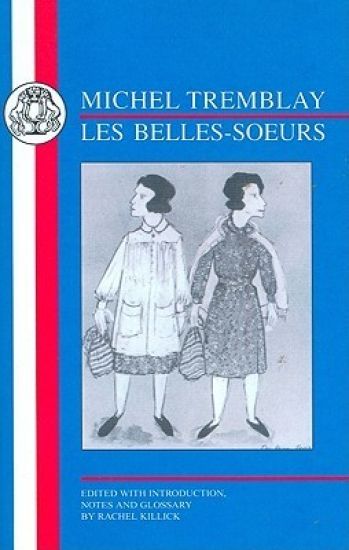
Les Belles-Soeurs

Les Belles-Soeurs

Michel Tremblay

Bristol Classical Press
2000
nidottu
This play takes a crate of gift stamps, a Montreal kitchen, and 15 women, and mixing fast-moving dialogue, monologue and chorus, produces a critique of "women's place", Quebec society, and modern consumerism.
The Duchess and the Commoner

The Duchess and the Commoner

Michel Tremblay

Talonbooks
1999
pokkari
(This third volume in the Chronicles of the Plateau Mont-Royal--an epic series of novels which imagines the lives of the characters of Tremblay's plays--deals with an explicitly gay thematic: Tremblay's metaphor for the Quebecois desire for a more glamorous identity on the world stage.) This is the third volume in Michel Tremblay's six-volume Chronicles of the Plateau Mont Royal, an epic series of novels which imagines, in prose, the lives of the characters of Tremblay's plays, in which each of them acts out their own personal drama: their loves, their disappointments, their travails, their agony and their ecstasy. It is in the novels, however, that these characters are seen in their context of time and space: the neighbourhood in which Tremblay and his extended family lived and grew up. The Duchess and the Commoner focuses on Albertine's brother, Edouard, brother-in-law to 'the fat woman' and uncle to Marcel, and to the 'fat woman's' son. In ths volume, Edouard launches his forays into the 1940's world of Montreal show-business and creates his own astonishing role within it. As with all the novels in this series, a certain sense of wonder, even magic, emanates from the grandmother, Victoire, which in this episode is seen flowing through Edouard to his nephew, the brilliant and disturbed Marcel.
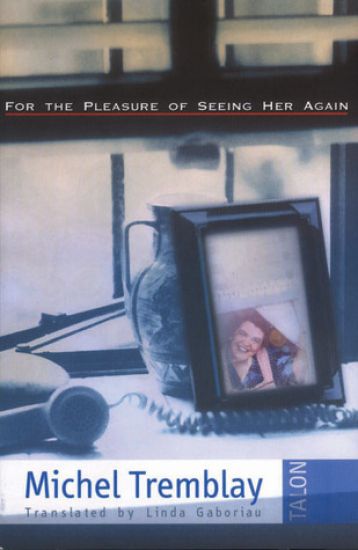
For the Pleasure of Seeing Her Again

For the Pleasure of Seeing Her Again

Michel Tremblay

Talonbooks
1998
pokkari
For the Pleasure of Seeing Her Again is Tremblay's homage to his mother, who nurtured his imagination, his reclusive reading habits and his love for the theatre and the arts, yet who did not live to witness the performance of Les Belles Soeurs--the first successful play written in joual with which Tremblay legitimized the Quebecois vernacular in the arts--and the world-wide acclaim for her son's artistic genius. In a compelling balance of humour and poignancy, Tremblay offers glimpses of himself and his mother at five different stages of their lives together, culminating in his reassurance of his dying mother's concern for him immediately prior to his spectacular success.
A Thing of Beauty

A Thing of Beauty

Michel Tremblay

Talonbooks
1998
pokkari
March, 1963. Winter has launched its final assault on Montreal. The Fat Woman, Therese, Edouard, Pierrette, Marcel, all the star-crossed characters of Tremblay's Chronicles of Plateau Mont-Royal are here again, 20 years later. Marcel, now 23, learns that his Auntie Nana--The Fat Woman who is here finally named--is gravely ill and her days are numbered. How will he, with his exaggerated sensitivity, his visions, his ongoing struggle with "reality" pit his fertile imagination against this inexorable march of death? In five epiphanic visions that take us from a nineteenth-century London pub to a reworking of Michelangelo's Last Judgement, Marcel uses his gift of the creative imagination to break the eternal spiral of new beginnings, and to thumb his nose at despair and resignation. Presented here, side by side, is Tremblay's fictionalized account of the death of his own mother, so lovingly enacted in his new play, For the Pleasure of Seeing Her Again. In what becomes a coda to his great Chronicles of the Plateau Mont-Royal cycle of novels, Tremblay creates, with grace and tenderness, a redemption and transcendent grandeur for these familiar and beloved characters: A Thing of Beauty.
Bambi and Me

Bambi and Me

Michel Tremblay

Talonbooks
1997
pokkari
Bambi and Me consists of 12 autobiographical pieces about how movies shaped the young life of Michel Tremblay, one of their biggest fans. Among others, he talks about Twenty Thousand Leagues Under the Sea, Cinderella, Snow White and the Seven Dwarves, Parade of the Wooden Soldiers, Orphee and the Night Visitors and about how each led to his discovery of his emerging emotional sensibilities as a child and an adolescent. In the piece that gives the book its title, he writes: "Did you cry as much as I did at the death of Bambi's mother? Personally, I've never got over it." Bursting with wit, charm, and the profound resonance of youthful self-discovery, Bambi and Me provides Tremblay's many fans with a clear sense of the origins of the talent which has made Michel Tremblay one of the most important and fascinating playwrights and novelists of the 20th century.
Marcel Pursued by the Hounds

Marcel Pursued by the Hounds

Michel Tremblay

Talonbooks
1996
pokkari
An extended tour de force with no act or scene breaks, Marcel Pursued by the Hounds examines how our "innocent" childhood games and fantasies can come back to haunt us in adult life, full of the dangers and realities that were invisible to us as children. An extended dialogue between the characters Marcel (one of the main characters in Tremblay's novel The First Quarter of the Moon) and Therese (one of the main characters in the novel Therese and Pierrette and the Little Hanging Angel), illuminated by a chorus of the fates, it is Michel Tremblay's toughest, most uncompromising play to date. Cast of 4 women and 1 adolescent male.
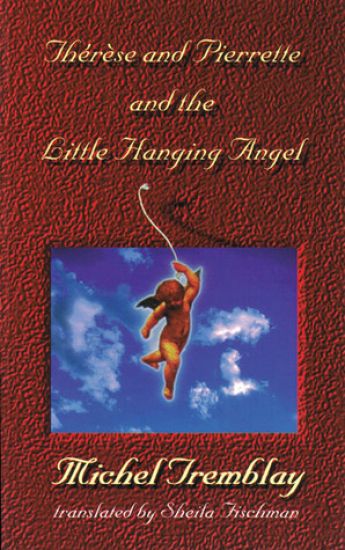
Therese and Pierrette and the Little Hanging Angel
This is the second of five novels in Michel Tremblay's Plateau Mont-Royal series, an evocative, magical retelling of the author's own birth, childhood, and adolescence in a working-class Montreal neighbourhood populated by eccentrics, dreamers and imaginary characters of mythic proportions. Three schoolgirls, "Therese 'n' Pierrette" and their friend Simone, are caught up in the dark mysteries of their rites of passage: innocence moving into experience; life into birth. Circling around their uncertainties are cold, merciless predators, ready to strike at the slightest sign of weakness--the vicious hypocrisy of the Church, the cruel ignorance of the petty bourgeoisie, and the burning lust of the child molester.
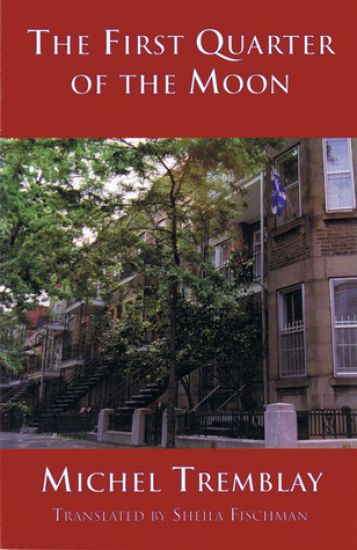
The First Quarter of the Moon

The First Quarter of the Moon

Michel Tremblay

Talonbooks
1994
pokkari
It is June 20, 1952, a decade after the events described in The Fat Woman Next Door Is Pregnant, the first volume of Michel Tremblay's series of autobiographical fiction. The mystic, yet palpable instant of summer's arrival is experienced simultaneously by the fat woman's son (who is never named) and Marcel. These moving, profoundly different epiphanies of a transforming world, seen through the memories of the characters, set the stage for the action of the novel which takes place in the space of this single, evocative day. The fat woman's son experiences this moment as an episode of profound personal objectification--he sees himself as in a photo of that larger, inclusive moment. Marcel, on the other hand, literally seizes the moment, and stores it in his school bag as a physical thing. It is also the day of final exams at the Ecole Saint-Stanislas where the fat woman's son, a boy who lives inside the books he loves, is in the "gifted" class, and his cousin Marcel, the "mad" family terror, is in the class for "slow learners." Racked by envy at what he sees as Marcel's genius--his ability to create and function in another dimension of reality--the gifted child blanks out during the French exam. The first quarter of the moon--which rises over the final scenes of the novel in which the fat woman's son recognizes and acknowledges his cousin Marcel's genius--is an exquisitely crafted and resonant metaphor for the symbiotic relation between the imaginary and the real, the privileged "educated elite" and the "great unwashed," innocence and experience, sanity and madness.
Belles Soeurs, Les

Belles Soeurs, Les

Michel Tremblay

Talonbooks
1992
pokkari
Germaine Lauzon has won a million trading stamps from a department store. Her head swimming with dreams of refurbishing and redecorating her working-class home from top to bottom with catalogue selections ranging from new kitchen appliances to "real Chinese paintings on velvet," she invites fourteen of her friends and relatives in the neighbourhood over to help her paste the stamps into booklets. Raucous, reckless and rude, the women shamelessly share their most secret hopes and fears, complain stridently about their friends and relatives, fantasize wistfully about escaping the misogynist drudgery of their lives and surreptitiously tuck most of the stamps into their purses and clothing, self-righteously appropriating what they consider to be Germaine's "illegitimate" good fortune. While earlier attempts had been made to stage the realities of Quebecois life using colloquial language and a realist backdrop of working-class Montreal, these populist hits were considered rustic and anomalous, while "real" (Parisian) French continued to dominate theatre and "high culture" until the end of the 1950s. As Quebec searched for a new socio-political identity and a language that could articulate its rapidly emerging post-colonial reality throughout the "quiet revolution," Michel Tremblay struggled to find an authentic Quebecois voice. Written in 1965, it took three years for him get a first production of Les Belles Soeurs in 1968. Premiering at the Theatre du Rideau-Vert in the same year that Rene Levesque founded the nationalist Parti Quebecois, this first of what was to become more than a dozen plays in Tremblay's Cycle of Les Belles Soeurs became an overnight success. In one fell stroke, Joual, the distinctive Quebec vernacular that had evolved over centuries since the end of French colonial rule had been legitimized, and Michel Tremblay, much like Chaucer in English and Dante in Italian, had become "the father of the Quebecois language."